Letter to Nobody(ies)
At the request of Metropolis M, Changli* writes about communities in China that cannot openly embrace their culture, and because of that will never be represented by the Chinese pavillion. GO TO DUTCH VERSION
Dear no bodies and every bodies,
I’d like to invite you to sit by the fire pit. Imagine us gathered in a circle, the warmth of the flames leaping from the fire to your hands, the smoke curling up with the scent of charcoal, slowly drifting toward the moon.
Here, the fire pit is reignited as a symbol of matrilineal spirit. We are invited into a space between reality and fiction—where seeing is witnessing. Here, I can share experiences that are impossible to tell, stories that may not have a clear ending, and may not ask for a reply. But here, at least, we can listen to one another, support one another.
‘How does one tell those impossible stories, the ones erased from archives, and the ones that must be told?’ In Venus in Two Acts, Saidiya Hartman proposes ‘Critical Fabulation’, weaving archival research with critical theory and fiction to mend the gaps of history—responding to stories that must be told yet are impossible to tell.
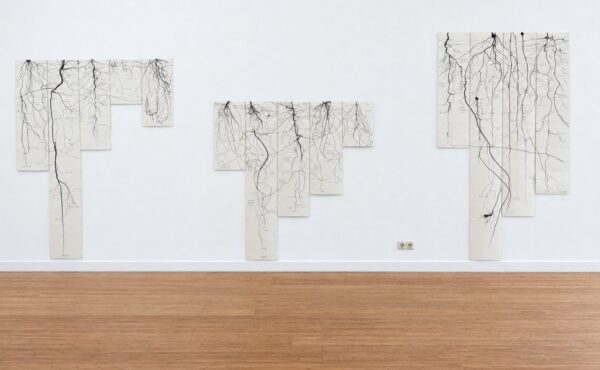
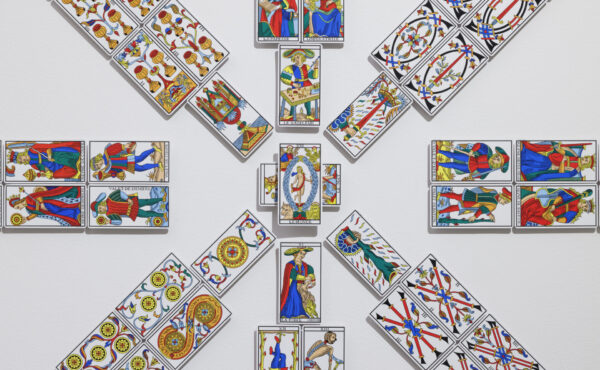
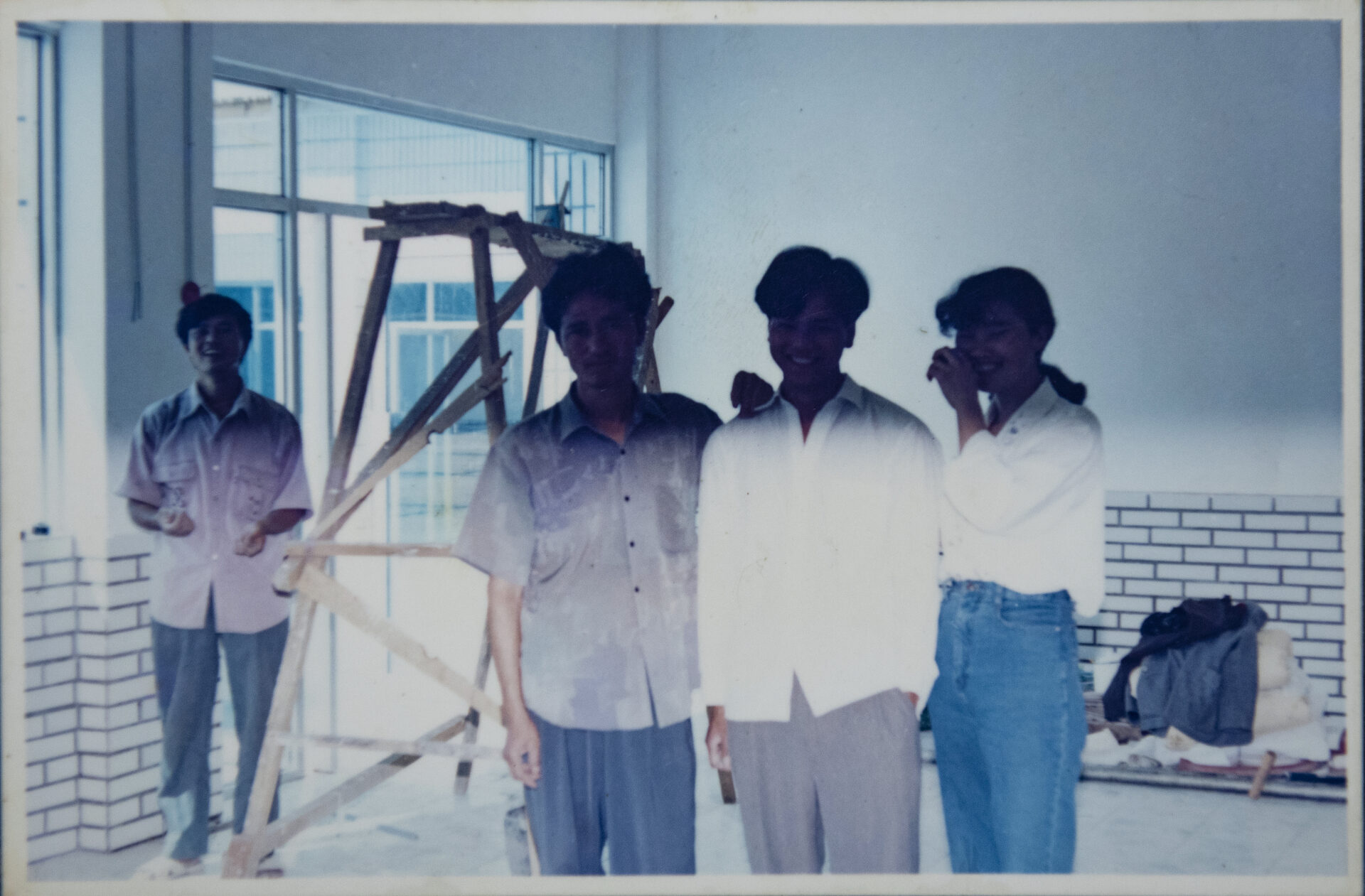
Since 2023, I have been collaborating with my mother, Cui, to create a fictional figure named Changli Cui. Rooted in family archives and shared imagination, “Cui” carries my mother’s surname and is shaped from the faces of my mother, her sister, and me.1 “Cui” is all of us, and yet more than us. Through images, writings, bodies, and rituals, I’ve been weaving a sci-fi narrative of a matriarchal society. This is both a response to and a continuation of my ongoing research into the symbiosis between ethnic minority feminisms and future imaginations.
My father is called Zhuang. My mother’s official ID identifies her as Han, the ethnic group constituting the majority of China’s population. But there’s another ID, for some reason, that has been hidden in the seams of the archive—as if it shouldn’t exist—listing her as Li, the people with a long matrilineal history.
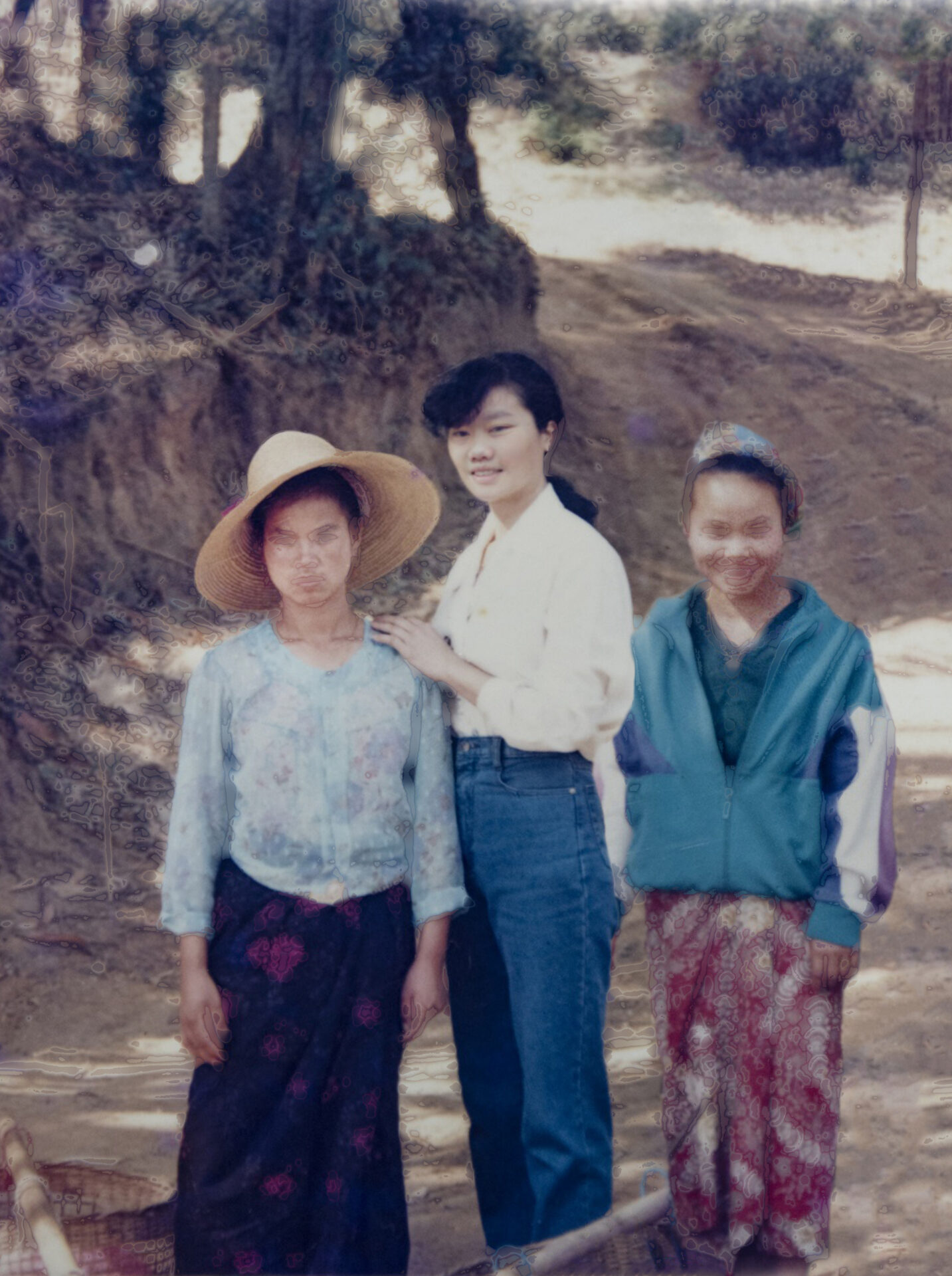
My understanding of who I am as an ‘ethnic minority’ was shaped entirely by my father. From the moment I was born, his hometown became mine, his ethnicity became mine, and his language became mine. My mother’s history, meanwhile, was folded, only appearing in glimpses of the archive. This is the patriarchal structure of China’s ethnic minority system: a dense, expansive network woven through monogamous marriage and the nuclear family, binding women within its confines. Through images, language, and texts, it constructs airtight narratives that discipline women’s bodies, trapping us within mountains and ‘homes’ we cannot escape—I am there, my mother is there, her siblings are there, along with countless other women.
As ethnic minorities, women often live in regions that are economically marginalised and constrained by customary practices, patriarchal beliefs, and gendered norms. At the same time, being a woman entails subjection to patriarchal gender expectations and divisions of labour.2 Historically, governance and cultural infiltration under Han cultural regimes have profoundly impacted internal structures of ethnic minorities, forming systems of “male superiority and female inferiority” that remain difficult to dismantle.
Therefore, we, as women, often dream of ‘walk-out’— walking out from our fathers’ homes, our husbands’ homes, from the enclosing mountains. I am no exception. I have imagined countless times a different kind of life—freer, more caring, more equal—outside the patriarchal ethnic minority framework. That is why this fictional identity—Cui—emerged, as an interlocutor between archives and imagination, between past and future. She becomes a medium for exploring nonlinear, embodied ways of producing knowledge that resist and transcend patriarchal narratives.
Within the overlapping structures of patriarchal and ethnic minority systems, the voices of women like us are often swallowed into silence. And yet, we endure. In the mist that clings to the mountains, in the dimming embers of the fire, in the stories whispered from mother to daughter, in the natural language from matrilineal ancestors. These voices slip through the cracks of erased histories, travelling through forgotten archives and dreams.
At the same time, through all these years of walking out, I wonder: what are the shared struggles that ethnic minority women in China experience with women in other parts of the world? Is it possible for us to recognise common ground, to open up new solidarities, and to imagine collective resistance?
Theoretical frameworks like intersectional feminism and Indigenous futurisms have gently and firmly carried these questions for me. They situate my questions within broader feminist movements, revealing both the universality and specificity of women’s oppression, and urging solidarities across time and space. They teach me: although our oppressions are layered and different, we can still support one another, learn from one another, and care for one another. We can land on fluid and open common ground, in shared futures beyond any singular ethnic identities. Whether indigenous or ethnic minority, we long for futures rooted in land, spirituality, and relational care.
It’s also a decolonial practice that looks backwards—to history and the archive—and forward to the possibility of other worlds. When these stories are told, they become new fire pits. Flames bright or dim, spaces large or small, yet together forming a greater, collective fire pit. There, rooted in matrilineal principles—sharing, regeneration, love, community, reciprocity, balance, a gift economy, and a sacred understanding of life—stories are carried forward and passed on.
Dear no bodies and every bodies,
I leave this letter here, as if by the fire pit. Perhaps it will be read, perhaps not. But if you sense within it a familiar warmth, then for a brief moment, we have sat together.
Wishing you all the best—peace, joy, and deep contentment.
Changli
Changli