‘No hay futuro sin futuro indigena’ (‘There is no future without indigenous future’) – Talking to Sara Flores who is representing Peru at the Venice Biennale
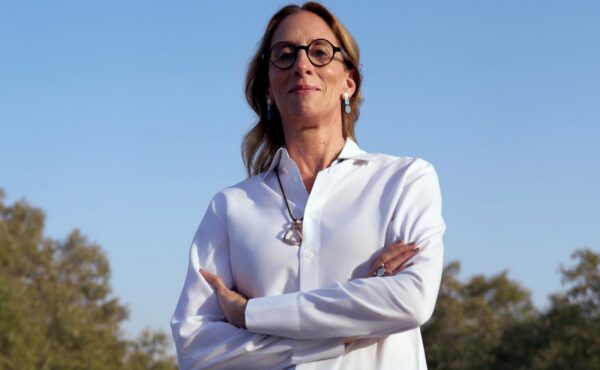
Sara Flores is the first female indigenous Shipibo-Konibo-artist that represents Peru at the Venice Biennale. Mirella Moschella speaks with Flores about her kené practice, that she learnt from her mother and is now teaching her daughter. GO TO DUTCH VERSION
‘You may call me Sara Flores, but my true name is Soi Biri. The words describe something dazzling: something beautiful to behold, gentle, and well-ordered. Curiously, it is almost exactly what people say when they speak about my work.’ Flores wrote this in response to questions I sent her while preparing this text.
‘We, the Shipibo-Konibo, have a name in Spanish, but we also have “true names,” like those used before European colonization. True names are kept strictly confidential, or used only in intimate settings, within the family. They are bestowed on us under different circumstances: by grandparents, who give you the name of someone skillful, hardworking, or strong, so that as you grow you may come to carry some of those same qualities; or by the midwife, at the moment the newborn’s umbilical cord is cut.’
Kené
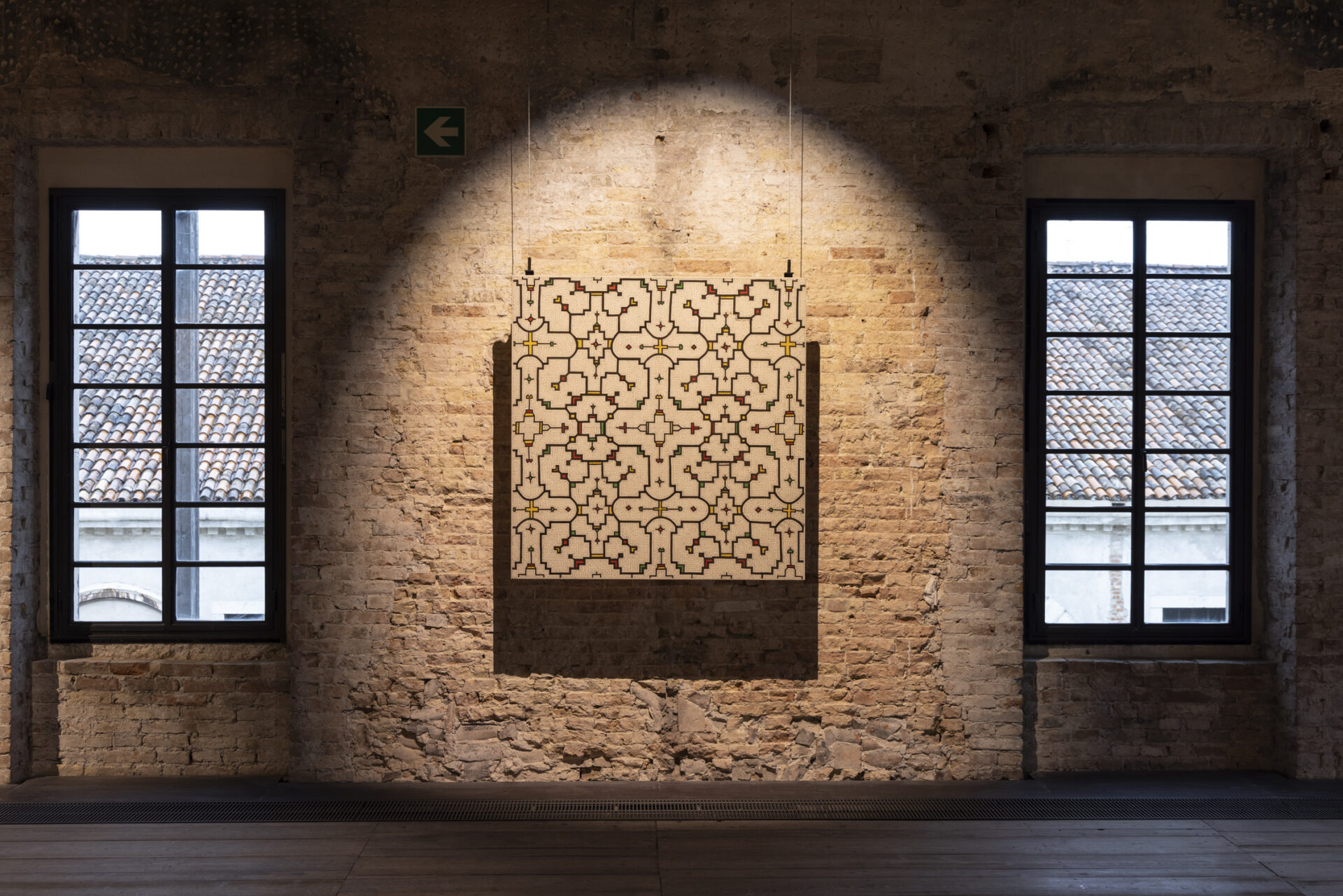
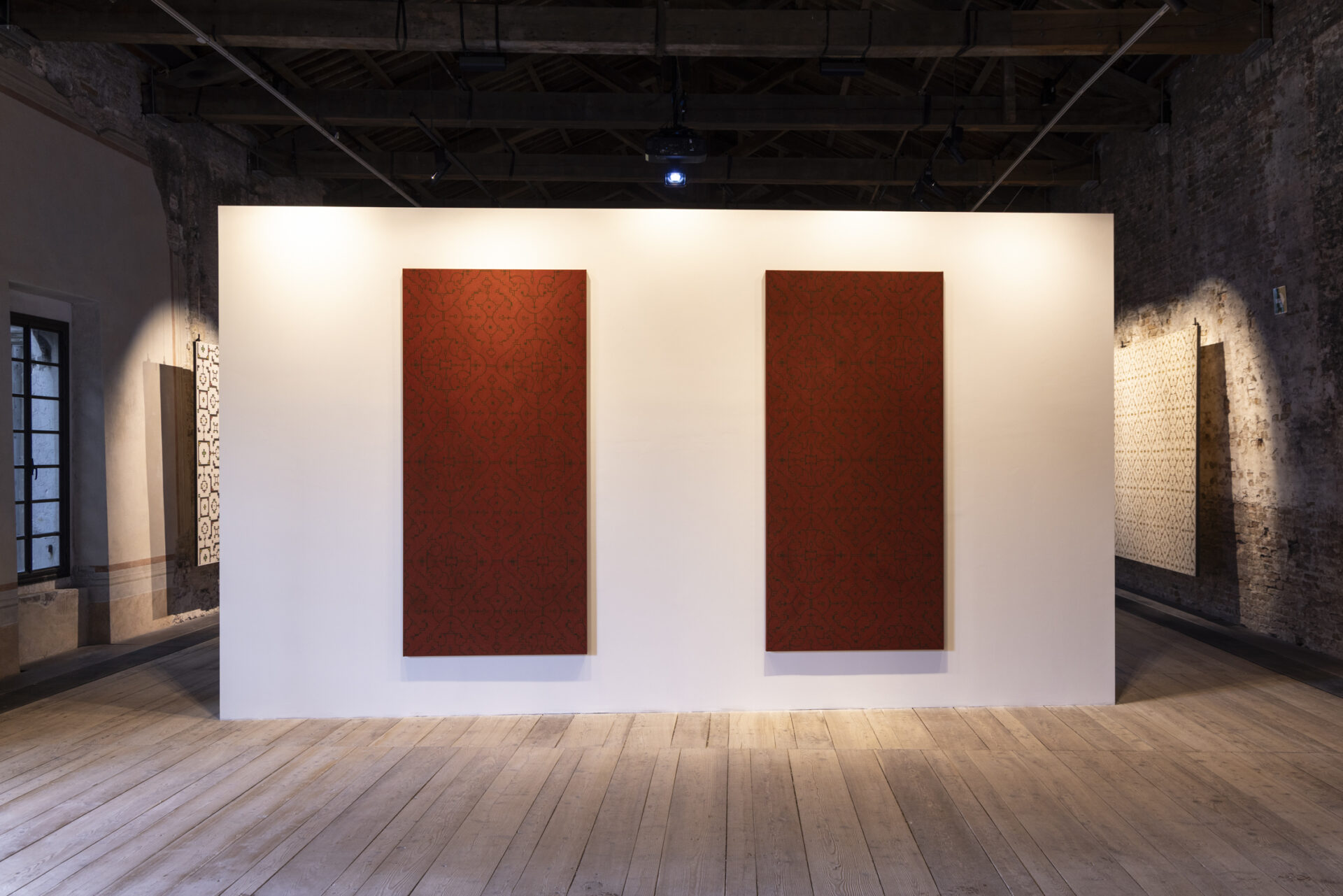
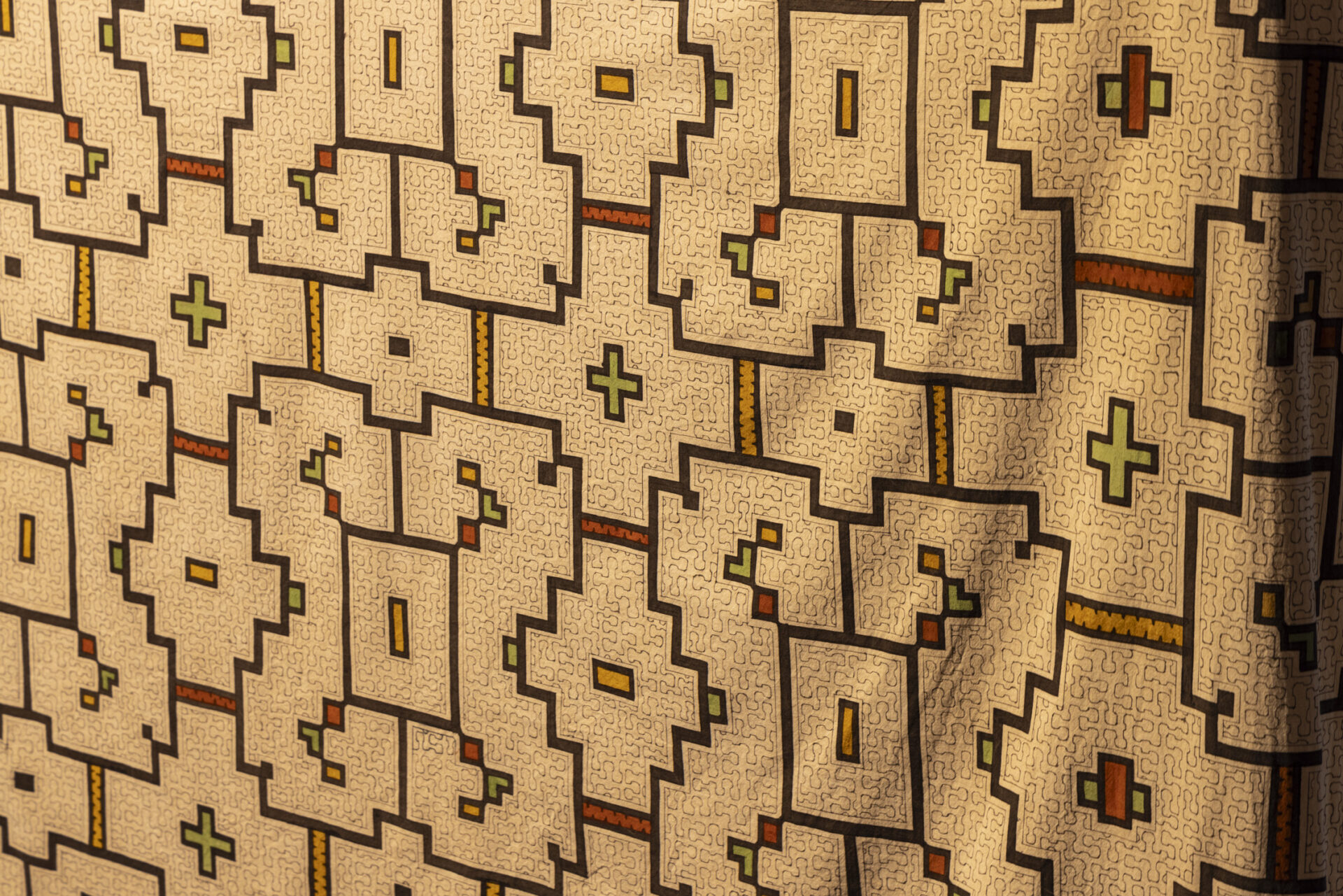
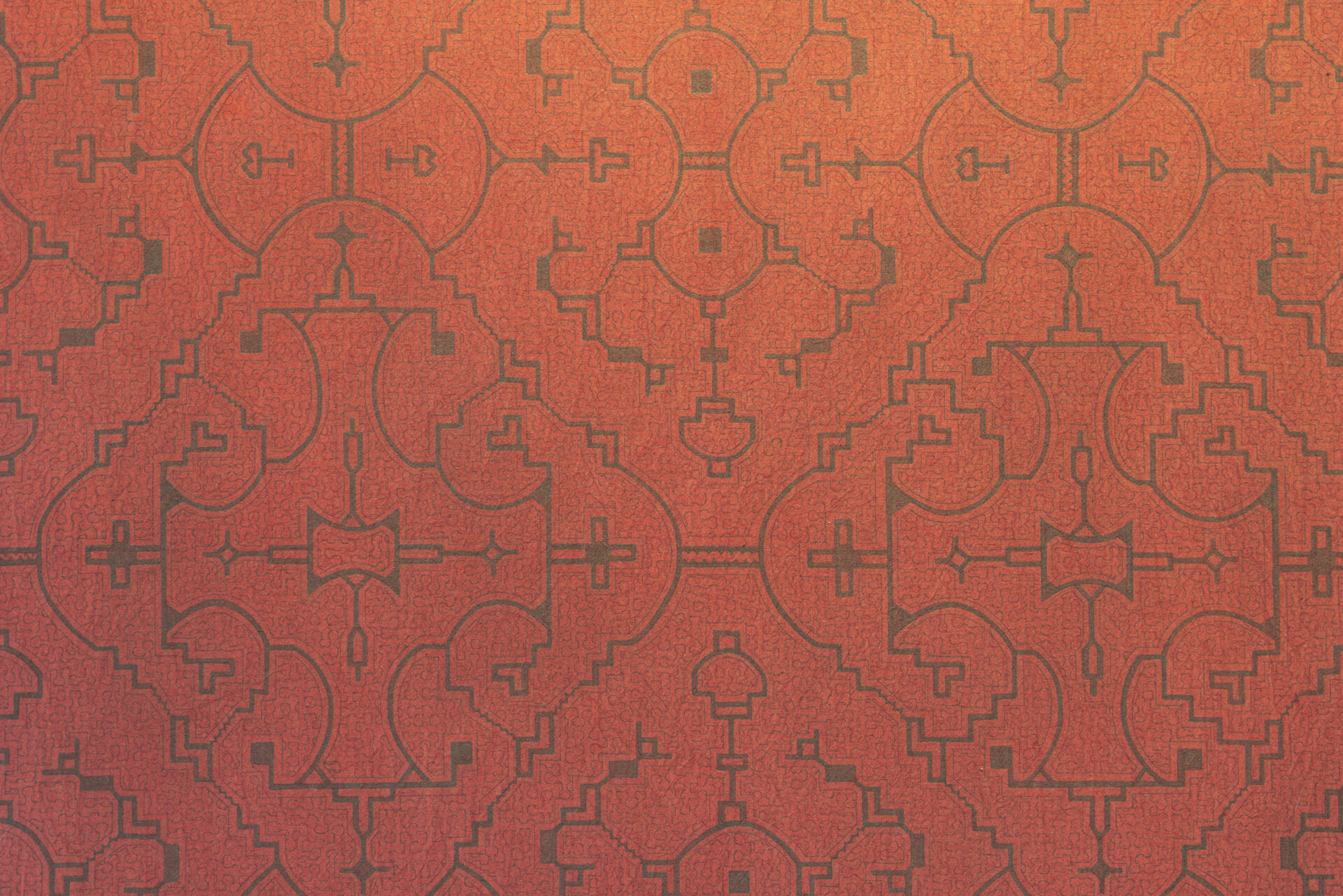
Flores learned kené as a child from her mother, Virginia Valera Sanansino, an exceptionally talented painter who also suffered from a rare condition affecting her hand. Kené is a traditional practice from Shipibo-Konibo nation, ancestral geometry patterns that illustrate the relationship of the female practitioners with the rivers, amazonian forests, suprasensitive worlds. An abstraction of their territory interpreted through the hands and visions of women. Kené is present on the skin of the Ronin, the sacred serpent that inhabits the depths of their rivers, waters that connect the stories of the territory.
Flores: ‘Because of this, she was reluctant to teach me, as she believed her condition was caused by the envy of others, provoked by how well she painted. So I had to learn simply by watching her, until she died, when I was still a young girl. Then one day, upon waking in bed, I looked up and had a vision: the kené designs were forming in the sky of the mosquito net. That was when I realized these patterns live in our mind, in our blood. Later on, when I married, my father-in-law, who was a shaman, gave me a kené crown. That crown comes with the gift of visionary imagination for life. It is a spiritual crown that is only seen during ayahuasca ceremonies.’
Like Shipibo-Konibo women have done for generations, Flores passes on her kené practice to her daughter. Mother, daughter, and granddaughter practice together, but each work carries the unique visions of its creator. It is a collective practice, nourished by the memory of the land and the waters they inhabit and that inhabit them. Through her practice, Flores transports the bodies of her Shipibo family members to art spaces around the world.
Yet, despite the fact that the kené in exhibited works bears her first and last name, the artist’s family and community are always present through her voice, wherever it goes.
Flores: ‘At first, it was hard to imagine that what I made could be hung in beautiful spaces so far away, and that there would be foreigners there who appreciated and valued our work, when in Peru Indigenous lives are still shaped by discrimination and stigma.. Now, whenever I see my textiles exhibited in a gallery or museum, I feel that I am not traveling alone: my people travel with me. It is a source of pride, but also a great responsibility, because as a tita1 of the Shipibo-Konibo people, I must speak about where we come from and what is at risk in our land. And the truth is, I have never really liked speaking in public.’
The individuality that produces singular, exclusive names within the art world seems to hold little appeal for Flores. Instead, she uses the platform her voice has gained, especially following her historic selection as the first woman artist from the Shipibo-Konibo nation to represent Peru at the Venice Biennale, to acknowledge the ecological, human, and non-human infrastructure that sustains her practice.
Water
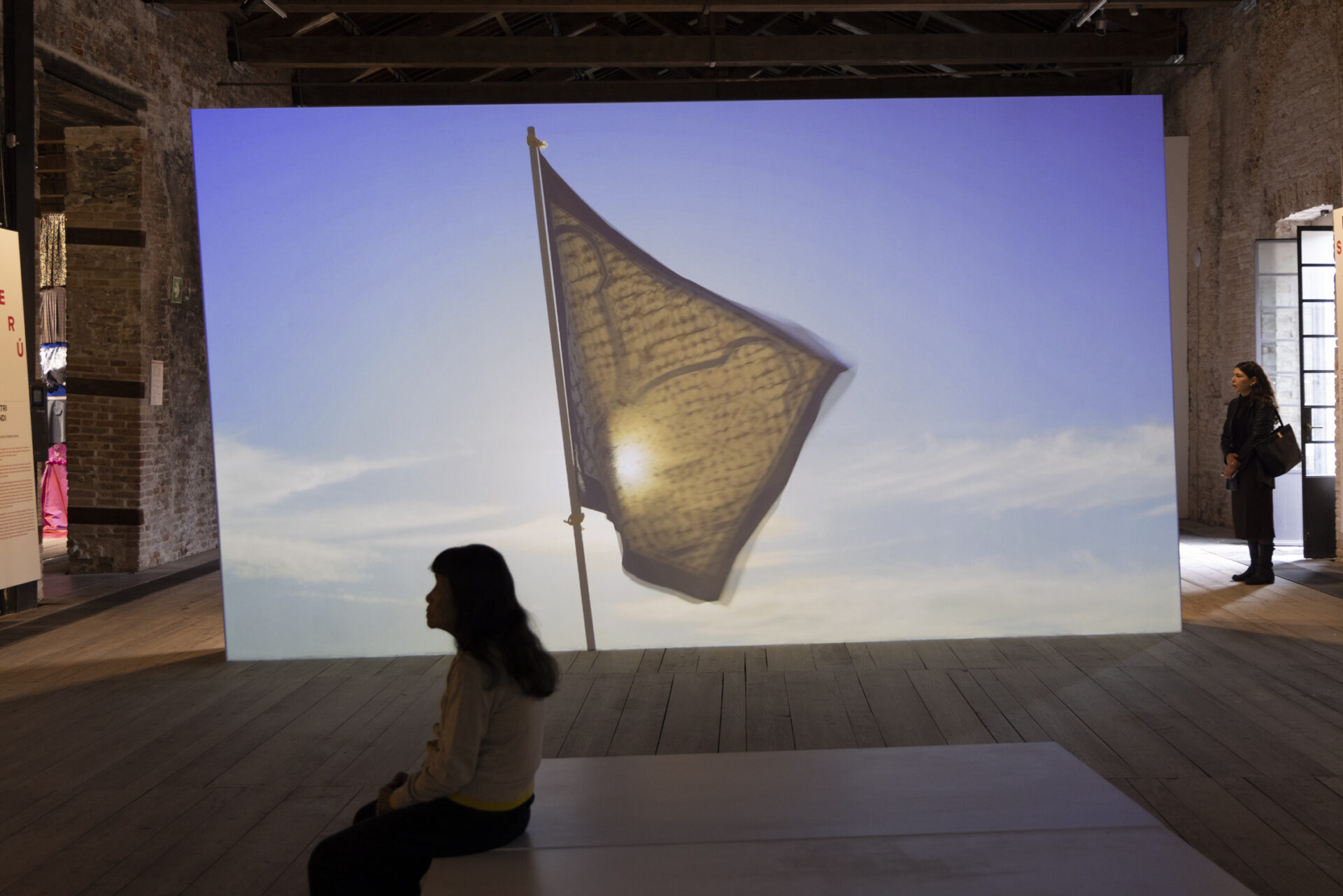
Water is the primary connector of the communities that inhabit the banks of the Ucayali River, through which Shipibo-Konibo traverse both territory and the collective memory. Water is traced as the original location where sacred kené knowledge appeared and expanded, thought by beings hidden within the water; jene chaikonibo.2 Water allows communication with the suprasensible worlds that Shipibo-Konibo women like Sara traverse in visions and dreams.
It is the same water that, for more than twenty years, has been affected by oil spills. In Peru, between 1993 and 2023, approximately 831 oil spills occurred in the Amazon rainforest, casting an enormous dark shadow over the waters that sustain life there, including those of the Shipibo-Konibo Nation. There is a painful paradox in a society that celebrates the aesthetics of Indigenous people while allowing the structural threats to those communities to persist. These dangers are visible in the spills that pollute the Amazon River, and in ongoing illegal logging and extractive activities that scar the forest. Ironically, the same bark discarded by loggers is what Flores uses as a fixative in her kené practice.
Her relationship with nature is one of shared territory: a nature from which she learns and through which she heals. Flores’ work, beyond being an abstract geometric representation of a dreamlike cartography, is a vessel for the plants and waters that inspire its creation. It contains elements of tree bark in the ink that draws its lines, clay respectfully taken from the water, the musicality and balance of an ecosystem in which the Shipibo people are as much a part of the land as the land is part of them.
Through the reach her practice has gained over the past decade, she has been able to establish support for Coshikox; Consejo Shipibo-Konibo Xetebo, an organization that works toward the self-governance of Shipibo communities along the Ucayali riverside. Its methodologies follow the ancient knowledge of their people and their ways of relating to the land. Our territory is being attacked from all sides, and if we wait for the Peruvian government to defend it, we will simply be left with nothing.
As Issela Ccoyllo, co-curator of the Peruvian Pavilion in Venice shared in a conversation, ‘The river is inherent to the lives of Shipibo-Konibo artists because they live along its banks, and this presence is also embedded in kené patterns: it is suggested visually, but the river is also within their bodies. We understand it as an extension of them being fixed onto the cloth. Flores is a local point of reference who draws many others along with her, beginning with her family and her community—both those in Pucallpa and those in Lima. She has a long trajectory, and it is only in the last decade that people have begun to speak about her. She has been written about abroad, her work is acquired abroad. It troubles me that there are works that are not exhibited in Peru, that are shown outside instead, and that institutions are not paying attention to them in order to build collections of their contemporary artists.’
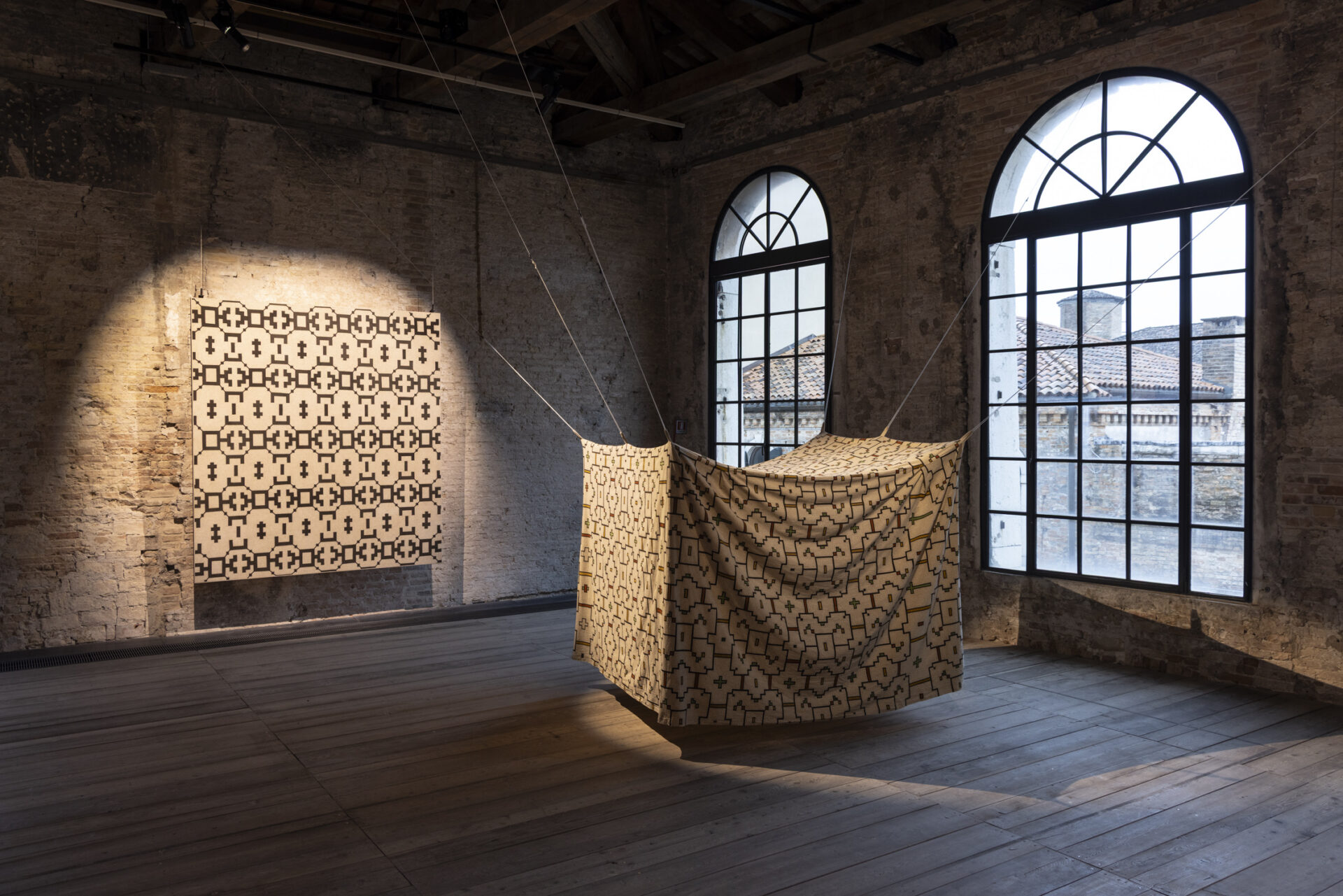
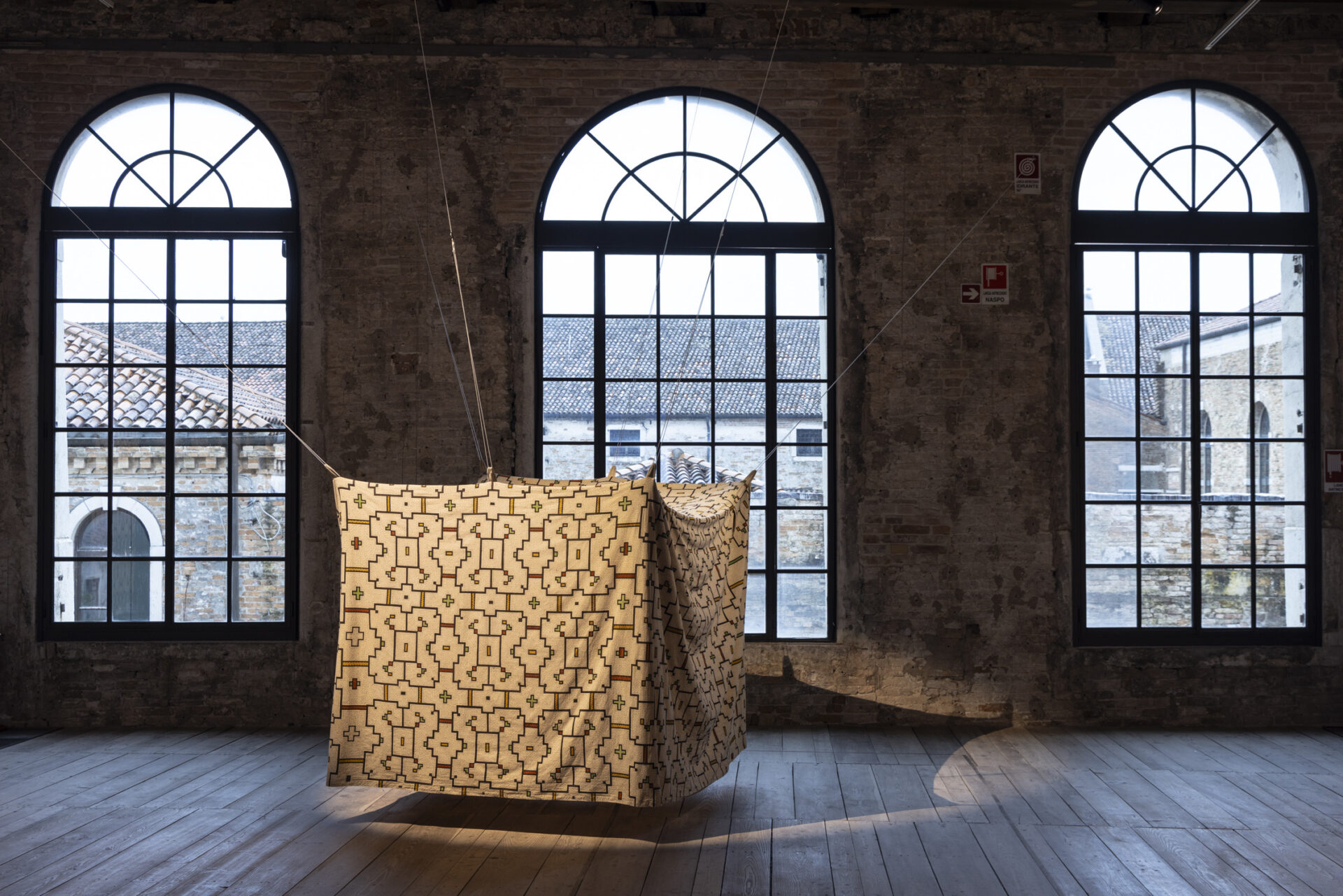
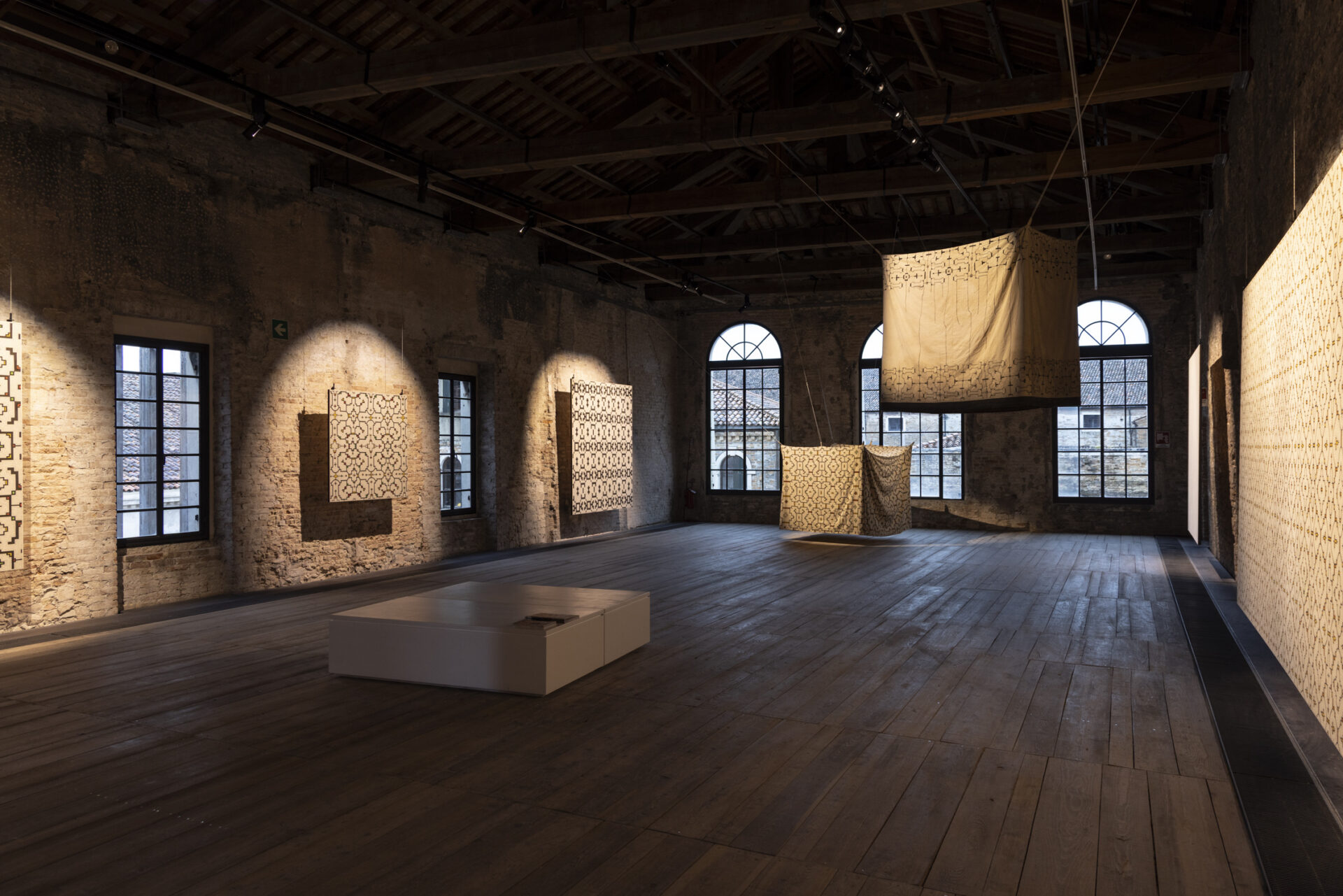
Sara Flores. De otros mundos (Sara Flores. From other worlds)
Peruvian Pavillion, 61st Venice Biennale, Arsenale, 9.5 t/m 22.11.2026
Mirella Moschella
is a Peruvian multidisciplinary artist based in Utrecht, member of Feministas en Holanda, producer and community organizer of Casco Art Institute