To look again to the grandparents / volver a ver a los abuelos – Techno-Ancestrality IMPAKT Festival & exhibition (still open)
At IMPAKT Festival 2026, a balanced encounter of digital media and tangible craftsmanship shapes a body of work around the theme of the Techno-Ancestrality. Held at IMPAKT, BAK Basecamp, and Theater Utrecht, the artists invite one to engage with voices from different territories, predominantly in South America, challenging the shape, speed and Western understanding of technology. The exhibition at IMPAKT is still open.
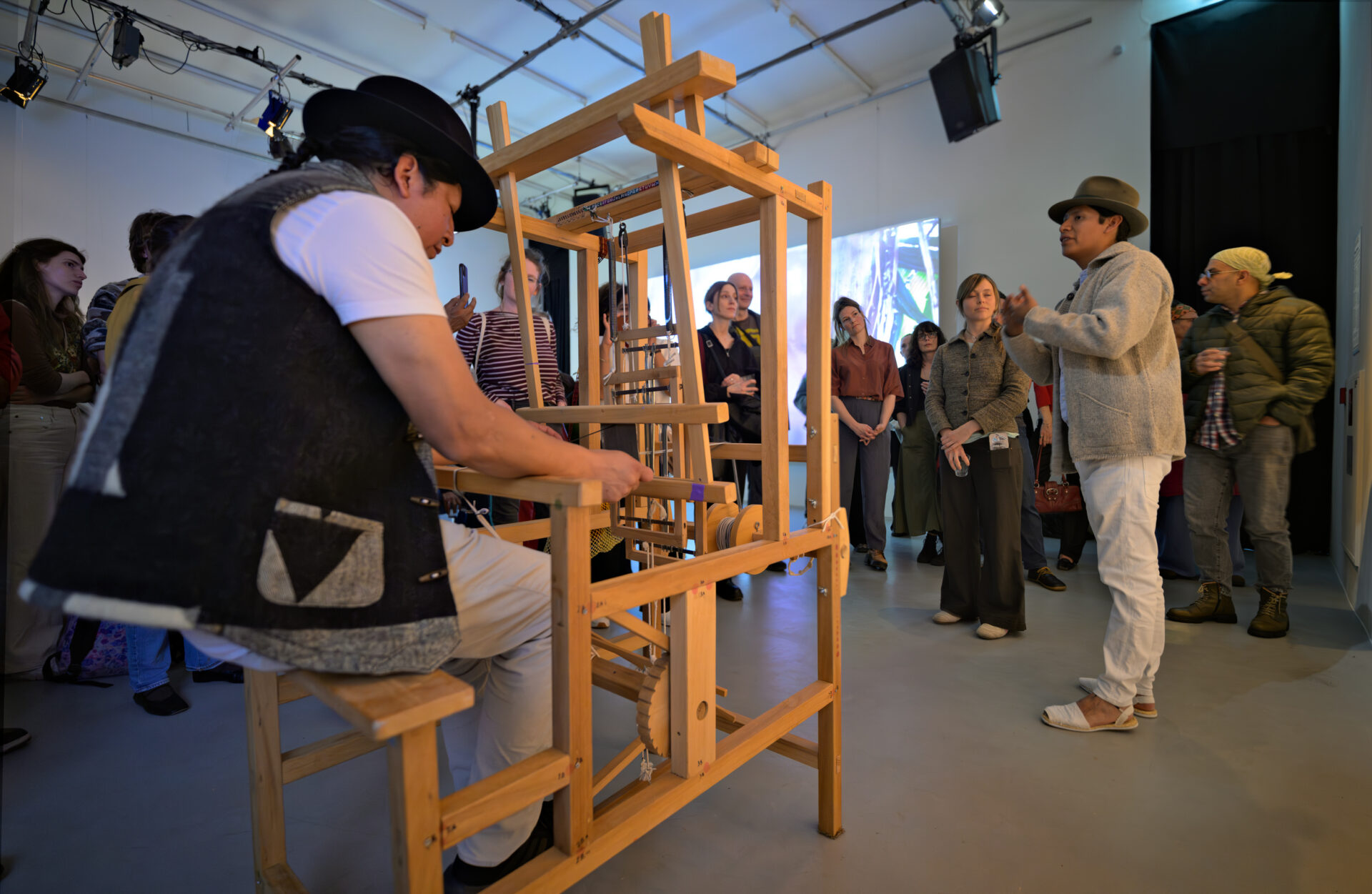
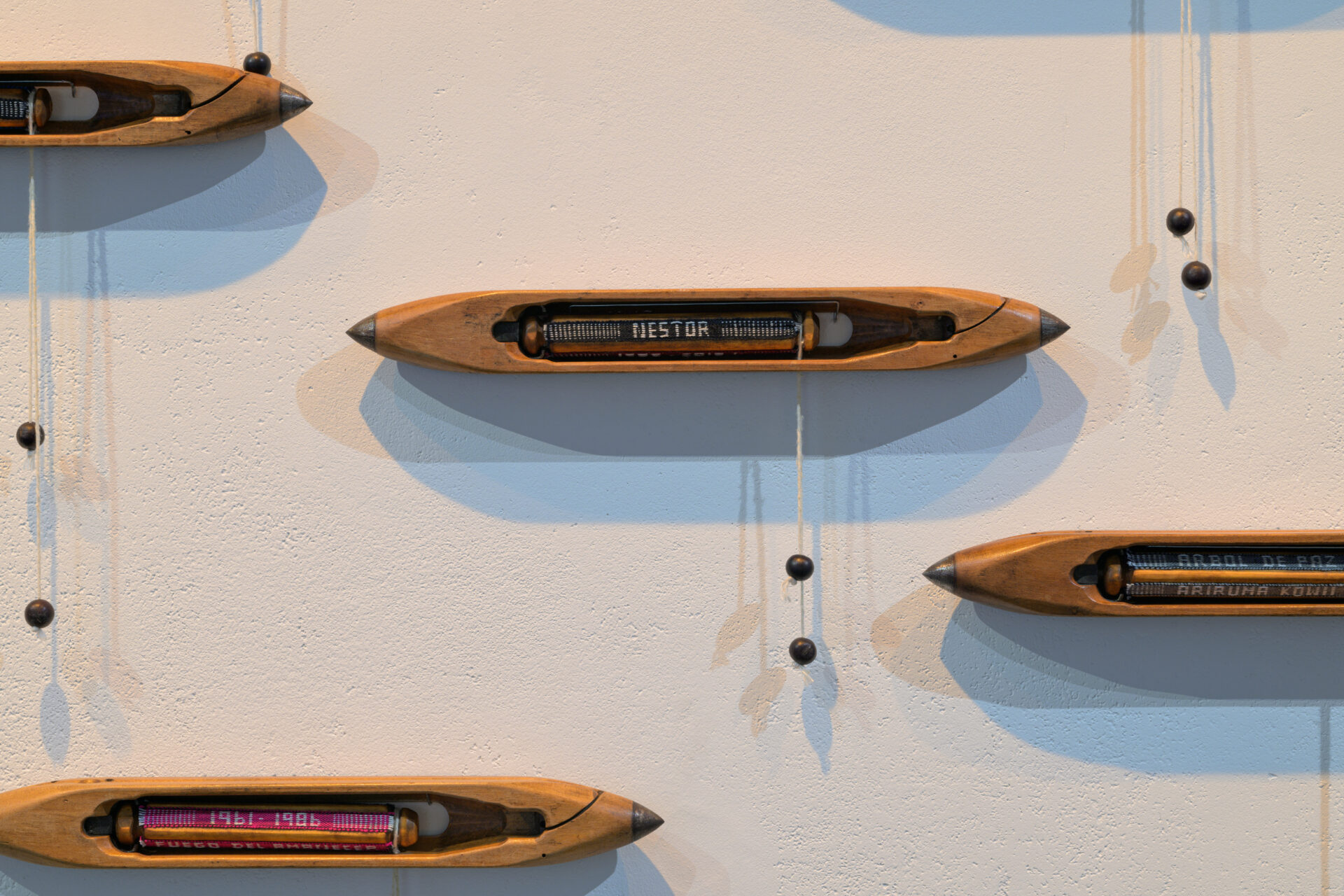
Entering IMPAKT, a mechanical telar (loom), part of Rishpa Tigrashpa Ir y Volver; Hilar el pasado, presente y futuro, el arte y la vida (Going and Returning; Weaving the Past, Present and Future, Art and Life), welcomes me into the space. Besides the loom, numerous woven names are held by small wooden pieces: eighteen lanzaderas (weaving shuttles) reminiscent of canoes traversing the water that connects South American saberes with The Netherlands. These components serve as the material heart of the work by the brothers Inty and Yauri Muenala. The artifacts are presented as the infrastructure, physical and metaphorical, that carries the names and stories of Kichwa people who fought to keep their indigenous names.

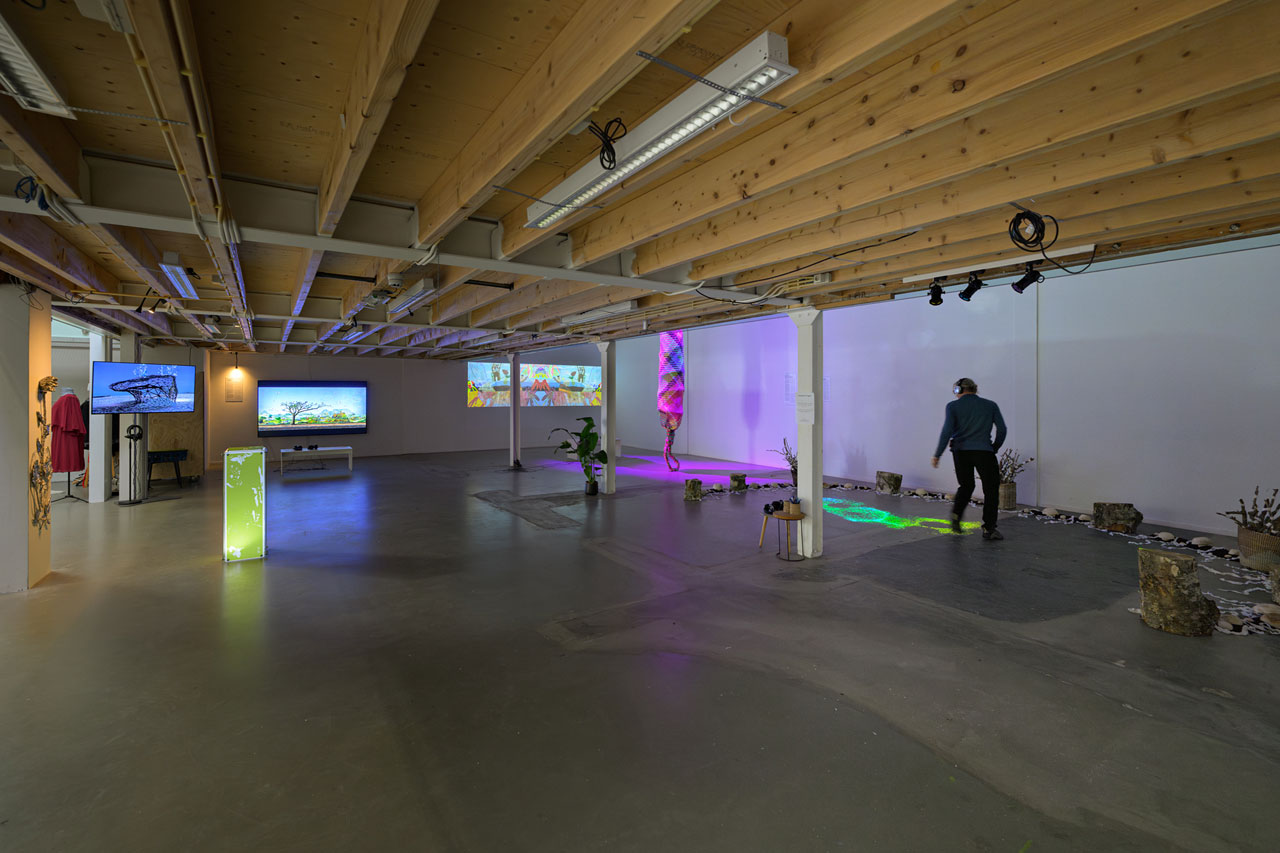
Nearby, the voice of Voluspa Jarpa fills the air, sharing the depth of her large-scale installation: Counter-Cartographies of Resistance: Innovation and Ancestral Memory. Here, organic fiber is also present as a form of multidimensional tejido (woven structure). ‘When we Latin Americans carry stories of overwhelming violence, it is difficult to find the tools to understand what is happening while we are within it,’ the artist explains during her guided tour.
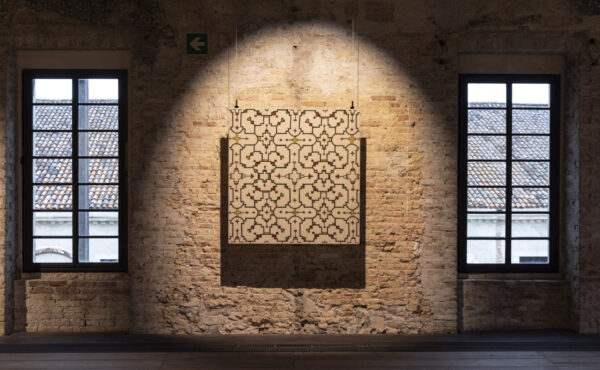
Jarpa’s research originated in Chile as a refusal to accept dominant power narratives. Her work archives histories of violence across scales, transforming the colonial tool of dominating cartography into its exact opposite. These are not maps of power, but maps evidencing the names and places of victims murdered by police brutality during dictatorship periods, the estallido social, and colonial violence against indigenous peoples, connecting those names with the change of the land itself. In her massive installation, Jarpa overlaps seven-meter-high layers of translucent cotton, digitally printed and intervened with other textile materials and moving images. The way the data is hung in tags by threads, resonates with the Quipus (Khipus, Quechua for knot), a pre-Columbian textile artifact used to archive complex information by adding knots in different threads.
The installation is accompanied by the sonic presence of Mapuche machi Millaray Melinao, who contributed significantly to the research process. ‘For Mapuche people, everyone is everywhere,’ said Jarpa during her guided tour. This paradigm is reflected in the work’s structure: multidimensional cartographies in constant movement and transformation. Through video mapping and the spatial distribution, the work offers multiple entry points for the audience to engage with. This approach acknowledges the deep relationship between bodies and territory, challenging the linear temporality imposed upon us.


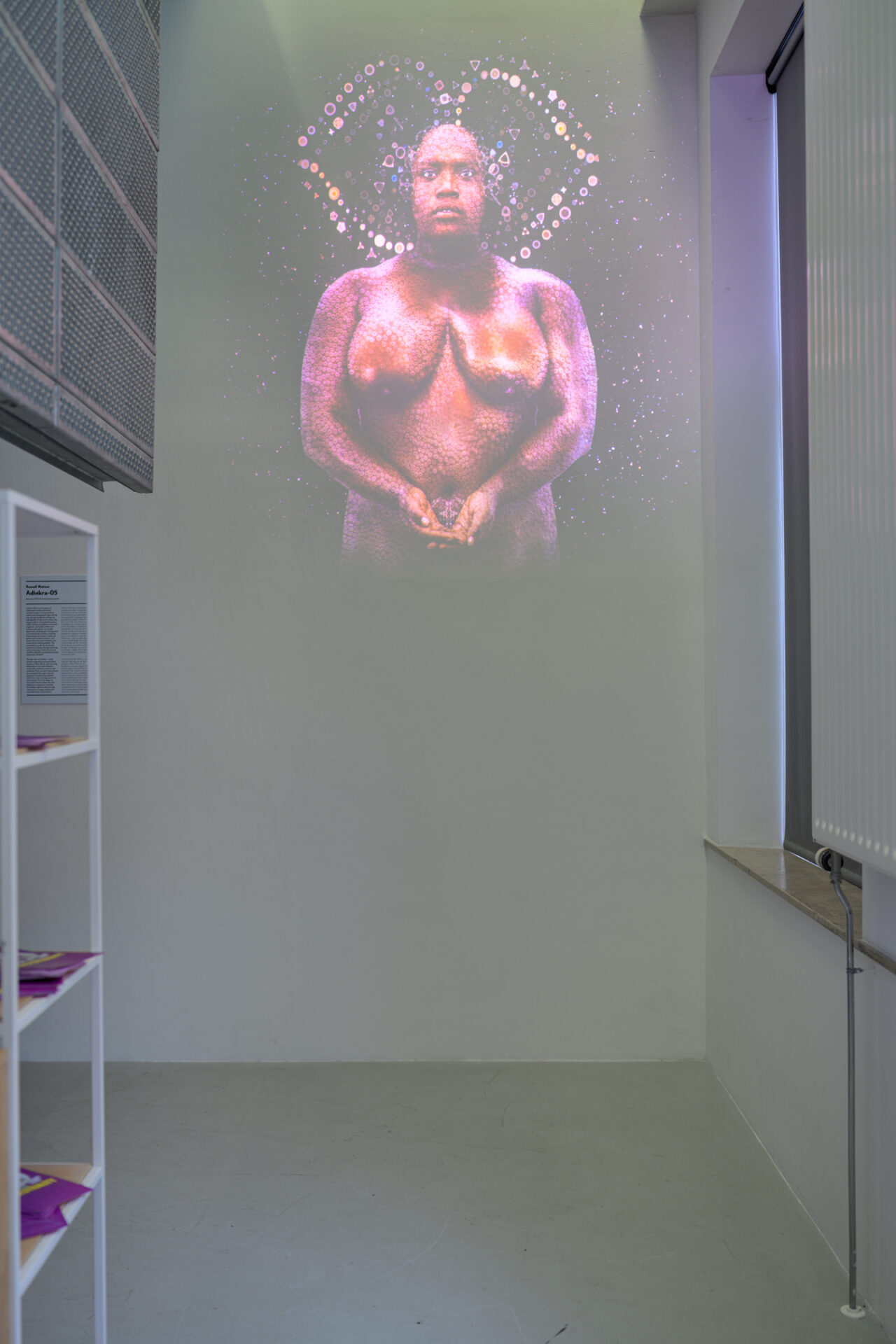
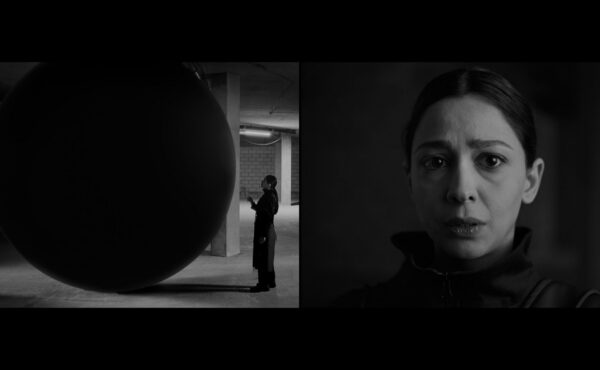
Another work challenging this temporality is that of the Karrabing Film Collective. On April 10th, their program Salt, Sea, and Zombies was screened at Theater Utrecht. The films, Wuthar, Saltwater Dreams, The Family & The Zombies, and Night Fishing by Ancestors, were introduced by Arjon Dunewind, who spoke of intertwining Northern Australian perspectives with the South-American knowledges, predominantly present in the festival’s program. Fostering an inter-Pacific conversation between cultures distant in geography but close in values.
The films are raw; the camera acts as a character itself, escaping ‘white zombies’ and observing alongside ancestors. The actors represent both themselves and their ancestors, which provides a method to unlearn Eurocentric storytelling. The filmmaking methods and resources highlight the voices of community members struggling to inhabit lands facing the depredation of life-sustaining sources.

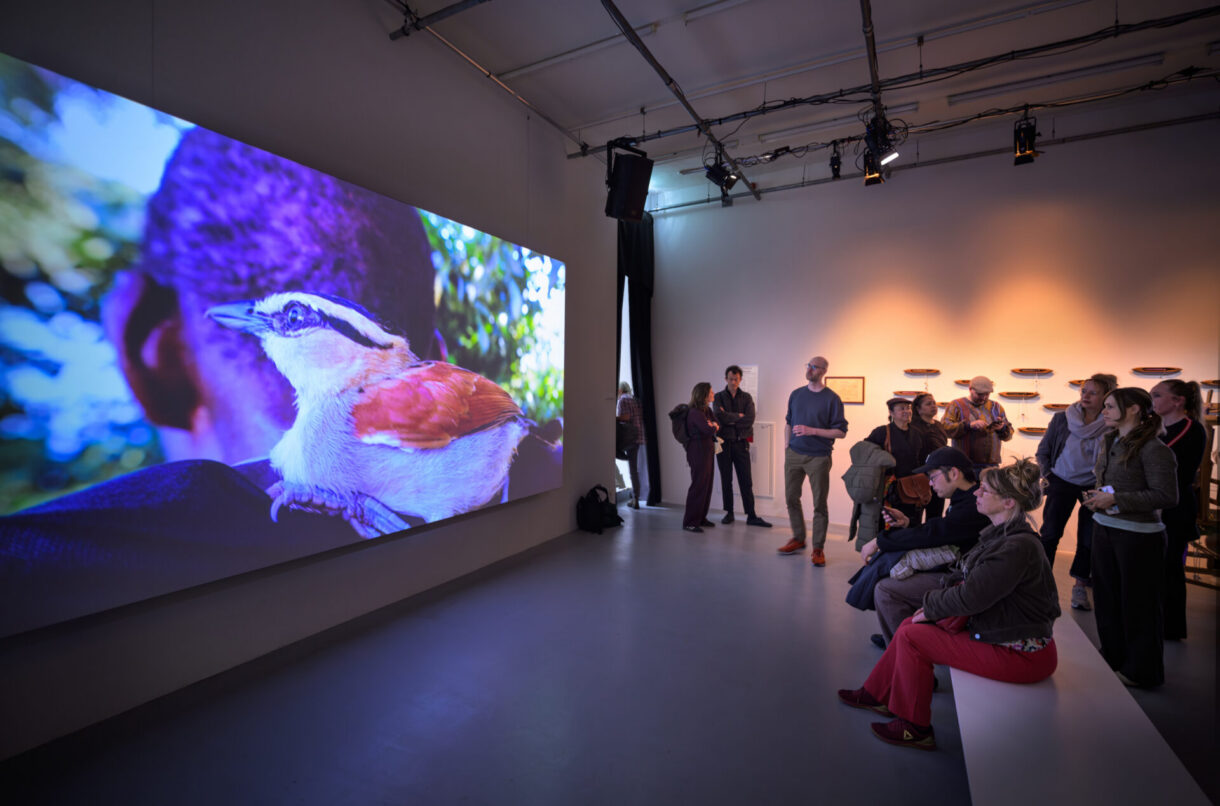
This echoes the two-channel video installation accompanying Yuca Brava by aniara rodado presented at BAK Basecamp. In rodado’s work, the focus shifts to the agency of the botanical body. The installation features a Sebucán, a traditional basketry press used by the Curripaco people to process bitter cassava. The device uses mechanical tension and diagonal geometry to liberate toxic cyanide from the root, making it safe for consumption. Here, the Sebucán becomes a symbol of negotiation through care, evidencing the agency of the cassava responding to the possibility of depredation. Through this metaphor, Rodado highlights a biochemical resistance that mirrors the political resistance seen in the Australian landscape. The agency to transform poison into food (transformar el veneno en alimento) brings me back to Rishpa Tigrashpa by Inty and Yauri Muenala. Just as the Sebucán processes the land, weaving is transformed from forced labour into a technical mastery used to resist the pressure of erasure.


As Yauri Muenala shares with me at IMPAKT, colonial obrajes (forced labour) was once imposed on his community in Otavalo, Ecuador. After independence, the community transformed that oppression into a symbol of identity through the craft of weaving. Inty and Yauri, the third generation of this tradition, utilize this materiality to hold the stories of Kichwa rights activists who, like Inti Muenala himself, had to claim their right to an indigenous name. In Kichwa, Inti means Sun, representing a supreme deity. Yet, naming a child after the sun was met with discrimination. This work acknowledges systemic racism and vindicates a labour often dismissed by academic arts as ‘artisan’. For Yauri, this work is a way of “Volver a ver a los abuelos y volver a tener orgullo de lo que ellos hicieron” (To look again to the grandparents and feel proud of what they did).
By intertwining digital media with ancestral mastery, Techno-Ancestrality moves beyond the traditional exhibition space. It proves that the tools for facing contemporary struggles are already woven into the materials and practices of our ancestors. The past might not be behind our backs but right in front of our eyes, serving as the visible guide for the path ahead. The works show us that temporality is not a linear arrow of progress, but a system of constant negotiation with the environment. A multidimensional weaving of memory and survival. It is this deep, circular memory held before us that truly allows us to walk toward the future.
The IMPAKT festival took place from April 9th to 12th. The exhibition at IMPAKT is on show until the 15th of June.
Mirella Moschella
is a Peruvian multidisciplinary artist based in Utrecht, member of Feministas en Holanda, producer and community organizer of Casco Art Institute