Alternating Rhythms – OFFSPRING’s Constant Ballads at De Ateliers
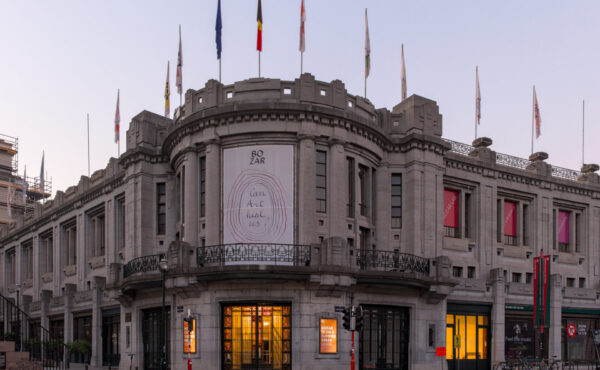
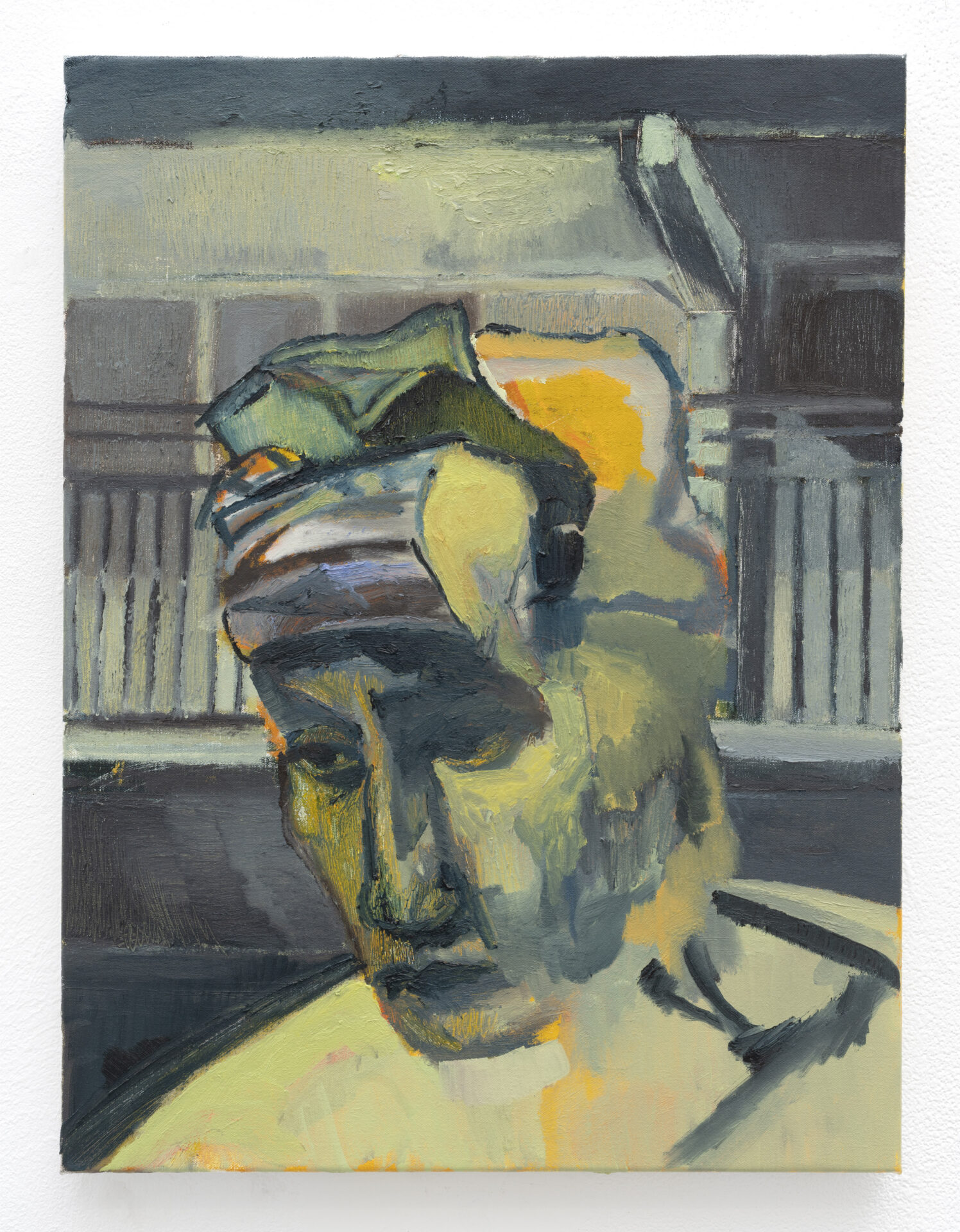
OFFSPRING at De Ateliers marks the end of its two-year work development residency. The current edition, Constant Ballads, curated by Isabelle Sully and designed by Maud Vervenne presents the work of its ten participants. Spread across De Ateliers’ maze-like building, the exhibition brings together a wide selection of technical skills and distinct visual languages. Each artist has their own room or rooms spread through the building, allowing connections between the works to emerge gradually, as you move through the space.
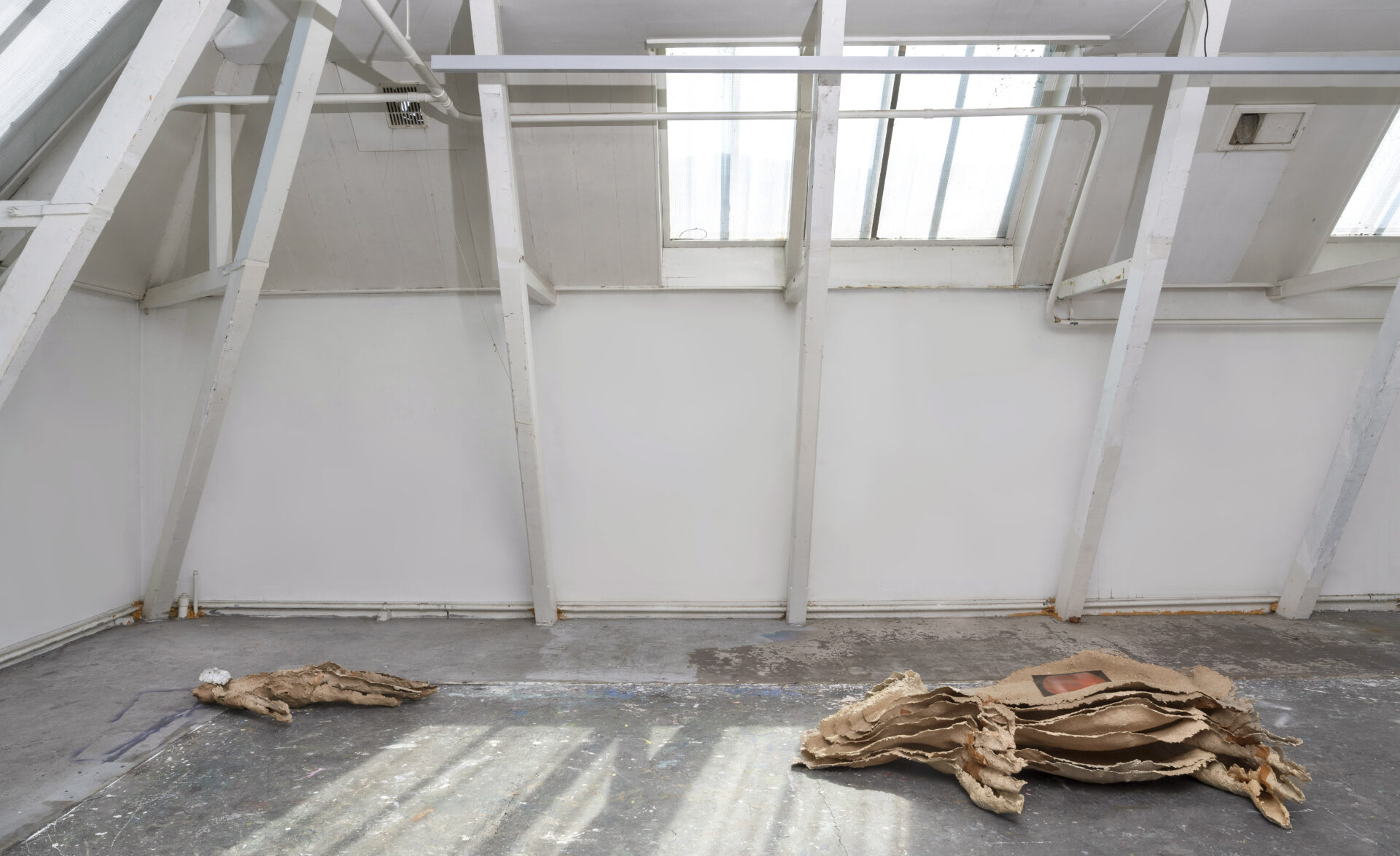
Entering Iiris Riihimäki’s room my focus immediately goes to two floor pieces. In Creamer (Time folds in half to be cut into a snowflake) (2025), a sunbed with floral print is partially dusted with milk powder which extends to the floor surrounding it. Later, when walking up the stairs, I encounter Rihimäki’s other work, Mrs. Vice Versa (2025) from her Matches, 2025-2026 series. These installations are made of bubble wrap covered with canvas, held together by fur coat hooks, resembling enlarged matchsticks. Swimming caps cover their tops, appearing as human heads, transforming the objects into body-like figures. What connects these works is the relationship between human and object: Rihimäki links these objects not only to human bodies, but their absence. Beyond resembling body parts directly, some of the domestic objects evoke them through recalling an absent figure that would normally sit, lie on or move among them.


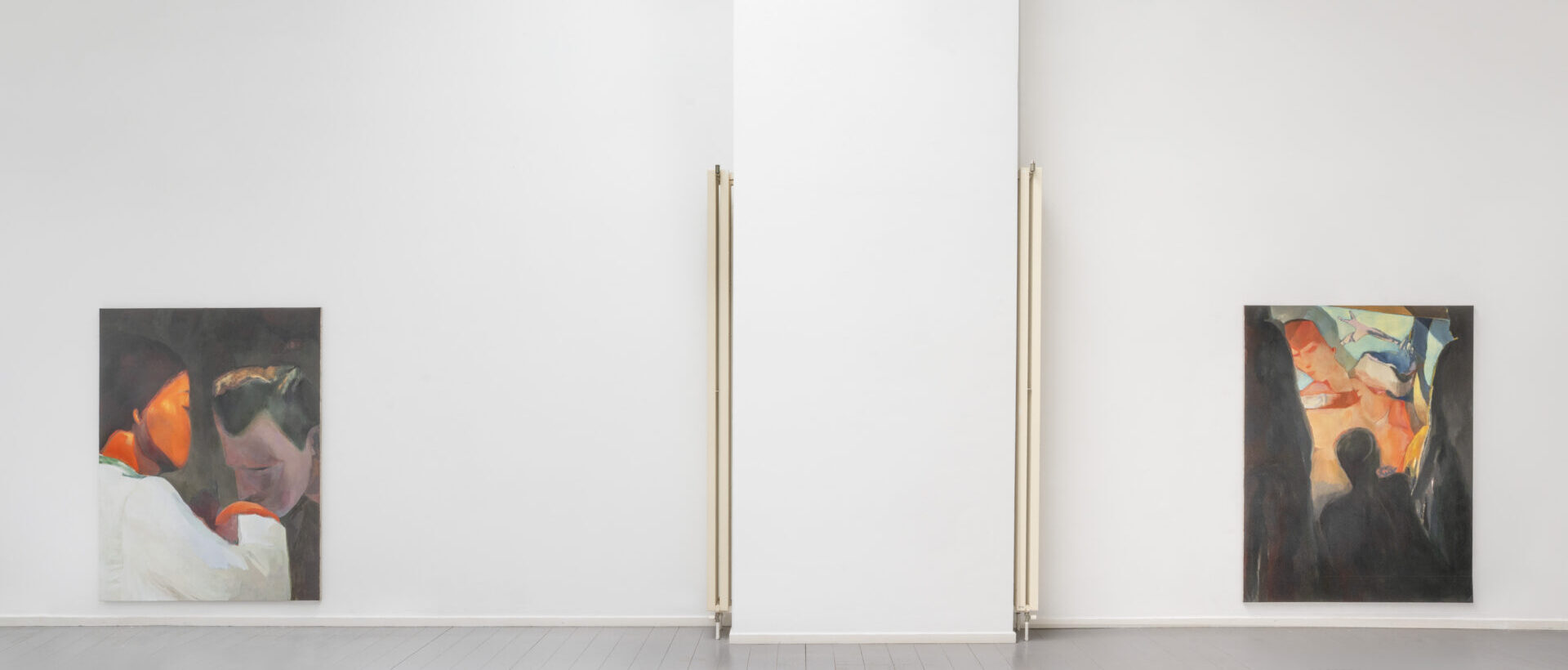
Working with found materials and giving them new contexts seems central to several artists in Constant Ballads. Oscar Morel works with clothes gifted and gathered from people he knows, scraps, swatches from painters, and materials like foam or plaster. He layers these into installations, collages and spatial structures. Oftentimes he stages scenes from everyday life: domestic interiors, street scenes, moments from his Dominican community in the Bronx. These scenes are set against a backdrop of old New York postal chutes, grounding the works in a specific urban and communal history. These materials feel more connected to spatial and domestic memory, highlighting intimate moments of lived experiences.
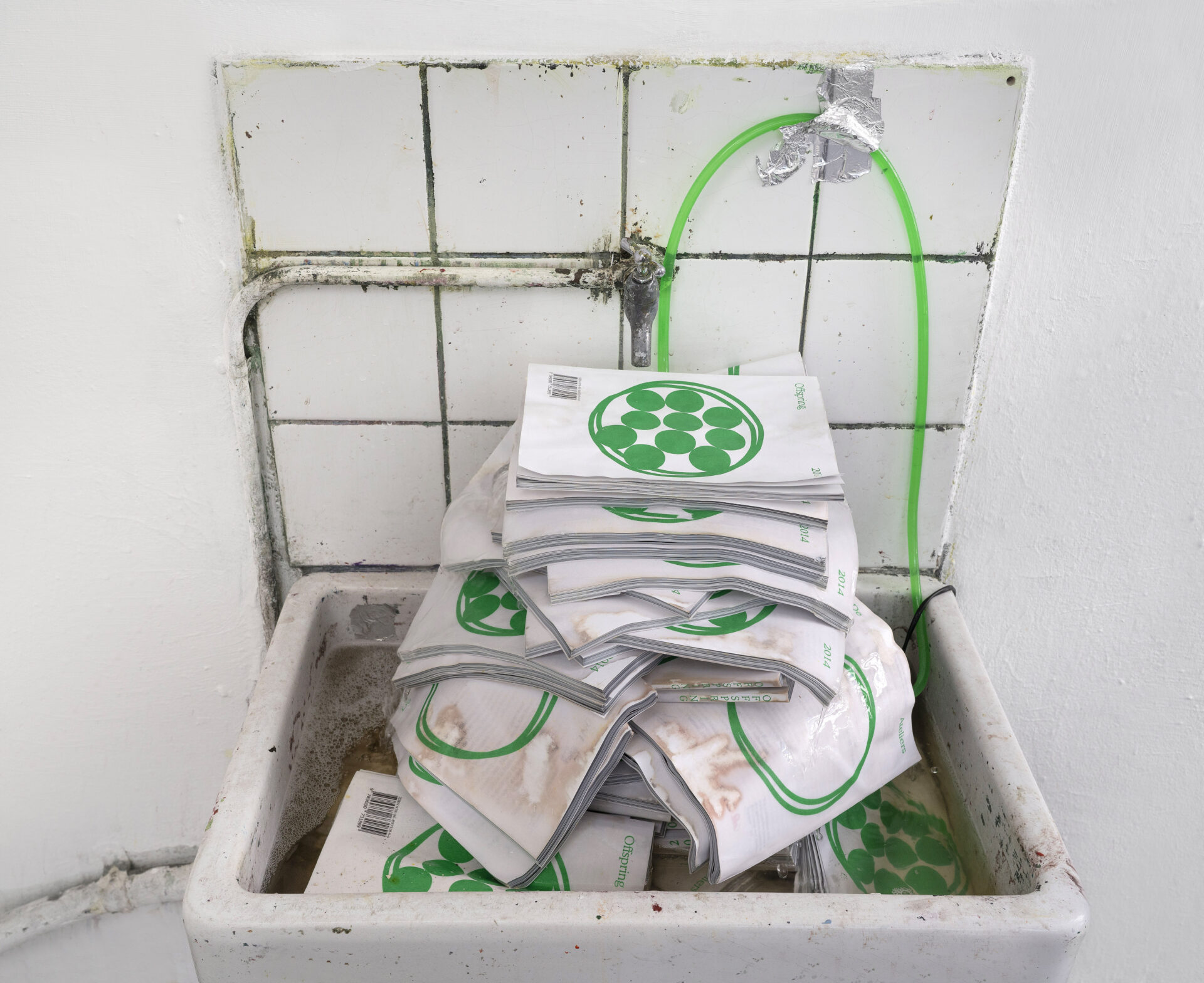
Juliette Hengst also works with found and collected materials, reassembling them into new configurations. For Hengst, the focus seems less on the history or memory these materials hold and more on testing how their meaning shifts once they are dismantled and placed into new contexts or configurations. Throughout the room are casts of animals, modelled figures, an old catalogue of a previous edition of Offspring preserved in a jar, metal legs holding lightbulbs filled with liquid, disassembled monitors arranged in the shape of a horse, and small pig figures open in the belly with candy eyes inside. The Offspring catalogue illustrates Hengst’s process, it is taken apart and examined, but then preserved and reintroduced into the exhibition, recontextualized in the very context it documents.
Tosca Monteyne’s The Pink Drawings (2025-2026), made with ballpoint pen and collage on pink A4 paper, cover an entire room in the mezzanine. In the work Monteyne rearranges arbitrary words she heard on the radio, into an orderly sequence in the space. She consciously recontextualizes language; simple words are stripped away from their initial meaning and set against each other. Rather than forming a coherent narrative, the work seems to be more concerned with how the meaning of these words shift through proximity to one another, while the resulting associations remain open-ended.


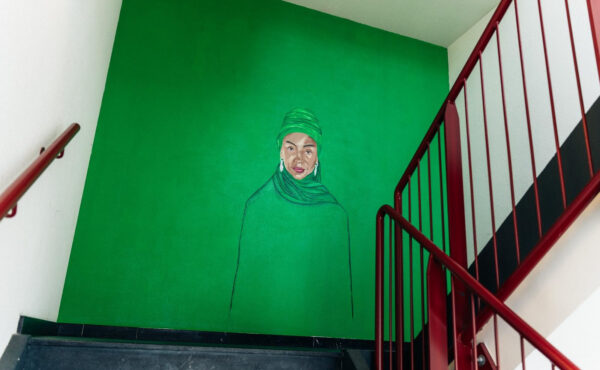
Going up the stairs to the first floor, passing by Rihimäki’s matches, I arrive at Yingfei Lyu’s room. Intergenerational memory and material intersect in this room, as most of the fabrics were hand woven by villagers of the Chinese Shandong province, and consequently dyed by Lyu and her mother, using natural materials, while the threads themselves were hand spun by Lyu’s great aunt. This way, generations of labour are embedded in the work itself. These materials are then combined with 3D-prints and laser cut acrylic sheets into installations, making the space feel like an archaeological site crossed with a laboratory. Despite their differences in origin and method of production, they share a lightness and precision that makes these materials come together in a surprisingly cohesive visual language.
Aiganym Mukhamejan’s video works, I Used to Wish for Thunder So We Could All Sleep in Her Bed (2026) and Kündelık.Amsterdam (2026) are both set in a somewhat domestic interior. The first, in a small room creating the impression of being in a closet, with Mukhamejan’s grandmother’s dresses hanging at the entrance. The latter is accompanied by a vitrine full of small objects – flowers, candles, frames, and religious objects – almost resembling a shrine. Mukhamejan works with the aesthetics of mass-produced objects, referencing bazaars and markets both from Central Asia and the Netherlands. In the room with Kündelık.Amsterdam, this consumerist visual language exists alongside something more ritualistic, as we watch the vlog style video from a couch, while these small, almost sacred objects sit behind the glass. As Mukhamejan places consumer culture and ritual aesthetics side by side, the distinctions between the two become less fixed.

Reading the exhibition at first seems a bit overwhelming, partly because of the building and because the rooms dedicated to each artist are spread across the space. There is a guide, as well as a navigation system organized around the building’s internal bell system. These bells serve as information points, indicating which artist’ rooms are found along different routes through the building. Though even with that, finding your way can be difficult. This reflects the exhibition itself which brings together artists working with different materials, stories and visual languages. As I spend more time with the works, certain connections appear. Found materials are transformed, familiar objects take on new meaning and traditional techniques are placed alongside contemporary ones. Yet the exhibition never fully settles into one narrative, instead, it leaves space for these different approaches to stand on their own.




Offspring, De Ateliers, t/m 14.6.2026
Rebeka Erdélyi
is an Amsterdam-based art historian and curator whose current research focuses on post-socialist memory, nostalgia, and the (re)positioning of Central and Eastern European art in an international context.