The Flesh is Weak – 8 Favourites from the 61st Venice Biennale
The 61st Venice Biennale is a bodily edition. Bodies appear everywhere: exhausted, encased, disrupted, or turned into material. Naked performers, mechanical animals, dancing robots, vacuum-packed meat, bodies that chime like bells, float underwater, or hang like animals in a factory. But beneath the official language of hope, resilience, and new imagination lies something much rawer. This edition of the Biennale does not feel oriented toward recovery, but toward a prolonged impasse in which the body itself becomes the site where political, ecological, and institutional fractures are made tangible. The flesh is weak, and precisely there lies the strength of the best presentations.
1. Florentina Holzinger – Austria, Giardini & Arsenale
Florentina Holzinger, who quickly captured everyone’s attention at this Biennale by hanging naked from a huge bell like a human bell-ringer, perhaps comes closest to the physical horror lurking behind the Biennale’s institutional façade. According to curator Nora-Swantje Almes, the work heralds ‘the death of old structures, and the ringing in of a new era’. Holzinger’s SEA WORLD VENICE is not a performance you can prepare for. It is a baptism in waste, sweat, urine, and water. In the pavilion, a naked body floats in a tank, sustained by a closed-loop system in which visitors’ urine is filtered. There are portable toilets that visitors are actually allowed to use. A jet ski circles endlessly as an absurd monument to spectacle tourism and ecological ruin. The presentation is raw, grotesque, and intensely physical. It feels as though I have ended up in a disastrous amusement park, where I do not want to stay, but where I linger nonetheless, driven by adrenaline.
In her extreme bodily performances, Holzinger offers no hopeful prospect. There is nothing conciliatory in her work, nothing that reassures the viewer, nothing that depicts the promise of a better future. Within the context of the Biennale, hope feels like a bell jar: a fragile structure that makes the world sound more beautiful than it is, as long as one does not tap the glass too hard. Such structures cannot be elegantly dismantled through brief discomfort; they can only be made tangible through friction and violence imposed on the body, through ‘piss and shit.’
Thema's
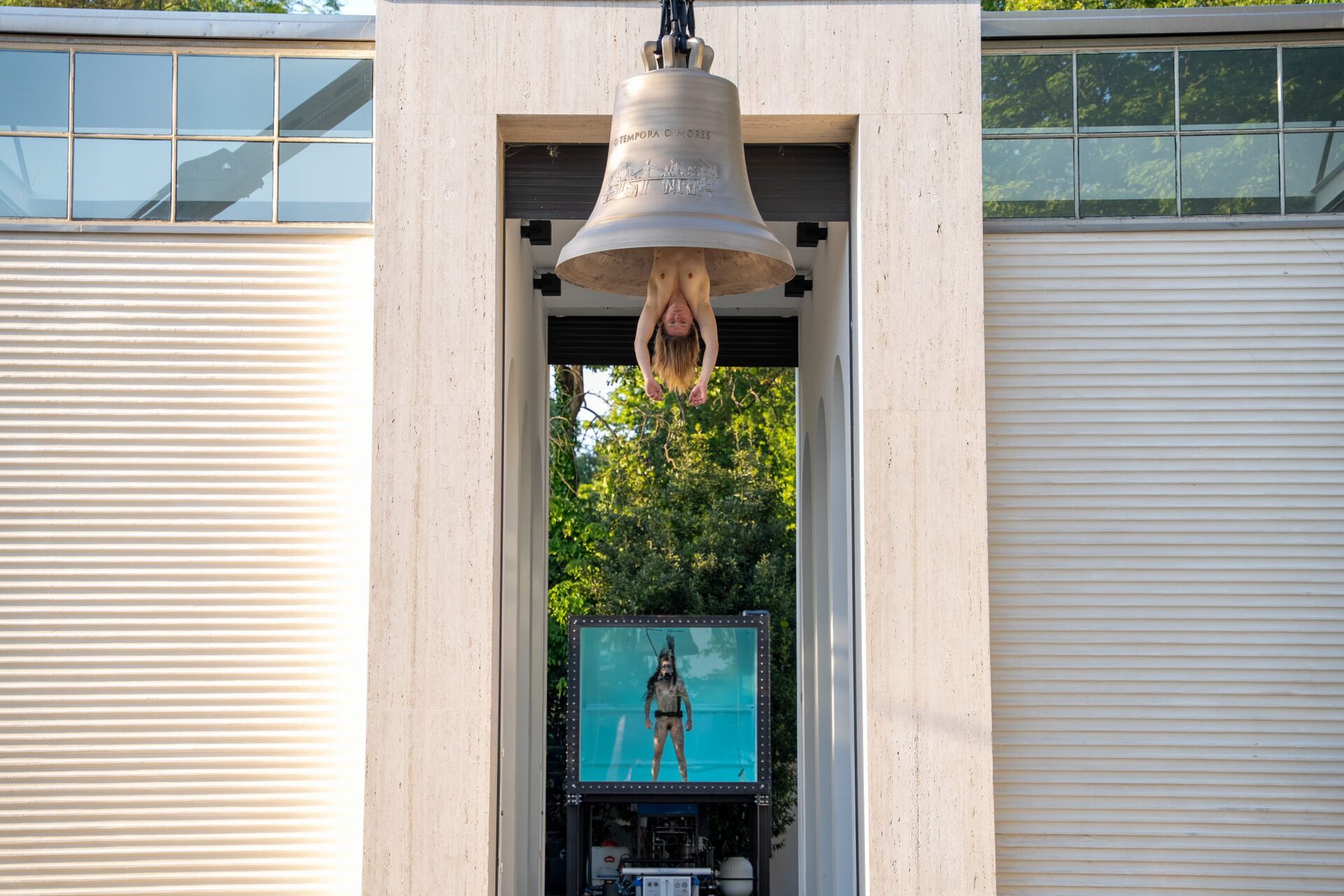
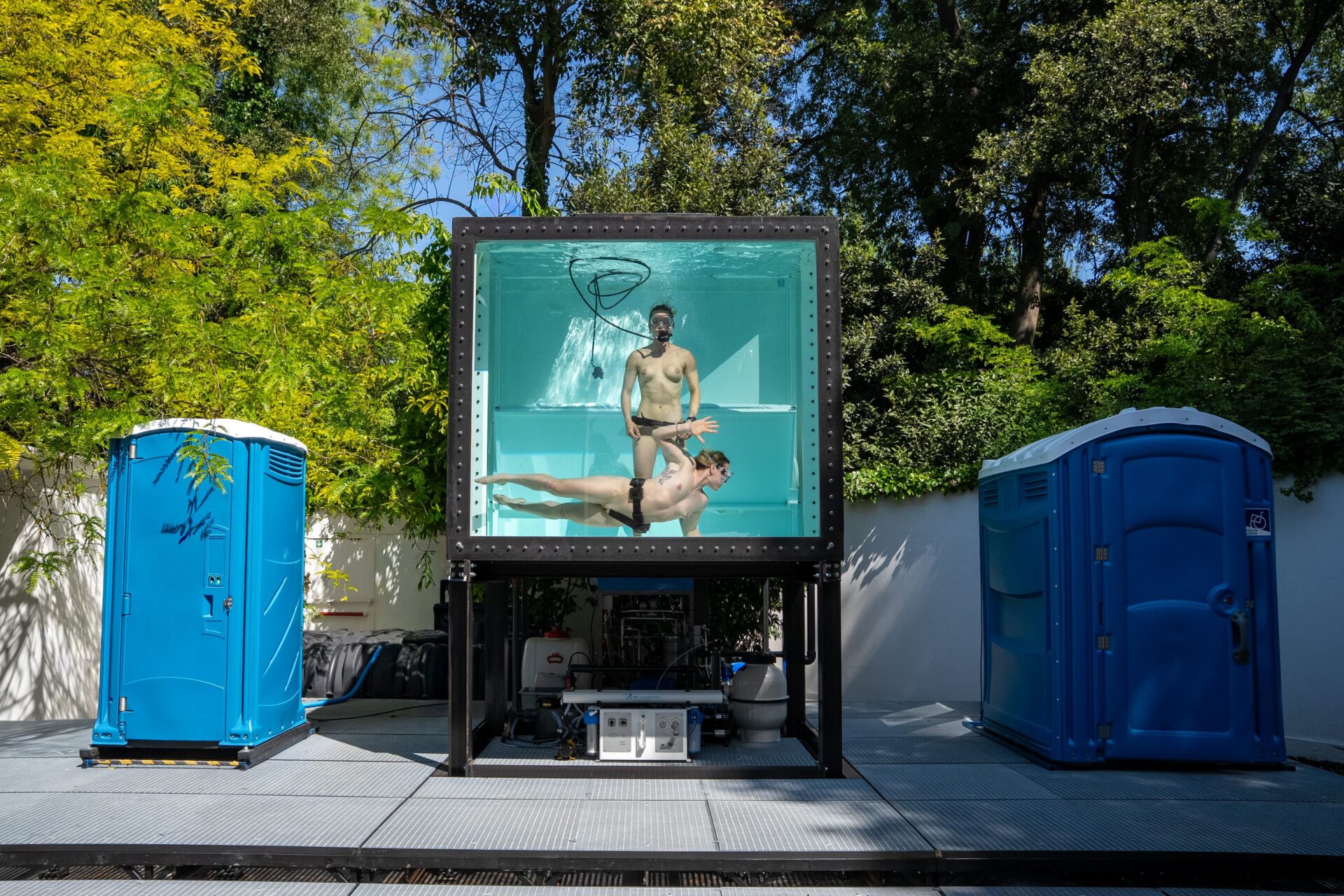
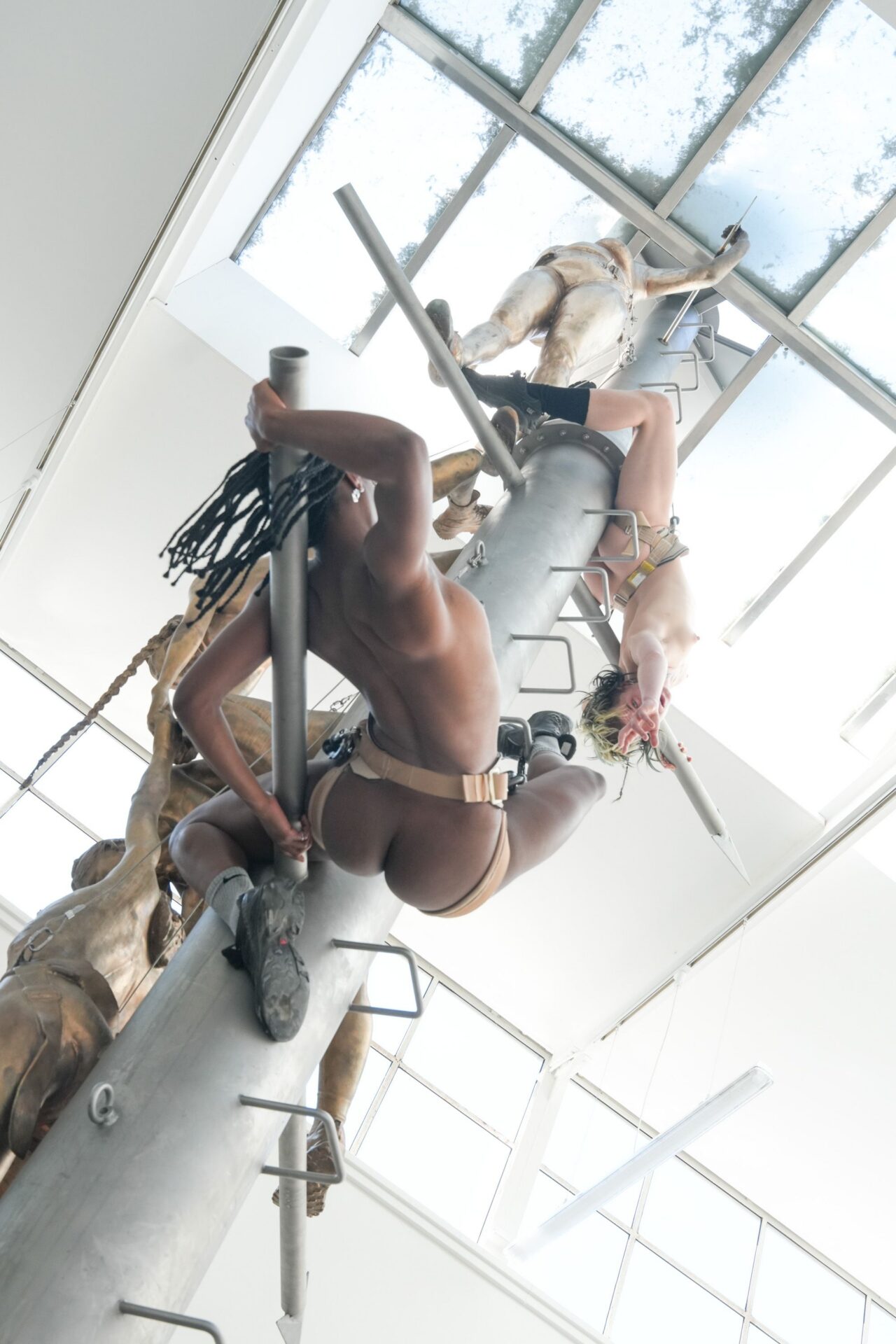
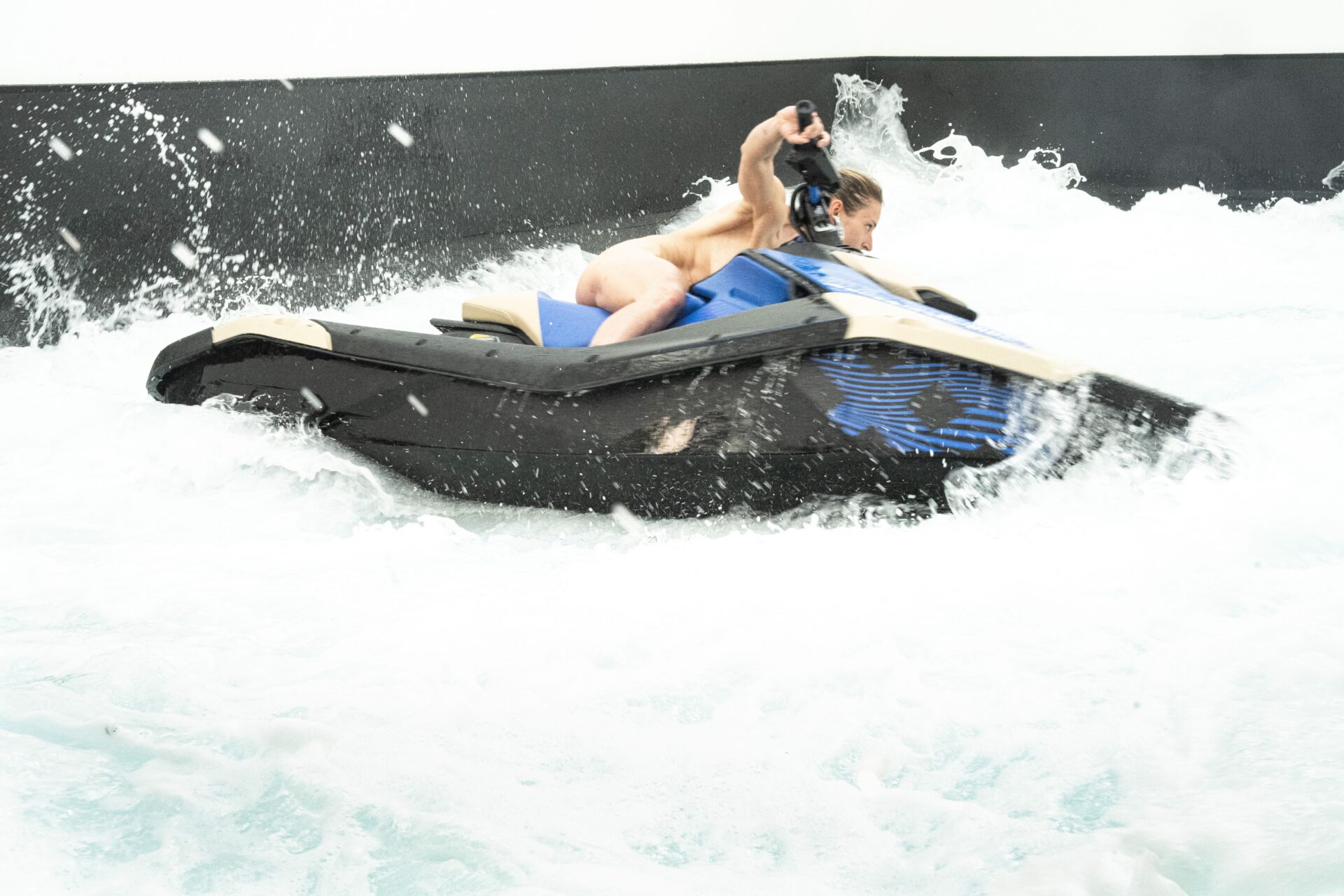
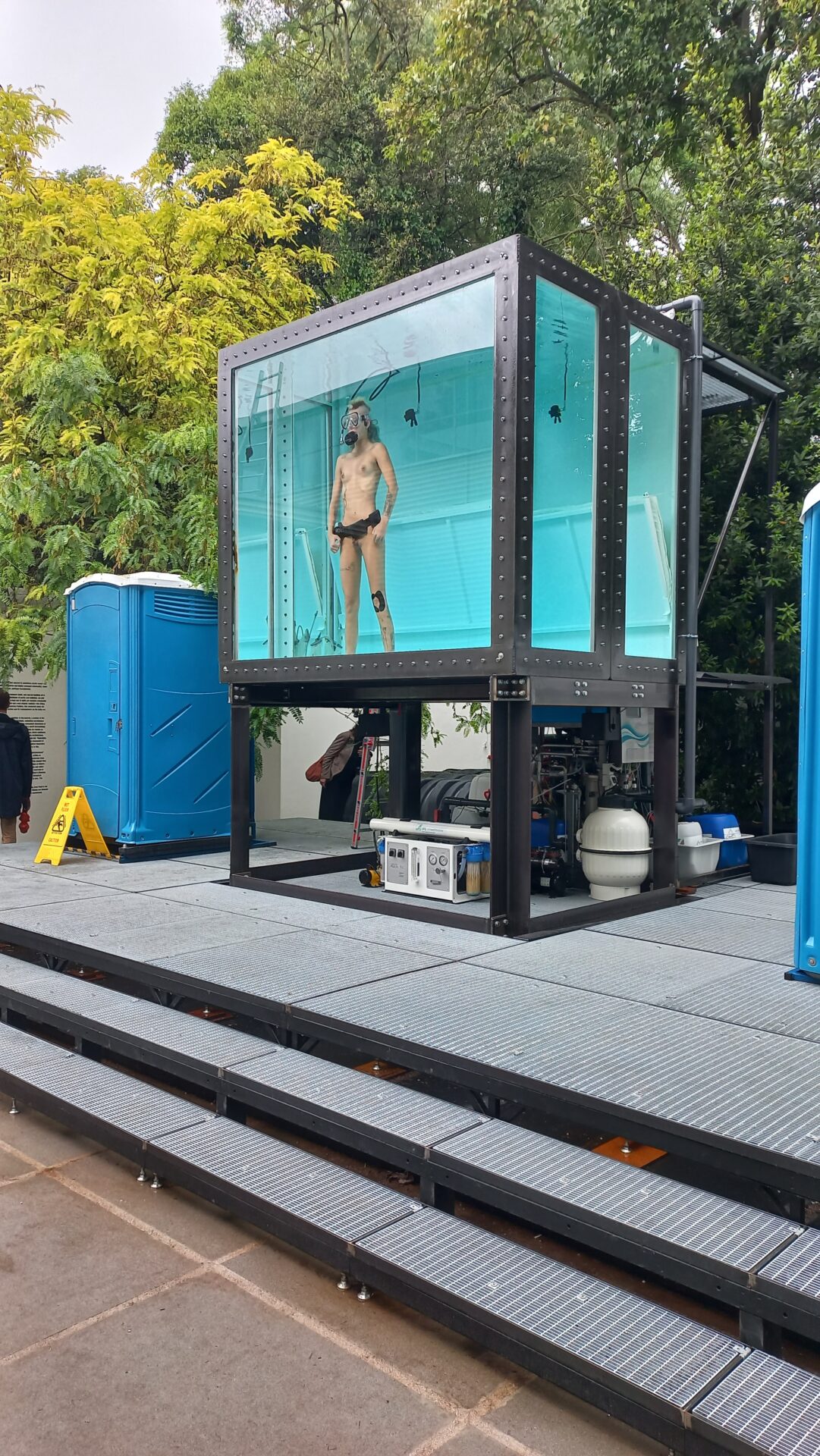
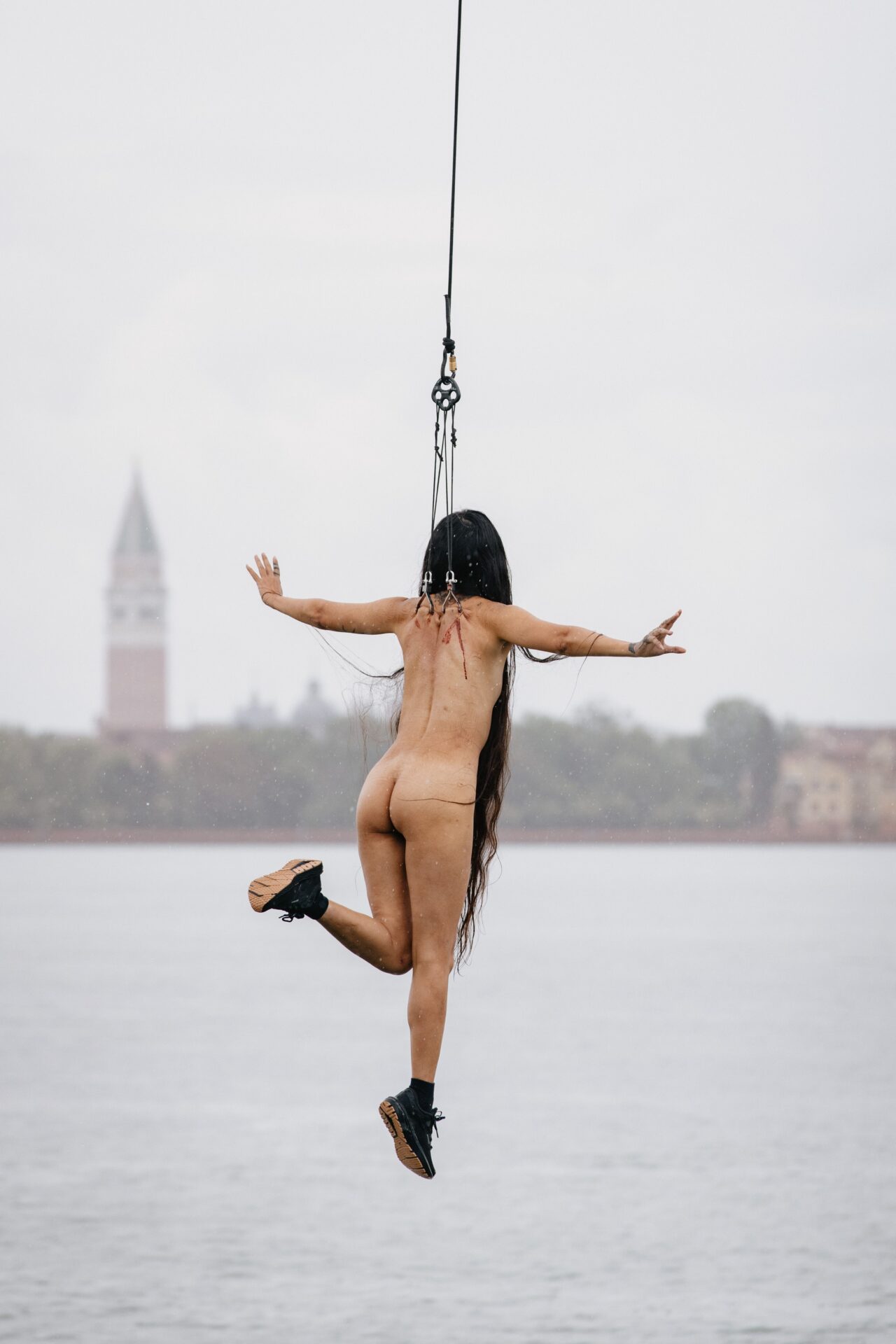
Within the context of the Biennale, hope feels like a bell jar: a fragile structure that makes the world sound more beautiful than it is
2. Maja Malou Lyse – Denmark, Giardini
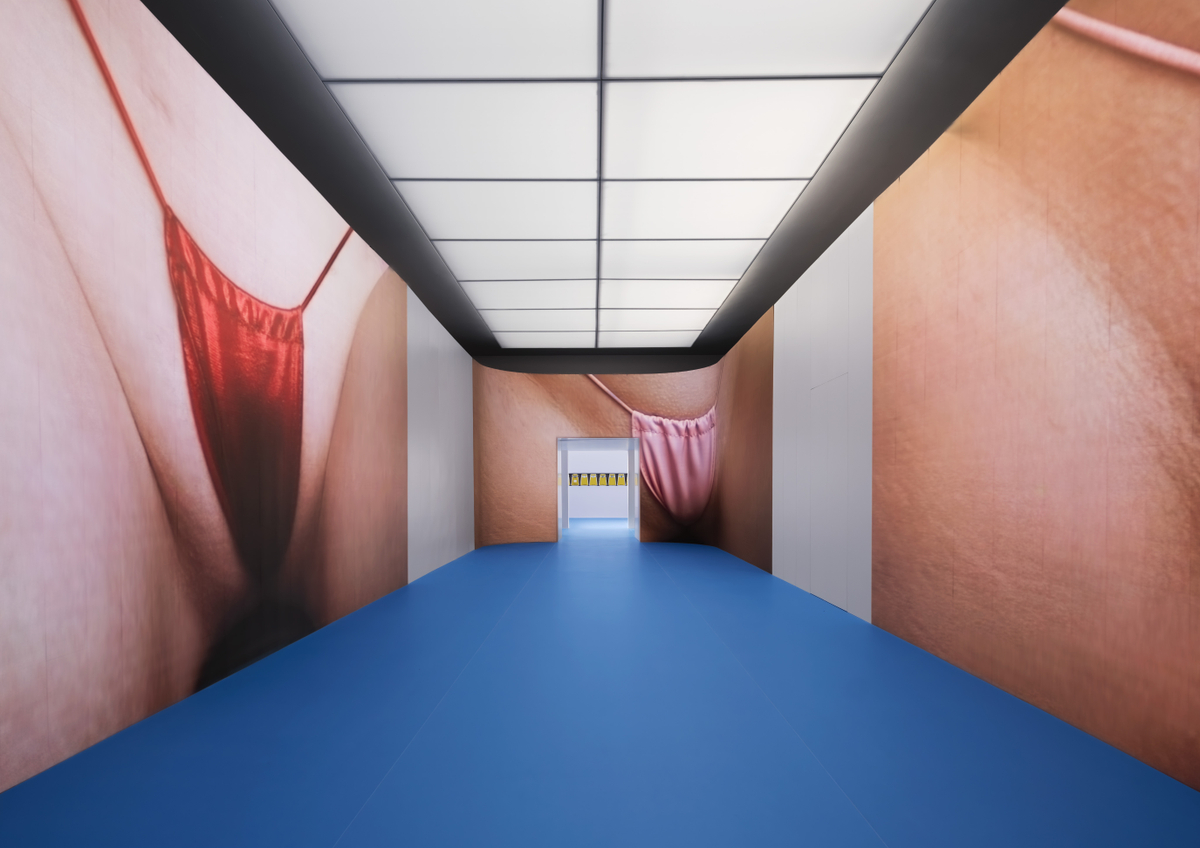
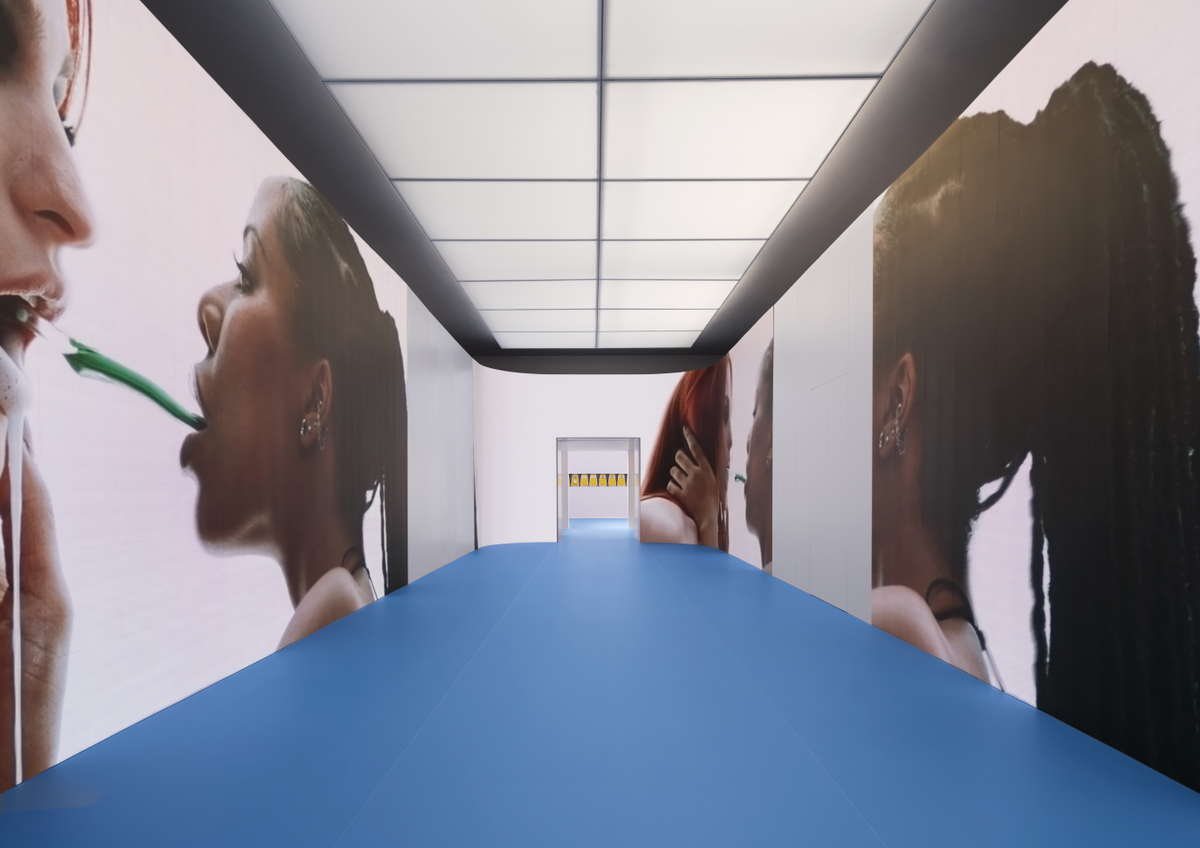
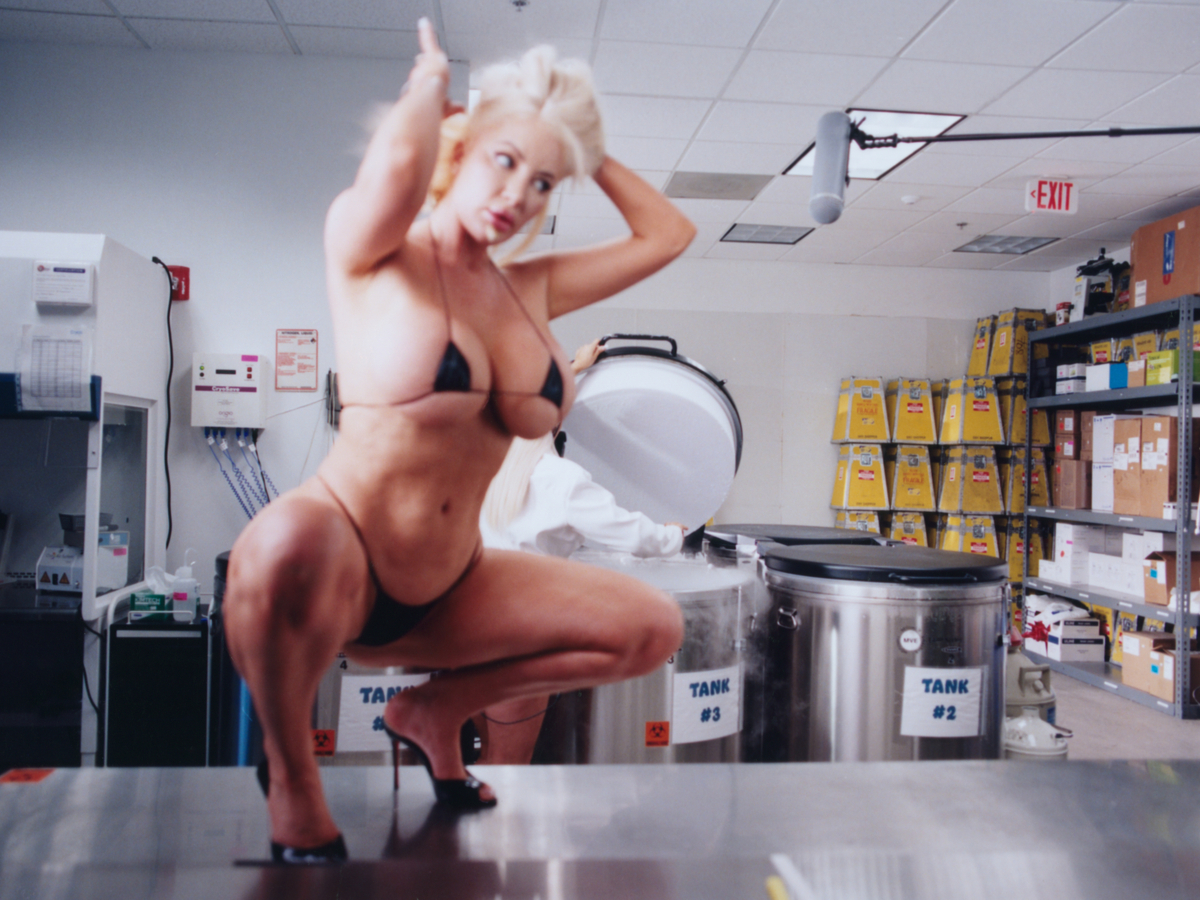
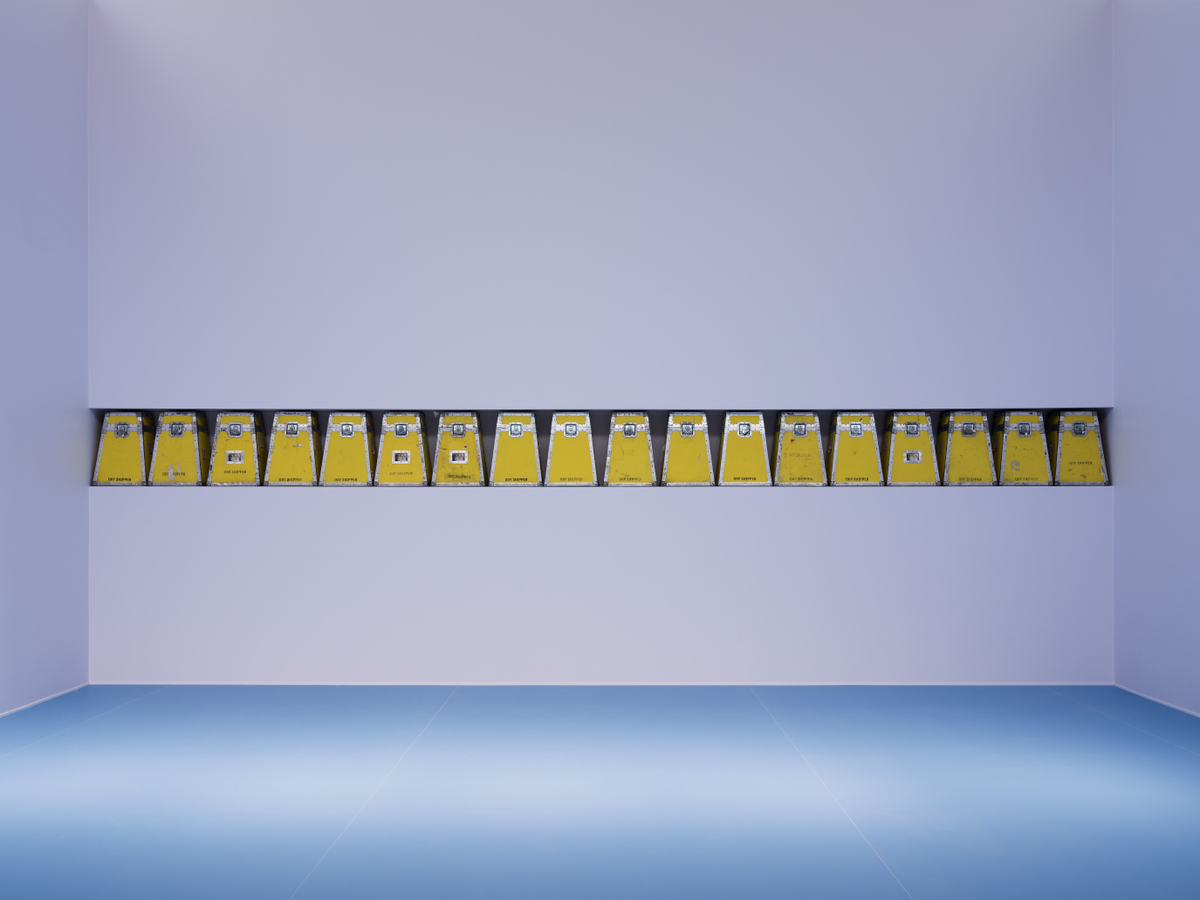
Maja Malou Lyse, the youngest participant at this year’s Biennale, presents what is perhaps the most radical solution to the fertility crisis: VR porn. Lyse became interested in research suggesting that pornographic images could measurably increase male fertility. This presents an uncomfortable paradox. Pornography, often seen as a symptom of alienation, exhaustion, and image addiction, suddenly appears here as a force capable of influencing the reproduction of the species.
In her immersive video work Things to Come, filmed in a fictional sperm bank, images of babies, bodies, stripteases, sperm races, and fertility data overlap to form a strange, at times almost convincing fantasy of the future. I had never heard of sperm races until now; it turns out to be a competition in which millions of sperm cells race against each other under a microscope, as if male fertility were a sporting event. See it as a provocation, see it as a critique of the manosphere, see it as a response to the crisis of excessive imagery. Because if the future of the species is partly shaped by screens, clips, data, and desires, then who or what is actually reproducing?
3. Ei Arakawa-Nash – Japan, Giardini
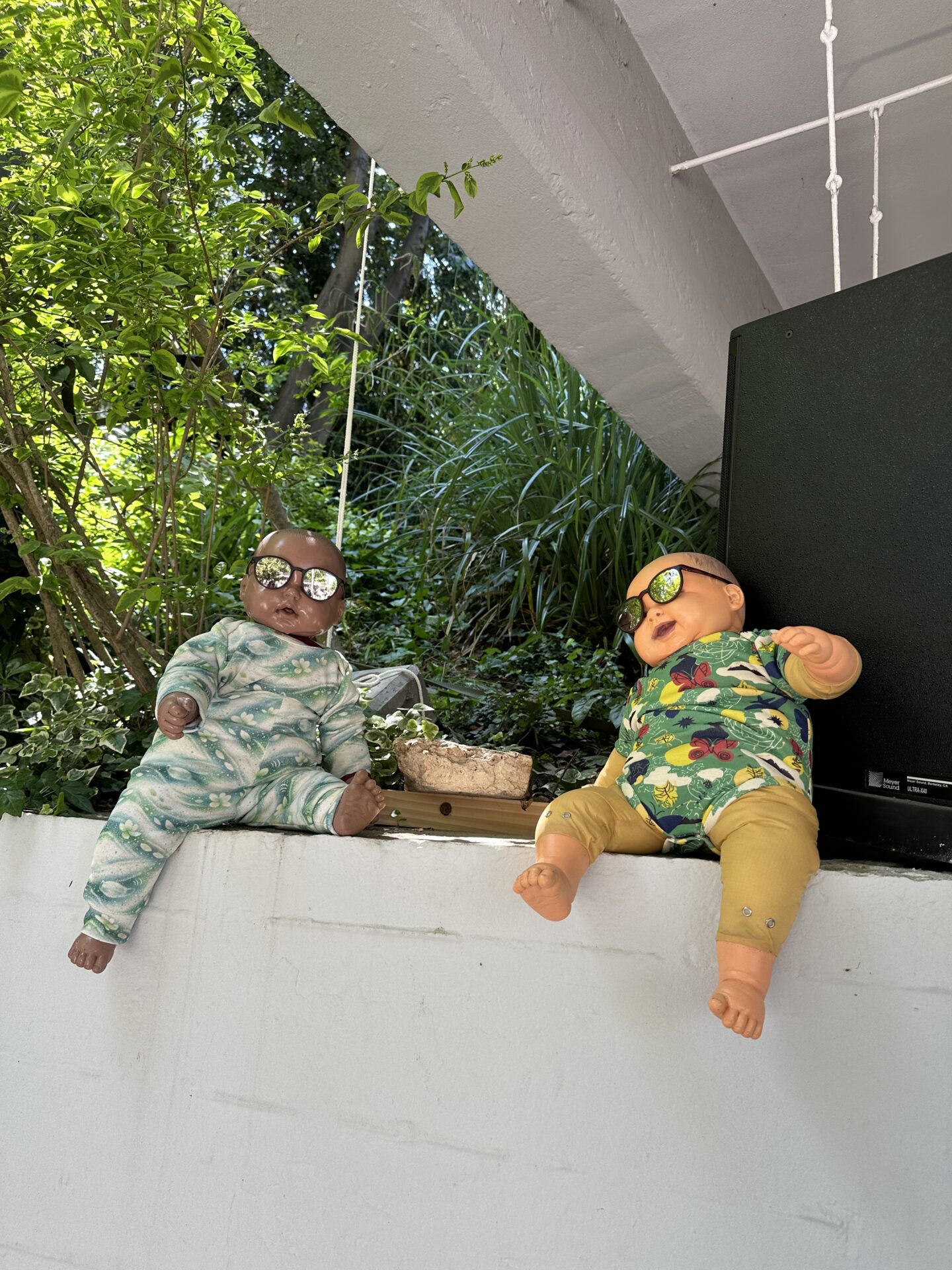
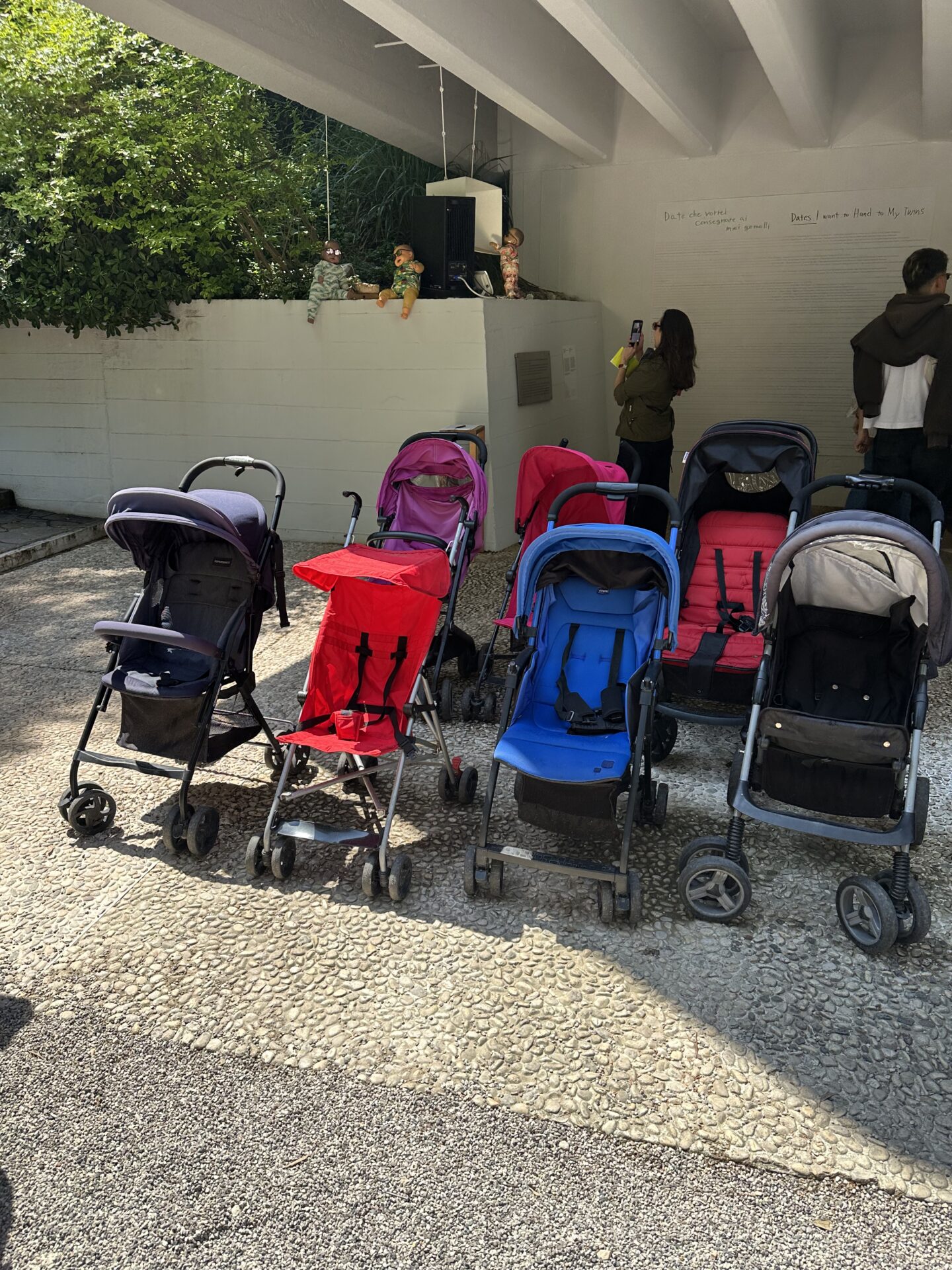
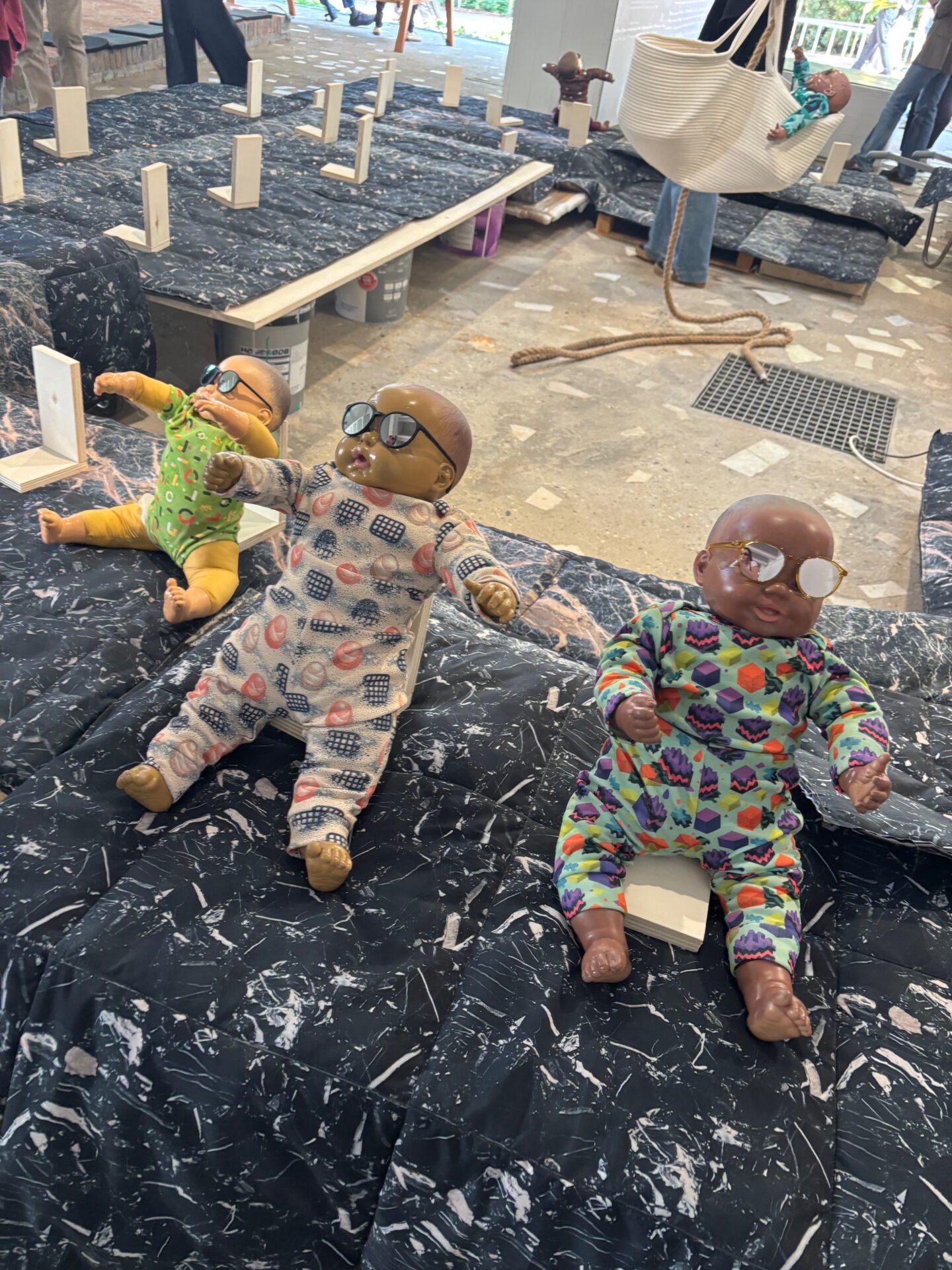
It’s just a short walk from sperm races to babies in the Giardini. In the Japanese pavilion, reproduction is no futuristic fantasy: there are babies in abundance – 208, to be precise. Anyone who wishes to, is handed a doll to carry around the pavilion. Upstairs in the presentation, you are asked to change diapers of your temporary child; a poem appears via a QR code in the nappy. It is a magnet for selfies, but at the same time, it is also quite disarming to walk around with a baby in your arms for a while. The dolls have a realistic weight – I found it quite heavy to carry one around the whole time – which makes the experience more than the gimmick it might initially seem to be. A little later, I hear someone respond emotionally, because she herself had not been able to have children.
4. Farah Al Qasimi – United Arab Emirates, Arsenale
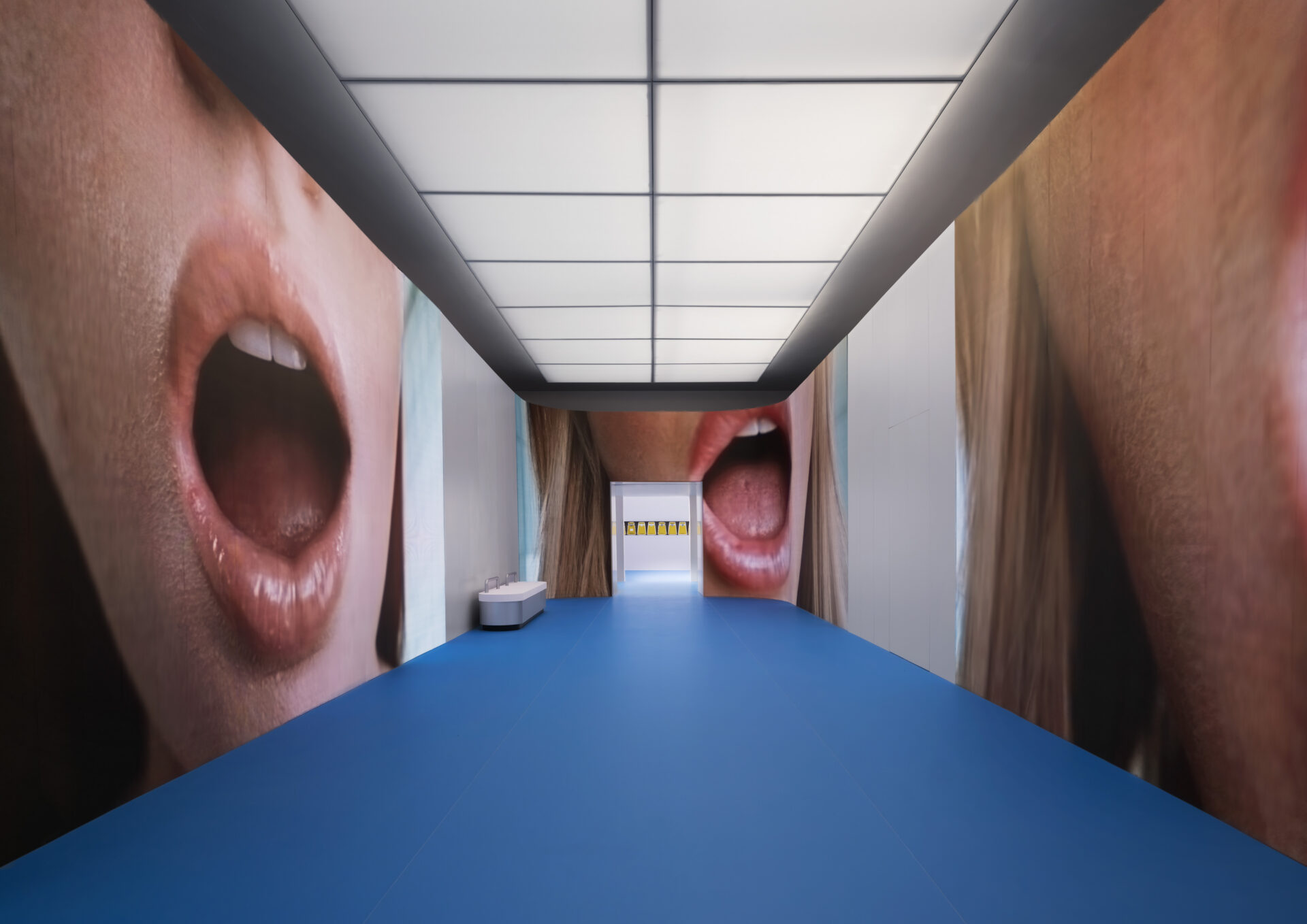
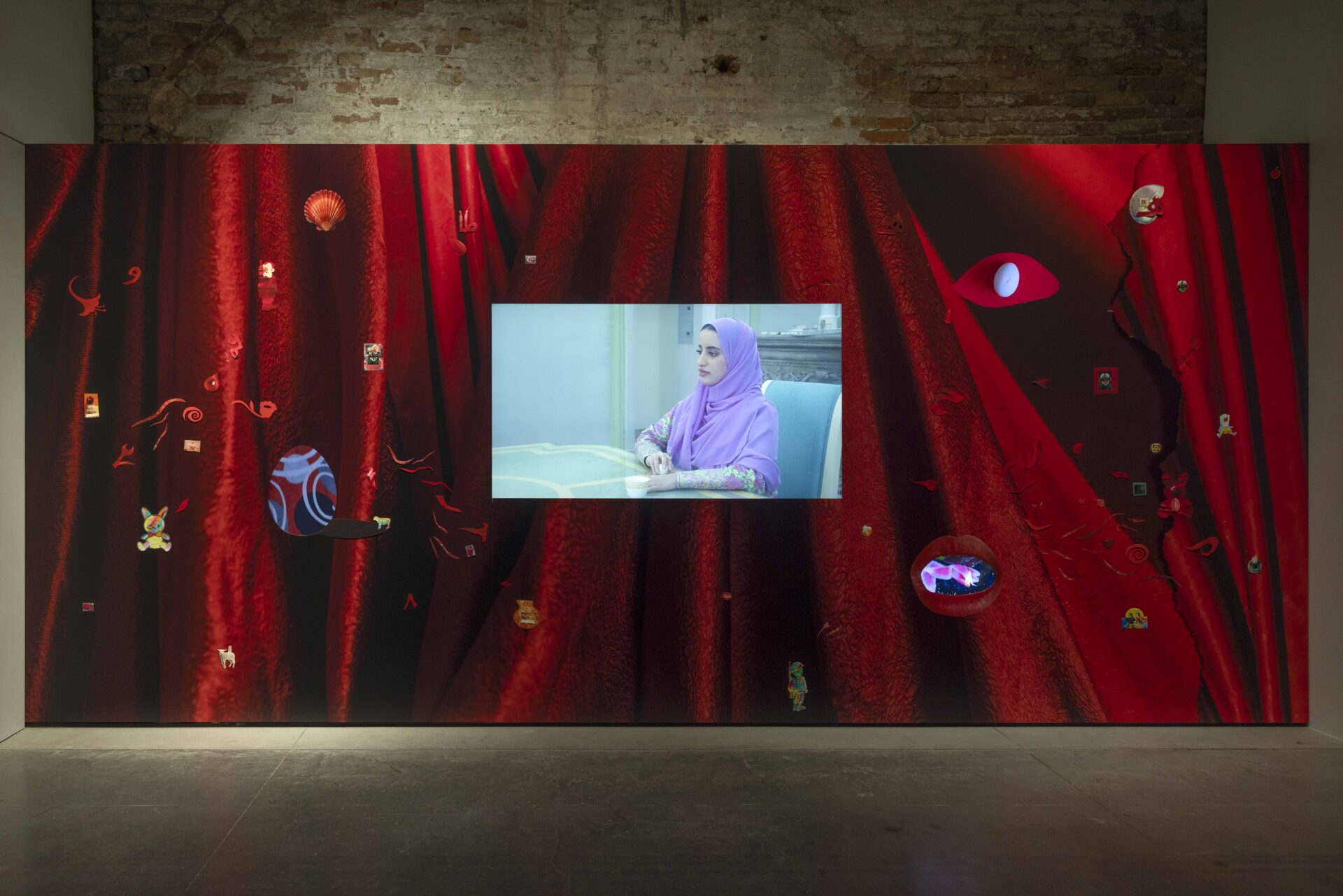
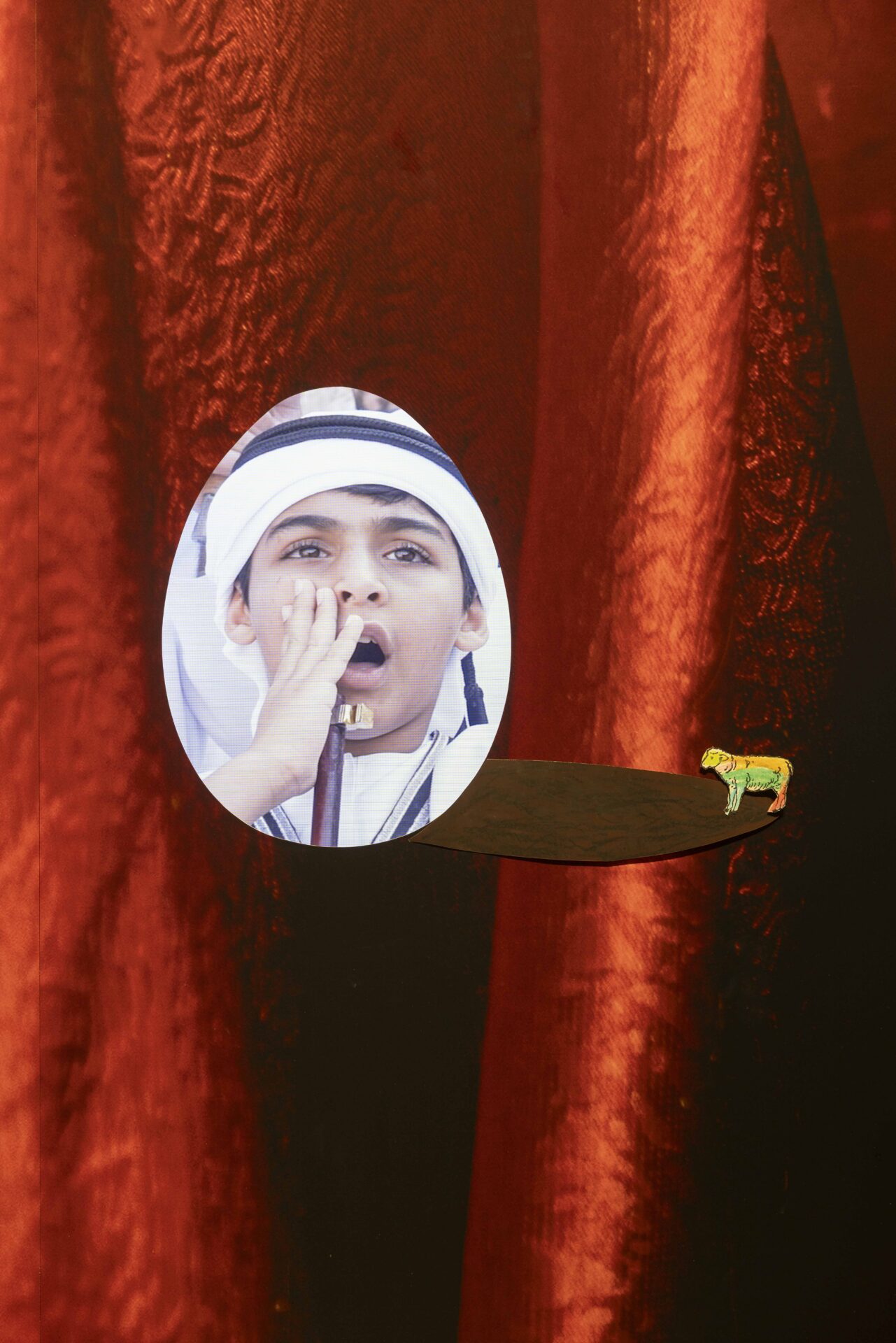
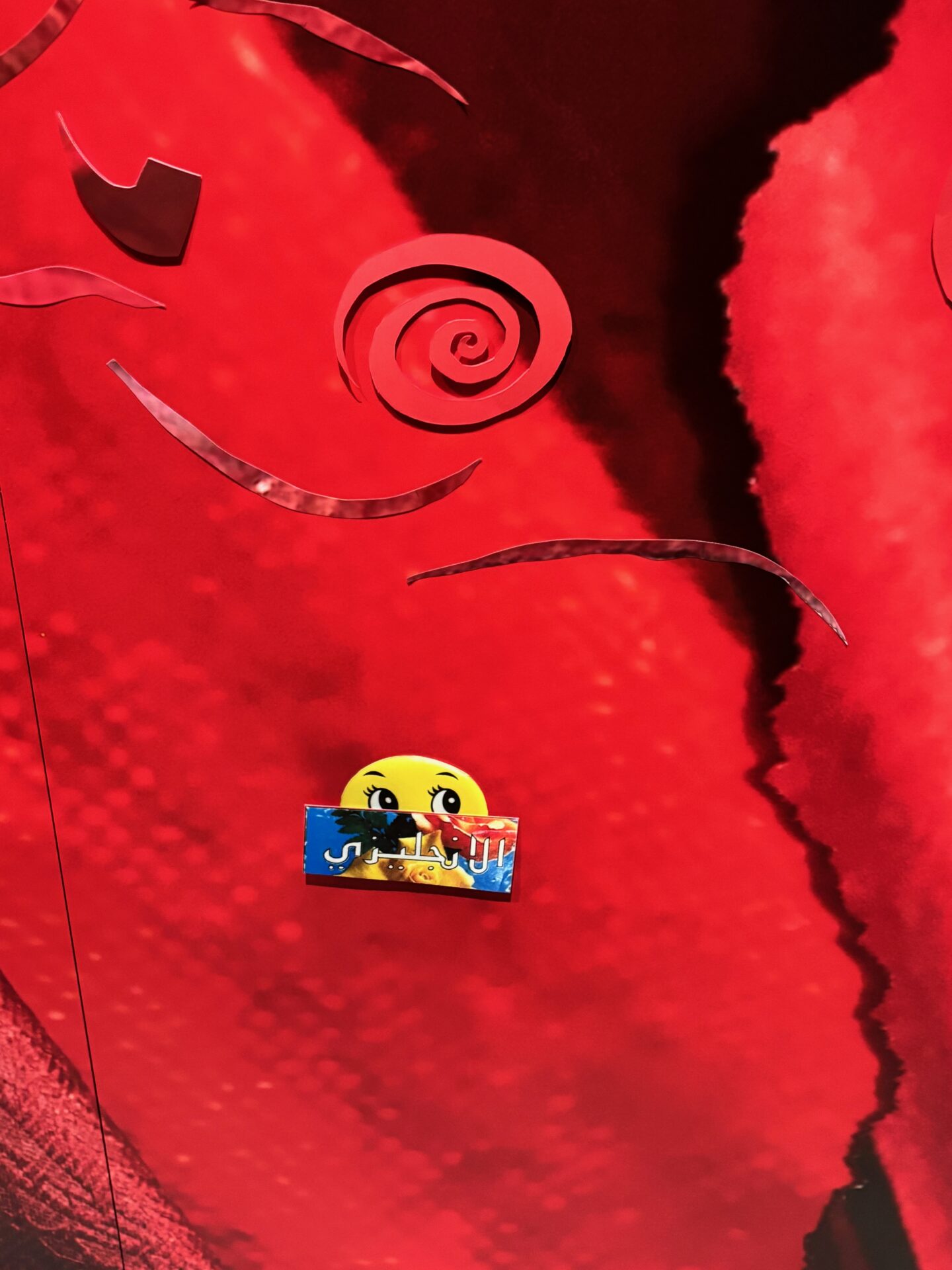
In Farah Al Qasimi’s work, part of ‘Washwasha’, the presentation by the United Arab Emirates, the gaze shifts to the child. ‘Washwasha’ is an Arabic onomatopoeic word for whispering: a word whose meaning lies in the sound itself – try saying it out loud. Her multimedia installation The Curse unfolds like a surreal diary of childhood memories: pigeons, interiors, headless camels, eyes and mouths as mini video screens, texts in English and Arabic, and children’s drawings – including some by Al Qasimi herself when she was five. Phrases such as ‘I was born and I died in the same house’ and ‘I brought suffering to all my relations’ sound as if a child has accidentally uttered a curse. The Curse is about the way children can feel guilt without being able to place it, and how misunderstandings, translations, and family stories settle in the body. The child may be quiet, but already sees too much. Amid all the grand gestures, Al Qasimi’s work stands out as a whisper that continues to resonate.
5. Janis Rafa, Baby I’m Yours, Forever – Canicula, Fondazione In Between Art Film
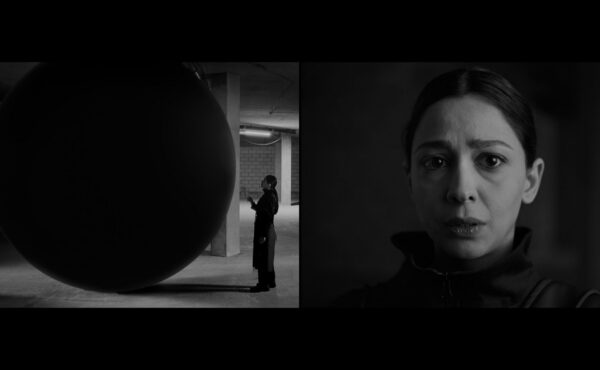
Baby I’m Yours, Forever (2026) is part of Canicula, the group exhibition by Fondazione In Between Art Film in the sixteenth-century Complesso dell’Ospedaletto. The title Canicula refers to the dog days, the hottest period of summer. In the exhibition, this heat becomes a metaphor for the present: a time of extreme conditions, in which bodies, systems, and landscapes come under pressure. That atmosphere is translated into the location through warm lights that guide you through the darkness. Impressive works range from P. Staff’s stroboscopic images and soundtrack (Terminal Lucidity, 2026) to Lawrence Abu Hamdan’s investigation of sound as a weapon (450XL: The Story of a Fugitive Sound, 2026), but with Janis Rafa, disruption becomes most bodily: through flesh itself.
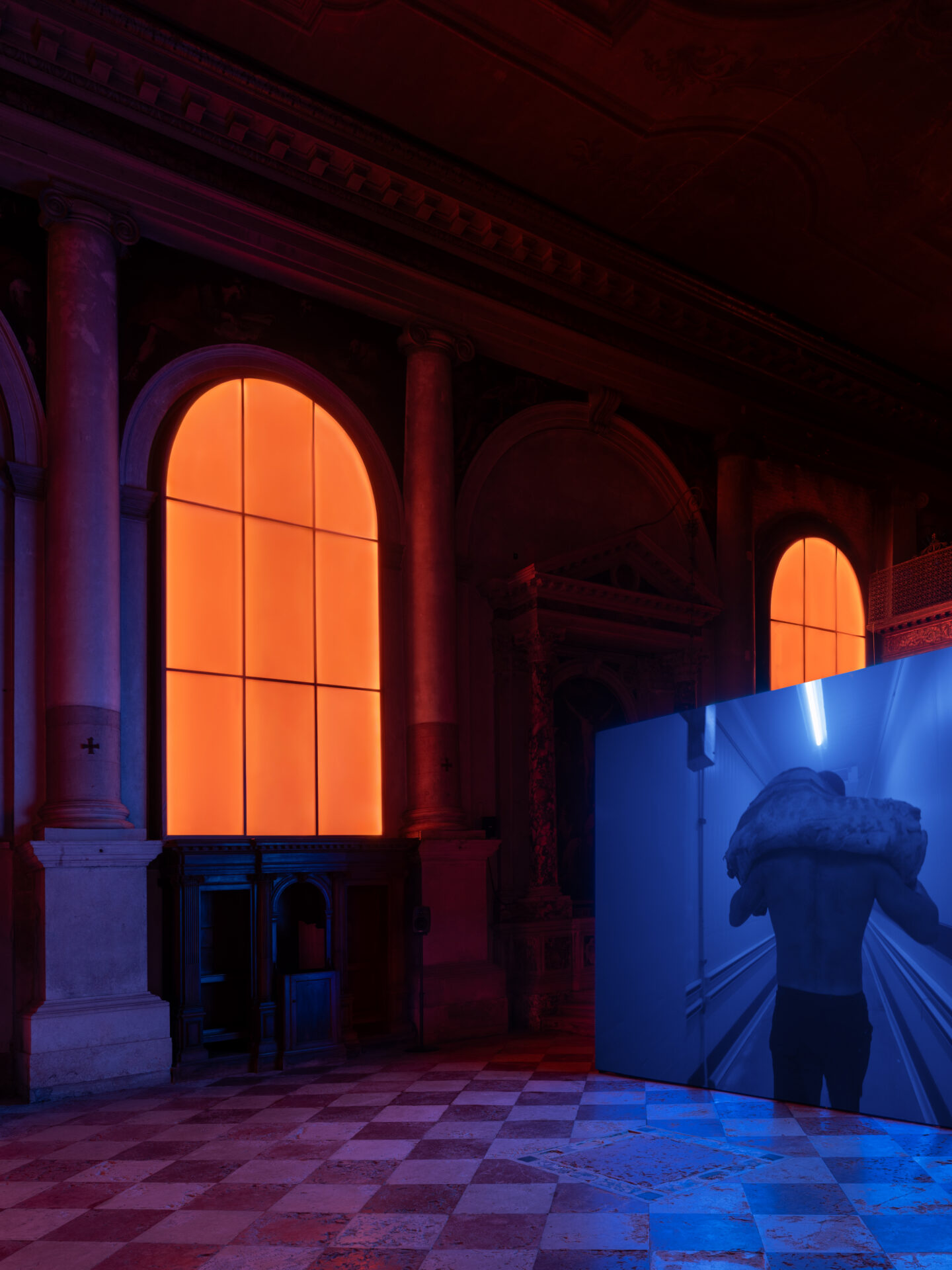
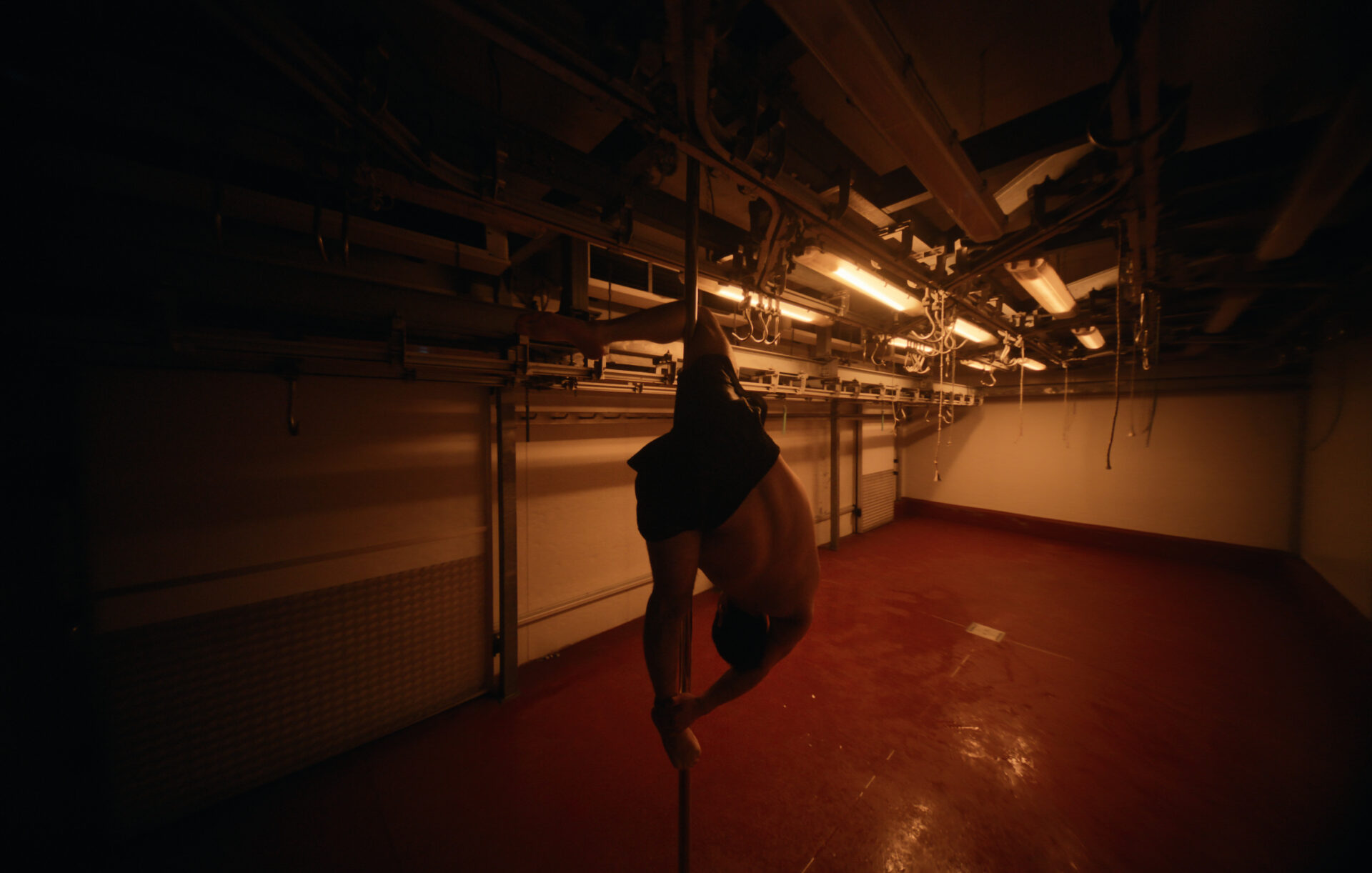
The 17-minute video installation Baby I’m Yours, Forever takes place in a meat-processing factory. We see a cold room being cleaned. One image seems to crystallise the work’s entire logic: a human body hanging like an animal from a pole in the centre of the room. The film is full of metaphors about life and death, but above all about the human condition itself: flesh that desires, flesh that is vacuum-packed and categorised, flesh that no longer knows whether it is still a body or already a product. Everything awaits consumption.
On the one hand, the work contains moments of striking, magical-realist beauty, such as the scene where milk seeps down a blood-coloured staircase, as though it is almost flowing inward. At the same time, it feels deeply oppressive. We are held inside Rafa’s long shot, unable to look away. The dogs eating and licking the meat introduce an intimacy familiar from her earlier work. I had to think of her film Kala azar, which had its world premiere at IFFR in 2020, where care for animals, death, and bodily proximity are similarly entangled in an almost magical register. Here too, the licking sounds of the dogs are almost unbearably close: wet, rhythmic, bodily. In an edition where bodies tries to break free – naked, exhausted, enveloped, displaced – Rafa shows how limited that freedom really is. The body wants to move, feel, and escape, yet again and again it is trapped within the systems that consume it.
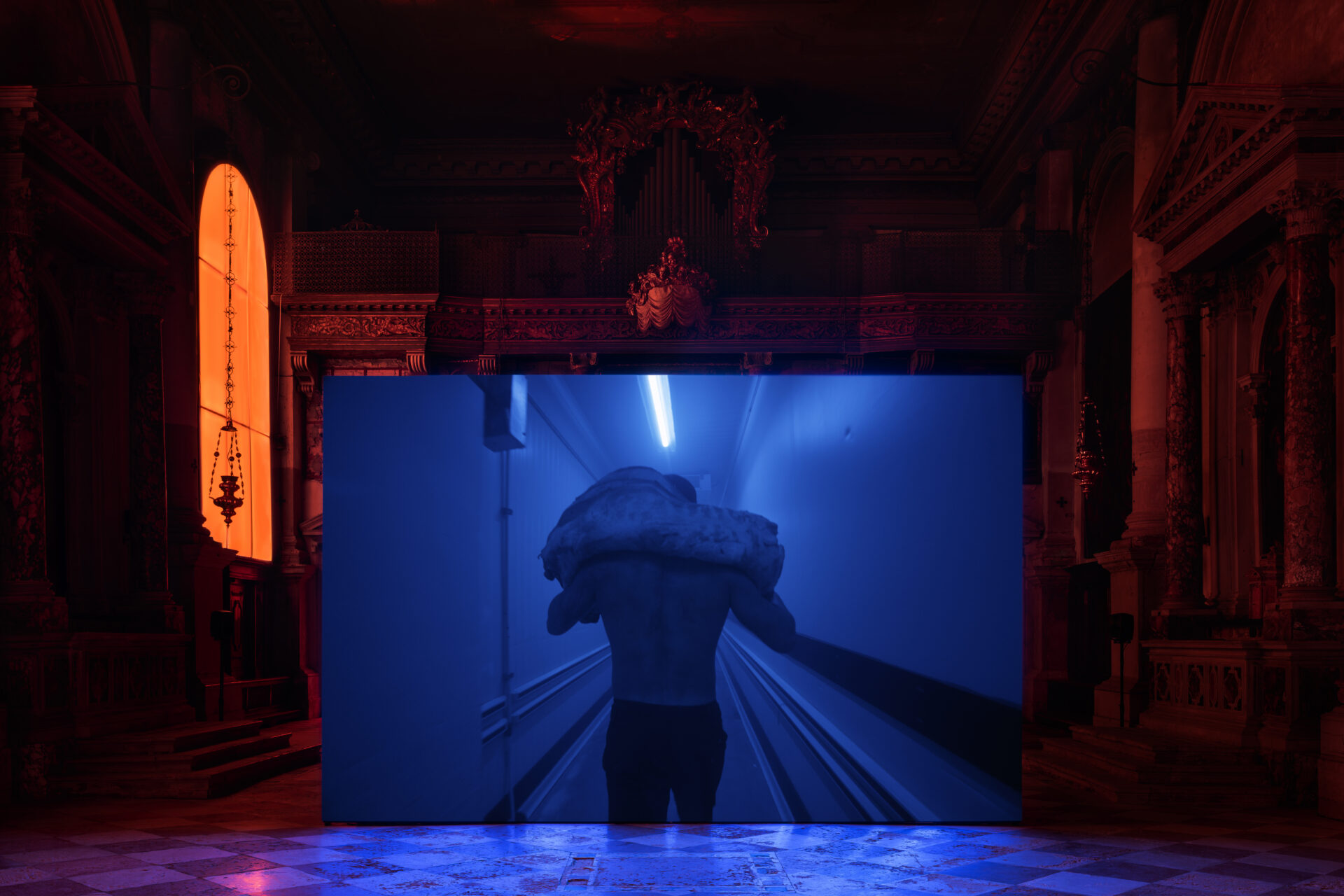
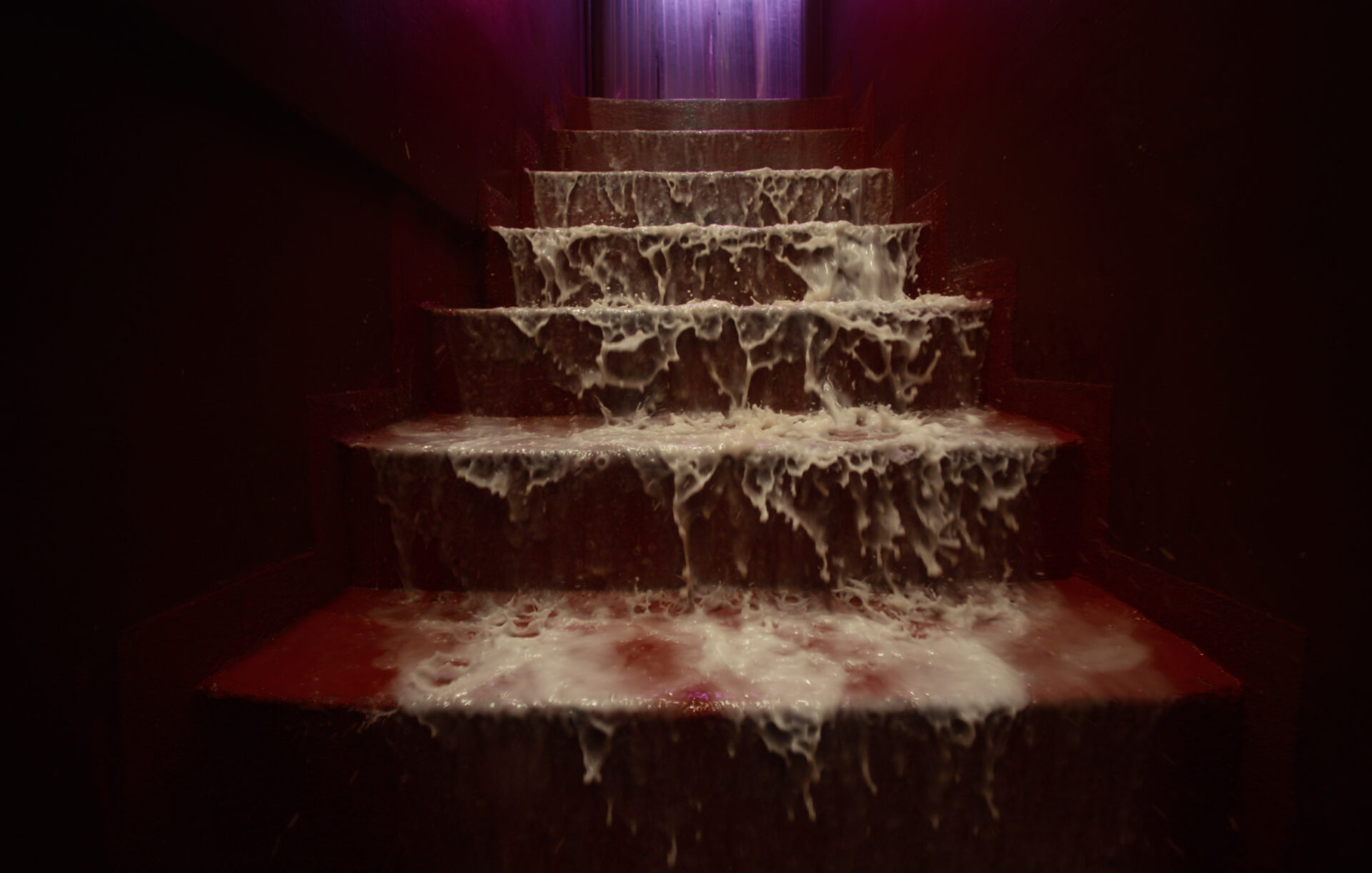
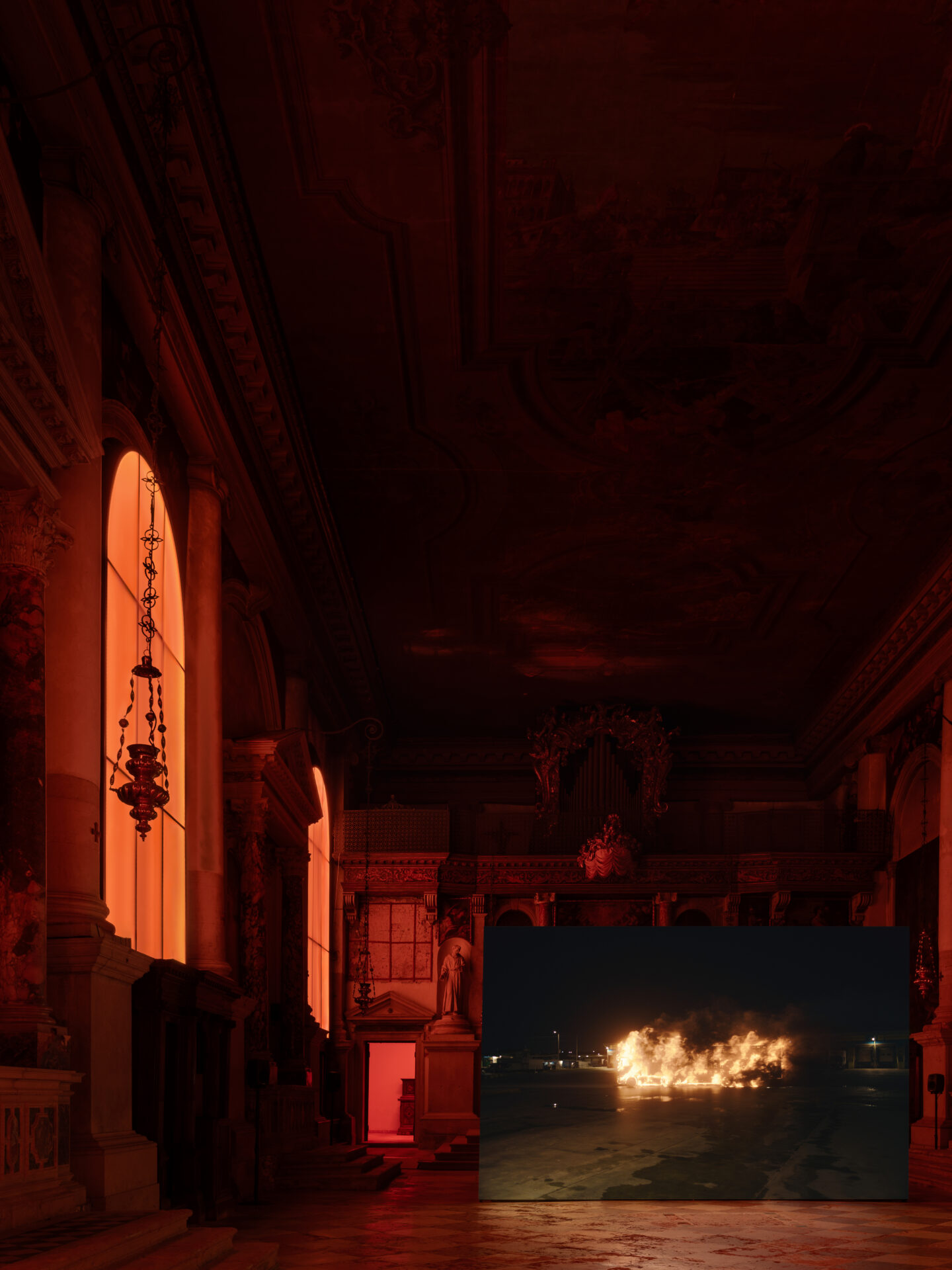
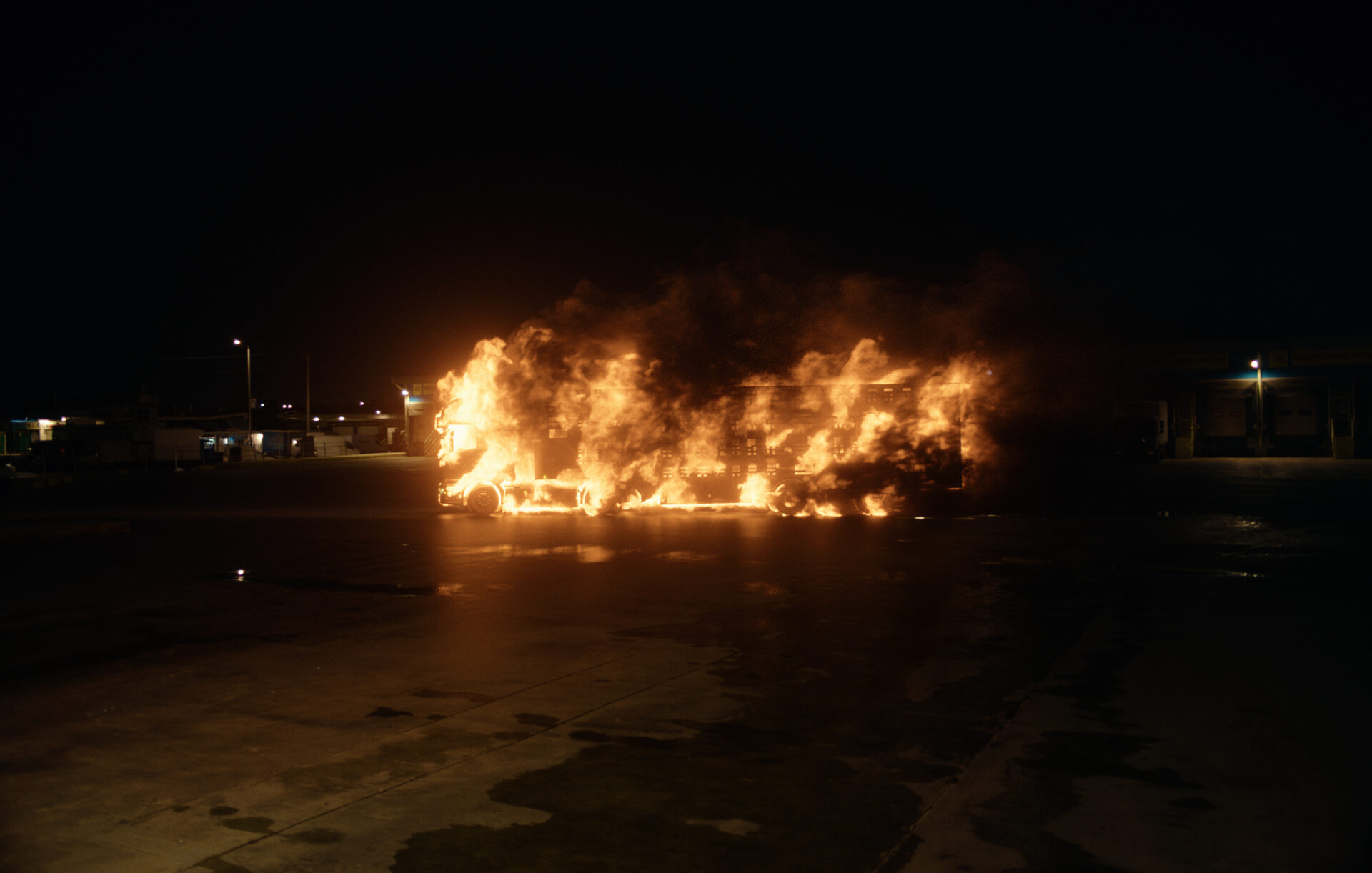
The body wants to move, feel, and escape, yet again and again it is trapped within the systems that consume it
6. Aline Bouvy – Luxembourg, Arsenale
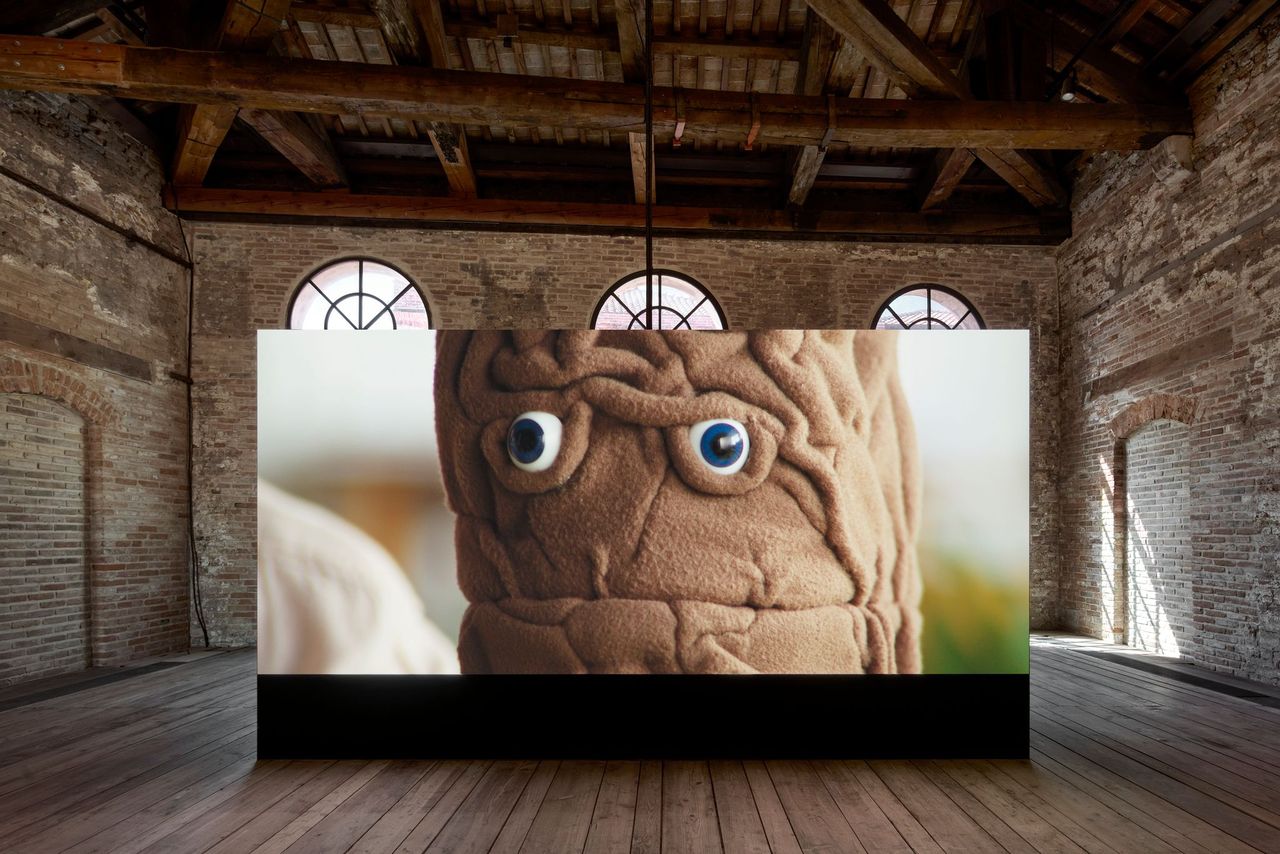
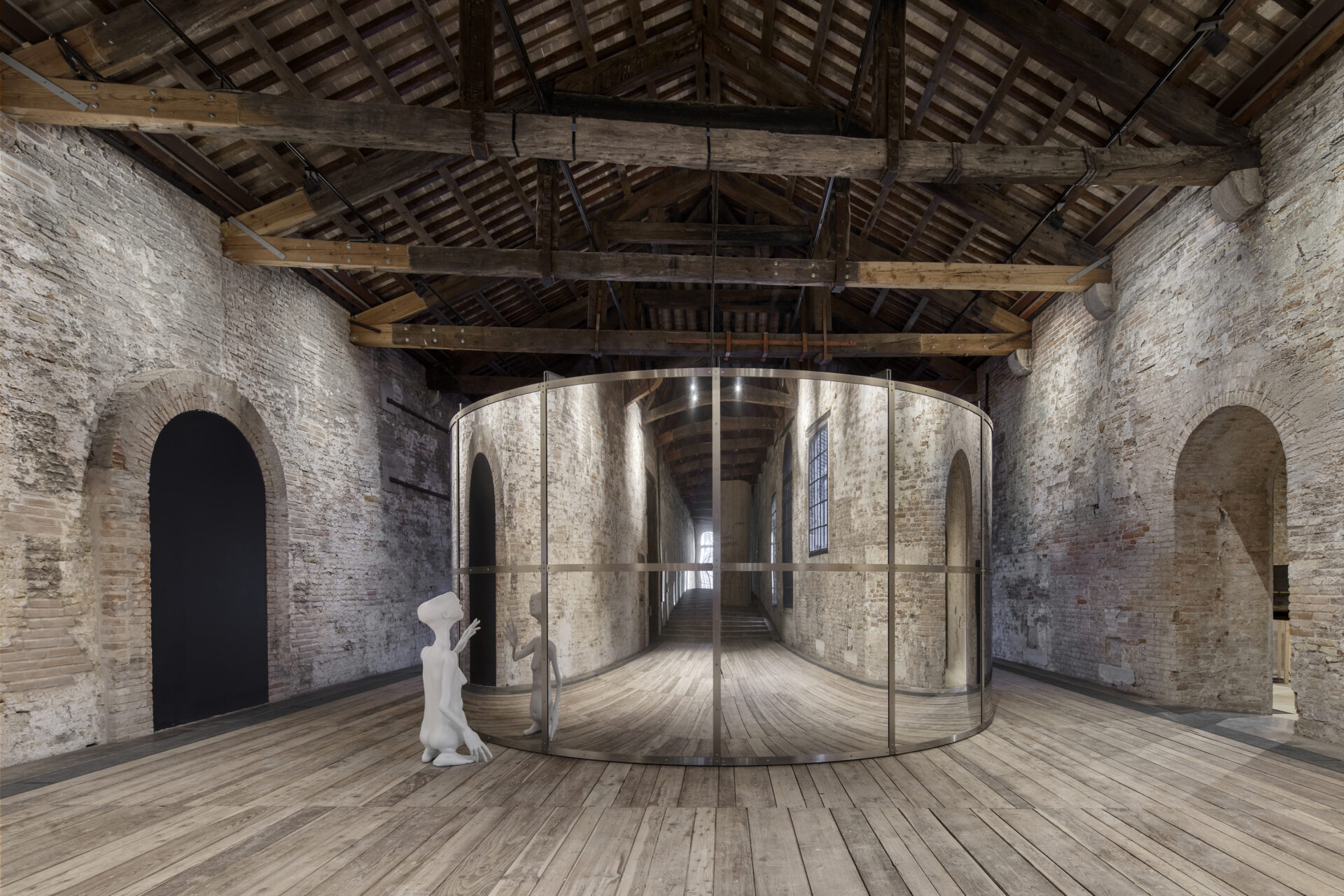
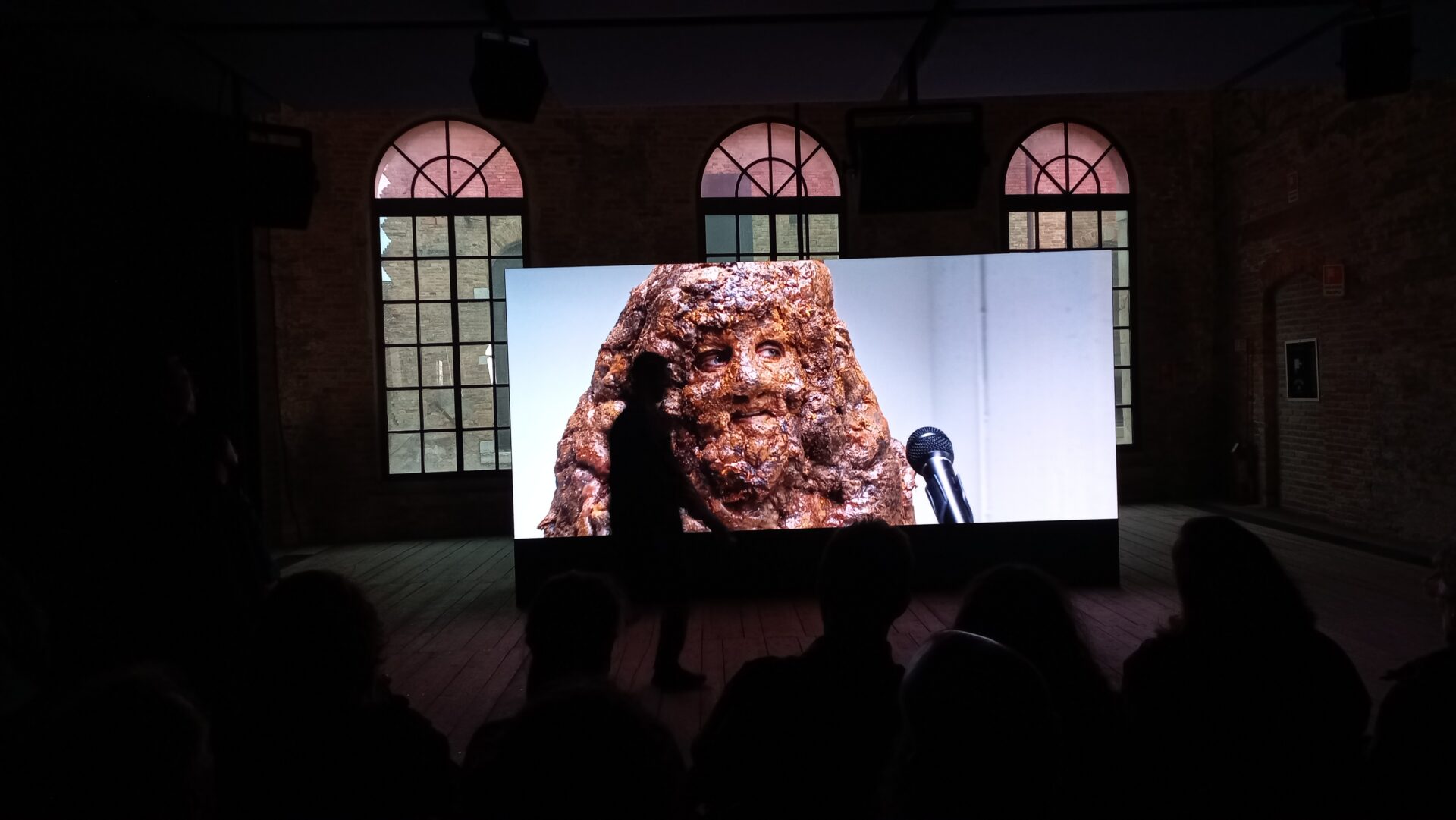
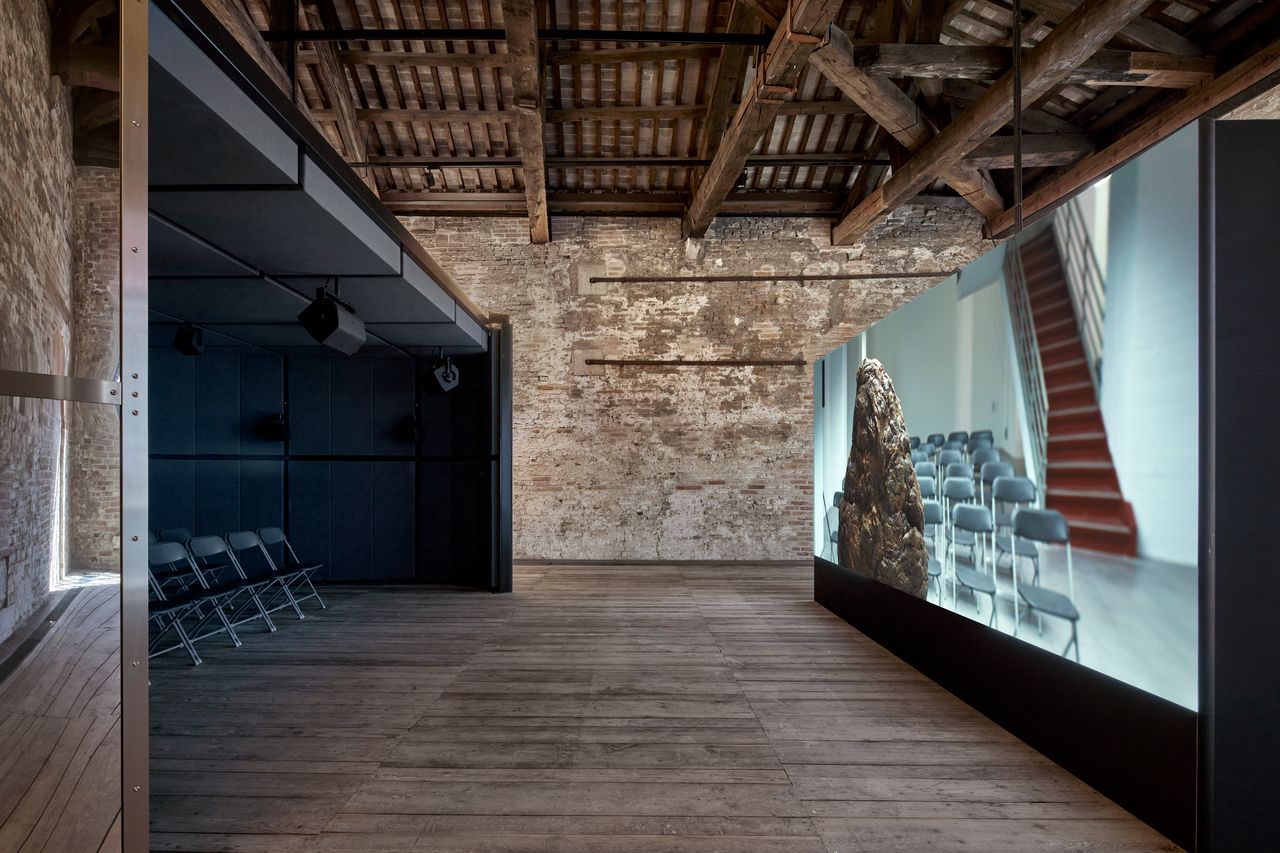
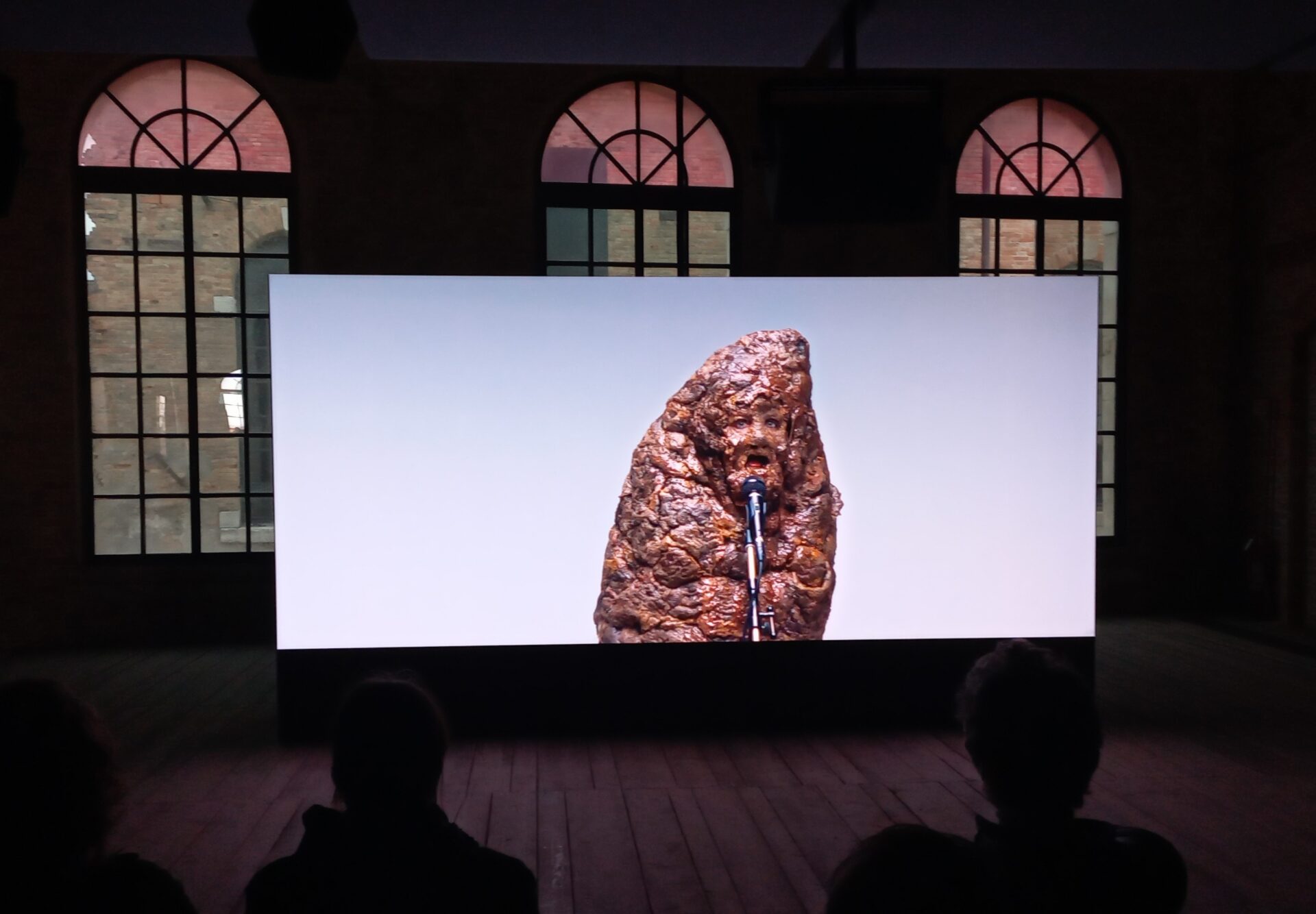
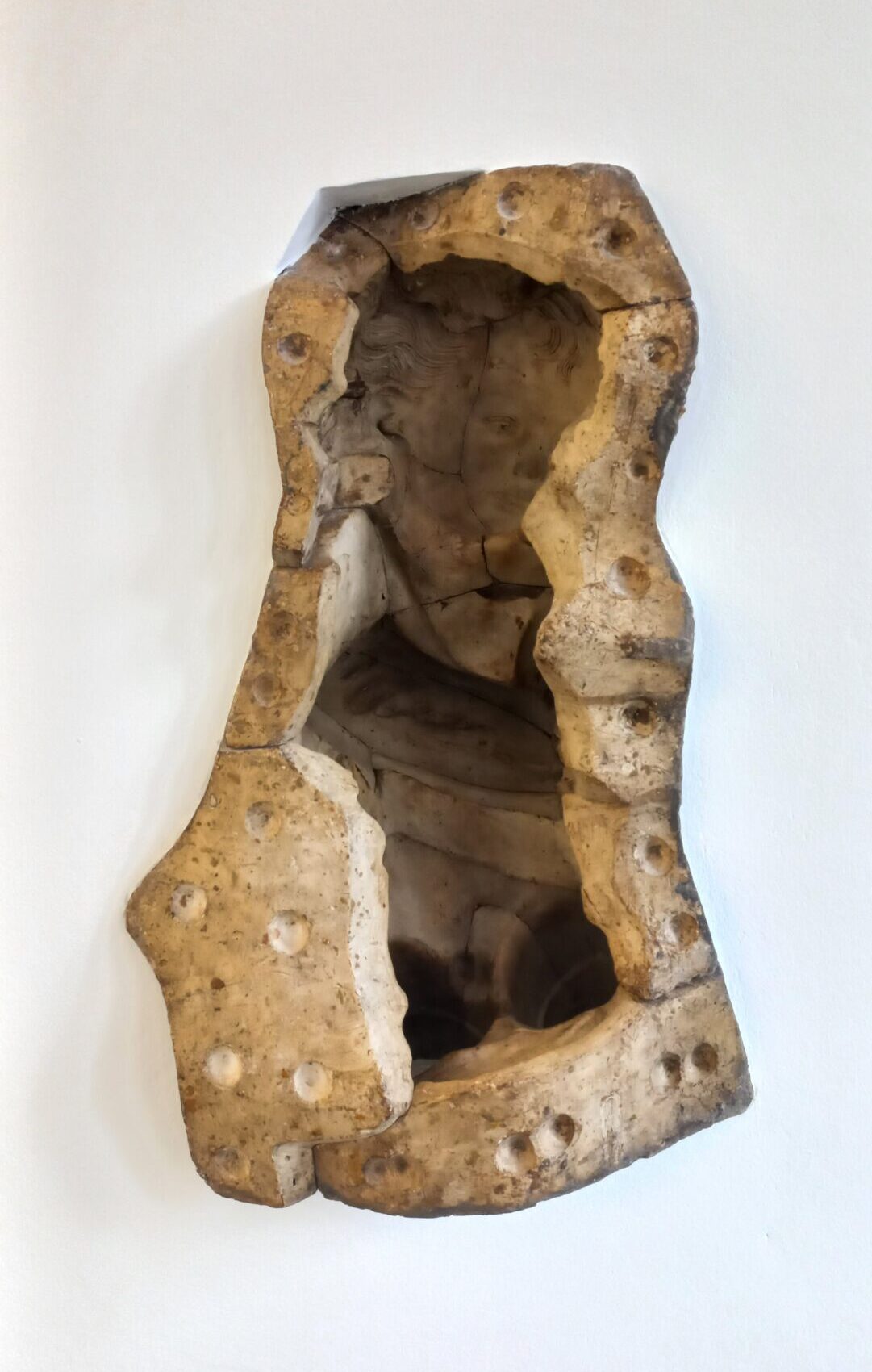
Within this bodily edition, Aline Bouvy’s work fits almost too perfectly. After Holzinger’s ‘piss and shit’ and Rafa’s vacuum-sealed meat, Bouvy’s La Merde brings the body’s most rejected and shame-laden matter to the surface. She turns the turd into a character, or perhaps turns the character into a piece of shit, giving it absurd dialogues and a strange theatrical presence. Bouvy is not the first artist to approach excrement as charged bodily material. Her work calls to mind Kiki Smith’s Tale from 1992, in which a naked woman crawls across the floor on all fours, dragging a trail of excrement behind her. Surrounded by reflective architecture, you are first confronted with your own image before encountering the film itself; you have to circle around it, almost physically negotiating your way in.
7. Lydia Ourahmane, Nicoletti Fiorucci Foundation
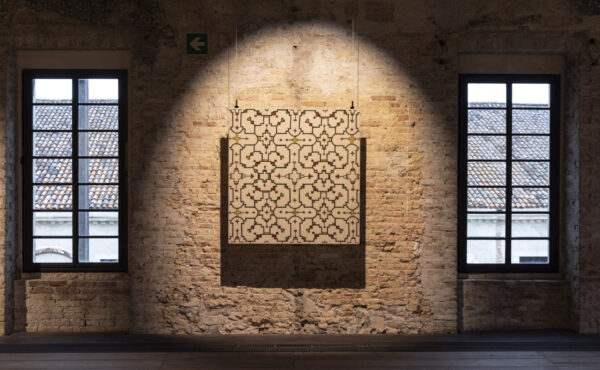
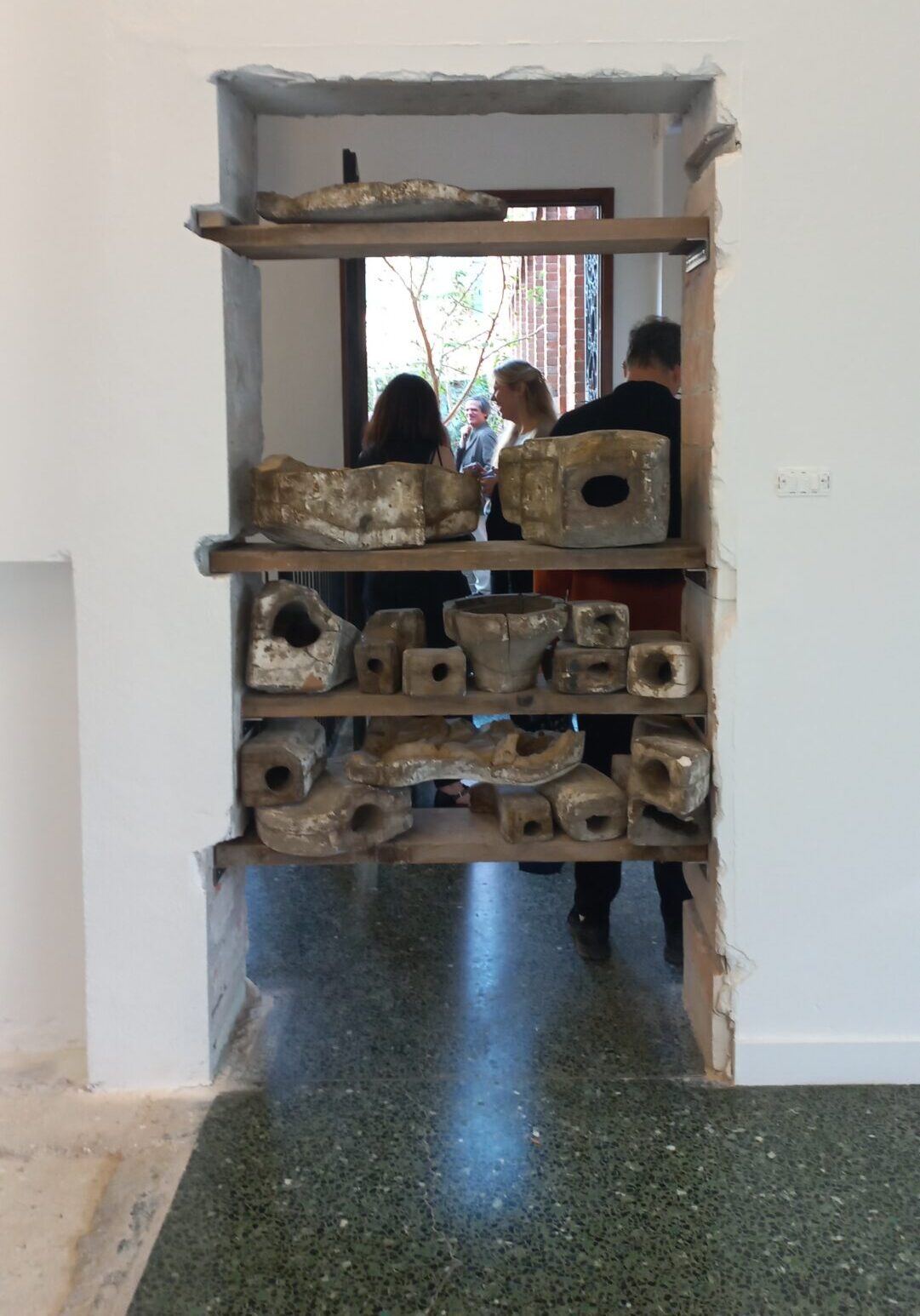
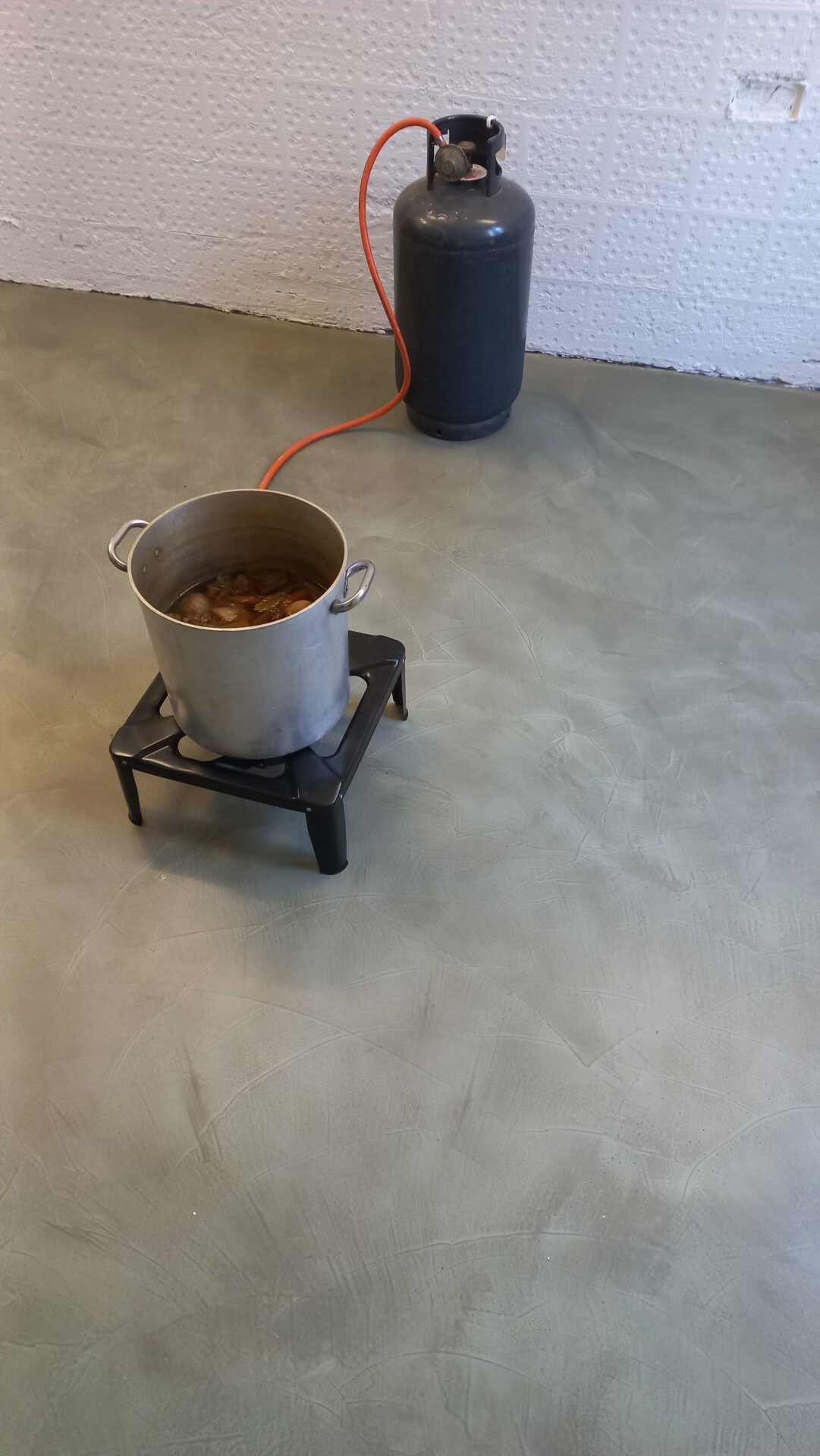
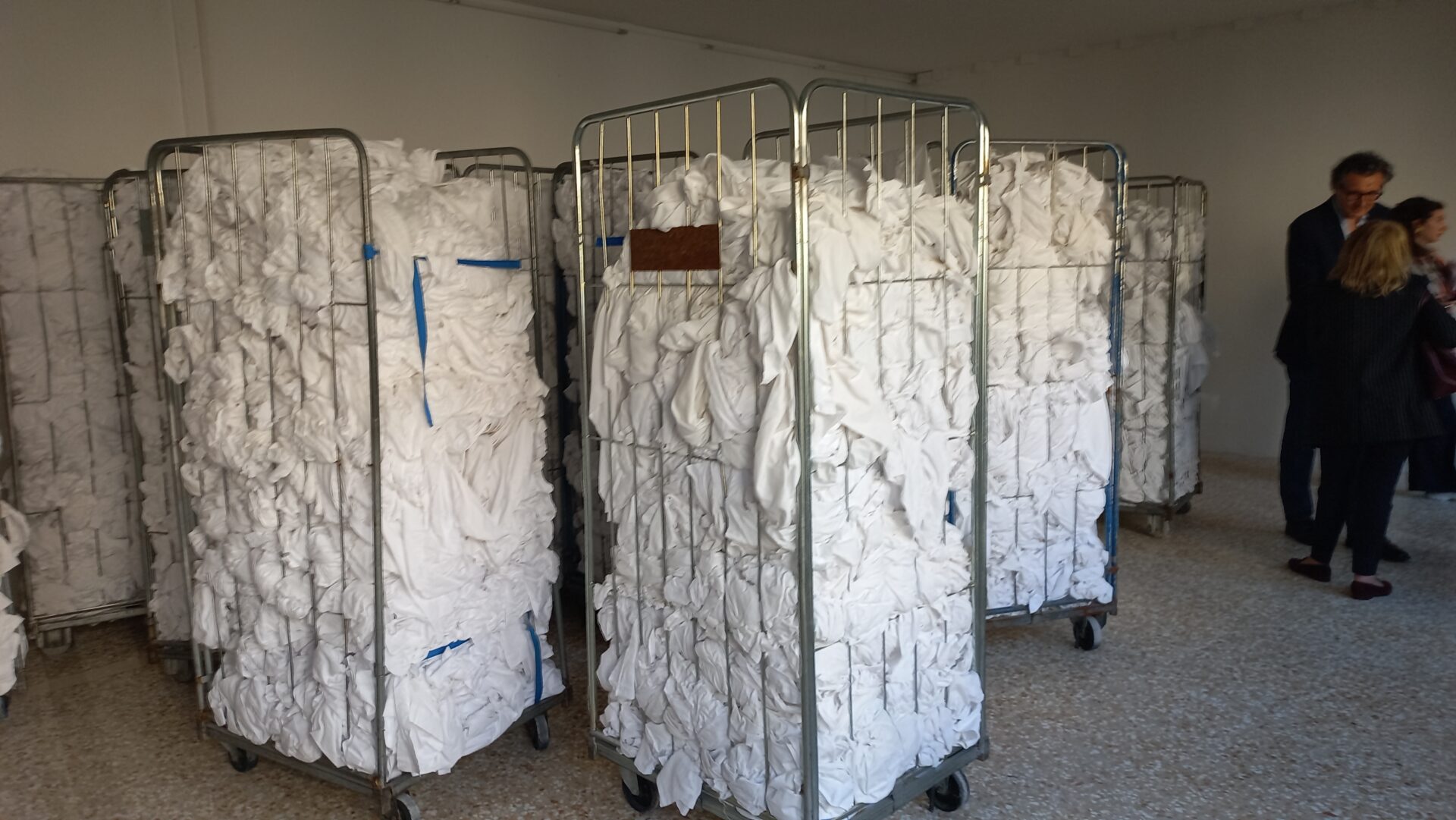
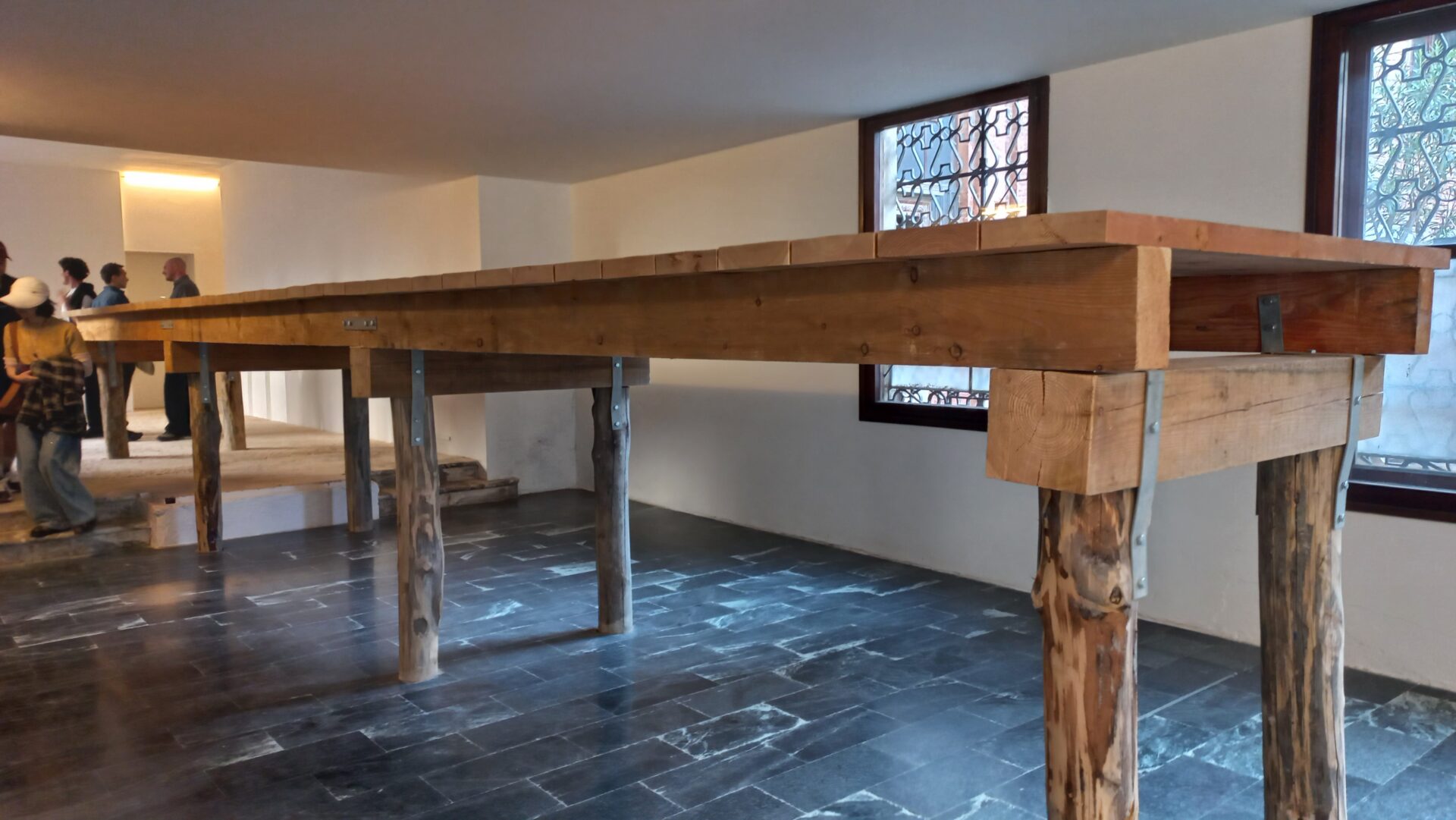
After seeing Lydia Ourahmane’s exhibition, I once again feel how the past continues to haunt objects. I previously wrote about Barzakh, for which she had her entire household shipped from Algiers to Europe: a home that, once displaced, was no longer entirely itself. In 5 Works, her solo exhibition at the Nicoletta Fiorucci Foundation, something seems to be present through its absence. The spaces are subtle, yet charged. The recognisable smell of broth hangs in the air; towers of industrially processed bed linen – sourced from two hundred Venetian hotels – stand opposite a fragile beaded curtain. These are not grand gestures, but situations in which you feel that something has happened, or is still about to happen.
Ourahmane’s practice revolves around migration and invisible barriers: how objects and people move, where they are stopped, and which conditions must first be negotiated before anything can take place at all. For her residency at the Nicoletta Fiorucci Foundation, she worked with Venetian artisans, technicians, and local organisations. In an interview, she said that she initially considered taking or melting down objects from Poveglia, a largely inaccessible island in the Venetian lagoon, but realised how quickly such an artist’s gaze can become extractive: “What am I going to do here?” turned into the question “How do I work for this place?” In response, Ourahmane made a fully functioning landing stage, 45.3820696, 12.3294242 (2026), which will be transferred to Poveglia after the exhibition, making the island more accessible from the water.
What is striking is the way Ourahmane does not approach Venice only in terms of what one can extract from the place as an artist. Also worth a small detour is Venetian Diary by Ilya & Emilia Kabakov, a participatory project at Ca’ Tron for which inhabitants of Venice contributed a personal object and a memory of the city. It connects unexpectedly well with Ourahmane’s attention to ordinary objects, hidden infrastructures, and the people who keep Venice running.
8. The Ear is the Eye of the Soul, Holy See Pavilion
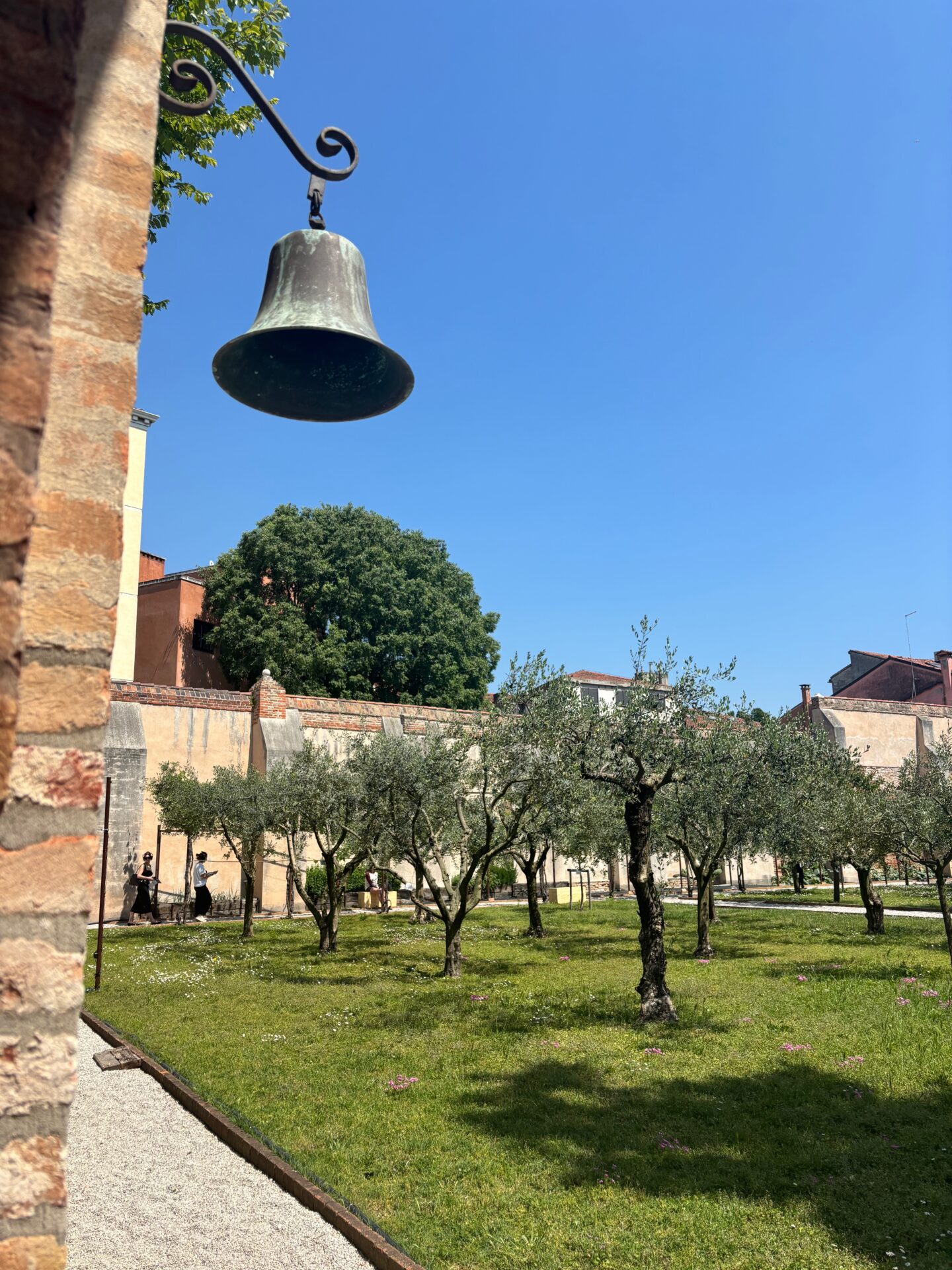
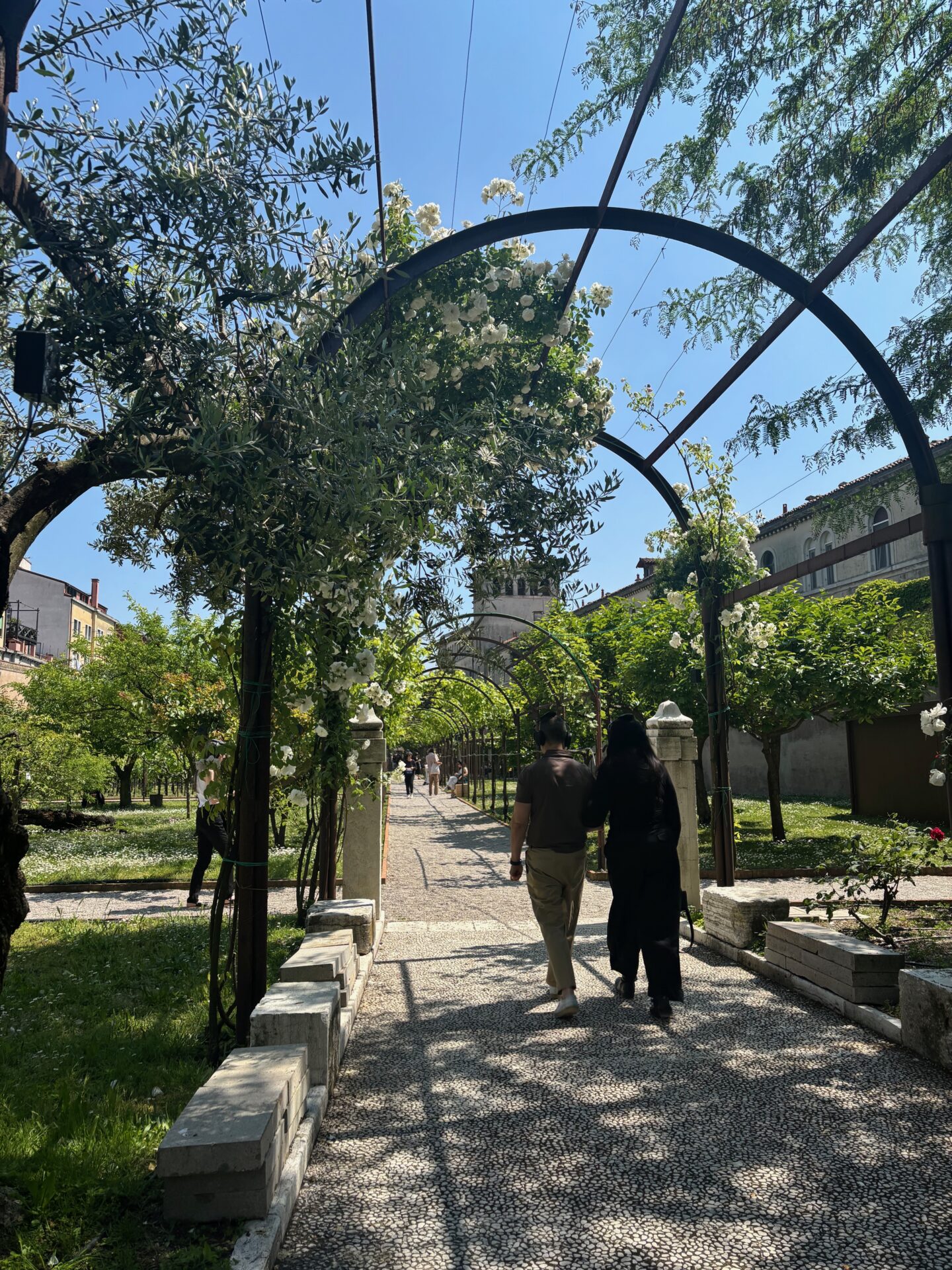
My final stop in the fever dream of Venice was the Holy See Pavilion. After days of smoke, urine, flesh, turds, babies, stroboscopic light, and getting lost, The Ear is the Eye of the Soul felt like the perfect ending. Not because it offered redemption (there was a rather long queue), but because it finally asked for something other than looking and rushing towards the next opening.
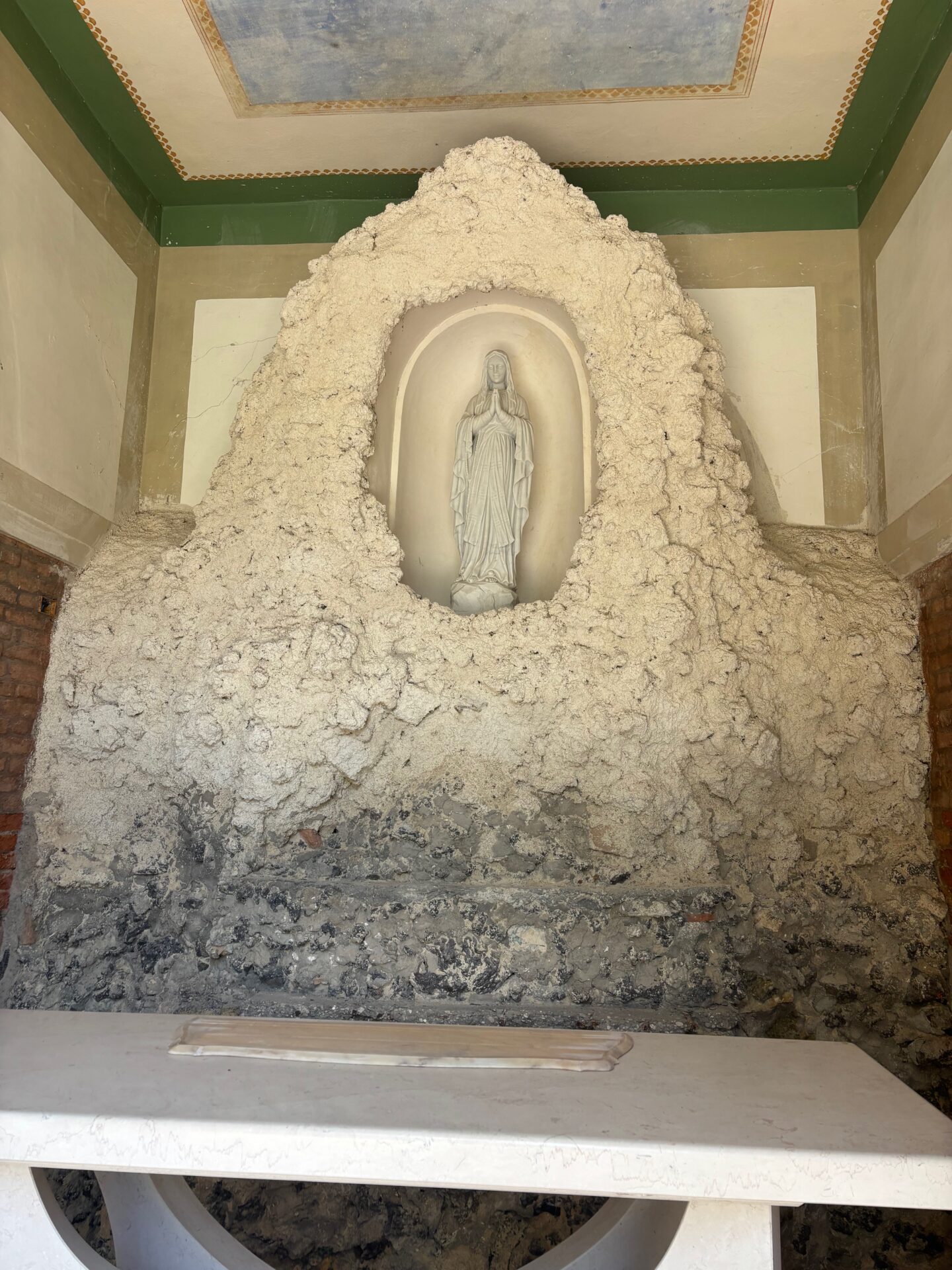
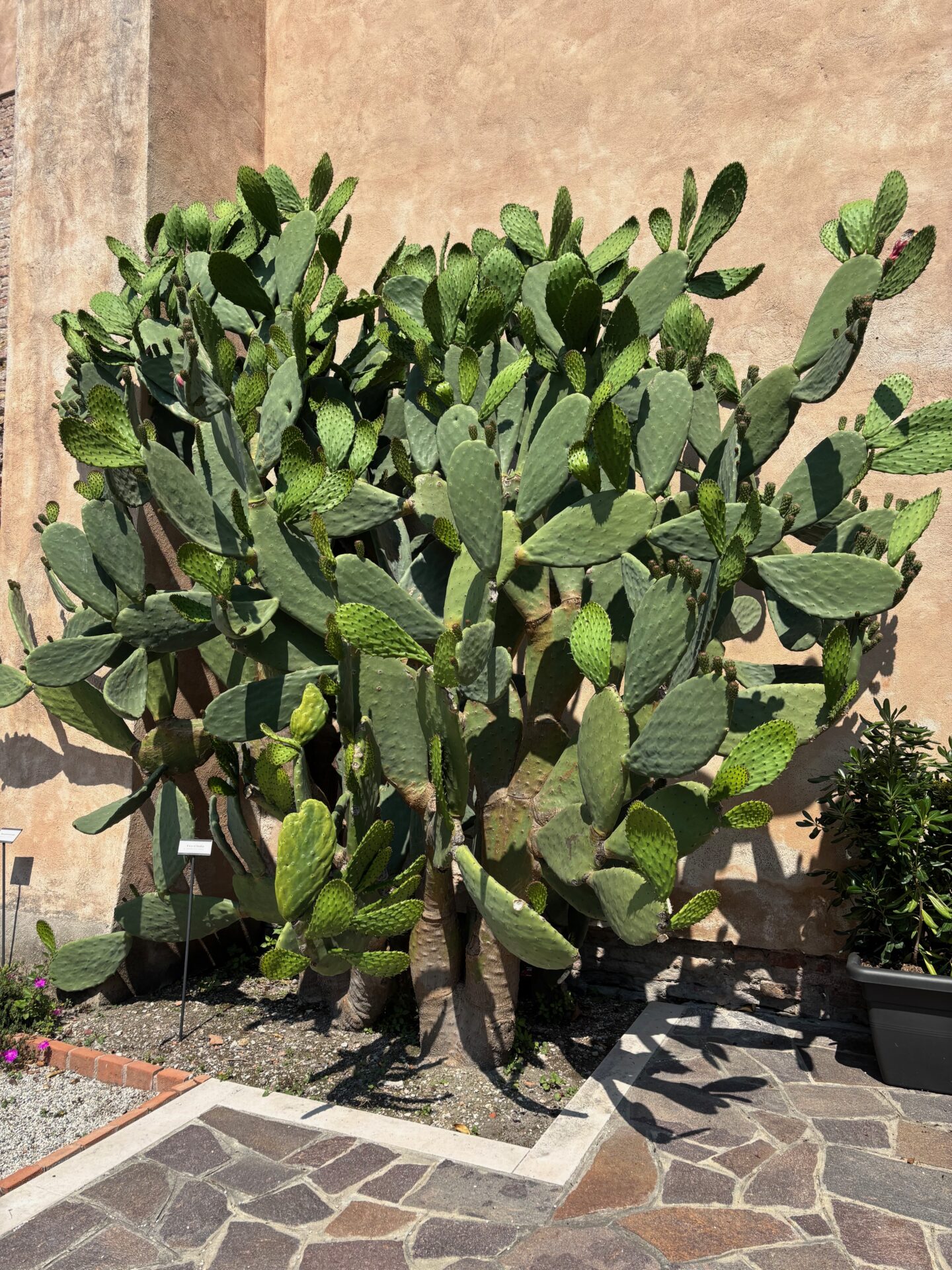
The pavilion takes as its point of departure the twelfth-century mystic and composer Hildegard von Bingen, whose chants form the work’s spiritual and sonic foundation. Wearing headphones, you walk through the Giardino Mistico dei Carmelitani Scalzi, the lush garden of an old monastery, where Soundwalk Collective has created a sonic meditation. It brings together sonic contributions from, among others, Moor Mother (my favourite), FKA Twigs, Brian Eno, and Meredith Monk, alongside glass sculptures by Precious Okoyomon and texts voiced by Patti Smith and Bhanu Kapil. As you walk through the garden, the sound shifts with you. Echoes and resonances merge into one another, as though the garden itself is slowly beginning to breathe.
After all the looking, analysing, and hurrying from one place to another, the Holy See became a place one could not immediately leave. It stood against the haste of seeing as much as possible, against the pressure to be everywhere, against the restlessness of the ever-next pavilion. I stayed listening and wandering until I suddenly realised I actually had to go. I very nearly missed my train.
Nadeche Remst
is an art historian and critic, and managing editor of Metropolis M