Collapse and Emergence – At the End(s) of the World: The Ground is Shifting at Garage Rotterdam
Some ends are announced, yet others fade out without a whisper. The new group show at Garage Rotterdam, At the End(s) of the World: The Ground is Shifting, takes on the theme of ‘collapse’ through the lens of extraction and inevitable, consecutive endings. As destruction is often paired with creation, the exhibition conceptually pairs collapse with the idea of emergence.
Yannik Güldner is curating the new three-part exhibition cycle at Garage, of which this show is the first. The series is conceptualized under the title At the End(s) of the World, but chaptered sequentially. Moving from this first chapter, The Ground is Shifting, to further exhibitions in second and third chapters that focus on ritual and re-worlding. From Jamilah Sabur’s deep ocean co-ordinates of underwater basins, to Natalia Papaeva’s mythical Siberian mountain, all eight artists in the show have their own nuanced, situated perspectives on human nature, history, and the surrounding environment. But what is the effect of their coming together here, under Güldner’s three chapter drama?
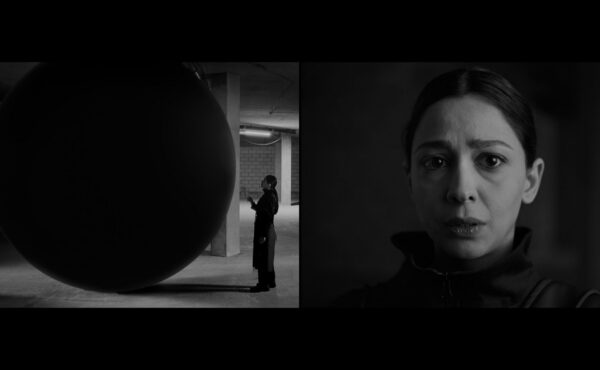
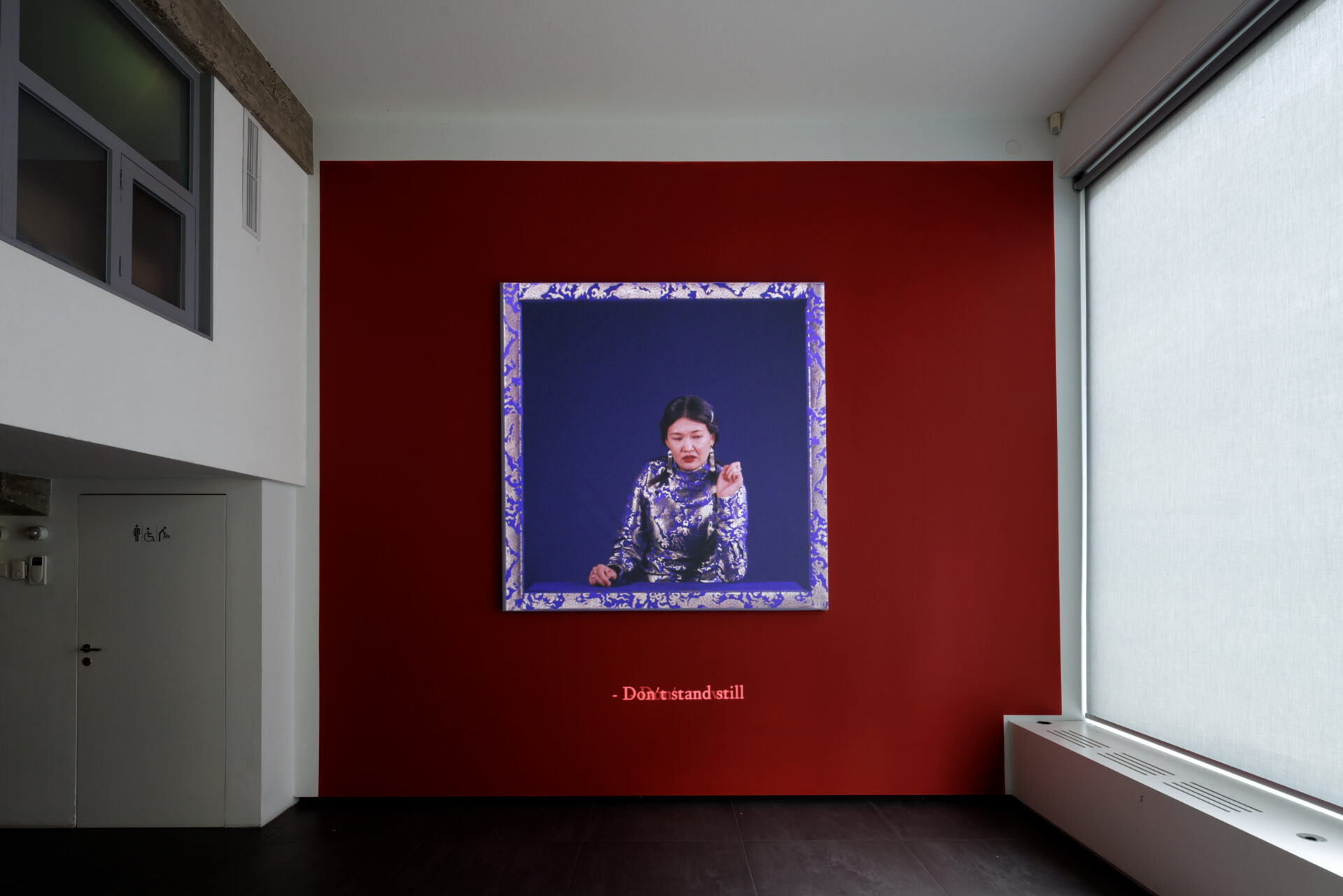
In her square format video Natalia Papaeva sits at a table in a lapis blue brocade dress with silver dragons. Dont Dance, Dont Talk (2025) is a fable delivered in a whispering and increasingly raspy voice. Papaeva’s story telling performs and thereby protects her endangered native language: Buriat—which, along with the administrative power of the region, has officially been taken over by the Russian language. It is a simple but effective format. She leads us to empathise with the hunger of the mountain character she channels; and how the personified mound of rock has swallowed a gold mine owner. As she tells the mountain’s tale of extraction she slides her silver hair clips from her temples, disappearing behind a curtain of her own thick black, peppered-with-grey, hair—abstracting the image of narrator as the story deepens, bringing this non-human perspective to light, and leaving us with a brocade frame and her slumped forward form giving the illusion of a dark stony-topped mound above the crumpled blue.
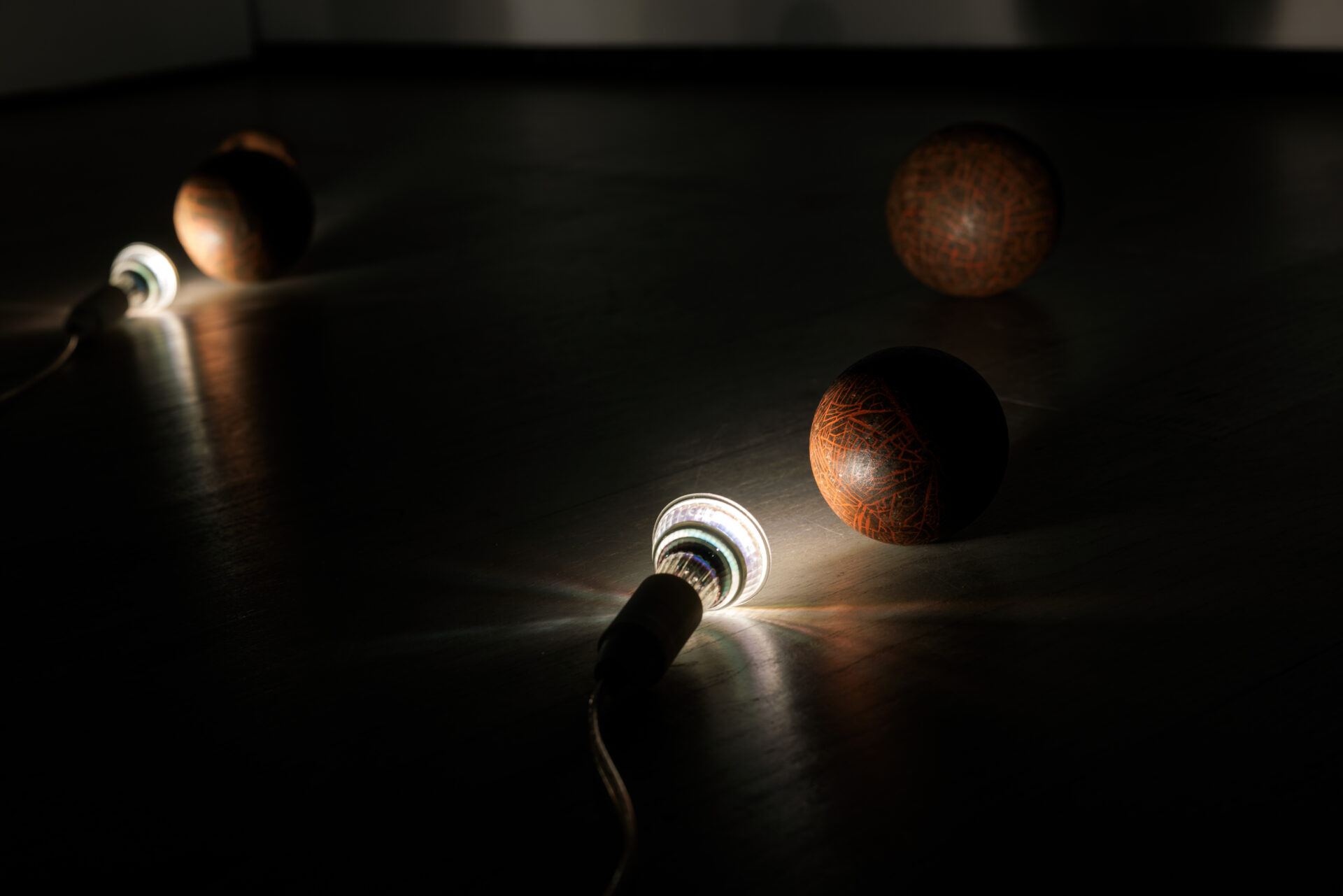
Internally lit, the two video works visually stand out with their studio lighting and bright flatness as all the other works in the space are held in semi-darkness with focussed spots. This builds a degree of intimacy as you get close with each work. The press release ensures that I am primed to think through metaphors like ‘caverns’ and ‘mineral-ores’. This idea is fruitful for the more abstract works. But for the most part I am instead stuck with a more institutional aesthetic and the idea of touring museum artefacts, which is of course metaphorically culturally extractive, even if it’s not cave-like. What makes something cavern-like, cavernous anyway? It is not only about dimensions, but the way a space or volume encourages awe. A mountain can do that, the intimidating depth of an ocean too. This is picked up on by subtle elements in the works included in the exhibition, not only by echoing sublime landscapes but also in the complex knowledge systems and the technologies refered to. Awe is a dimension of perception that reflects a sense of humility—this is something bigger than me, than us.
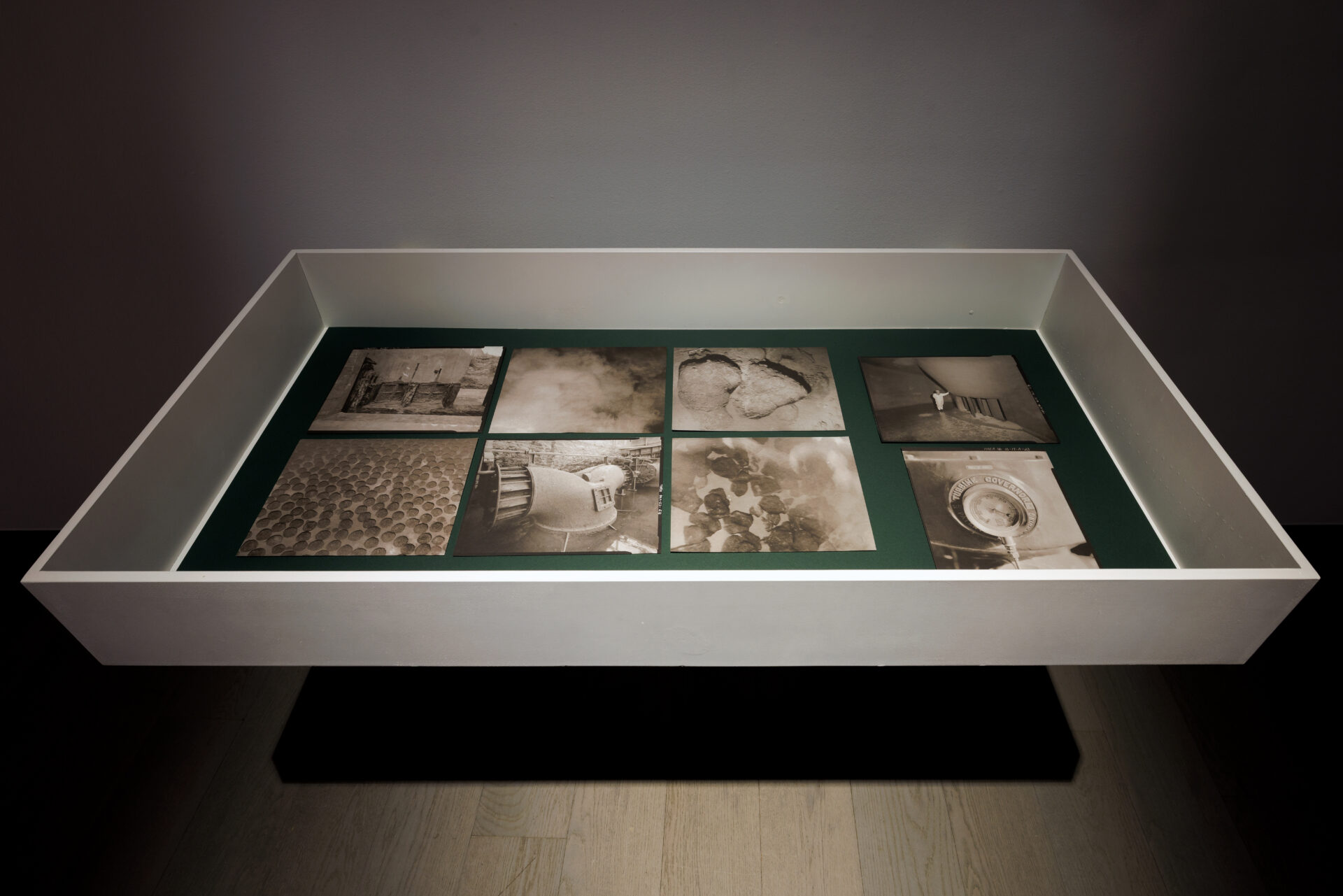
Jamilah Sabur’s analogue photographs of deep ocean wicket-gates provide a similar sense of scale. Taken from an archive of a 1966 exploration of the sea bed, she references global flows with this underwater sluice-form and the local import/export activity of Rotterdam’s port and extractivist Dutch practices. Sabur used manganese in her analogue developing process, referencing the valuable iron-maganese sediment which has accumulated in nodules on the ocean floor and on these gates. The mineral is also a key component for electric car batteries and wind turbines. Most of which I learn later. Aside from the gate, another photograph stands out: a miniature human figure standing by a huge concrete(?) orb. I think of the cooling tanks of a nuclear reactor and my parents’ generation living under the Cold War threat. We know more about the surface of the moon than the deep sea bed. What will emerge with the development of future mining techniques at this 5000m depth? The wicket gate image documents the gradual collection of mineral deposits beneath the water, whilst Sabur’s presentation and the futurity of mining revalues the archival image, ensuring that evidence like this is unlikely to collect dust in an archive above.
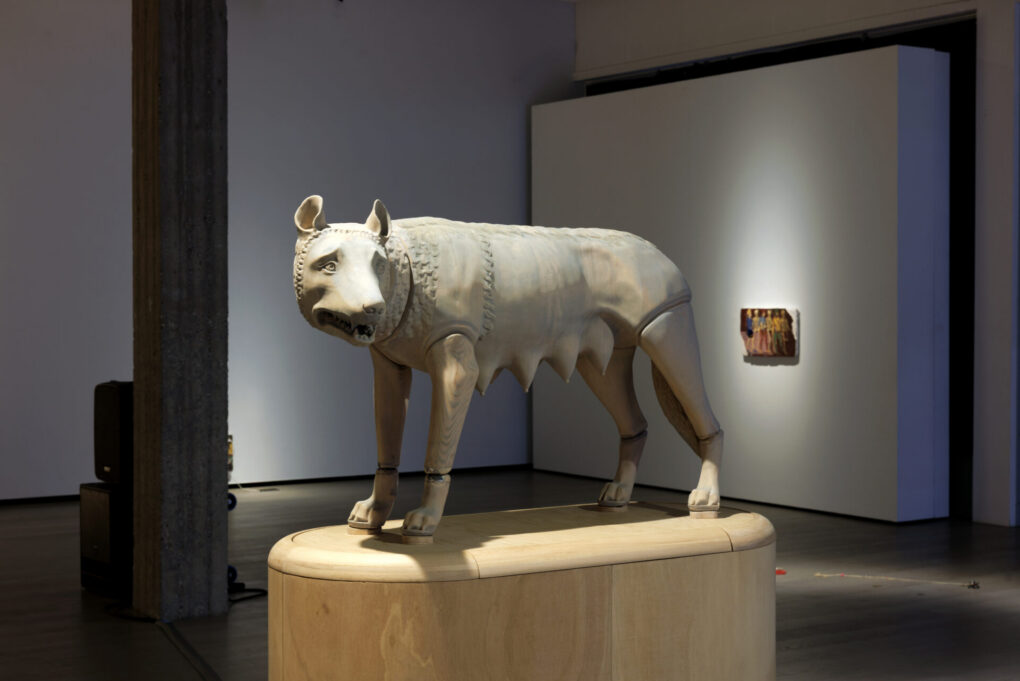
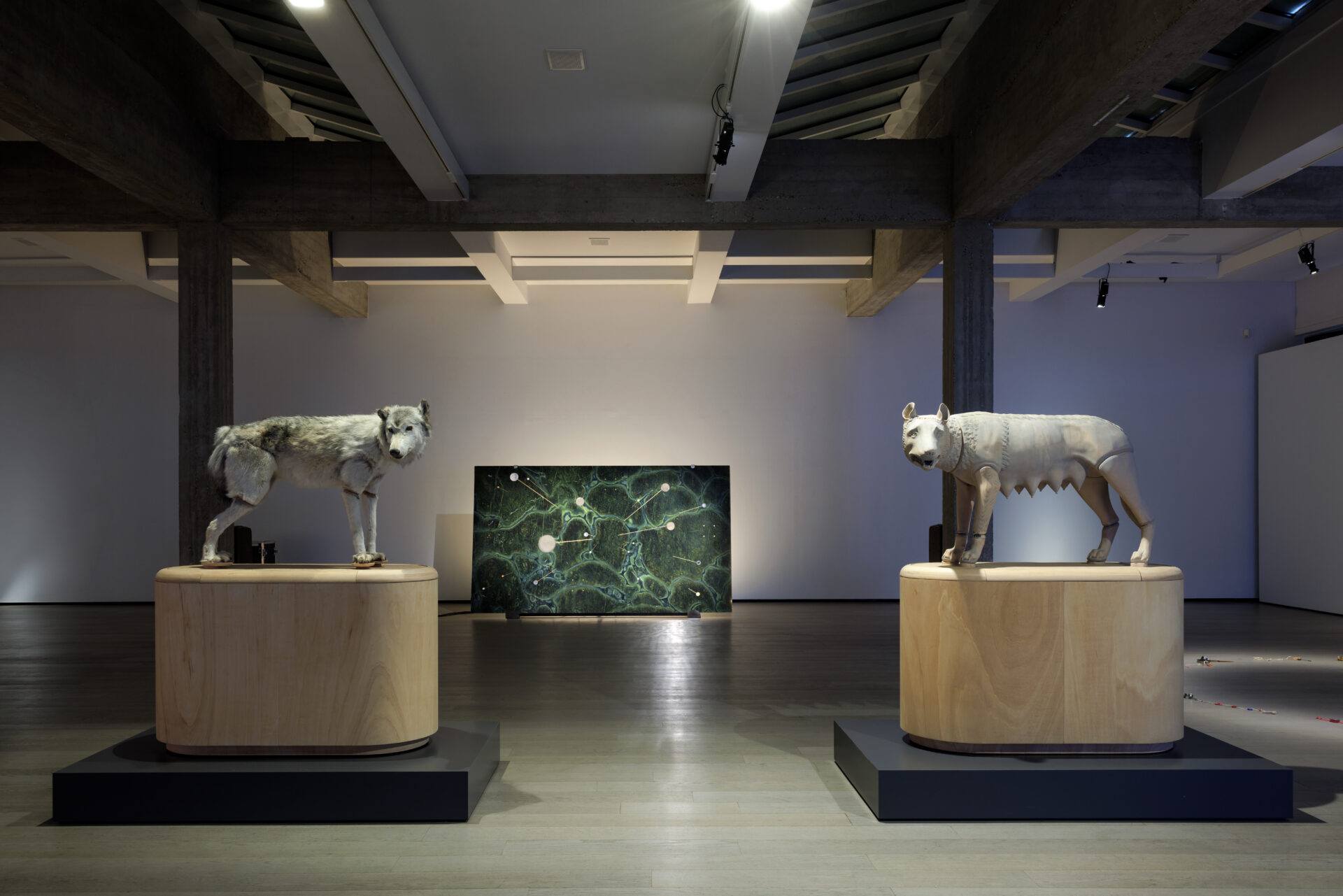
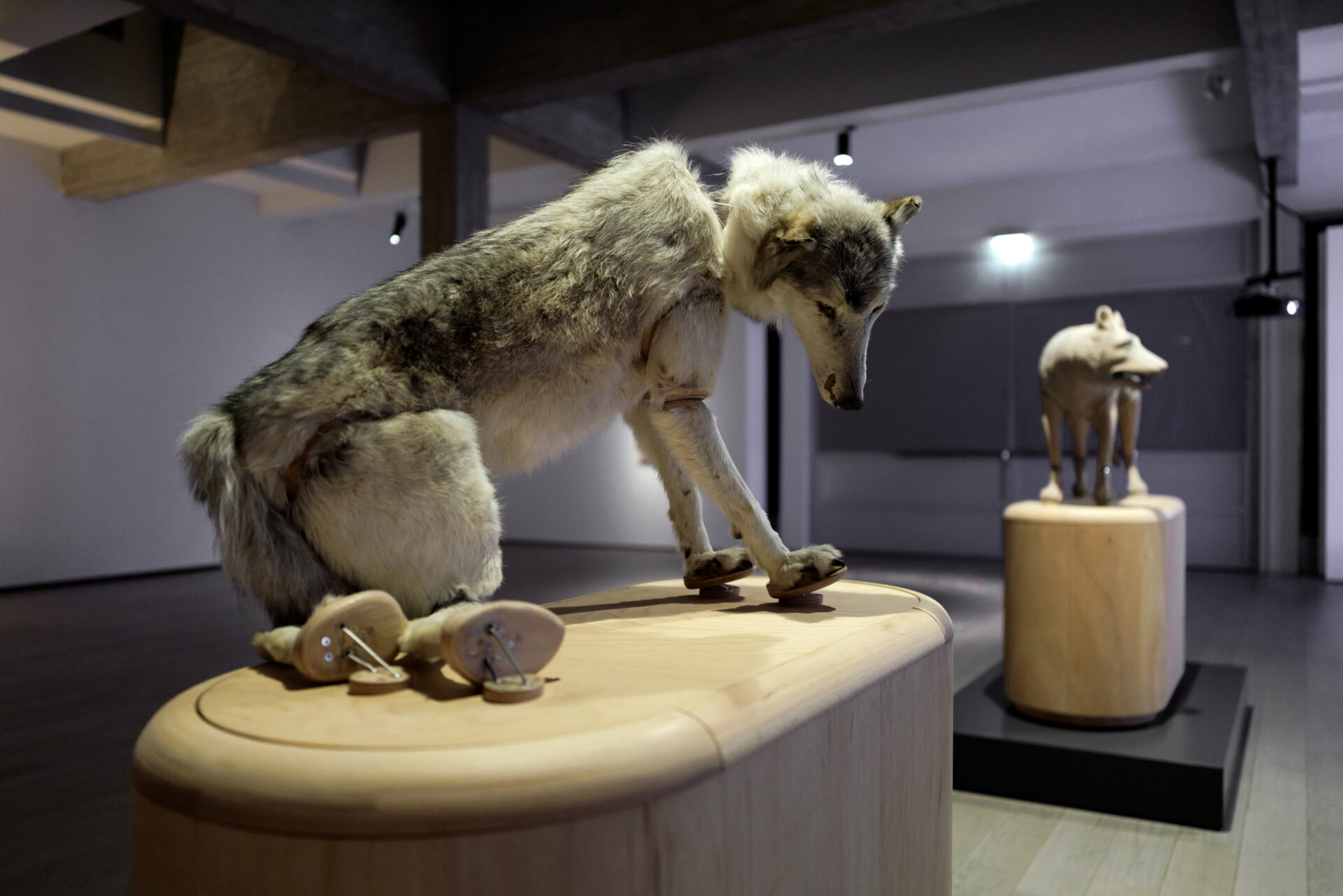
Accosting and ritualistic, Julius von Bismarck’s Zwei Wölfinnen (2024) guards the entrance to Garage’s main room. His central and symmetrically positioned work is supposedly slowly, continually ‘collapsing’. Two wolves, one taxidermy and the other a fifth century Roman icon: ‘the she-wolf’. Both imitate the form of a toy that loses its tension with a push button bottom, its body seeming to collapse when pressed–albeit at a much bigger scale. Understanding this clear correlation first, I’m dissatisfied by the robotic ‘collapse’. The mechanised fall is too smooth and careful to believe that the sculpture is indeed collapsing. The staged repetition of the wolves’ partial dismantling conveys a sense of nature being continually undermined or trapped in a Sisyphean loop. This is concurrent with the artist’s desire for us to reflect on the categorisation of nature as separate—is this what makes so much of society ambivalent to its demise? Yet, the spectacle in this work, including the crunching slow sound as the large pieces move, elicits more curiosity with its technical workings rather than the works’ overall semantic effect.
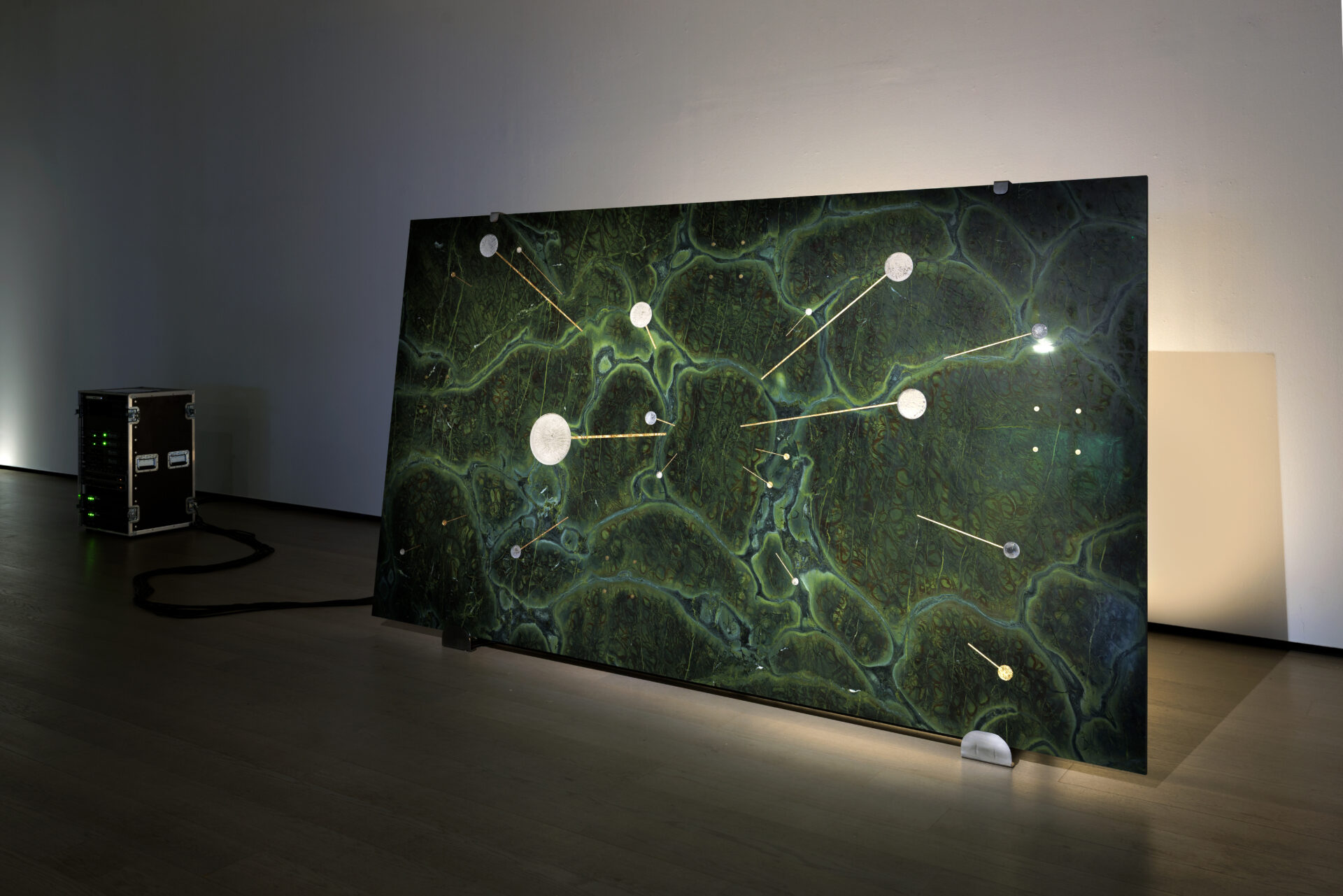
Perhaps meaning has given way to function–as the architectural placement of Bismarck’s work choreographs the viewer tactically. Like mythical beasts who guard a temple, Zwei Wölfinnen creates a momentary pause and opens your attention onto Louis Braddock Clarke’s work: an image of space, rendered through an immense marble slab turned speaker. Gems in Metal – FACE001 (2025) uses a combination of sound frequencies some of which are below 20hz (the lower part of the range of human hearing) so you feel/hear the drone before you see where it emanates from, working within the whole space to create an eerie sense of unease and permeating the other works indiscriminately. To my human body, the infrasound which it utilises feels like an unexplainable sense of dread.
The staged repetition of the wolves’ partial dismantling conveys a sense of nature being continually undermined or trapped in a Sisyphean loop.
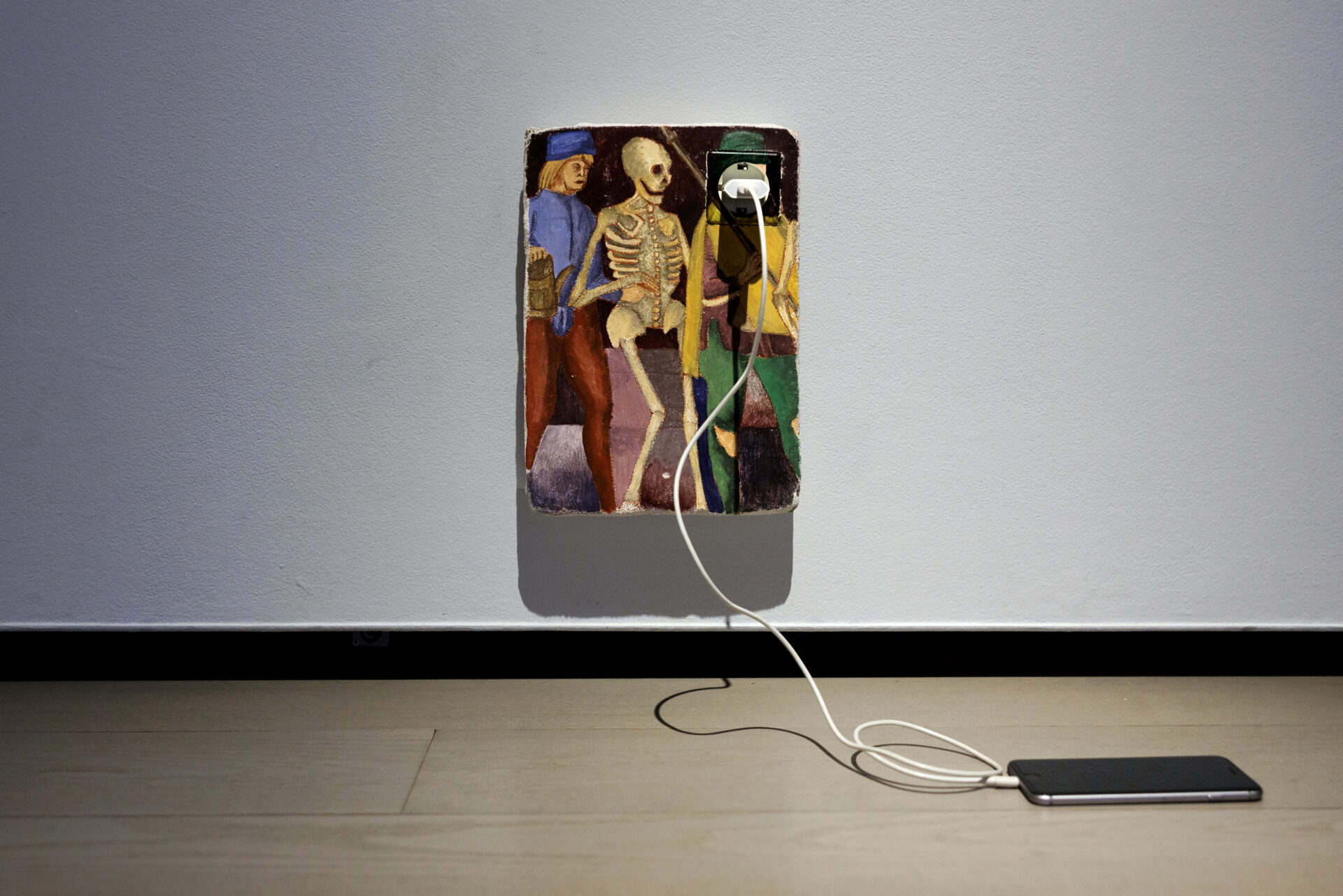
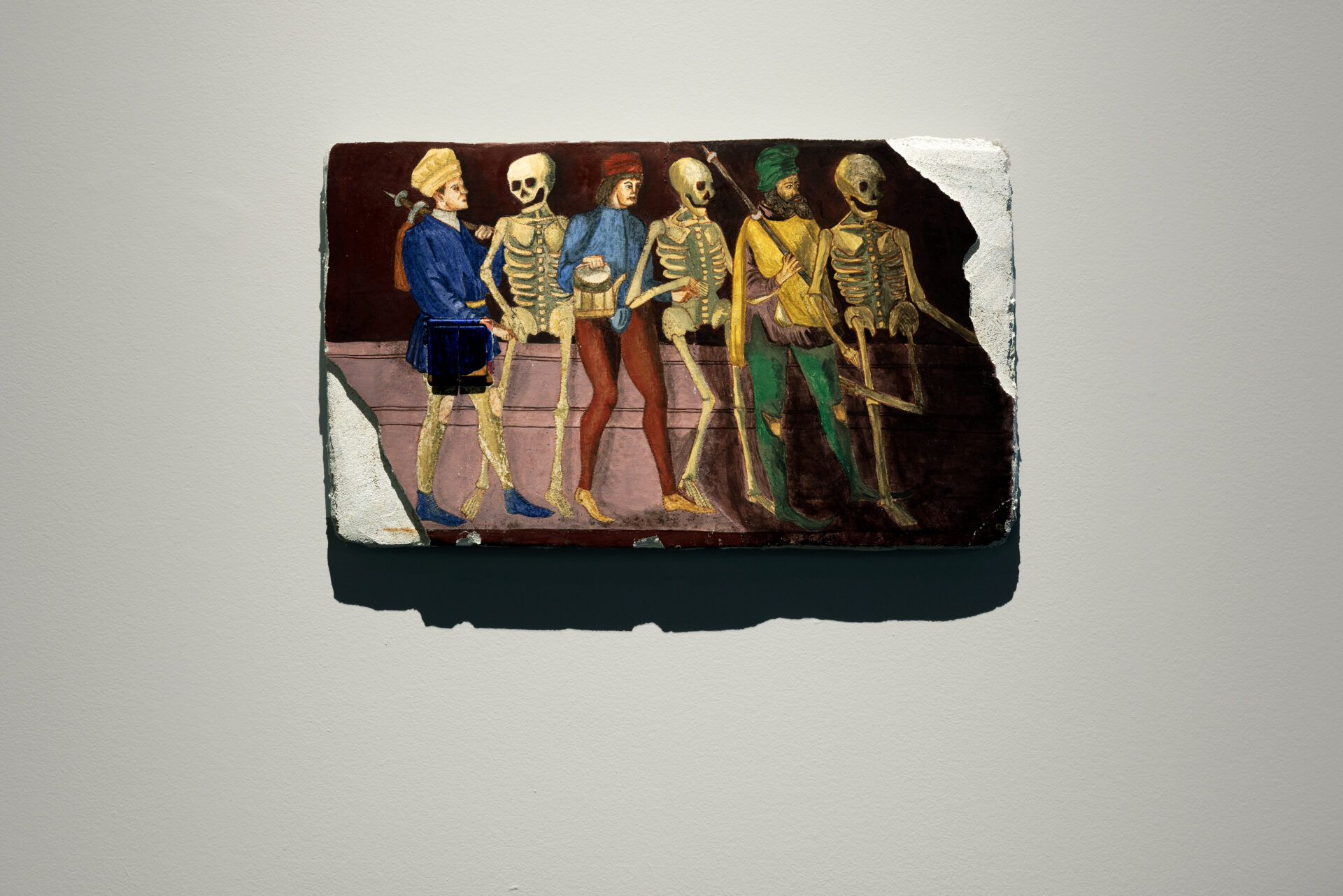
There is a quiet antidote to this dread in the humour of the fake-frescos by Ginevra Petrozzi: two fragments of wall feature medieval clad figures that stand in line with skeletons, one with a painted torso interrupted by a wall socket (never sure if the charging phone is part of the work) and another skewed by the flattening binary switch of an electric light-switch. In accommodating the incomparable necessities for electricity and history, a compromise is reached. And that compromise is: the sacred—paid back with humor.
The low frequency drone continues, irregular and heavy, an echo of the live connection to something deeper than this concrete floor. But between the different works a perceptive shift is needed. Either: I suspend my disbelief and I am in a cavern looking at artefacts from the world I once knew, or, I lean back and listen to the tone of address of the many objects in this space. Perhaps because many of these works lend themselves to situated narrative readings and indeed the show is about End(s), multiple–I swing in and out of the drama of fictional ends. Despite the mystic-semi-darkness the reality I land with is sometimes very banal. Yet, isn’t this part of how we manage to survive the almost-constant ends (of worlds)? Regrouping to be able to forge on, emerging refreshed, neutral, or ready to continue the fight?
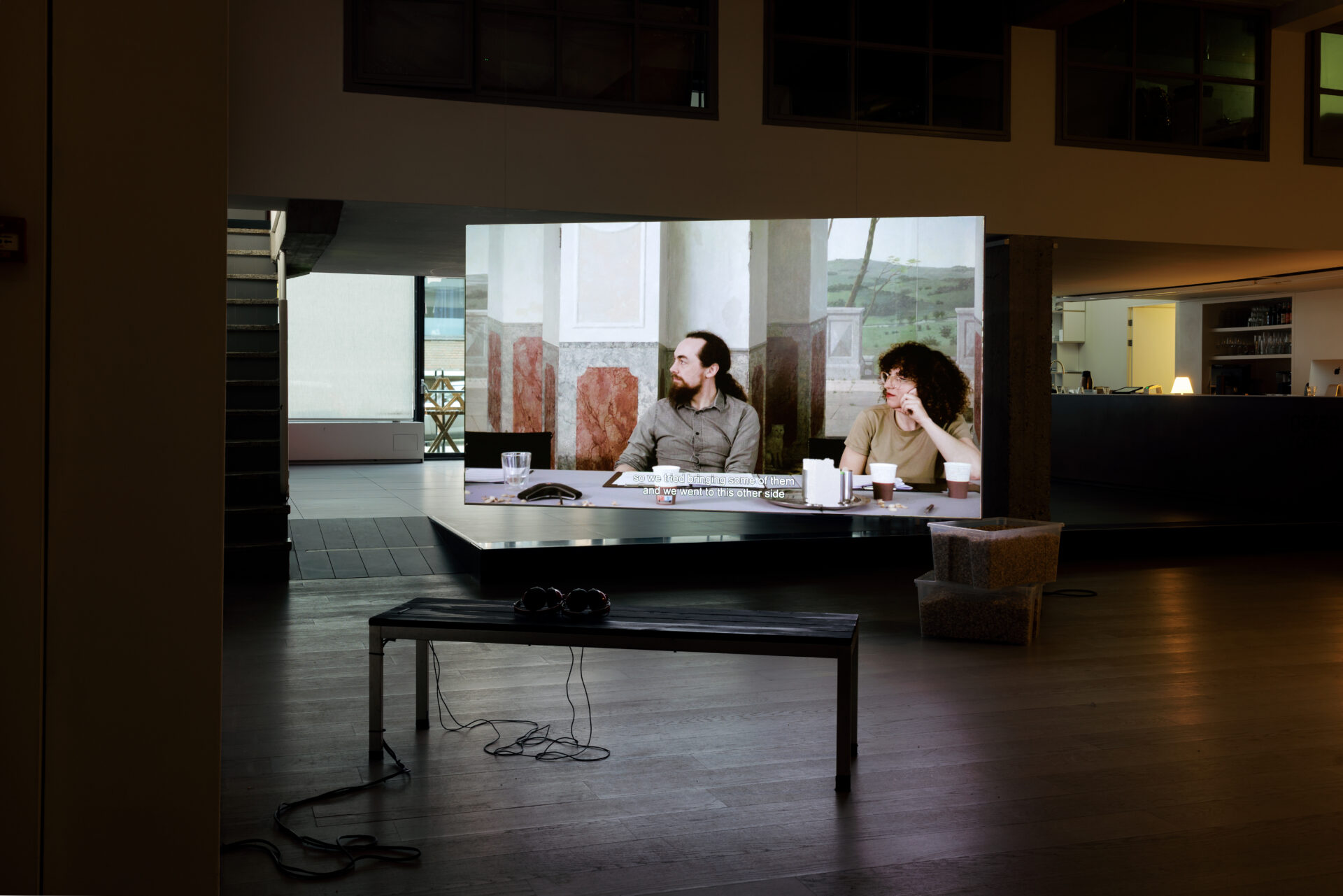
Tom K Kemp’s video dialogue also contains this oscillation from profound to banal. His work speaks to societal values through the premise of a panel-discussion in the afterlife. Unable to escape, but with the possibility to collaborate on a plan (with anyone who has ever existed) the four game participants face the challenge of redesigning their world. How will they do things differently? What is the solution to that pungent underworld smell? The work’s game structure is felt through the interactions of the panel participants including a medieval historian, a systems consultant, and PhDer’s who are here presented as ‘specialists in systemic change’. I look the panel up to check the fiction, and it’s strange to see their outward presentation on LinkedIn. The unacted and sometimes passionate or defensive responses they have to each other create a reality easily mapped onto a real-world political summit. Alongside Sabur’s work, this creates the strongest pull between poetic-envisioning and real-world relation with current states of collapse and emergence.
Despite the mystic-semi-darkness the reality I land with is sometimes very banal. Yet, isn’t this part of how we manage to survive the almost-constant ends (of worlds)?
In bringing together these artists’ works, Güldner pursues practices which, on one level, reflect a desire for a sense of justice in our future togetherness and on another, joke about what dire circumstances we are in. The complexity between and through the works—plus the possibility to shift registers—is refreshing.
Sometimes I found myself questioning: where does the imagined engagement take us with our real-world responsibilities? But the change is in the imaginative groundwork. We look at a collection of artefacts to learn something, ‘to bring the past to light’ and also to remember. Is there nostalgia in At the End(s) of the World: The Ground is Shifting for an illusory moment when the world felt shared? Humanity refracted across the globe, yet with a common home aside from nation-states: Earth? Perhaps a Utopian ideal, humans never cared, always extracted. And now? If we are overtaken, or eradicate our shared home and with it any shared sense of belonging, is this exhibition a moment for us to remember ourselves?
At the End(s) of the World: The Ground Is Shifting is on show until the 10th of May at Garage Rotterdam
Anastasia Shin
is an artist, writer and editor based in Rotterdam