Held in mid-air, with nothing to rely on – Rosalind Nashashibi’s feelings of un-homing in her show Stones at KM21
Stones at KM21 is the first museal solo exhibition in The Netherlands of British Palestinian artist Rosalind Nashashibi. In her paintings and film Nashashibi evokes a different sensation of time, where we mourn for the future and change the past. Elâ Atakan visits the exhibition in The Hague that leaves her with the uncanny feelings of absence and suspension.
In her recent book The Nation of Strangers, Turkish journalist and writer Ece Temelkuran reflects on what she describes as a growing condition of being ‘unhomed’. She suggests that even when we inhabit homes, we increasingly sense their fragility. Wars and political violence are reshaping the world in ways that make the very idea of belonging appear unstable. Humanity, she argues, has begun to mourn not only what has already been lost, but what is yet to disappear. ‘This is the first time humanity is mourning in the future tense.’[1]
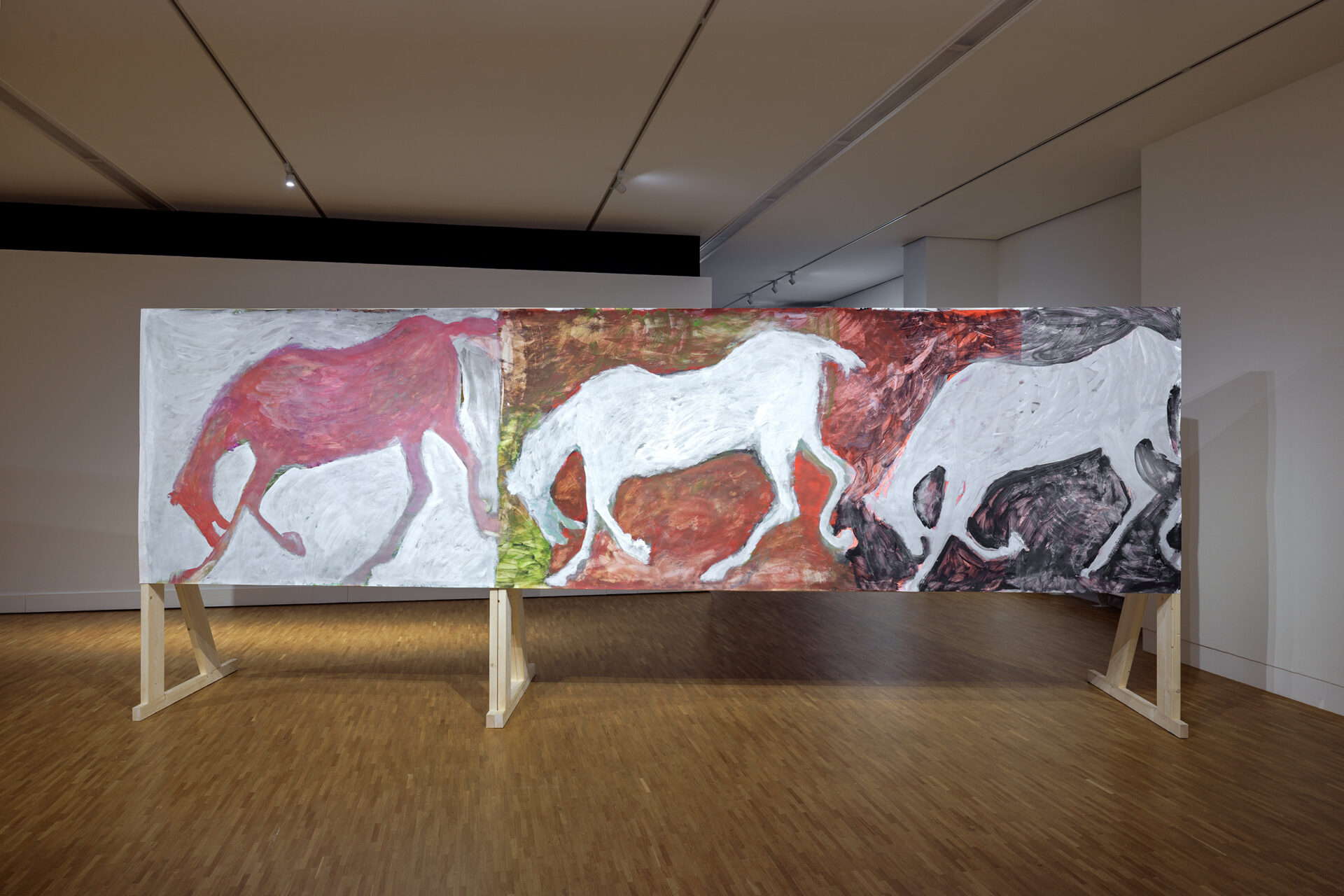
Rosalind Nashashibi’s exhibition Stones at KM21 resonates with Temelkuran’s reflections. The exhibition opens with The Return (2025), a painting depicting three horses moving in a circular formation. Drawing on late nineteenth century studies of horses by Edgar Degas, or recalling Paolo Uccello’s The Battle of San Romano, the work presents a sequence of repeated figures whose motion loops back onto itself. The repetition evokes a slow procession, almost like a migration. Here, movement no longer leads forward but turns in on itself, suggesting that return has become impossible.
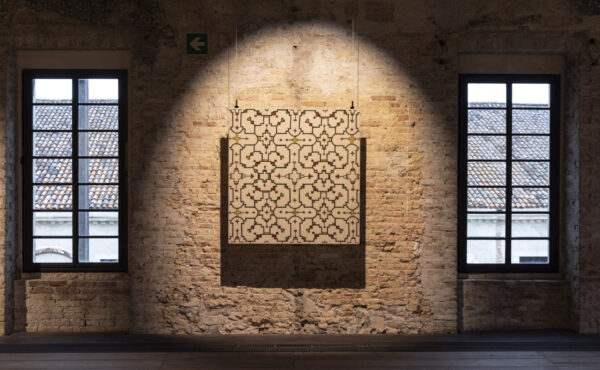
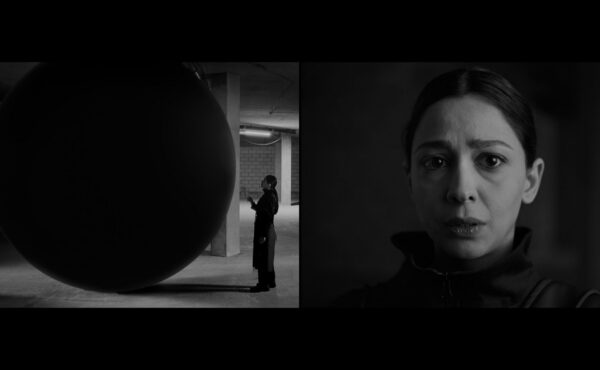
After the painting The Return, the video Electrical Gaza (2015) confronts the viewer from a dark alcove on the left. The succession of faces and sounds evokes a black stain at the center of the exhibition, opening a kind of emotional void that extends into the space itself. Carrying this weight, the viewer continues into the large, almost empty gallery with an uncanny sensation. Within this emptiness, the paintings repeat quiet motifs of loss: vases filled with chrysanthemums, a blue basket, grieving figures seated in stillness, and an empty grey single bed with a pillow. At the center of the space, the work Wait Another Week (2024) hangs suspended in mid-air, its reverse exposed to the void behind it.
This curatorial arrangement is particularly effective in extending the emotional register of the video into the entire exhibition space, allowing absence to function not only as a theme but as a spatial condition. The feeling becomes even more urgent in light of what Gaza signifies today. Within this condition of slow witnessing and un-homing, one finds oneself suspended in time like Wait Another Week, held in mid-air, with nothing to rely on, leaning only on the fragile surface of time behind us.
Within this condition of slow witnessing and un-homing, one finds oneself suspended in time
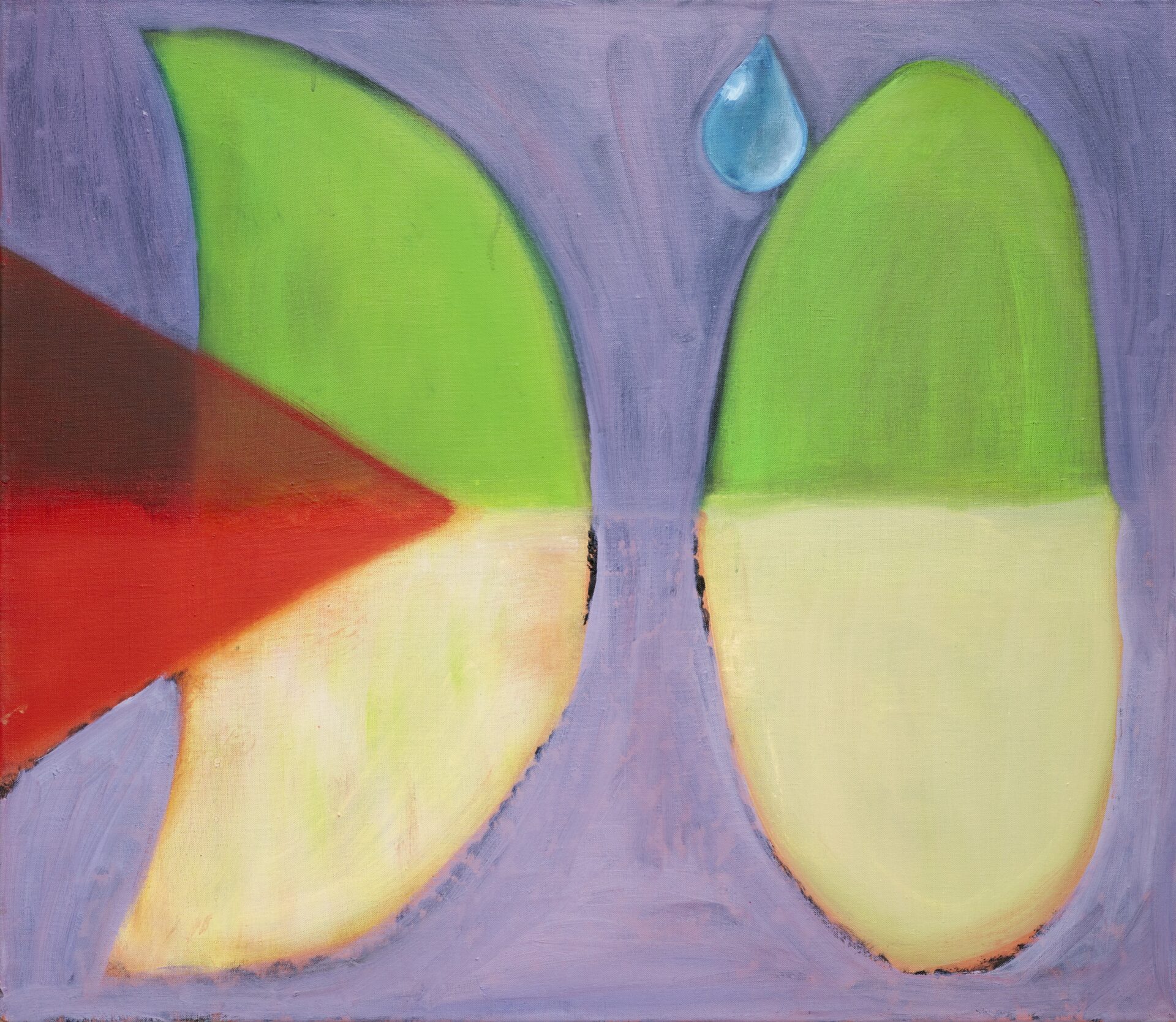
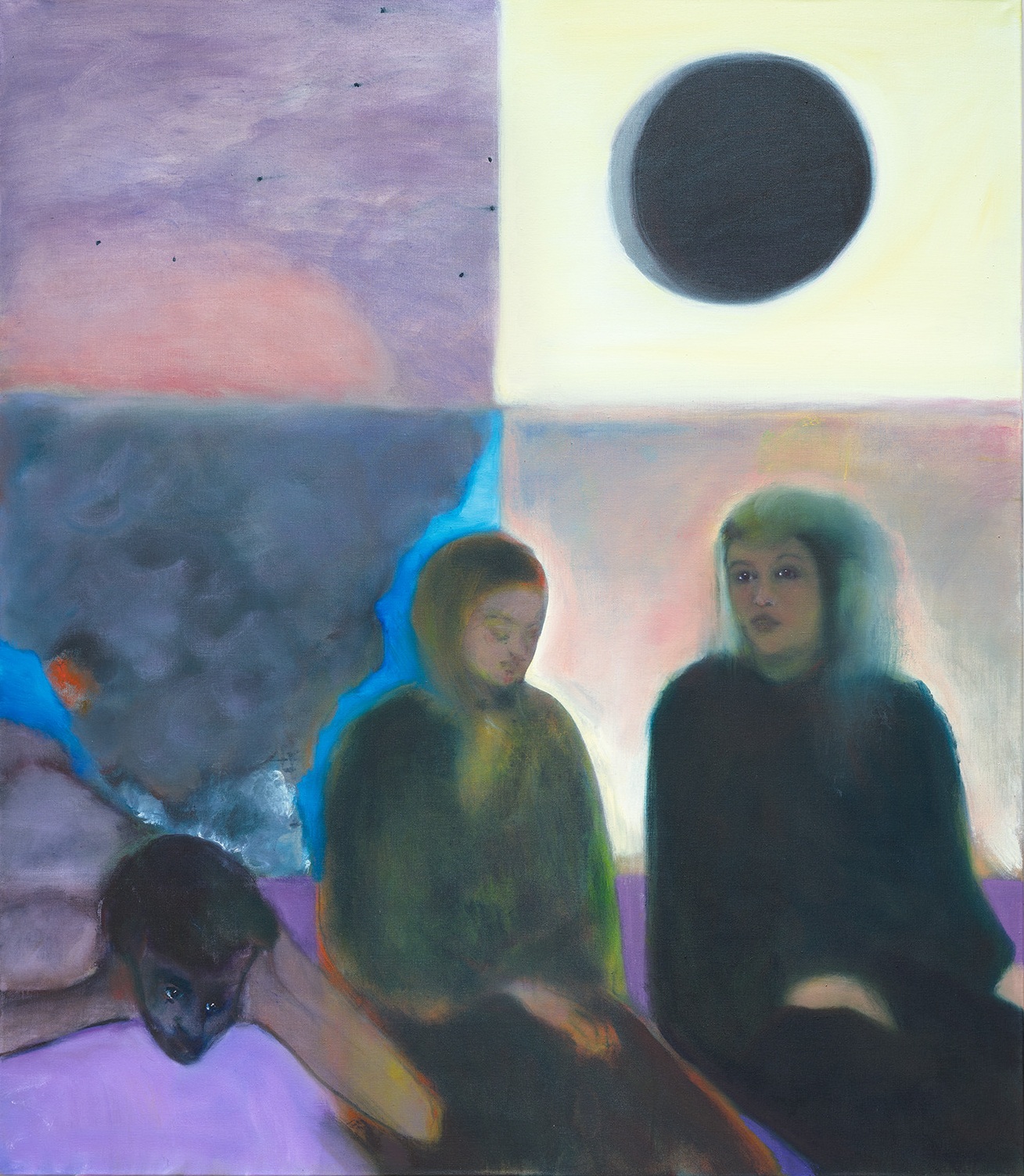
Such a carefully constructed condition of suspension points to a shift within Nashashibi’s practice. The exhibition marks a moment in her work, long attentive to questions of place, belonging, and displacement, becomes more explicit. In an interview with Fatema Ahmed published in Frieze, the artist notes, ‘It’s the first time I’ve been asked to do anything related to Palestine since the Imperial War Museum.’
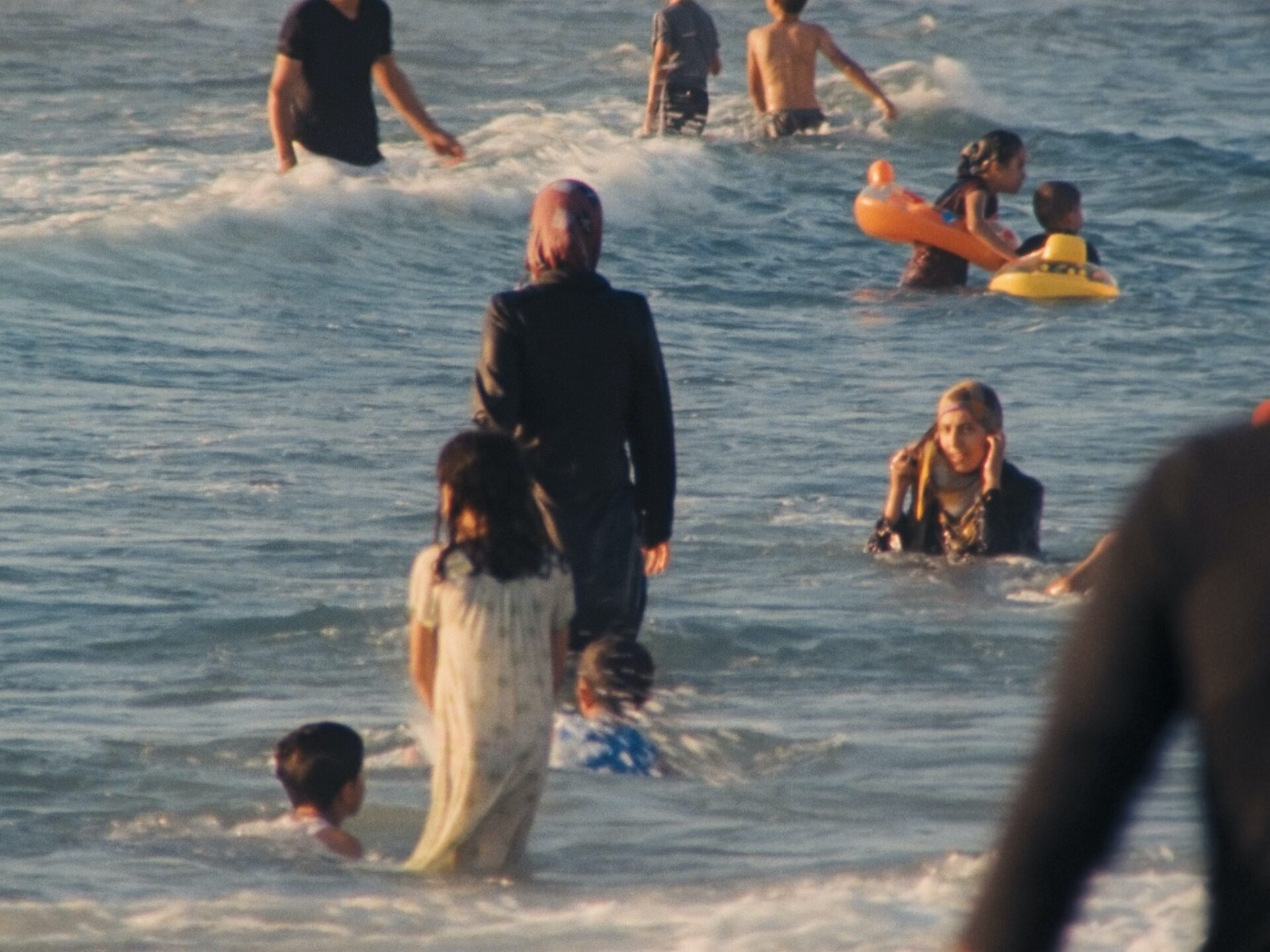
Electrical Gaza offers a striking example of this approach. Filmed shortly before the bombardment of Gaza in the summer of 2014, Nashashibi recorded fragments of everyday life: children at play, men singing or watching football, figures waiting at the border, women entering the sea with a quiet, almost defiant sense of continuity. The scenes unfold with a calm attentiveness that resists sensationalism, allowing life to appear in its most ordinary forms.
Viewed today, Electrical Gaza carries the weight of an unintended archive. The images, once anchored in the present, now appear as fragile traces of a reality threatened with disappearance. What we witness is not simply the past, but closer to what Temelkuran describes as mourning in the future tense. Yet the film unsettles even this formulation. What it holds is no longer a future to be mourned, it is a future already being mourned. The life on screen feels immediate and continuous, yet we watch it with the awareness that its future has already become our present.
This tension is further intensified in the closing sequence, where an animated black circle gradually overlays the image. This black void does not simply mark an ending; it becomes a visual form of absence, absorbing both image and viewer. It implicates us in what we witness, transforming the act of looking into a confrontation with disappearance itself.
In Nashashibi’s practice, this sense of suspension is inseparable from a mode of making akin to the production of poetry. Her films allow meaning to emerge rather than predetermine it. The cinematic language is grounded in observation rather than explanation.
This sensibility extends into painting. Around 2013, when her film Carlo’s Vision was shown alongside paintings by Renée Levi, an unexpected dialogue emerged between moving and still images. This encounter, along with her subsequent residency at the National Gallery, deepened her engagement with art history. References to seventeenth century Spanish painting, Christian iconography, and other visual traditions appear throughout her work as isolated motifs, drawn from their original contexts and reassembled into new configurations.
Her films allow meaning to emerge rather than predetermine it. The cinematic language is grounded in observation rather than explanation.
Animals frequently appear in Nashashibi’s paintings, where they function differently from human figures. ‘The human face is heavily coded by culture and representation, whereas animals retain a more unified and less mediated presence.’[2] Removed from narrative context, they begin to operate symbolically. Lambs, horses, fish, and swans inhabit open pictorial spaces that resemble stages rather than landscapes.
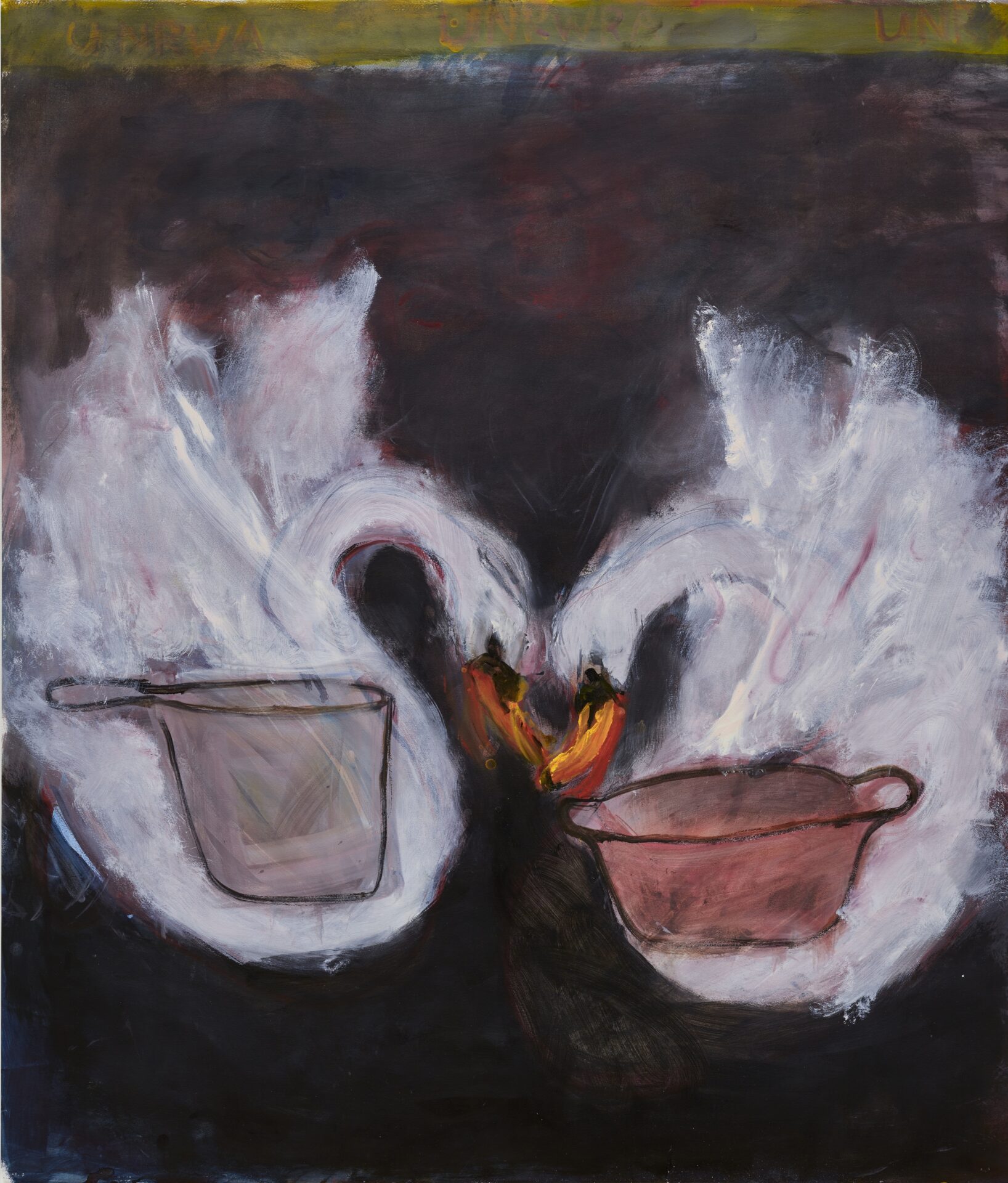
Within the exhibition, three recurring motifs come to the fore: swans, chrysanthemums, and stones. Traditionally associated with beauty and serenity, the swan belongs to a long pastoral tradition in European painting. Nashashibi unsettles this image by placing it beneath the repeated letters UNRWA, the abbreviation for the United Nations Relief and Works Agency for Palestine Refugees in the Near East. The fragile heart shape formed by the swans introduces a moment of intimacy, under conditions of displacement and siege. The empty vessels before them suggest a life held in suspension, where beauty and vulnerability coexist with the realities of exile.
A similar tension appears in the painting Wait Another Week. At first glance, the work resembles a classical floral still life. Chrysanthemums emerge from a dark background, their petals rendered in luminous colours. On closer look, skulls appear in the background, recalling the vanitas tradition, marking the fragility of life.
Nashashibi complicates this reference through the painting’s title. Wait Another Week introduces a different temporality, one shaped not by the finality of death but by the cruelty of waiting. The flowers appear suspended between bloom and disappearance. The flower is no longer a fixed symbol of mourning but part of an ongoing process, shifting between life and image.
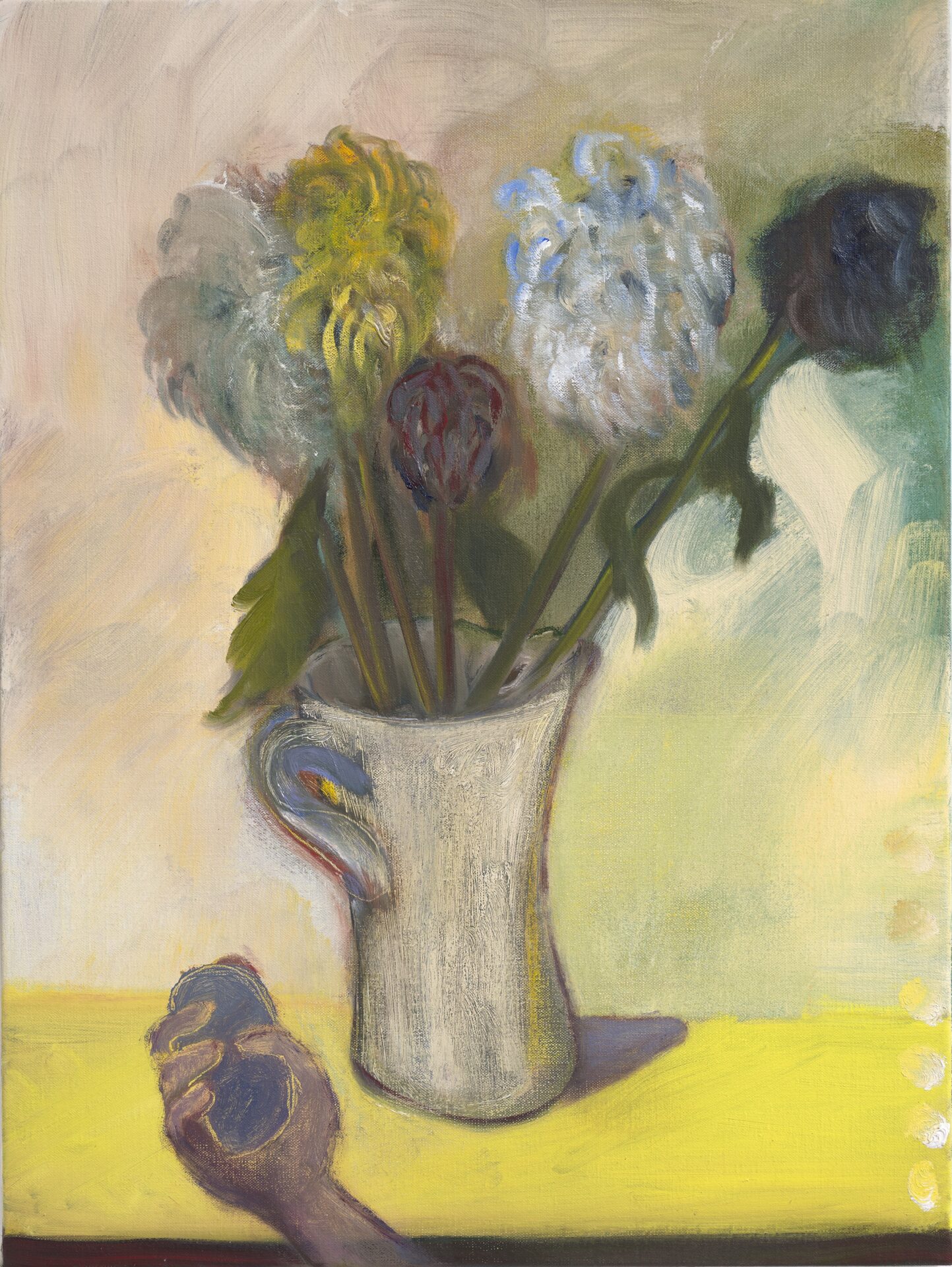
The title of the exhibition, Stones, refers to another recurring motif: a hand holding a stone. As Nashashibi notes, the gesture contains multiple possibilities. A stone may be thrown in resistance, but it may also simply be held. Some of the stones even resemble hearts. The image gathers the tensions at the core of the exhibition: the force of resistance, the act of holding one’s own heart, and the carrying of history, as if what remains, its fragments and residues, could be gathered and held within a single stone. It is within this threshold, between immersion and distance, that her work comes to rest, holding us in a space where presence and disappearance, reality and imagination, remain suspended together.
Stones is on show until the 17th of May at KM21 in The Hague
Elâ Atakan
is a curator and writer based in Amsterdam, working on contemporary art with a research-based approach