A Real Image – Takes on Transparency at A Tale of a Tub
Whilst transparency, as a trope of modernity, may evoke notions of openness and accessibility, the exhibition Takes on Transparency curated by Ruth Noack appears instead to materialise its darker dimensions: how transparency is not necessarily to be trusted.
Can a picture ever show something exactly as it really is? Asks curator Ruth Noack in Takes on Transparency at Tale of a Tub. This is one of many questions and provocations held playfully on a folded ‘decision maker’: a paper square folded into the fortune teller-type game with revealing layers, which is presented in the place of a press release for the group exhibition. Whilst transparency, as a trope of modernity, might evoke ideas of openness, Noack’s exhibition seems to materialise the dark side; how transparency is not necessarily to be trusted and is also about control of visibility and the un-ending challenge of revealing what has been oppressed and forcibly hidden.
The show spreads the artists’ works across the newly expanded space of Tale of a Tub, which for this exhibition means more room to muse and a crispness to the display of each work. Pauline Curnier Jardin and the Feel Good Cooperative’s video is cloaked on four sides like the tapered bellows of an old analogue camera, creating a viewing space on the central ground floor l. The scene is dark, filmed at night, with cicada sounds pervading the exhibition space, intermittently interrupted by cars passing and pausing. There’s no audible dialogue but sharp gazes hit back through the lens: Colombian transgender sex workers in Rome present themselves in the pitch black with torches and light. The control of the flashlight’s beam vies with the camera for control of the image — playing with who gets to be seen, and on whose terms. At first it’s unclear if the light is accosting, or providing safety in visibility, as closed eyelids sparkle against blinding car headlights.
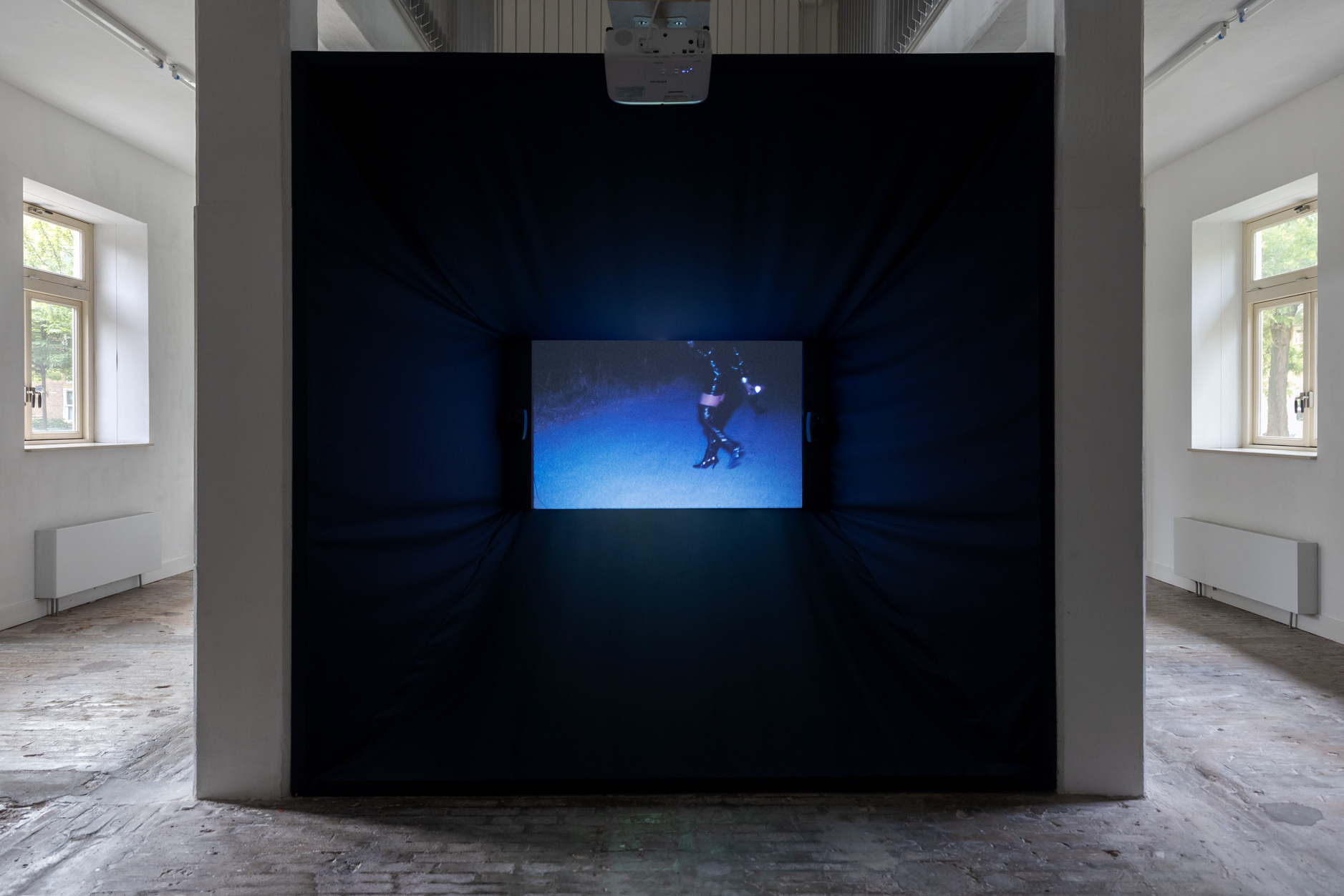
When I find that Fireflies (Lucciole) (2021) is one of ten projects developed with the sex workers depicted and that the Feel Good Cooperative is a foundation that was co-initiated by the artist in an effort to provide financial assistance during the pandemic, solidarity is revealed in the structural development of the film; bound by a collaborative process which encompasses both working relationships in flux and the broader project of dismantling violent subjectification. As Jardin purports: ‘The collective’s works are choral and, starting from the embodied experiences of all the members, propose multiple visions, which are intended to disturb smooth, monolithic and normative representations of reality.’[1]
I’m struck by the combination of confidence and vulnerability, one woman wearing the light as if a glamorous garment, and then contrastingly, stung by its smothering gaze. The film concludes on the edge of the city. As the buildings peter out into grassy hills, torches flicker like touch on bare skin and there is a conscious performativity and revelry in the light. A splattering of something which glows covers erogenous zones, reminiscent of a heat map visualising attention. Breasts and hips shine with this glow, their bodies sculpted by a bioluminescent painterly highlight, and a penis is illuminated in the same twilight blue of the evening sky.
Reading the other questions sporadically as I wander around the show, the ‘decision maker’ prompts me with a pedagogical / art school openness, setting a tone which, like Jardin’s sentiment of the choral and disturbed monolithic representations, wants to fragment a singular truth and assert the variousness of each ‘take’. There are many ‘right’ answers. The mass printed format of this ‘decision maker’ hasn’t got the intimacy of a handwritten version passed as a note at school between friends but I still feel addressed by a curatorial conversation. The folded paper object feels pivotal in activating an awareness of Noack’s dialectic approach; the unresolved tension she’s setting up about how we engage with the works and sense of resolve (or not) about the questions posed. Something about it seems cheesy… the over-didacticism of a (rhetorical) question? But perhaps this is the aesthetic of transparency in action and it’s something of my own discomfort with the pedagogical sincerity that I’m sensing? Or, something about treading this fine line between an intimate form of address, carried through text, between friends in school and then the teacher, trying to be ‘on a level’? It’s a productive tension either way. A playful way to engage with the questions brought up within the works. And, these are questions which branch out of the works into life, to carry with you as you leave the exhibition: Have you ever thought you understand who a person is from just looking at them? Is being visible always safe? Who has power over what you see in public?
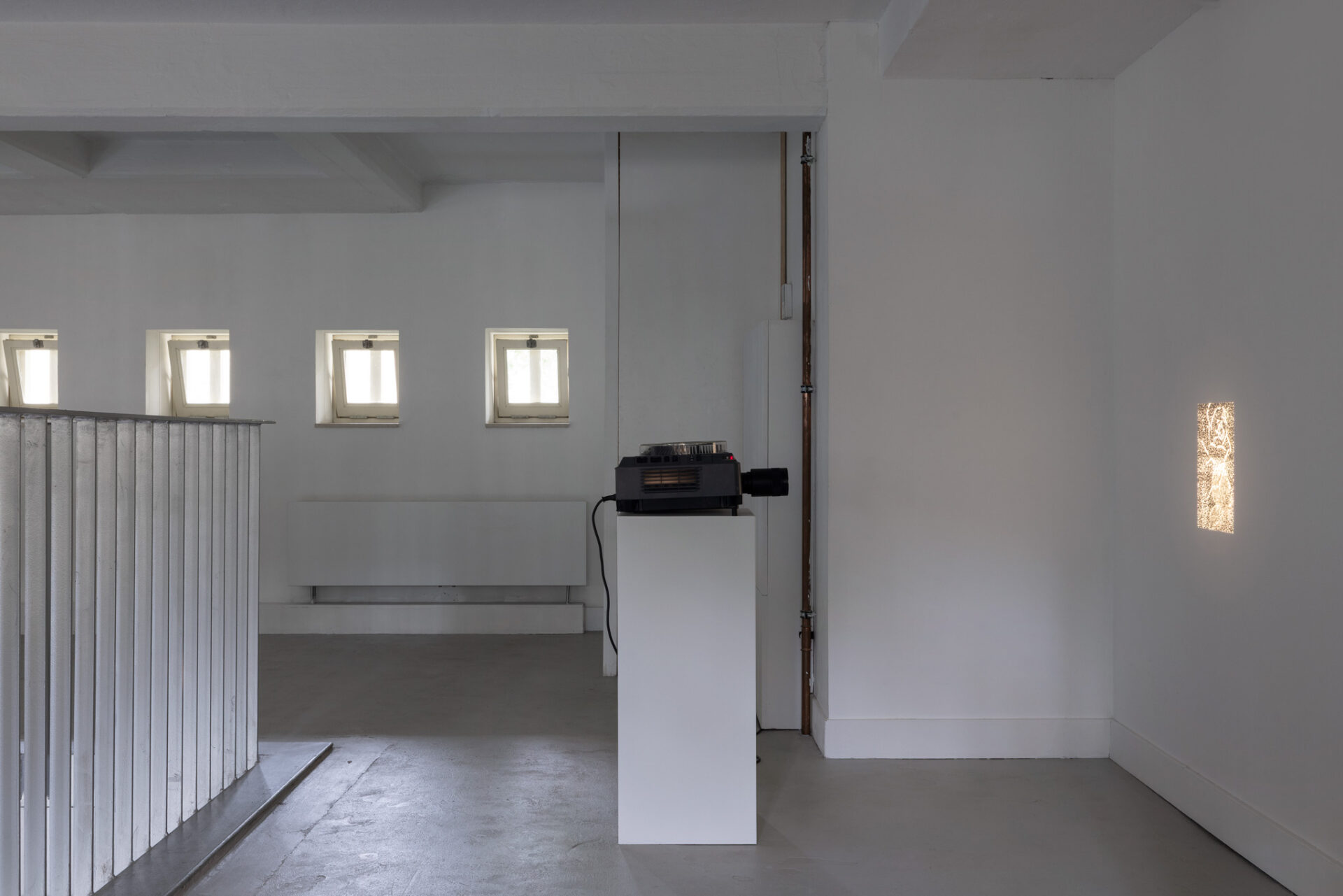
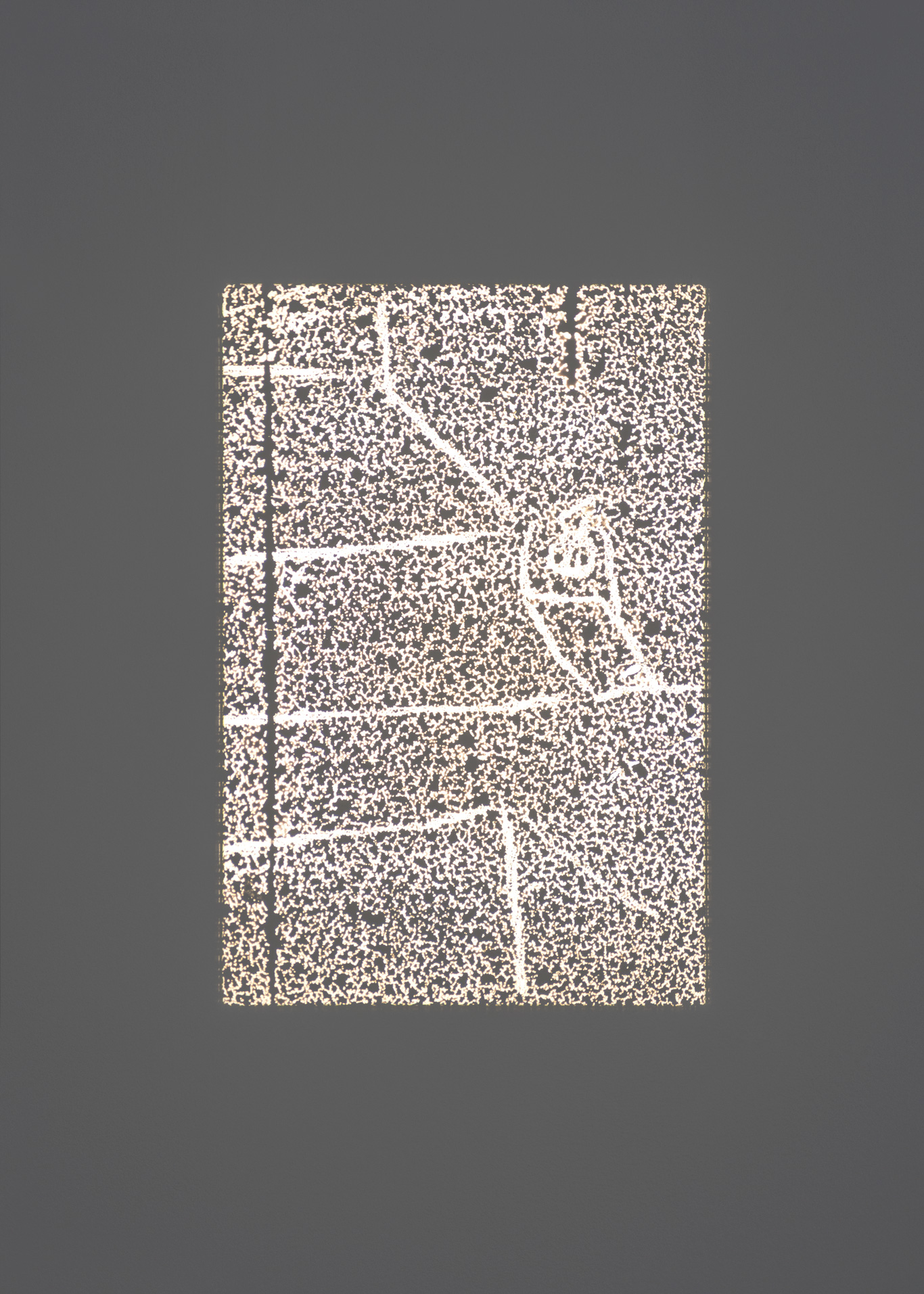
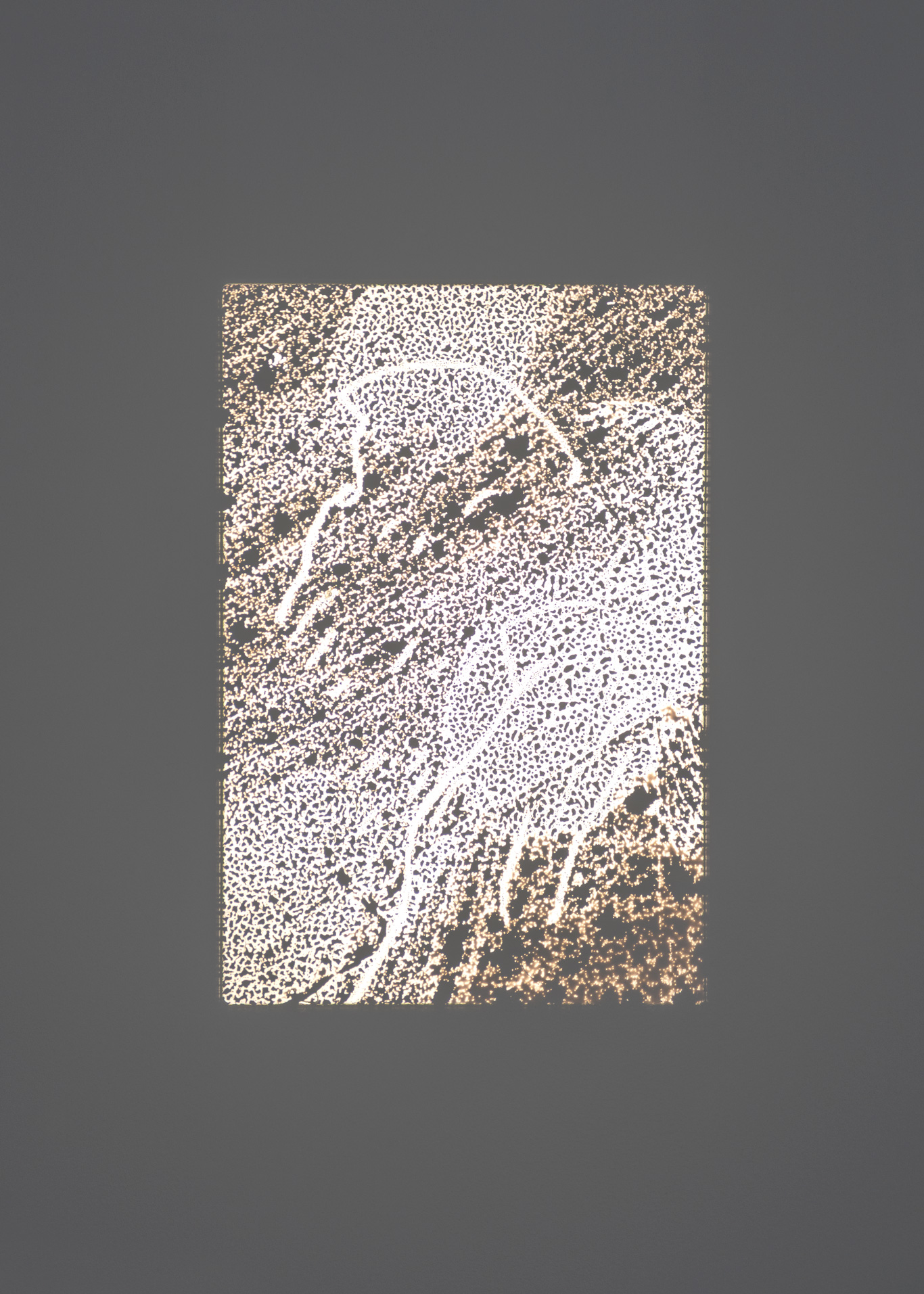
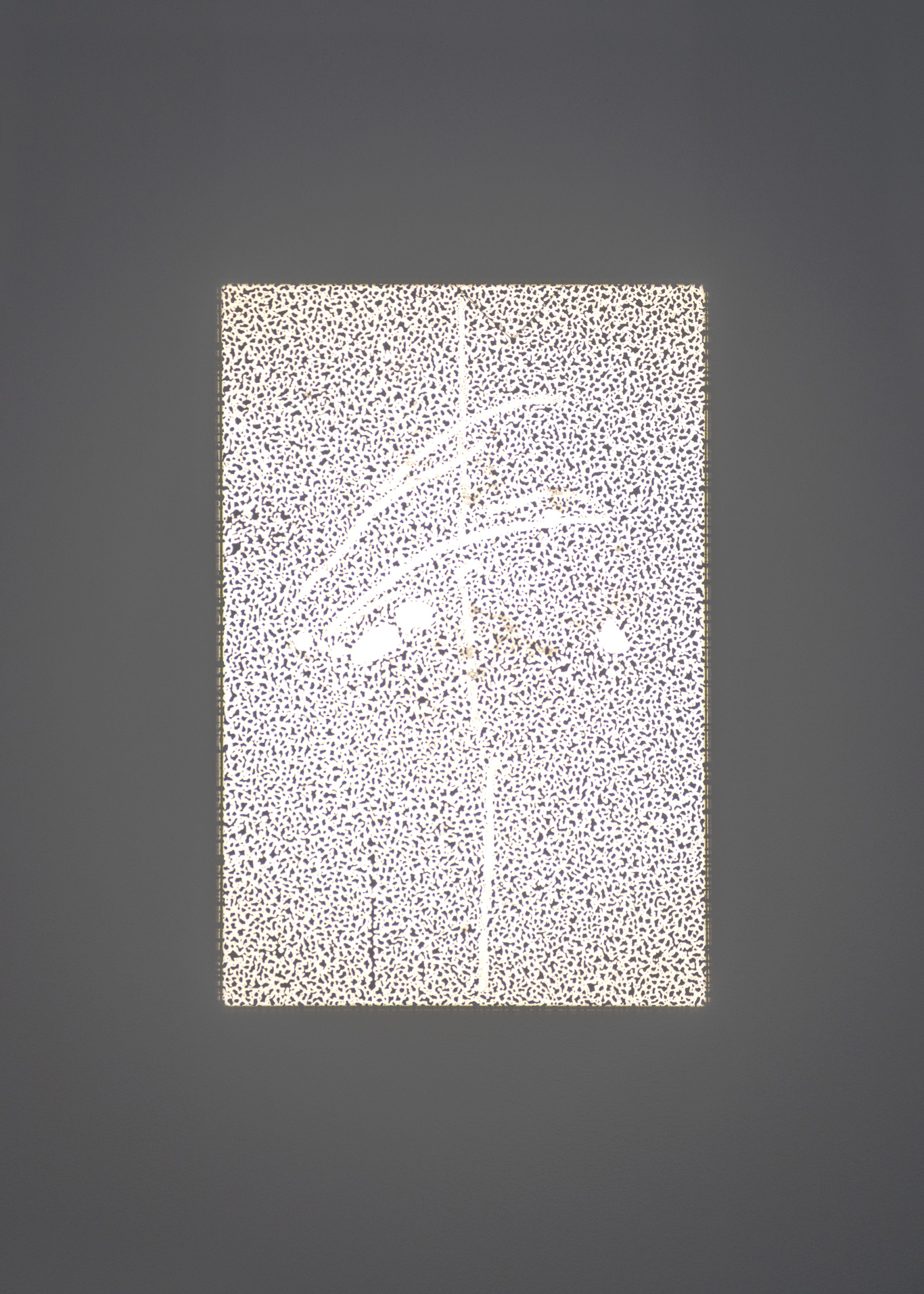
On the mezzanine, I wait for the slide carousel in Ilke Gers work to make its round. In anticipation of the filled slides, I look through the transparent plastic at the machine’s inner workings on display, the technical support for the images to come. Gers’ abstract black and white slides stay ambiguous as I watch. A few swiped lines on black spots, like granite. A print texture, maybe wet sponge lines dried over the slide. I see diagrammatic lines that seem to refer outside of themselves. The outlined profile of a face? Or just a hand jogged as it carries a vertical line from top to bottom? Entirely visible and for a brief moment incomprehensible, before the abstraction speaks in its material terms and the poetic license to read and describe guides me. Gers’ prints are anchored in their production processes. The graphite drawings, which were made on the site of a space observatory, are inverted and translated to a printed inkjet ‘image’ which does not hold. The ink smudges into another form of (still) faithful imaging, yet these imaged-marks are true to the artist, the oil of their fingerprints and the dust of the space of production—rather than the grander machinery of truth that an image-and-world-forming space observatory might dictate. These recently made prints were first shown as wall-based works at Air Berlin Alexanderplatz where they were accompanied by a print out with text by the artist detailing global, historical and personal references to dust and space observation. In that first iteration Gers’ notes the DIY ionisers her dad built in the 80s to manage allergies (small flat devices that would crudely catch the electrostatic particles of dust in family bedrooms) together with explanations of the cosmic dust of early astronomy and descriptions of the visible dust rings of Neptune; the residue of moon collisions. Ilke Gers take on transparency is one of ideology and scale. Dust seems to be part of the medium of the work, but so is a zoomed-out view from space on the intentional and accidental broadcast of what we do and why as humans — a kind of cause and effect reminder that perspective changes everything.
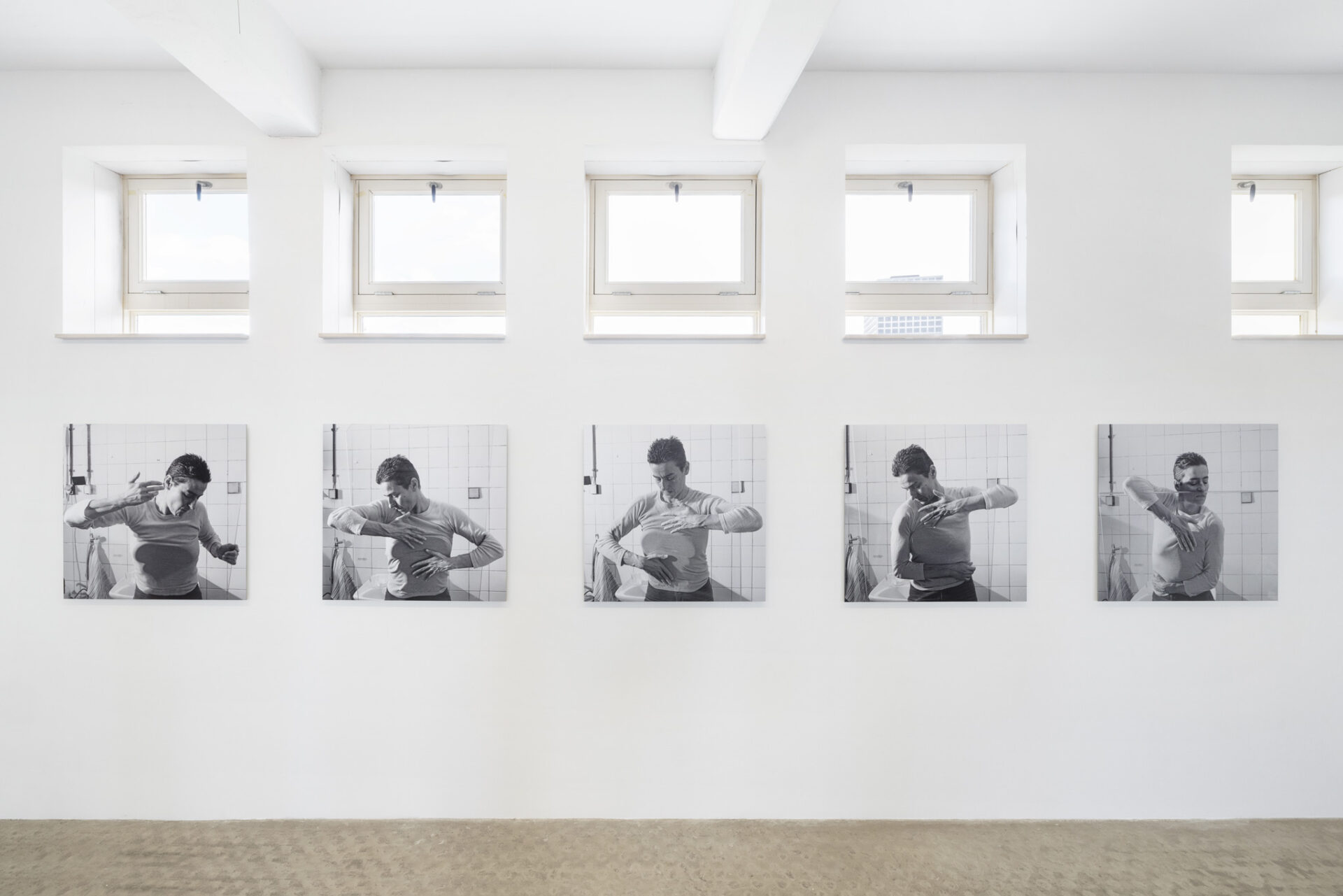
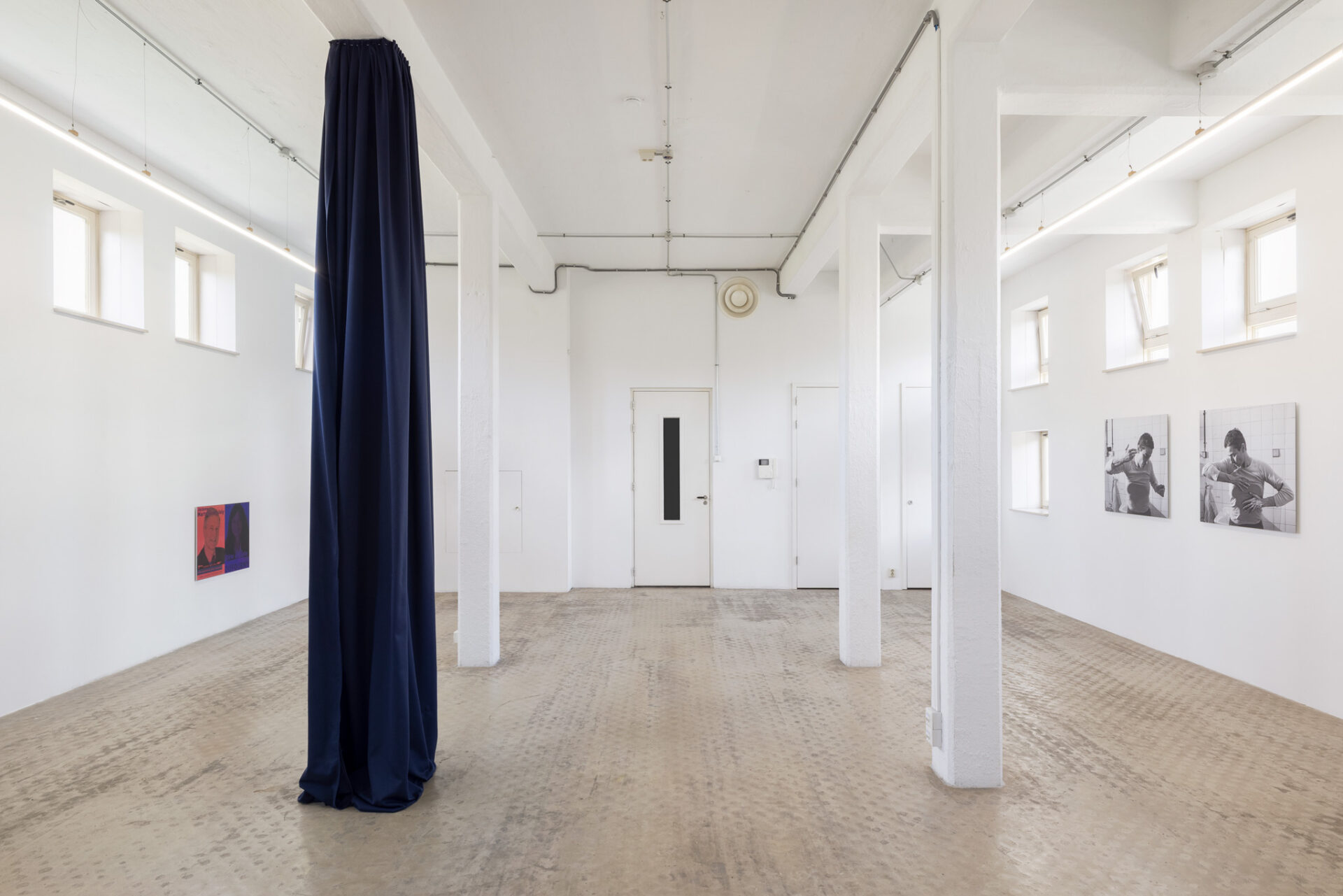
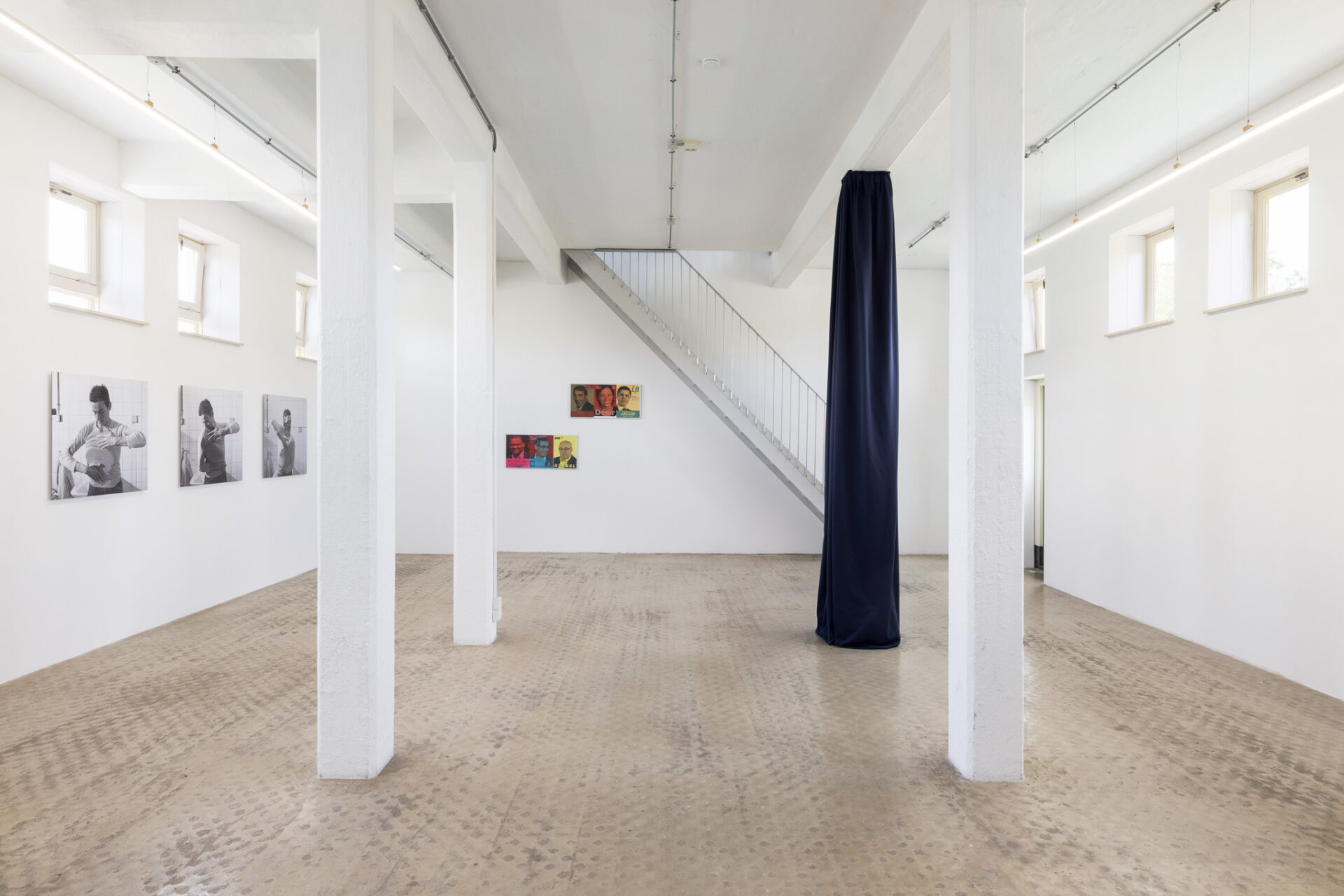
Upstairs, in the new space, one of the four architectural columns is dressed ‘head to toe’ as it were, in the same black fabric as the projection screen downstairs, quickly pleated and stapled. For a minute I think about the likelihood of this curtain, which completely obscures my vision of a column, actually being a ruse, for an empty space where I just expect a column to be. Rather than another work, it’s a curatorial choice that underlines the modernist architecture of A Tale of A Tub and draws attention to transparency’s inverse: opacity. Anchan/Anna Daučíková’s work is shown here; Upbringing by Touch (1996/2020). Five photographs where we see the artist navigating a difficult physical interaction that seems to be a placeholder for external judgement: her chest and torso forcefully pressed against a transparent surface of glass. There’s a kind of wrestle going on with this flat plane, of the process of becoming-an-image. She seems to apply the pressure of contortion herself but is trapped by it too.
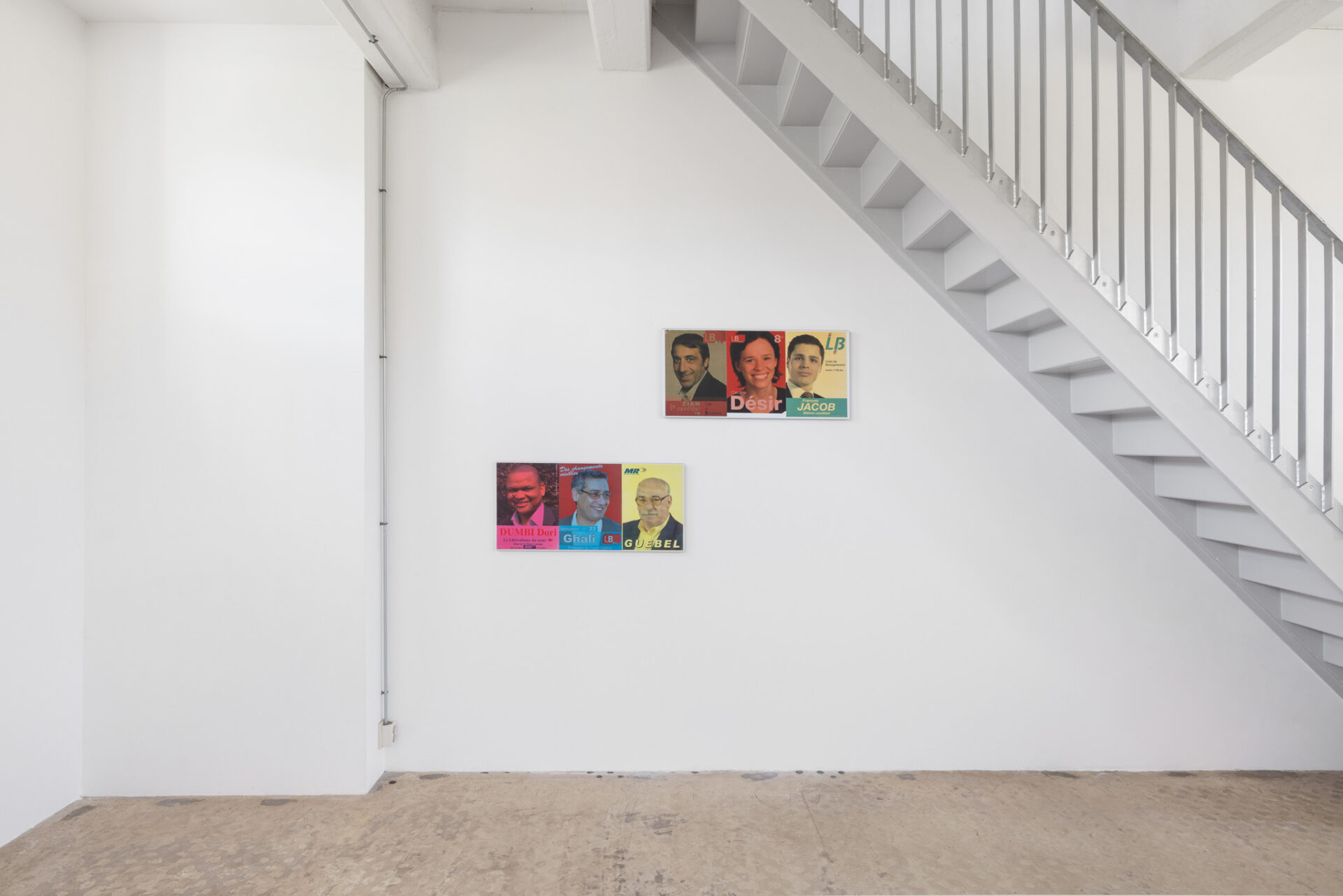
On the same floor, contrived smiles stare out of the campaign posters in Willem Oorebeek’s work: Monochromatic Studies (2007). Thinly veiled colours cover the faces on the posters but it’s a visual nuance that does little to change the power of multiple politicians’ gazes surrounding you in a room. On the street, where the various visual campaigns in their original form would have jostled for presence, I imagine their visual volume to be dampened by all the other activity and movement that goes on in a city, but here, spaced out on white walls, their presence is kind of slick and aggressive.
Art about reading-images is often contextualised by its complicated (non-human) production or authorship. Noack brings the social aspect of this to the fore: Who we identify as, how we feel, what we can trust; both as individuals and with a sense of humanity that is collective, with shared systems and networks of communication and presence. In Takes on Transparency Noack nuances a blindly positive interpretation of transparency (completely honest/nothing to hide) as that first rhetorical question turned statement could describe: A picture can’t ever show something ‘exactly’ as it ‘really is’ because exactly how something is ‘pictured’, is formed through the art of communication. A form which is grounded as it is situated, unpacked, and read. In Noack’s hands, the single-picture-idea falls prey to the twist of a kaleidoscope, with further questions communicated in as many various and idiosyncratic ways as there are of each of us, looking and thinking and reading along.
Takes on Transparency, 13.6 – 30.8.2026, A Tale of a Tub, Rotterdam. MORE INFO
[1] https://paulinecurnierjardin.com/feel-good/
Anastasia Shin