For Whom the Bell Tolls – ‘From the Cosmos to the Commons: Fire’ in Hamburg
Including works by Saodat Ismailova, Cecilia Vicuña, and Agnes Denes, Fire is a star-studded outdoor exhibition in Hamburg. Centered around the St. Nikolai Memorial, curator Joanna Warsza has devoted her summer exhibition—the second in a series of five titled From the Cosmos to the Commons—to the element of fire. Peter Vermeulen reports.
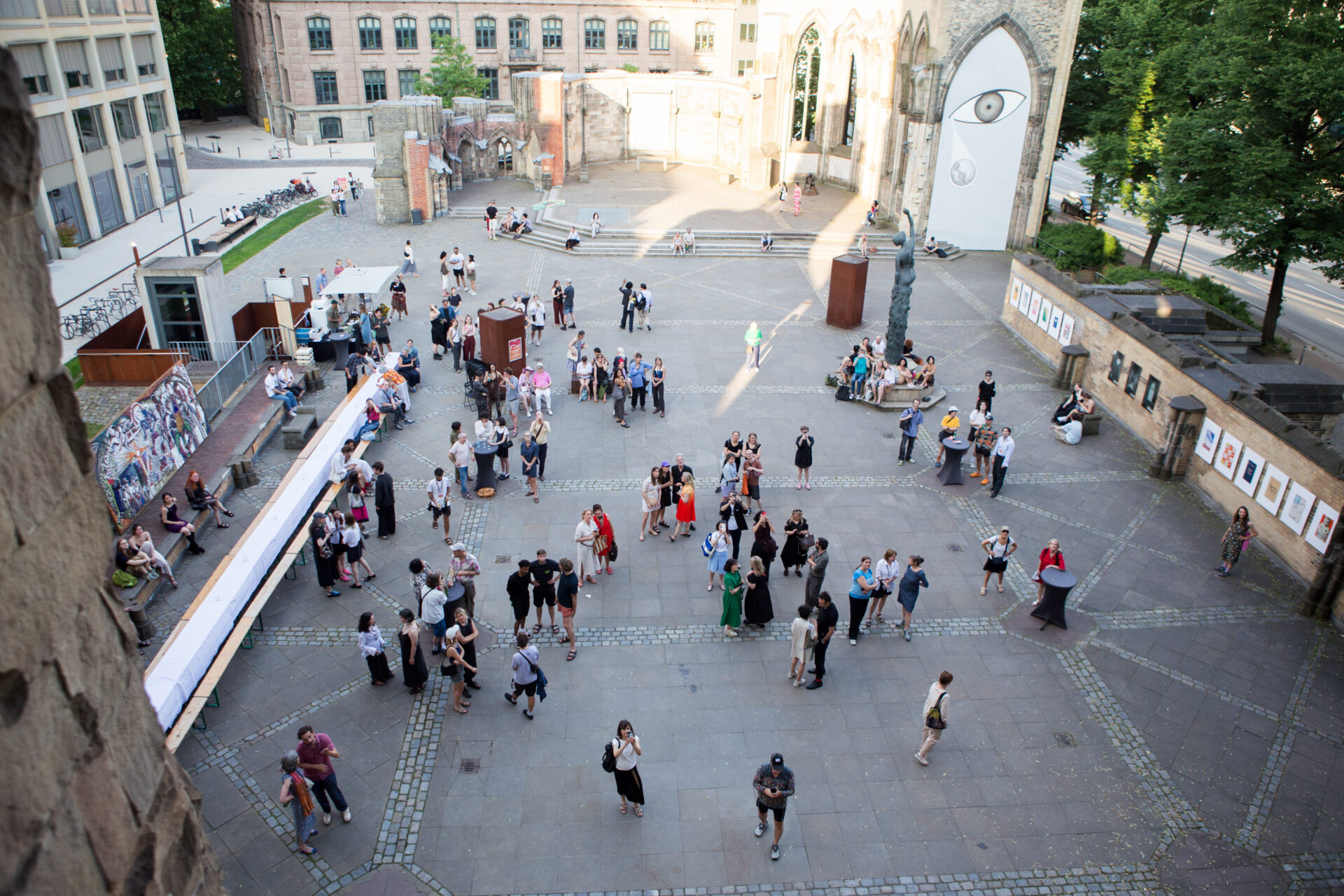
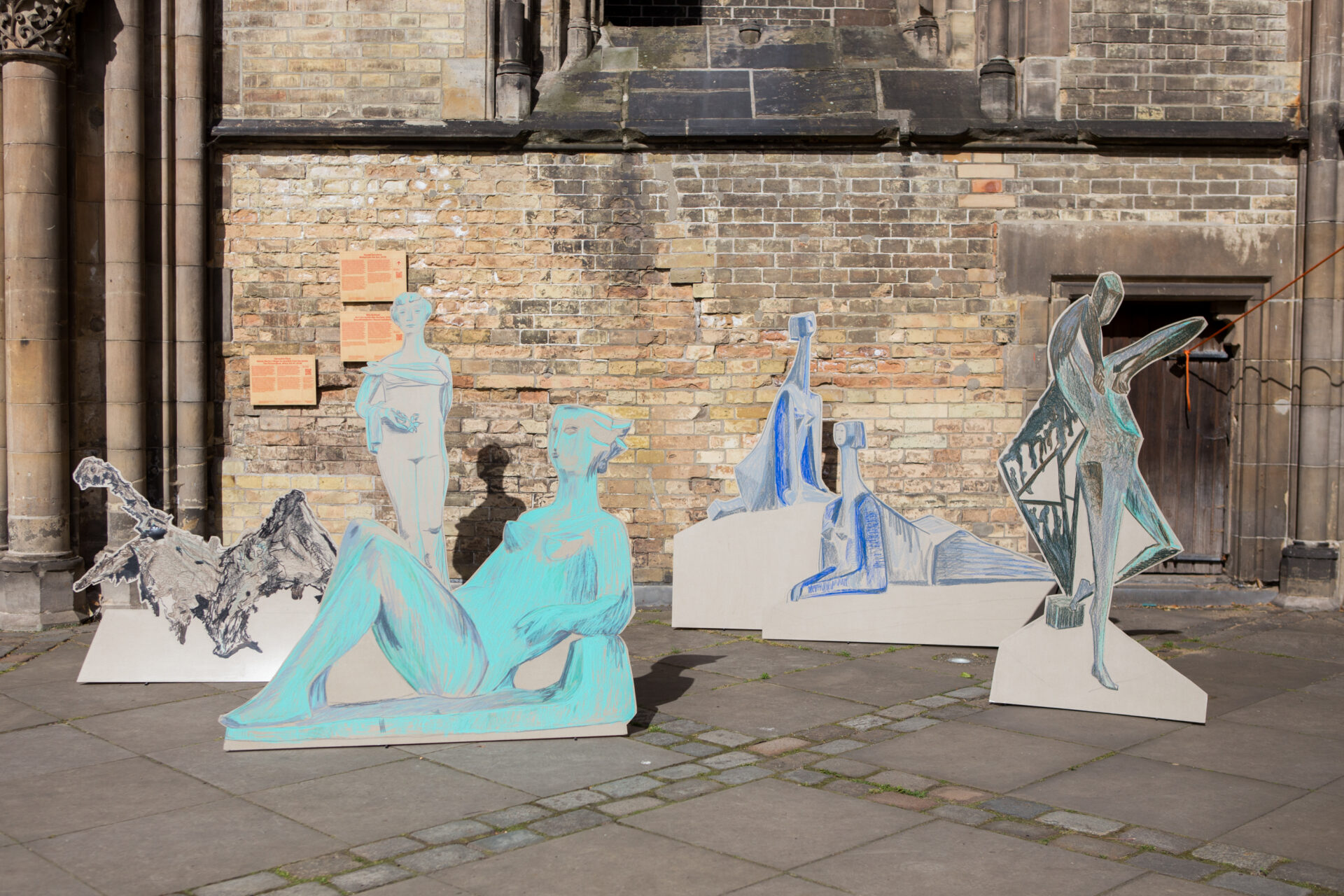
I meet Joanna Warsza, the city curator of Hamburg, on the square in front of the St. Nikolai Memorial in Hamburg. The church, which burned down twice – the last time during the Allied air raids of Operation Gomorrah in the Second World War – has been preserved in its ruinous state. Only its monumental tower remains, as both a landmark and a scar in the urban fabric; a reminder of a not-so-distant past. The site is this year’s location for From the Cosmos to the Commons, Warsza’s five-year curatorial programme for the city. After last year’s exploration of the meta-element cosmos, the current edition turns to fire, as a force of destruction and transformation, before moving on to the other classical elements of air, earth, and water in the years to come. At the intersection of the vertical axis of the cosmos and the horizontal axis of the commons, Warsza’s programme proposes a critical and speculative engagement with the planetary public sphere. Through exhibitions, conferences, newly commissioned works, performances, walks, and other public formats, it aims to spark new ways of imagining the entanglements of ecological forces, social life, and collective coexistence.
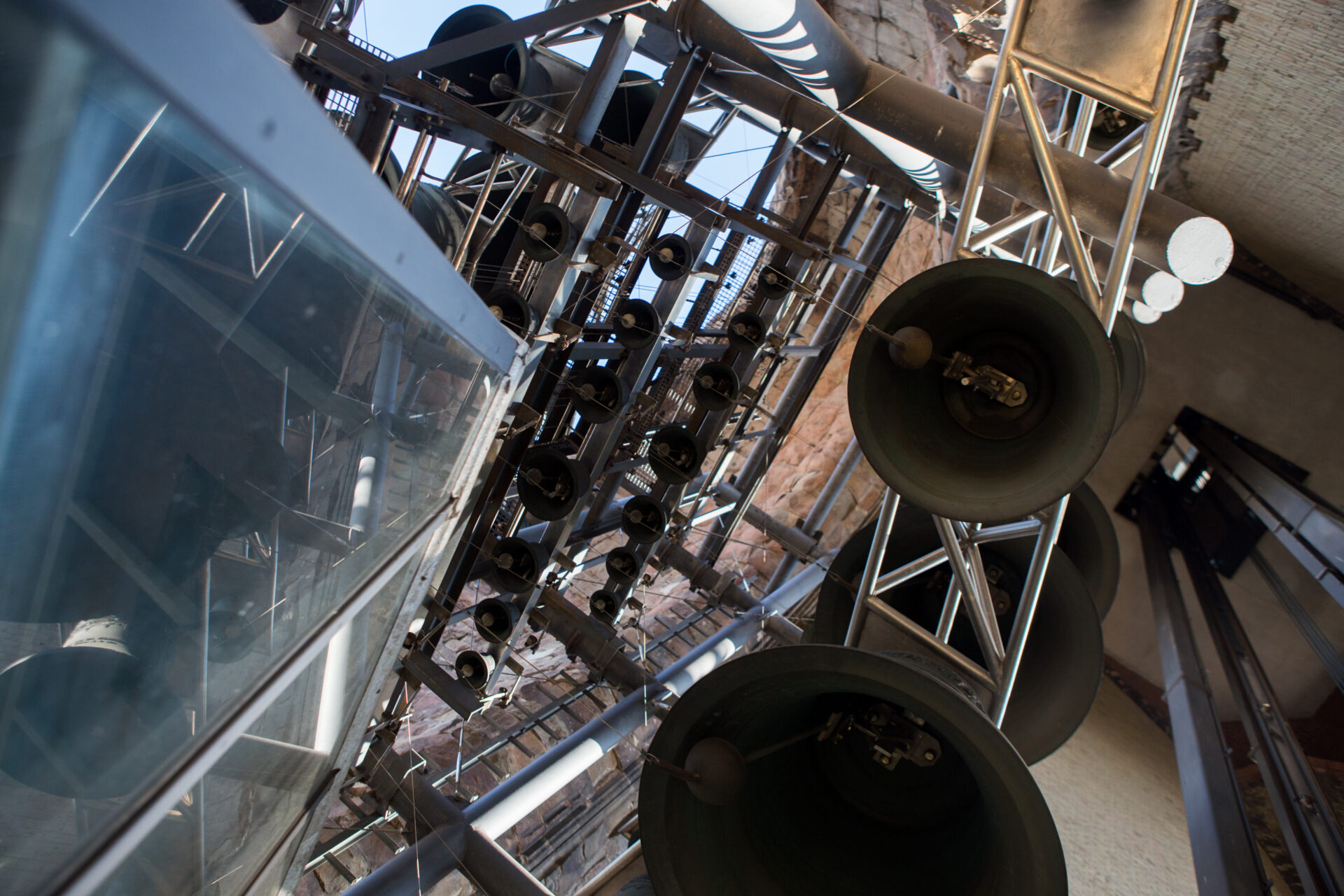
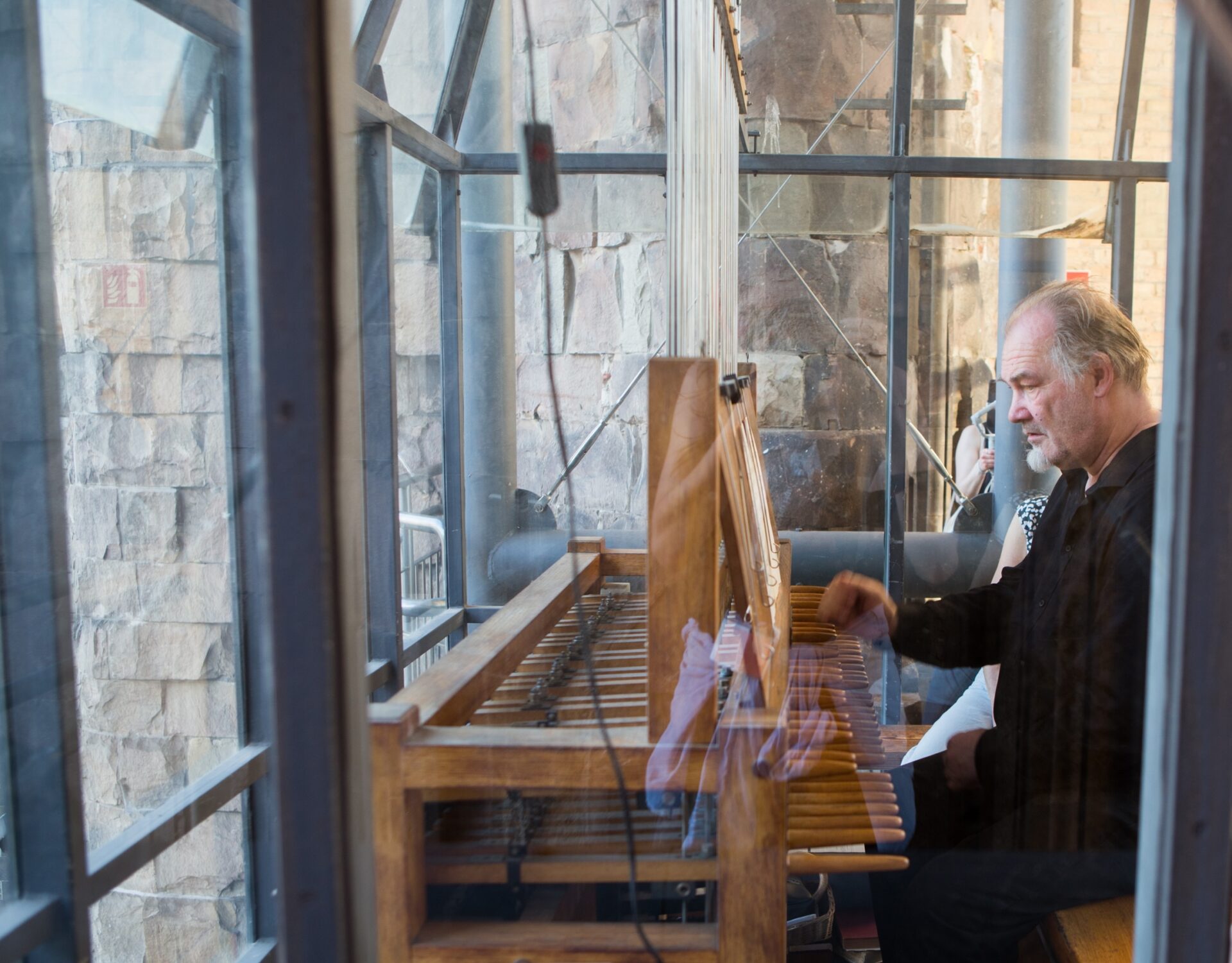
I am joined by a delegation from the Berlin Biennale and a group of students from the Hamburg University of Fine Arts (HFBK). As Warsza introduces the program, she must raise her voice over the sound of the church’s carillon. The 51-bell instrument occupies the façade of the ruined tower, facing a black-and-white reproduction of Ecce Homines (1974), a mosaic by Oskar Kokoschka and Sergio Cicognani, installed above the altar in the rebuilt St. Nicholas Church elsewhere in town.
Several contemporary artists have been invited to intervene within this liturgical setting. Among them is Billy Bultheel. Researched in collaboration with the Lebanese writer Edwin Nas, Bultheel was inspired by the Nazi confiscation of thousands of church bells, which were melted down to provide raw material for the arms industry. His composition, a prologue to his performance series A History of Decay, named after Emil Cioran’s 1949 book, is performed every Saturday throughout the program, alongside a newly commissioned work to premiere in September.
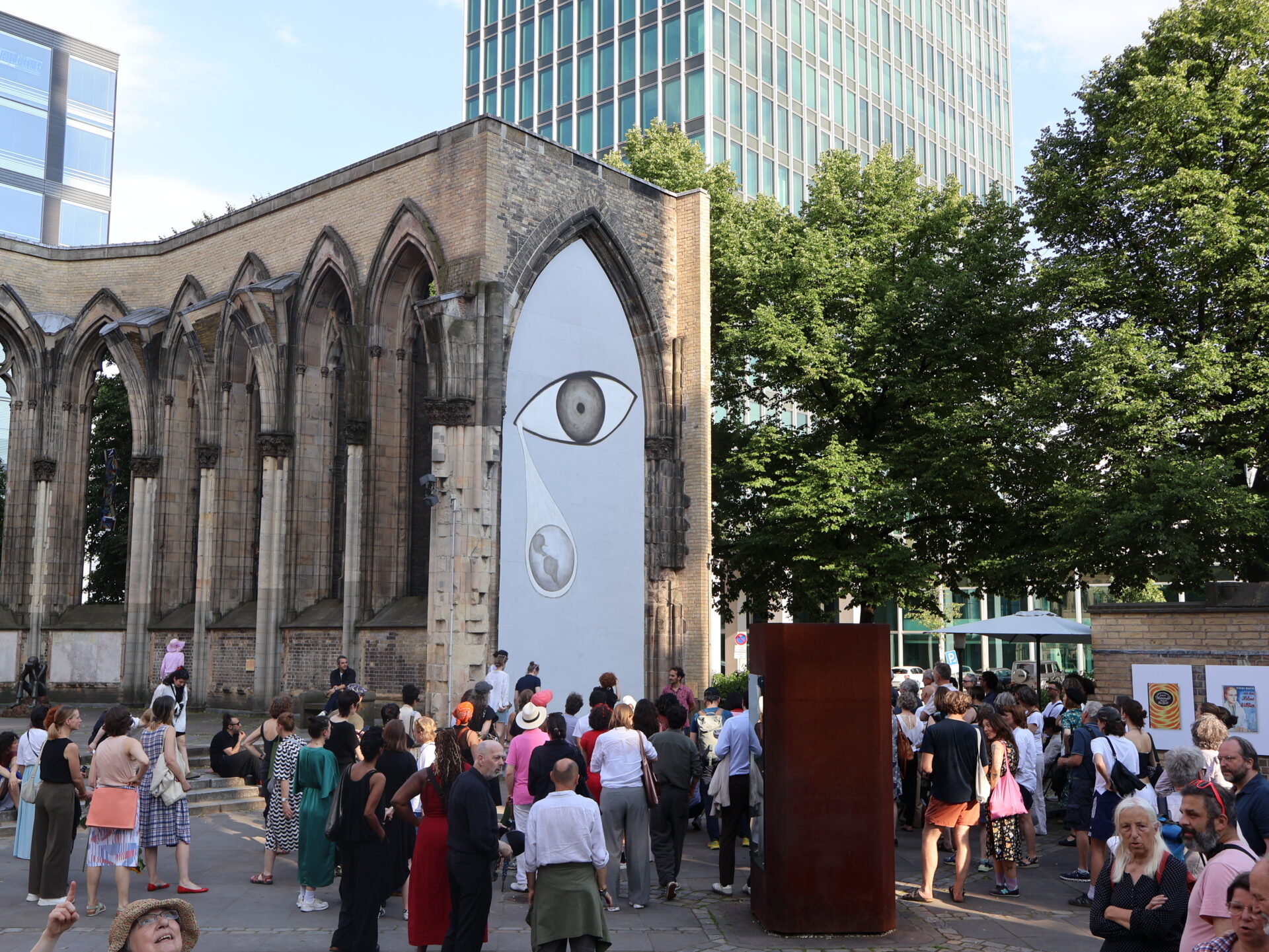
Another new commission is a large-scale mural that approaches the theme of fire from a more ecological angle. Realised by local artist Coco Bergholm and based on an oil painting by Chilean artist Cecilia Vicuña, the artwork portrays a single eye shedding a tear in which the Earth is reflected. As Warsza explains, its muted colour palette is physically infused with ashes from the Amazon rainforest, grounding the piece in a material and symbolic connection to environmental devastation.
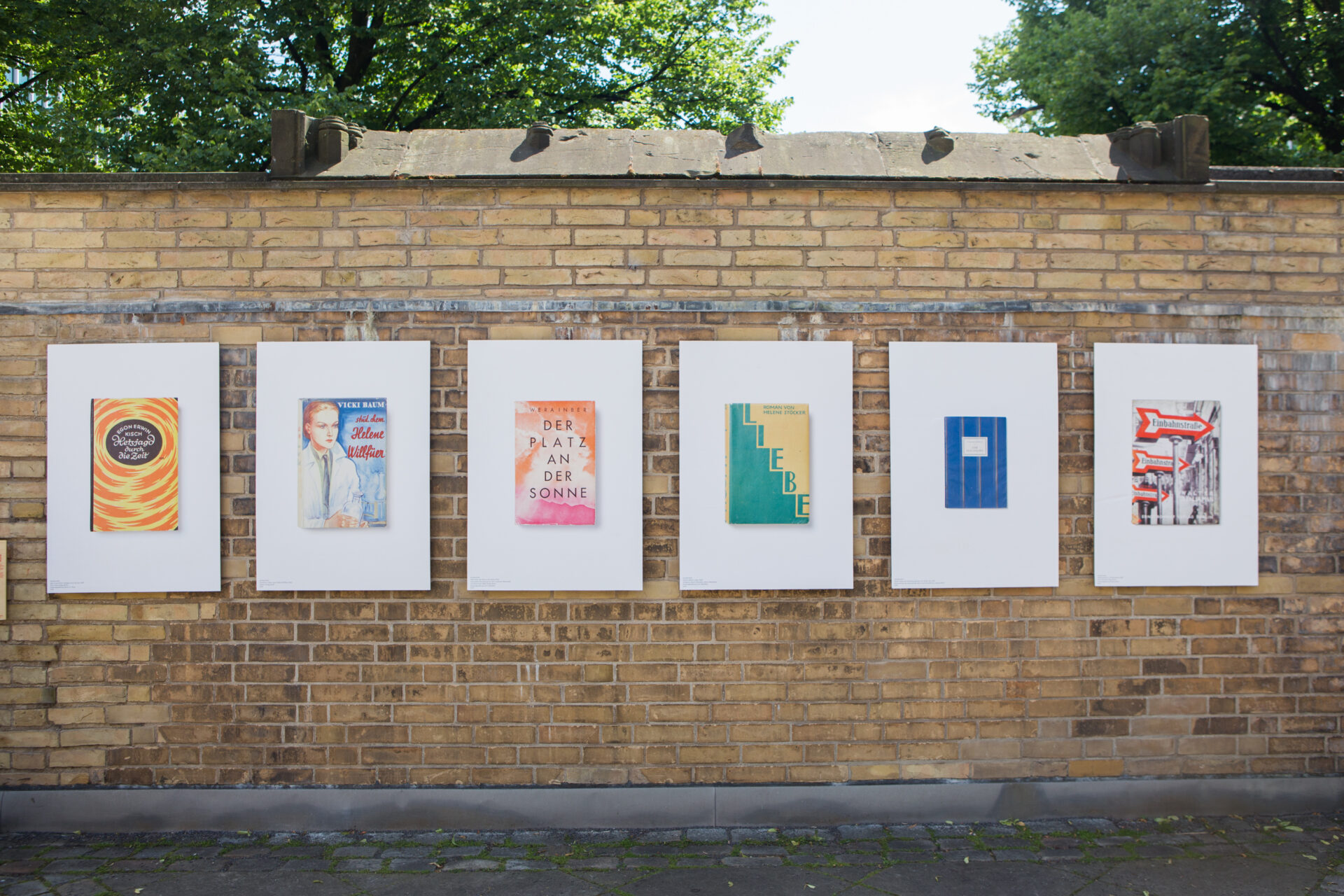
Also shown on the outside wall of the church are placards by Annette Kelm, a photographic series documenting books from the burned library of the Jewish publisher and collector Salman Schocken, currently part of the Hamburger Kunsthalle collection. It includes book covers that were deemed culturally unworthy or un-German such as Benjamin’s Einbahnstrasse (1928), Zweig’s Der Flüchtling (1919), and Helene Stöcker’s Liebe (1922).
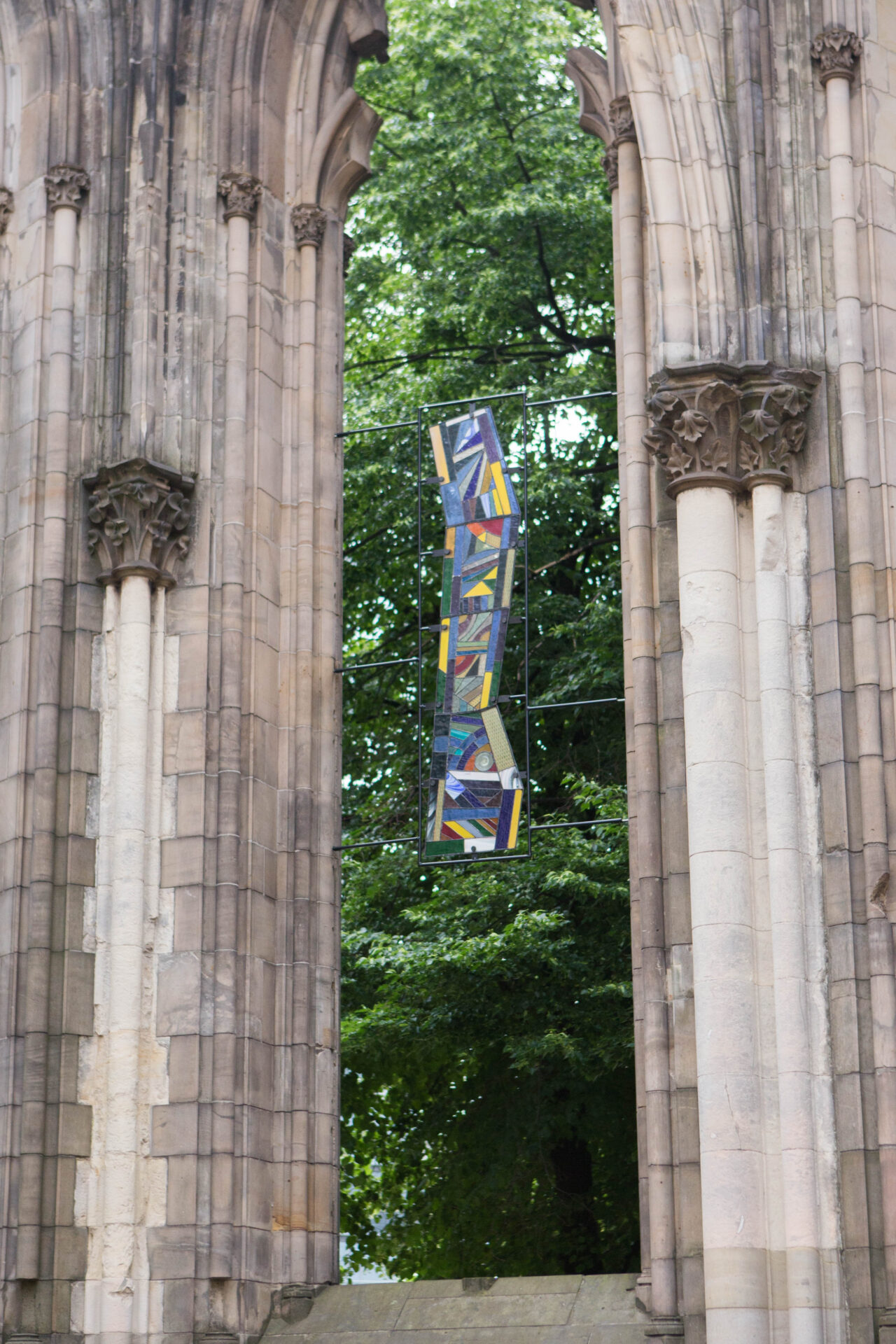
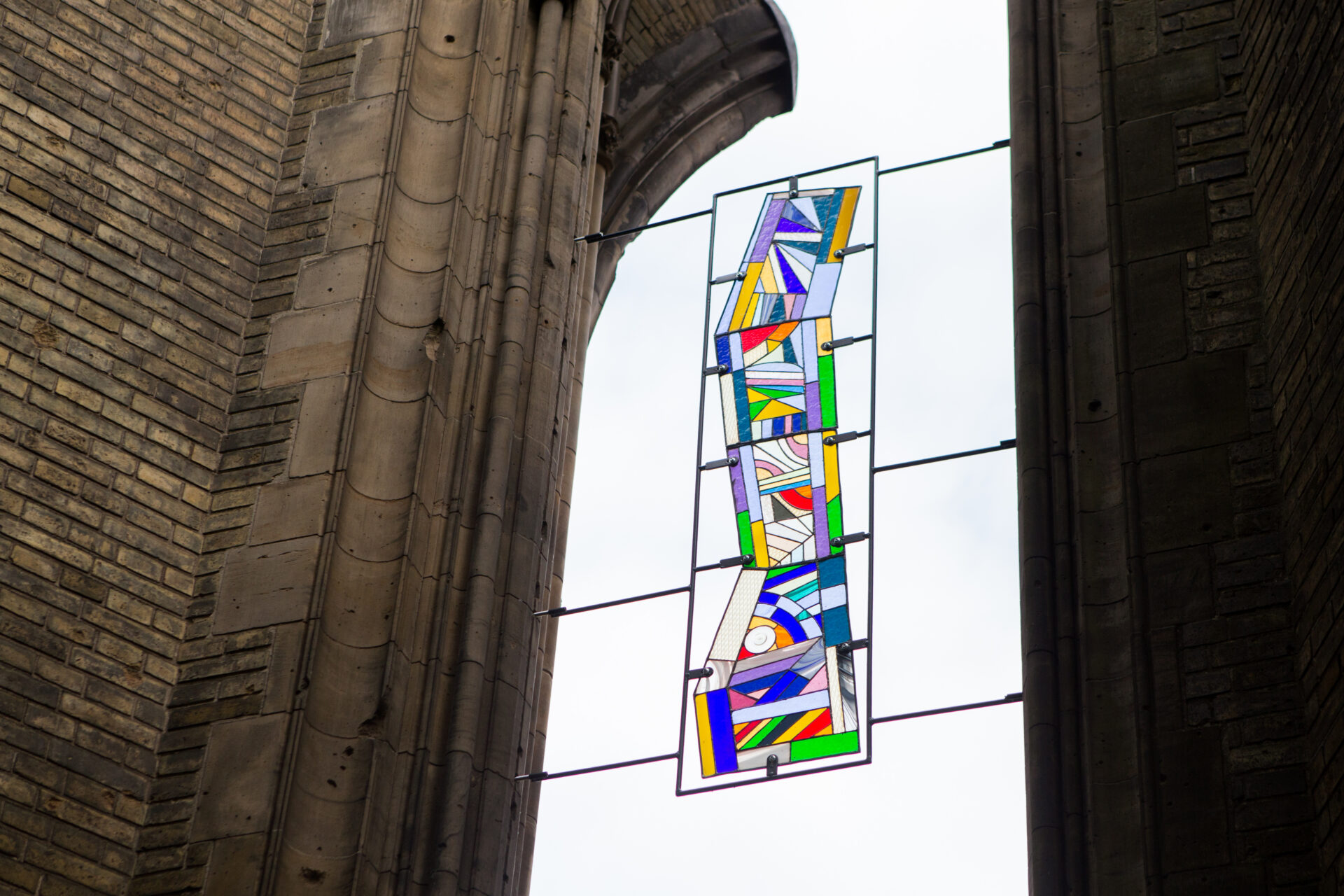
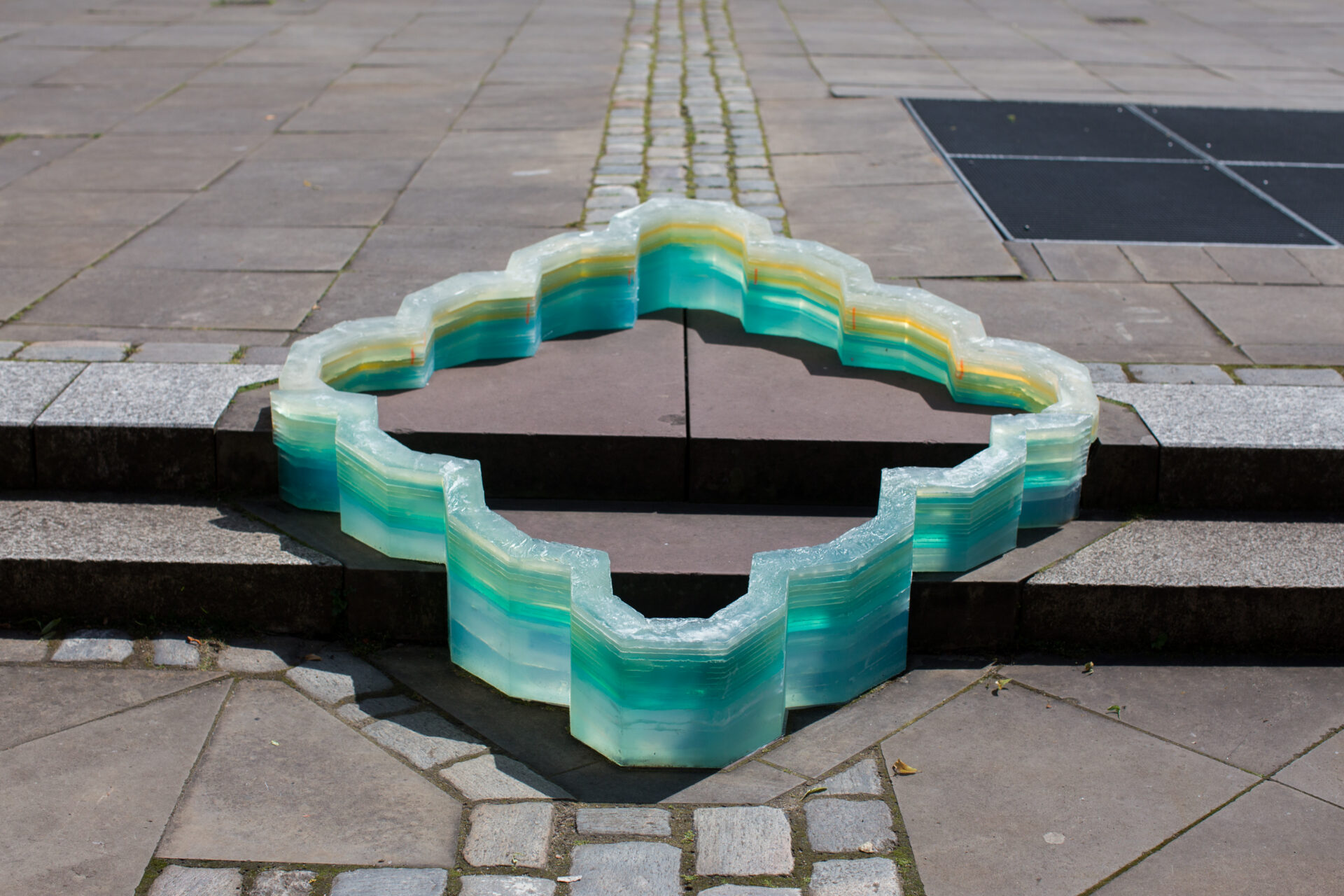
Iranian-born artist Neda Saaedi created a site-specific installation inside the ruined church entitled Vanished Topography. Reusing glass shards, the work consists of abstract, vivid motifs inspired by historical maps of the city’s waterways, which had been filled with debris in the wake of the Second World War. They are installed in the vacant Gothic apertures where stained-glass windows depicting biblical allegories originally stood. Another impressive new commission is a narrative mosaic in a social-realistic style by the prolific Polish artist Mikołaj Sobczak, focused on marginalized histories of queer resistance and political persecution.
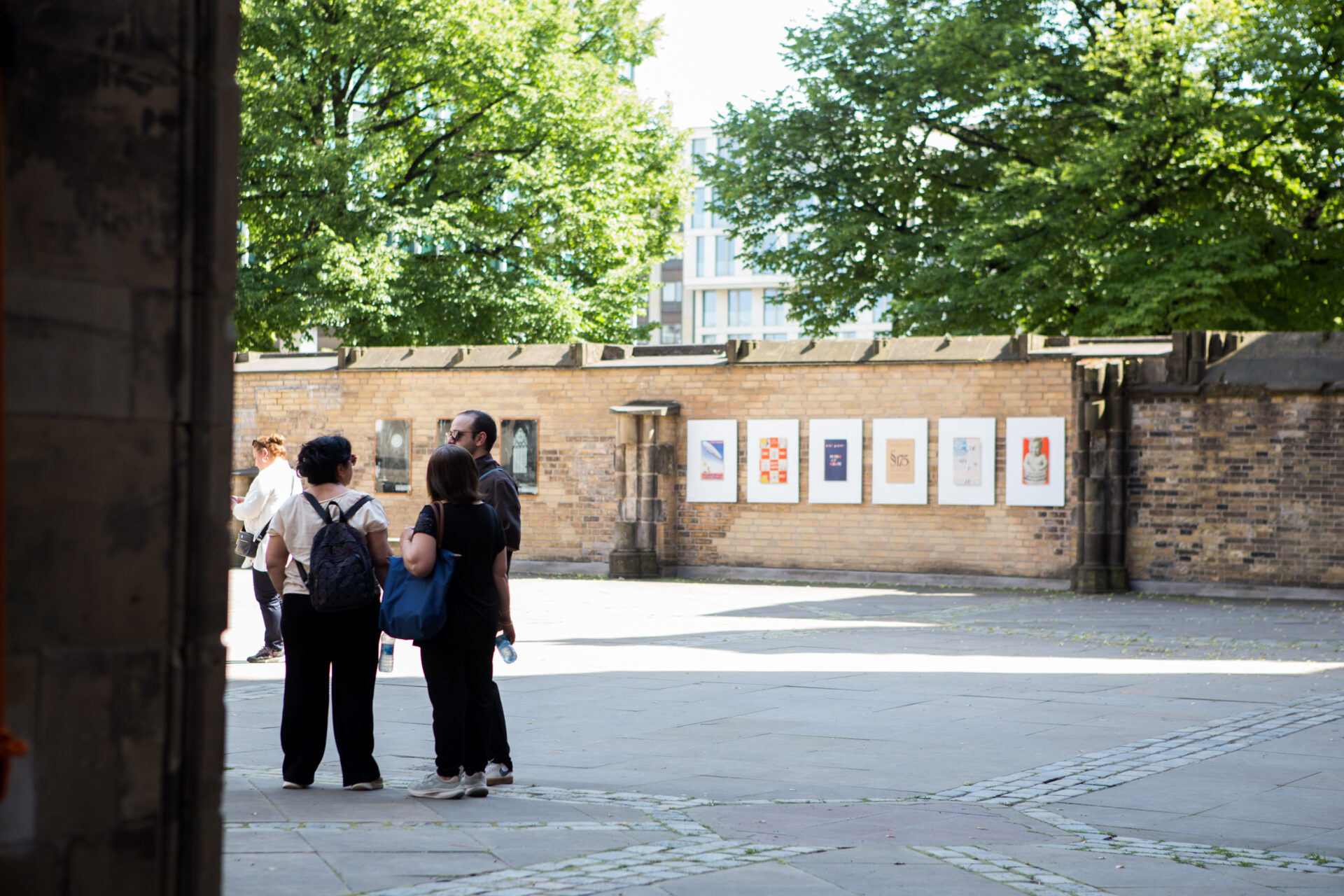
The artistic positions installed in the church’s courtyard echo its troubled history while also grounding it in the present. As the guided tour leads us inside, I notice a portable air-raid siren beside the entrance desk, seemingly ready to be reactivated at any moment. We descend into the basement, not only a place of shelter during wartime, but also – more symbolically – a repository of repressed memories and acts of disavowal.
The question of whether we live in pre-war or wartime conditions depends largely on the boundaries of this ‘we’. This collective dimension also lies at the heart of public monuments
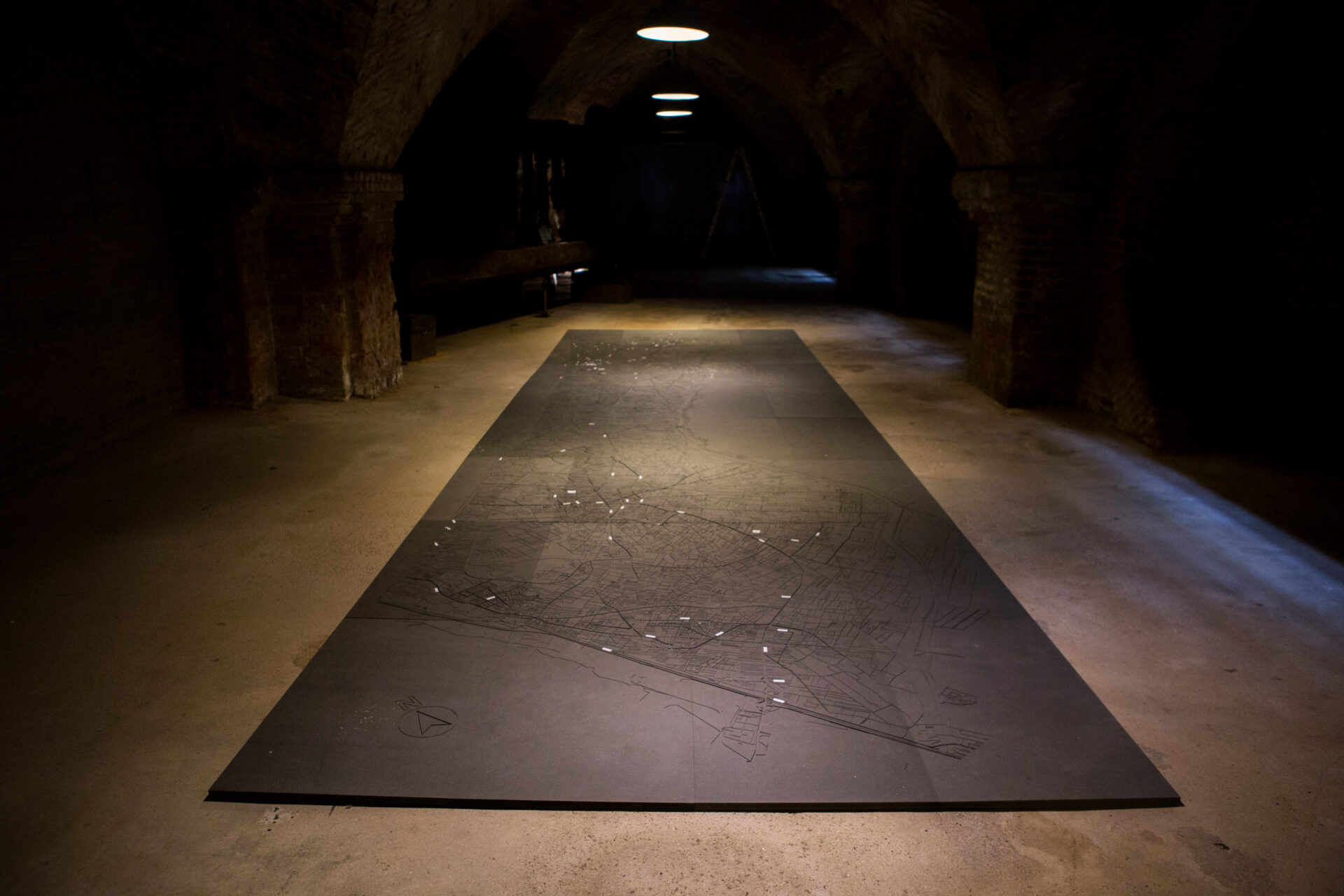
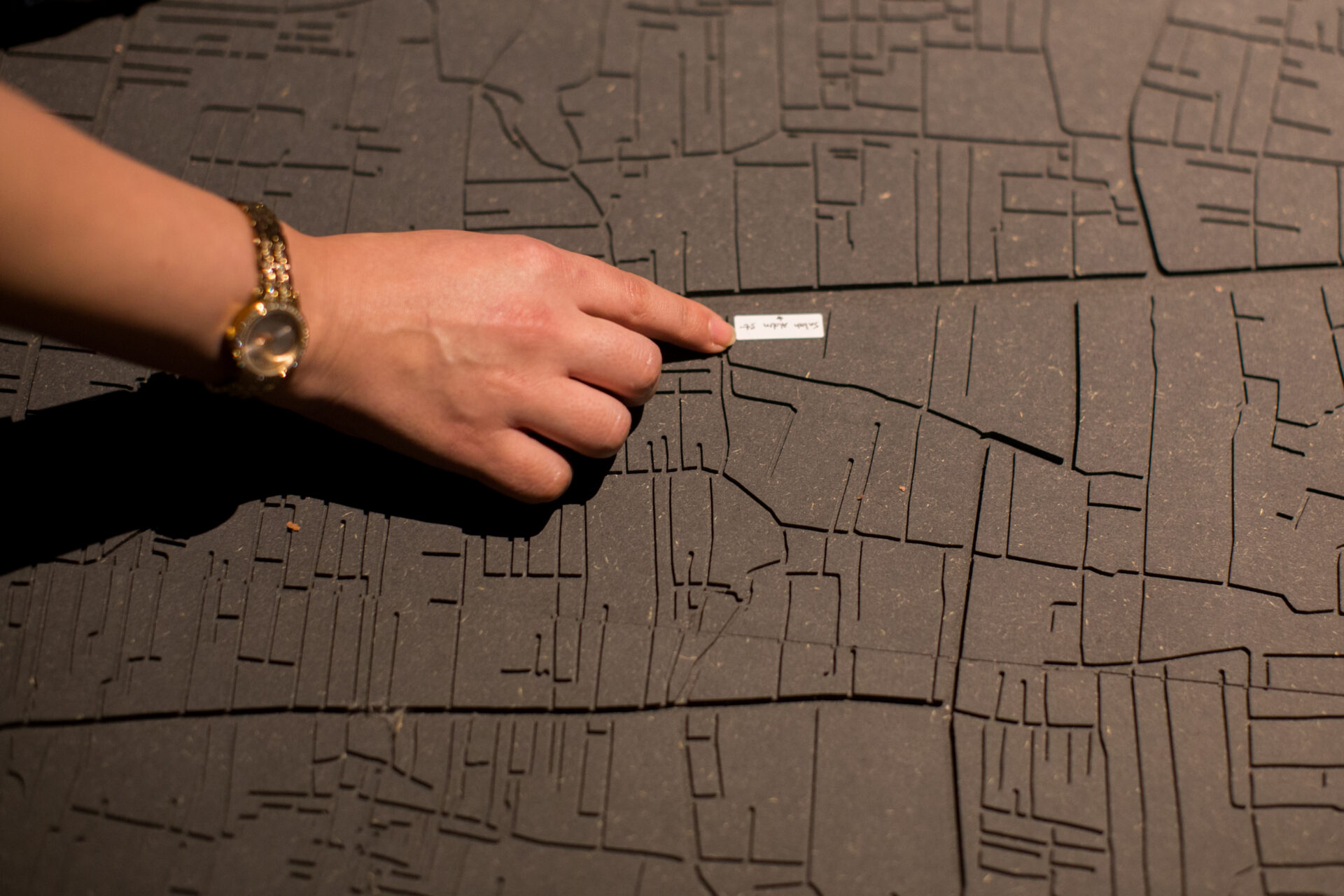
Spread across the floor is a vast map tracing the Gaza strip, laser-cut in black wooden panels. The work by Palestinian artist and architect Hala Alnaj, travelling from Kunsthal Gent, was initially produced in Cairo on a piece of fabric collectively stitched by displaced Palestinians who were able to leave Gaza after October 7, 2023. Members of the community are invited to add their own marks onto the cartographic grid, creating concrete, embodied, narrative anchors for experiences of trauma and displacement. Unlike the ruins of St. Nikolai, which preserve a visible scar of past violence, Alnaji’s work confronts the difficulty of commemorating an ongoing genocide whose material traces remain politically contested, especially in Germany.
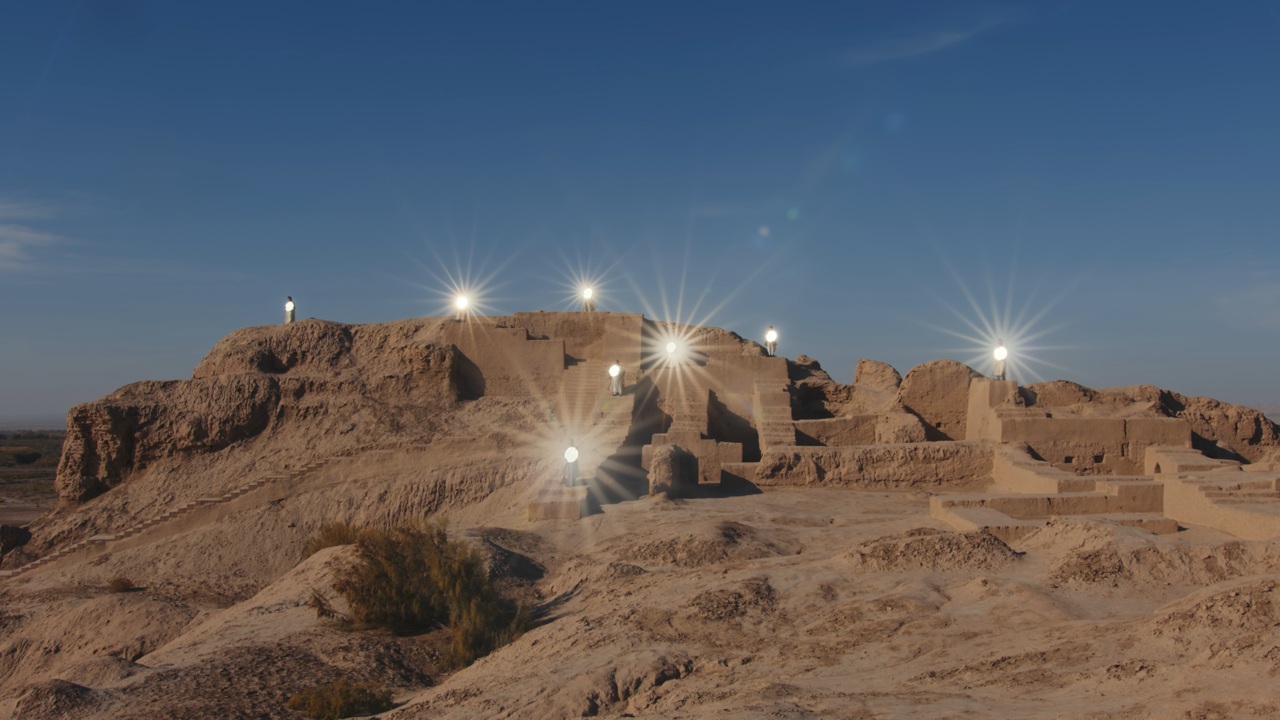
The most mesmerizing work in the exhibition is a film by Saodat Ismailova, which was also presented by the Fondazione In Between Art Film at the previous Venice Biennale. Melted into the Sun takes up fire as a cosmological motif and was shot across different locations in Uzbekistan, including Kafir Kala, an ancient fortress, and a solar furnace that once served as a secret facility for the Soviet space and weapons programs. Its central figure is al-Muqanna, an eighth-century Zoroastrian alchemist, illusionist, also known as the ‘Veiled Prophet’, whose story allows Ismailova to invoke the very origins of monotheism and its dualisms between good and evil, truth and falsehood, while also engaging with ecological thinking on a planetary scale and the ever-burning fire as a symbol of divine light. A cyclical conception of time evokes history’s ‘vortex of endless repetition’, as Imailova’s film puts it.
Iconographically, the film gradually shifts attention away from the Sun as a singular, overwhelming source of power towards a multiplicity of smaller lights and reflections: dispersed constellations of hope and resistance. The work recalls the ‘fireflies’ described by Pier Paolo Pasolini shortly before his assassination in 1975 as fragile sites of political struggle, later reinterpreted by Georges Didi-Huberman as images of persistence and survival beyond the supposed disappearance of emancipatory possibilities. Acts of resistance, memories, and images can flare up like flashes of light that illuminate the present, visible only in the darkness.
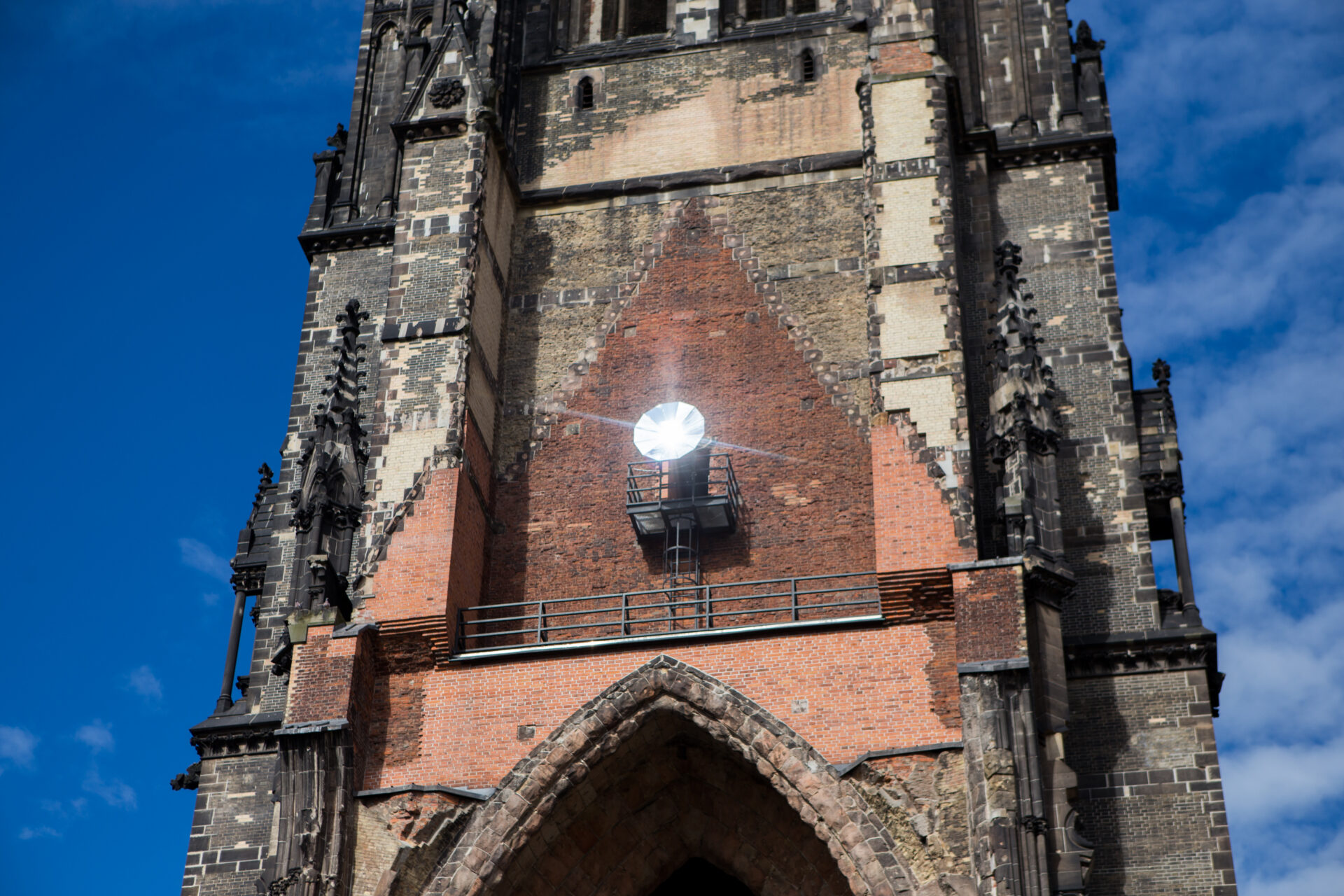
This idea is reiterated in Ismailova’s circular mirror sculpture that is installed on the church tower, right above the Glockenspiel. Passing the work on our way up in the elevator and arriving on the panoramic viewing platform, I listen through headphones to Nikita Kadan’s sound piece, which blends an air-raid siren with the voice of an opera singer and the sound of a violin. Drawing on the mythological motif of the sirens, as well as the Ukrainian word tryhova, which refers both to an alarm and to a state of anxiety, the work resonates chillingly with this location, from where I have an aerial view of the entire city.
Standing above Hamburg, listening to the church bells and air-raid sirens, I find myself returning the words of the seventeenth-century metaphysical poet John Donne, later taken up by Ernest Hemingway: for whom the bell tolls. The question of whether we live in pre-war or wartime conditions depends largely on the boundaries of this ‘we’. This collective dimension also lies at the heart of public monuments, another central concern of Warsza’s five-year tenure as city curator, which re-examines their role through a contemporary lens. Can monuments do more than preserve the memory of past catastrophes? Can they intervene in the conditions that allow history’s tragedies to repeat themselves?
Germany’s post-war memorial culture faced the difficult task of confronting its own material culture. Much of it was either destroyed or inseparably associated with the millenarian fantasy of the Third Reich. How could monuments commemorate a past that demanded neither heroic celebration nor national pride, but instead a continued vigilance against renewed violence? In line with the country’s commitment to Nie wieder (“never again”), the focus shifted from a Denkmal to a Mahnmal: a monument that warns rather than glorifies.
Hamburg played a decisive role in this transformation. During the heated debates of the 1980s surrounding the controversial Nazi-era memorial to the 76th Infantry Regiment, the city’s cultural authority introduced the term Gegendenkmal (“countermonument”) in its call for artists to create a work that would confront – and counterbalance – the monument’s historical legacy. The term countermonument only gained international recognition afterwards, through the writings of American scholar James E. Young, especially his book The Texture of Memory (1993), where it was described as ‘brazen, painfully self-conscious memorial spaces conceived to challenge the very presence of their being.’
Continuing our guided tour, we visit the Dammtor site as a key example of how public monuments can enter into a transhistorical dialogue rather than remain fixed expressions of a single historical narrative. Today, the massive Nazi-era memorial is flanked by two critical interventions: Alfred Hrdlicka’s Mahnmal gegen den Krieg (1983–86) and the more recent Monument for Deserters and Other Victims of the Nazi Military Judiciary (2015). Together, they create a spatial constellation in which the politics of memory are continuously negotiated in public space. The three-part conflictual ensemble demonstrates that remembrance must remain an active civic practice rather than be reduced to the passive preservation of inherited historical objects.
As a final stop on her tour, Warsza takes us to Harburg, a southern district with a large migrant and immigrant population. Quite exceptionally, she has the keys to one of my favourite public monuments: The Monument Against Fascism by Jochen Gerz and Esther Shalev-Gerz. In 1984, a 12-meter-high lead column was installed, inviting inhabitants to leave their names and comments onto its surface. Over the course of several years, the pillar slowly disappeared into the ground, leaving nothing more than a grey commemorative tile. Having access to the confined space beneath the pavement, the buried column functions as a time capsule, preserving the traces of the collective participation that gave the work its meaning. Yet it does not belong solely to the past, buried beneath the ground. What sinks can also rise again. Ultimately, the countermonument points beyond itself – to us, as visitors, citizens, human beings – to keep its legacy alive. This is also the lesson of John Donne’s poem:
No man is an island,
Entire of itself.
(…)
Each man’s death diminishes me,
For I am involved in mankind.
Therefore, send not to know
For whom the bell tolls,
It tolls for thee.
—
From the Cosmos to the Commons: Fire is on view through September 21 at the St. Nicholas Church in Hamburg.
More information: HERE
Pieter Vermeulen
is een kunstcriticus, curator en docent, wonend in België