An exhibition about exhibiting – The Collection Resists – 15 artists intervene at Missiemuseum Steyl
In a quiet corner of Limburg, a deeply uncomfortable collection presses against the walls of its enclosure. The Collection Resists at Missiemuseum, curated by Oscar Ekkelboom, breaches this preserved display. An encounter between two temporalities: a step back in time, unsettled by gestures that ask how we might live with, and think through, the legacies that remain. Isobel Nicholl visits the exhibition.
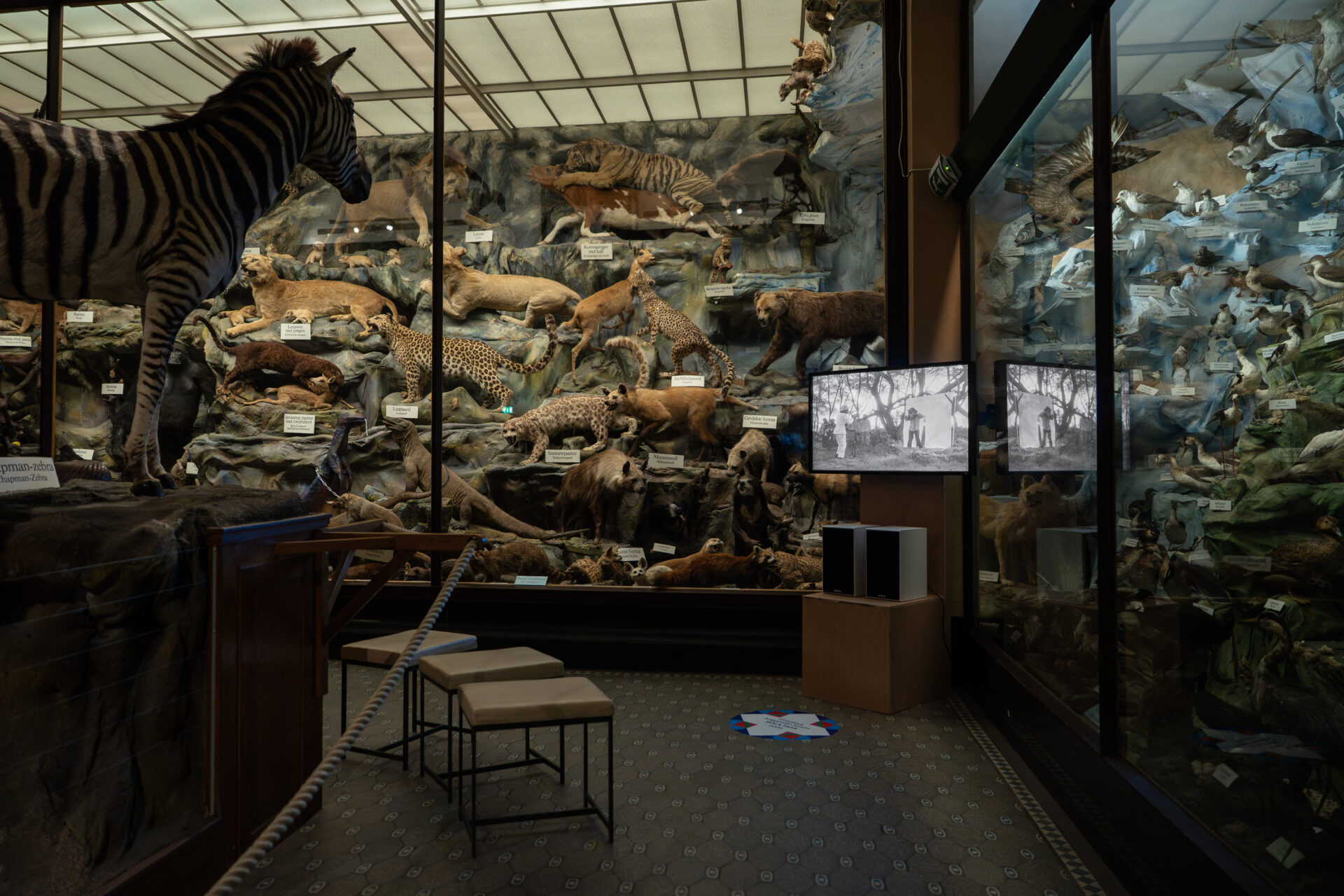
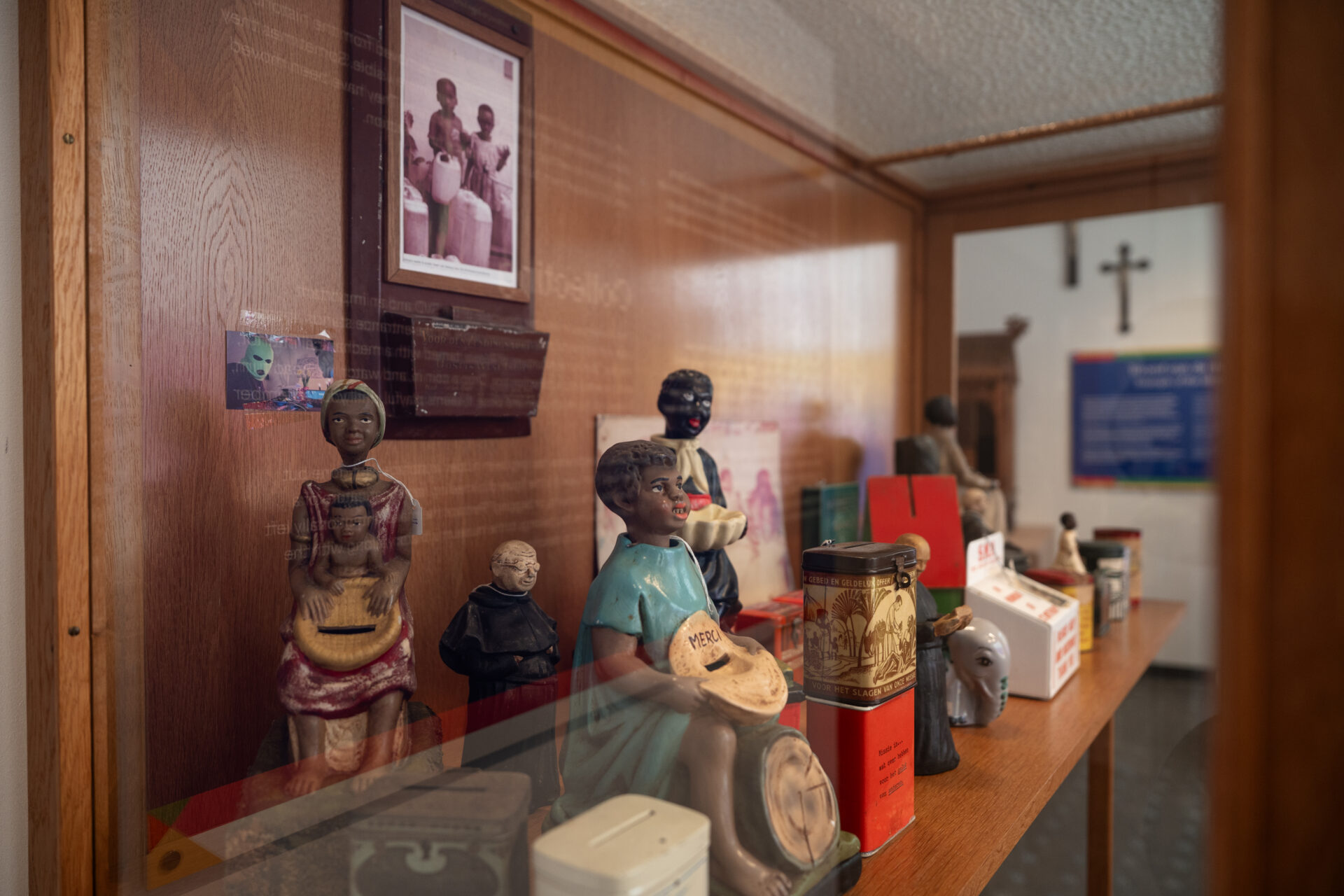
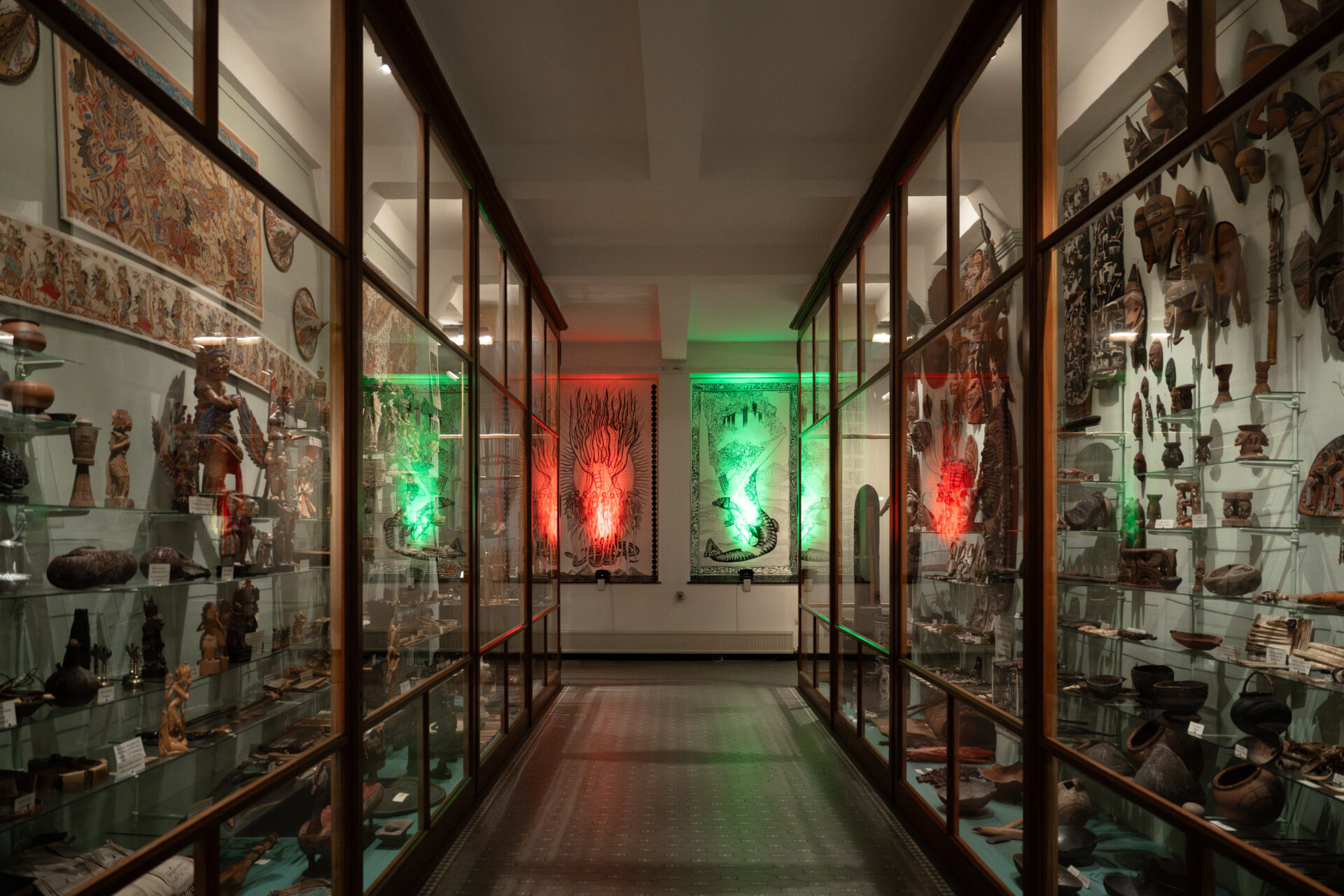
Founded in 1875, the Steyl mission house was the birthplace of the Congregation of the Divine Word: Societas Verbi Divini (SVD). When the first missionaries departed for China in 1879, objects from their arrivals were sent back to the house in Steyl. As the SVD’s reach extended across continents, this assemblage of artefacts swelled, and under the curatorship of Brother Berchmans–butterfly collector and missionary–the current museum space was inaugurated in 1931. The objects served to teach and to legitimize; framing the work of the missions as indispensable, and the cultures themselves as knowable through mediated categorising and display. Since Berchmans’s death in 1934, the displays have barely shifted, leaving the museum suspended in the stillness of its own historical air. The Collection Resists intervenes to unsettle this stasis.
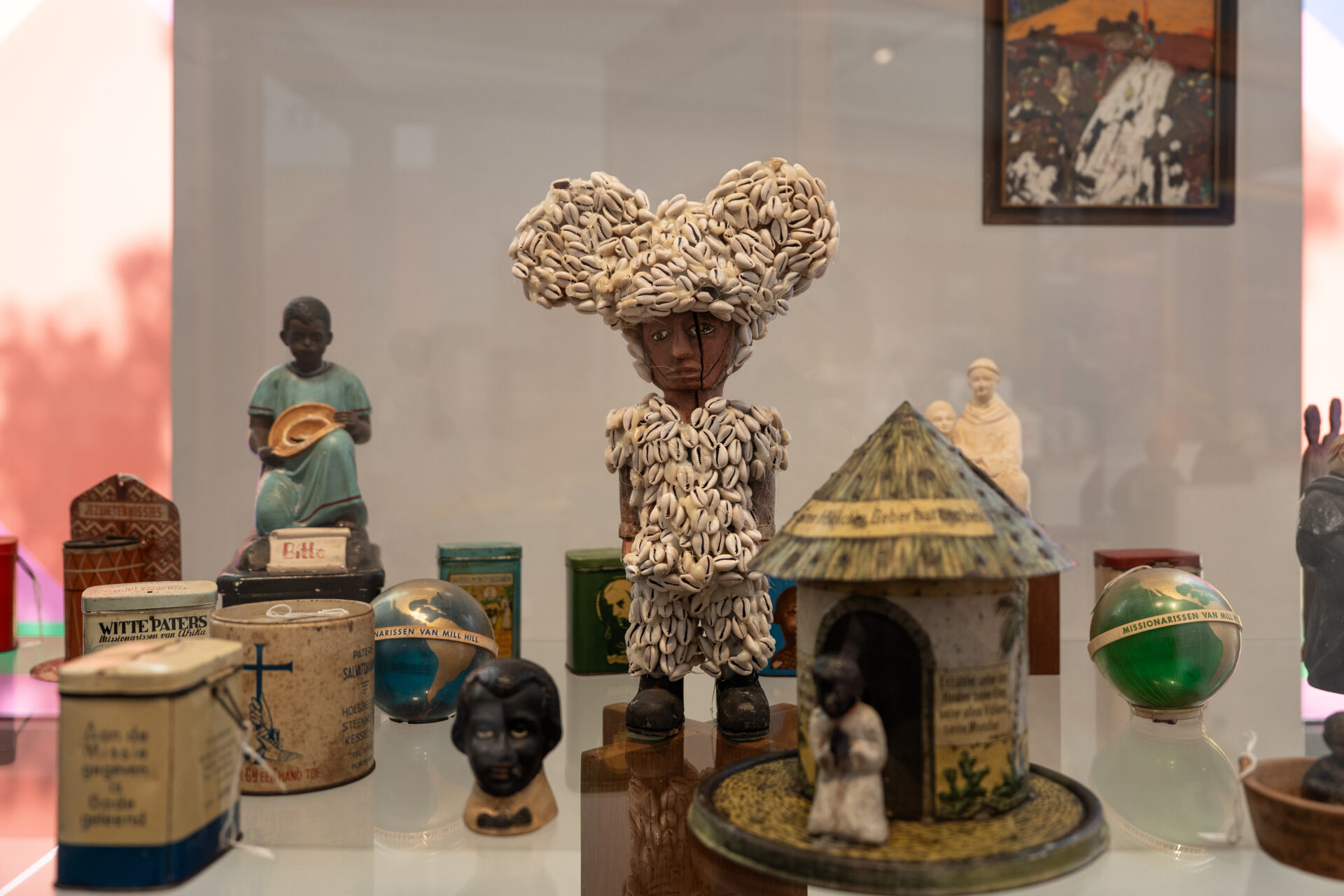
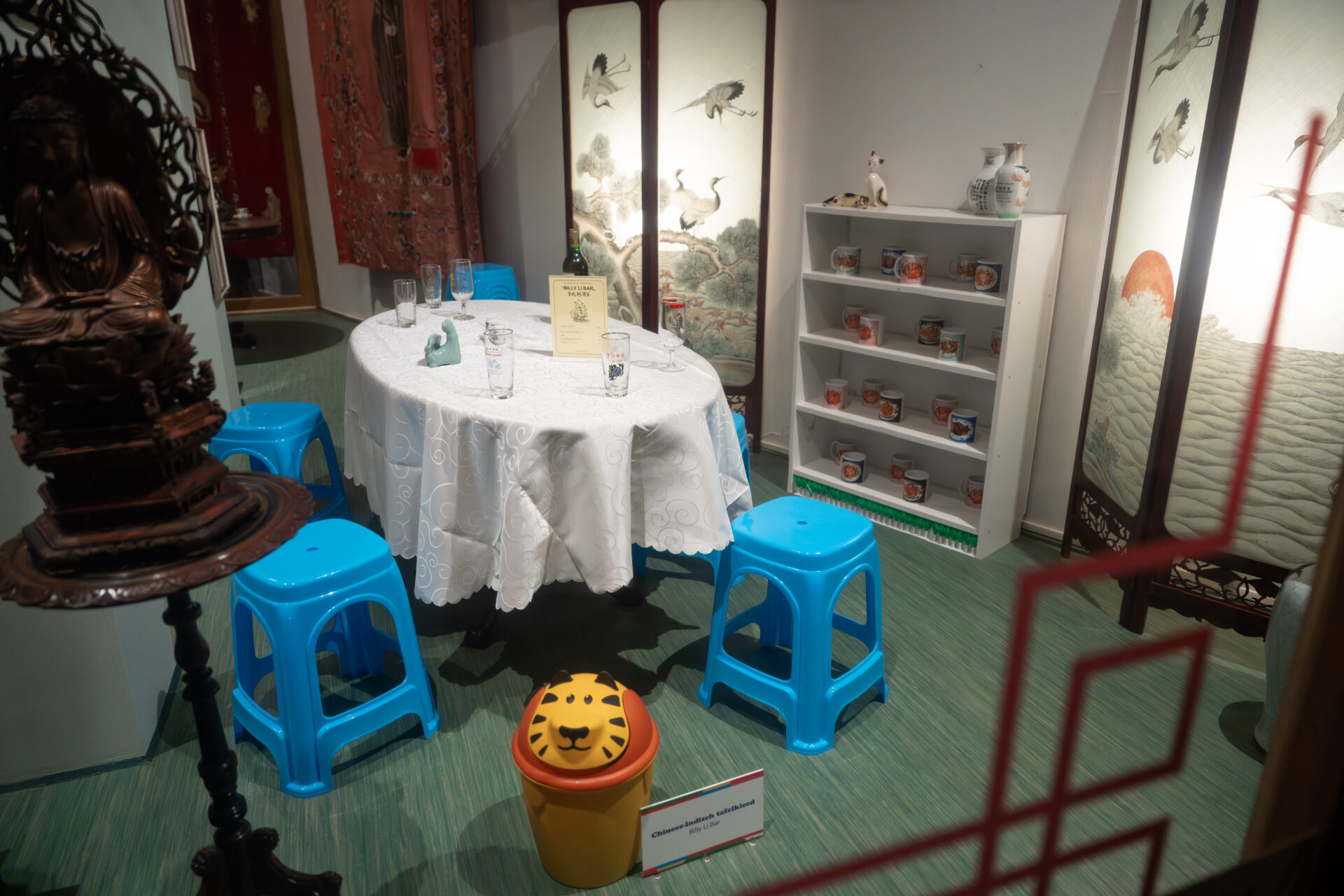
Oscar Ekkelboom, the guest curator, leads me around the exhibition. He tells me about the process of inviting fifteen artists to enter the museum, disrupting the historic display defined by cabinets crammed with bodies—human and animal—arranged side by side, their material remains and objects of use pressed together in evidence of apparent barbarity and peculiarity. Through intervention, the museum confronts the sediment of its own gaze. Unrestricted by the burden of the past, the artists have created a broad corpus of work that comments on, challenges, and interacts with, the original Missiemuseum collection. The result is unsettling, asserting itself through the quiet insistence of being slightly, deliberately out of place. The museum, momentarily loosened from the grip of its long-deceased founding curator, and the weight of its own history, becomes porous to other voices, not in a chorus of unison, but in polyphonic echoes that seek to address the historic collection from the present moment.
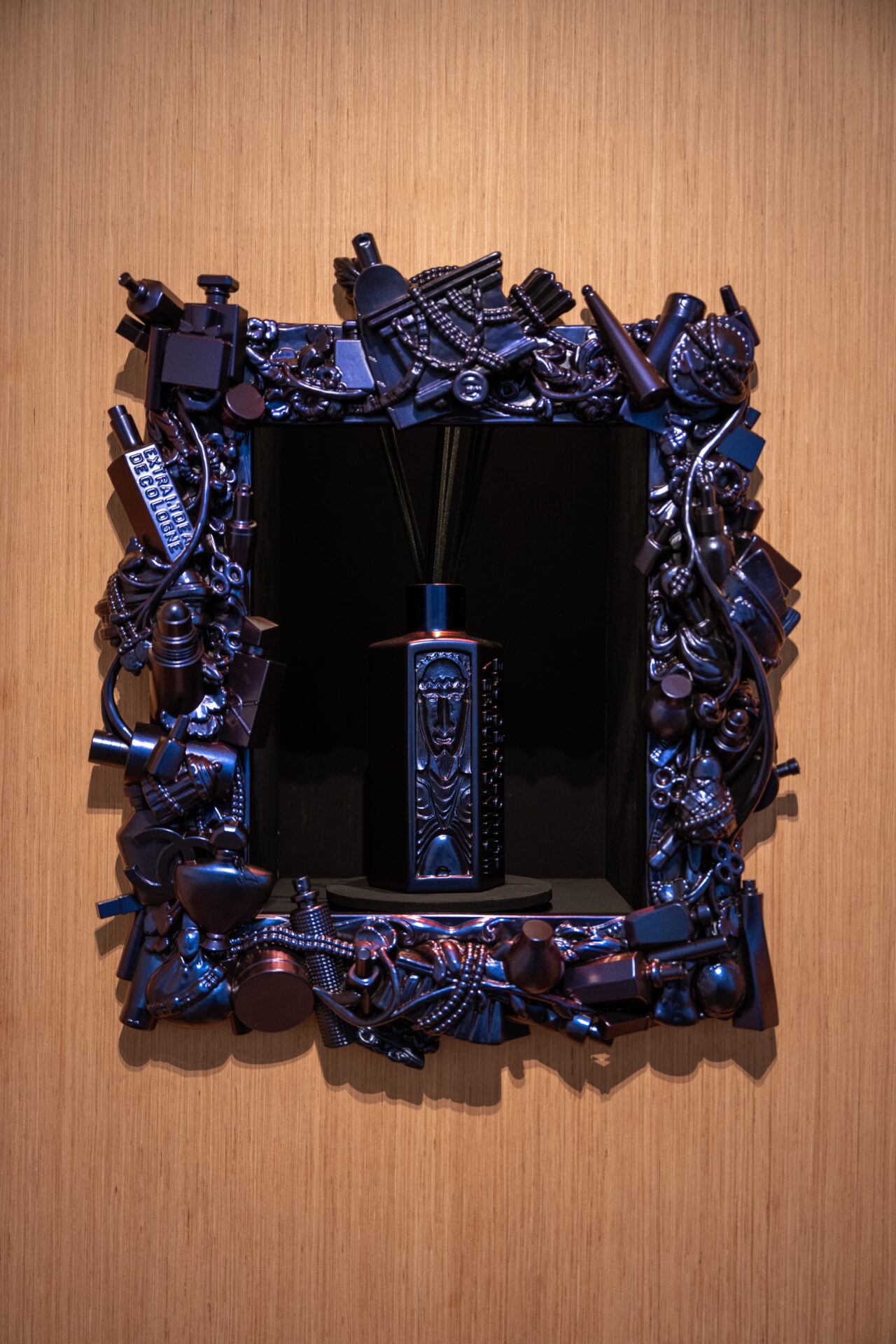
Upon entering the museum, the first intervention I encounter is by Boris van Berkum—though most will walk right past it. Eau Décoloniale (2025) drifts through the air: the scent of mothballs, tea, earth, and even ‘the bitter tears of Jesus’—otherwise known as myrrh. I noted the smell before I knew what it was–liked it even. It is only after convening with Ekkelboom that I see its description and am suddenly confronted with an immediate shift in perception. Van Berkum’s perfumed interpretation of the Missiemuseum embodies the affective register of the collection: a reminder that the senses attune to histories in ways words cannot immediately capture. By reinterpreting the museum through its smells, Van Berkum not only undermines the hierarchy of knowledge the collection enforces, but also draws attention to the colonial heritage that permeates the collection and even the air itself.
Through intervention, the museum confronts the sediment of its own gaze. Unrestricted by the burden of the past, the artists have created a broad corpus of work that comments on, challenges, and interacts with, the original Missiemuseum collection
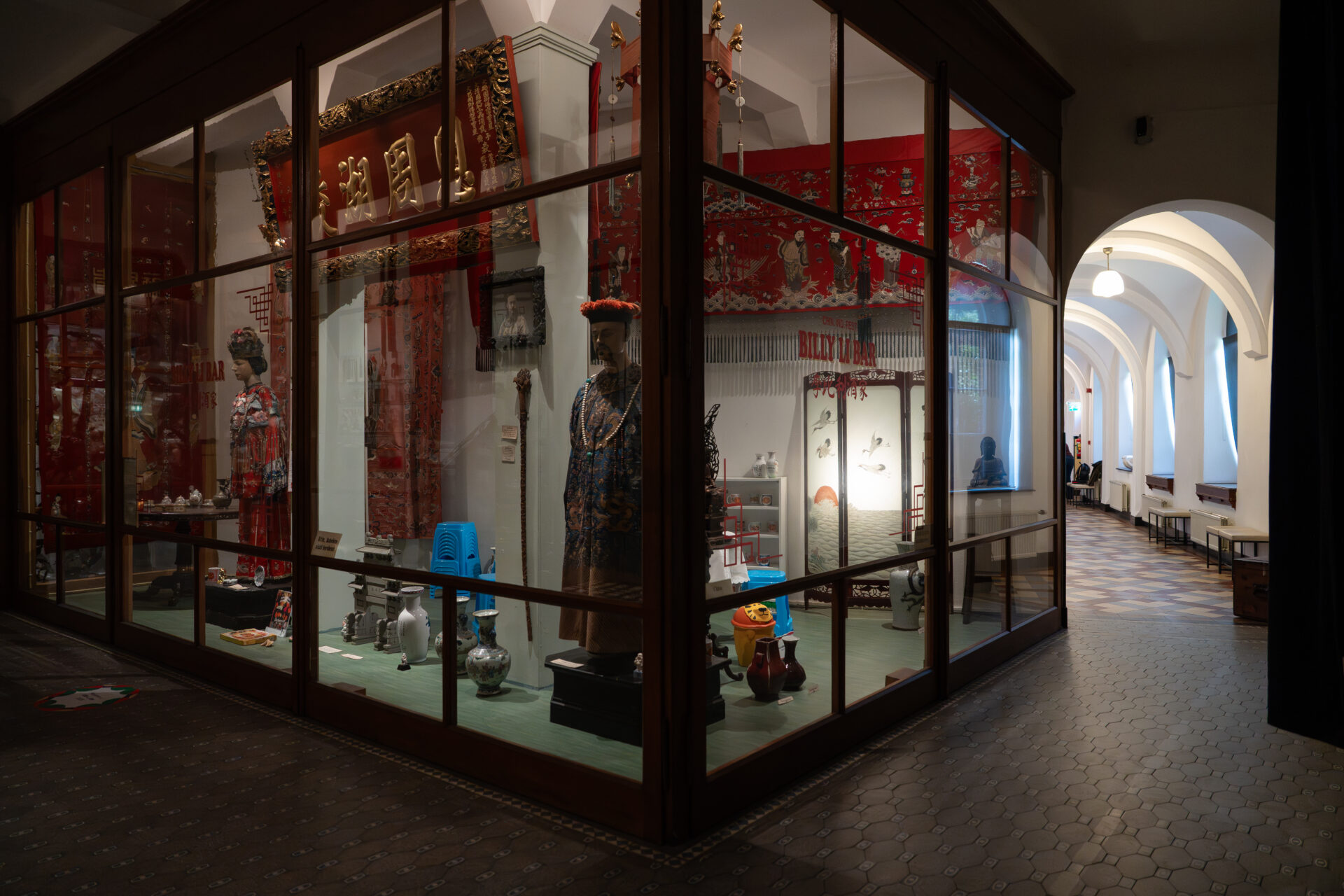
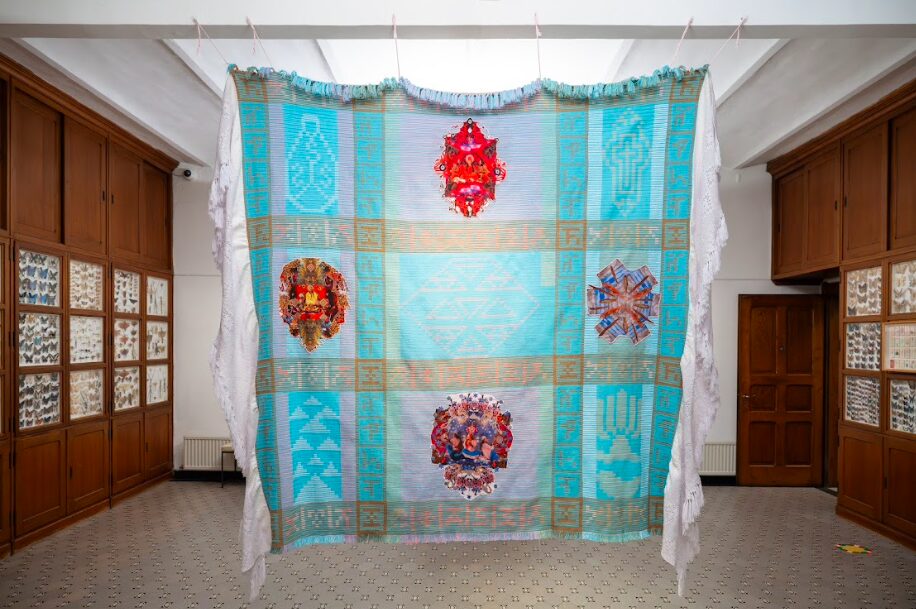
After my initial, unwitting encounter with Eau Décoloniale, Ekkelboom walks me through interventions that occur in different rooms. Andriana Bustos speaks from behind the glass of a natural history museum diorama. Fré Calmes’ human-shaped voodoo altar fills the room next to it. And a collared, komodo dragon–vibrant purple accosts the white tile of the hallway floor. The three pieces are as different to each other as to the collection in which they find themselves. Ekkelboom explains that much of his inspiration came from Andriana Bustos’ work Landscapes of the Soul (2011), a videowork in which the artist reads a text by Sabine Küchler from within the display of the Museum of Natural Sciences in Salta (Argentina). Layering European languages through voiceover and subtitles, the artist juxtaposes her experience of the forest through expedition with its diorama reproduction. Behind the glass, Bustos occupies a space reserved for the dead and commodified, giving voice to that which has been rendered silent by the colonial apparatus. Ekkelboom cites this notion as central to his exhibition that unfolds from Bustos’ work, inviting the collection at Missiemuseum to speak back to us.
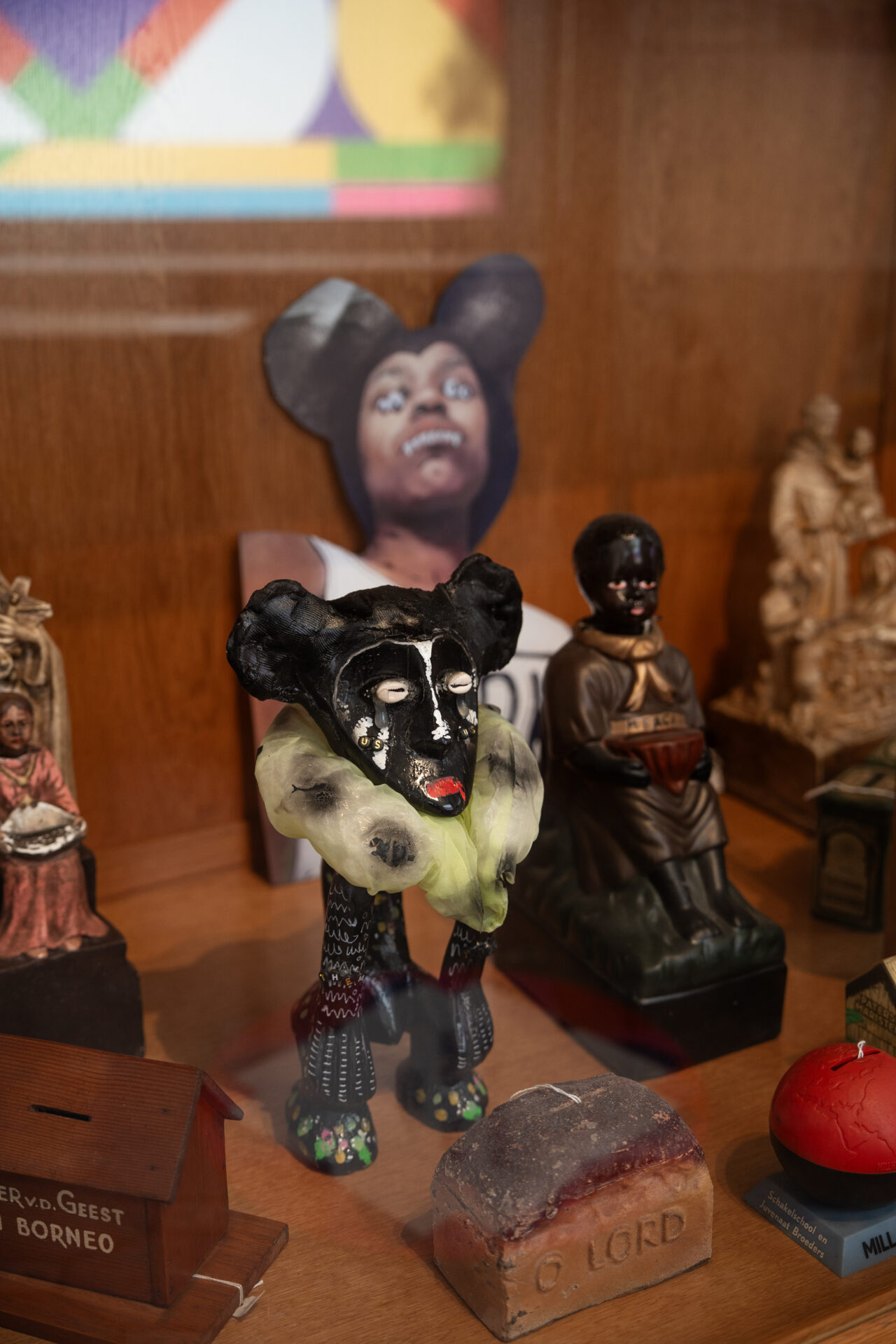
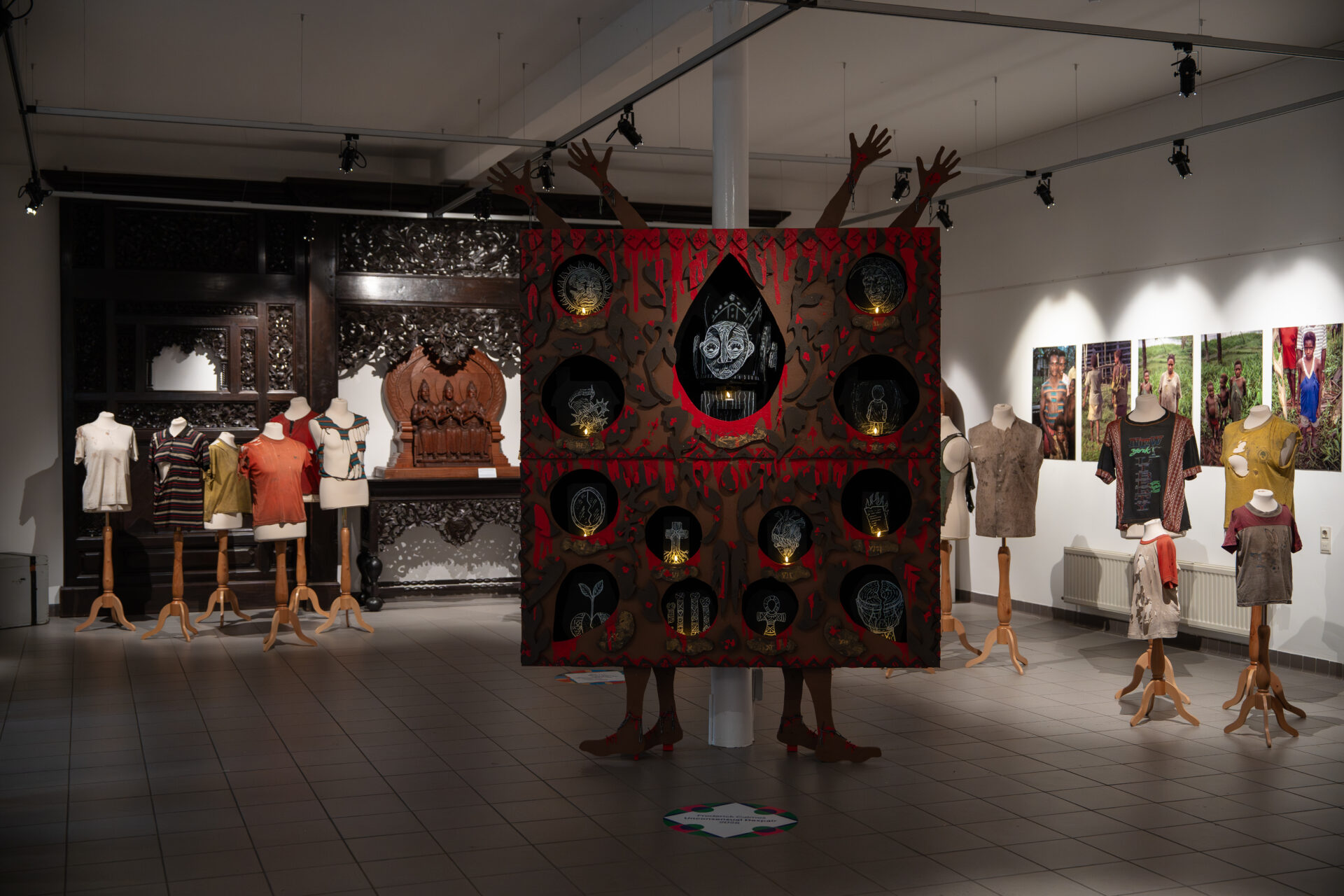
Standing before Fré Calmes’ altar, Unconsensual Despair (2025), I first sense the full weight of critique: the piece feels violent, marked by a suffering that contrasts sharply with the celebrated triumphs the mission claims. The voodoo priest mirrors his artwork on the esteemed altar cabinet of the SVD, honouring the founder and boasting the success of the missions. But for Calmes’ work, nails protrude and drip with painted blood; the altar stands on two pairs of legs whose chained ankles bleed in parallel, while four arms reach skyward, fingers outstretched. The two altars face one another, engaged in a dialogue that echoes Calmes’ childhood—practising voodoo in private while publicly performing Catholicism. Here, the once-hidden practice—kept secret under the pressures of Catholic and colonial authority—no longer hides, but confronts the forces that sought to dominate and suppress it.
While these pieces struck me immediately, it is only after moving through the entire museum that the impact of certain works fully reveal themselves. Some confront the history of the SVD head-on, where others create subtle ruptures that require the viewer to negotiate their meaning more deliberately. Ekkelboom describes this as central to his curatorial approach: engaging agency of both material and viewer, imparting responsibility and autonomy to both objects and guests.
With this in mind, I return to the Komodo dragon—Hadrien Gereton’s Wild Detectives (2019). The blind, limp-tongued creatures stalk the hallways, cabinets, and come nose-to-nose with their taxidermy counterpart. The harnessed creatures roam free in a mockery of attempted domestication. Gereton’s intervention restores agency to the animals of the collection, while deploying a quietly absurd humour that both unsettles and engages.
Some artists confront the history of the collection head-on, where others create subtle ruptures that require the viewer to negotiate their meaning more deliberately
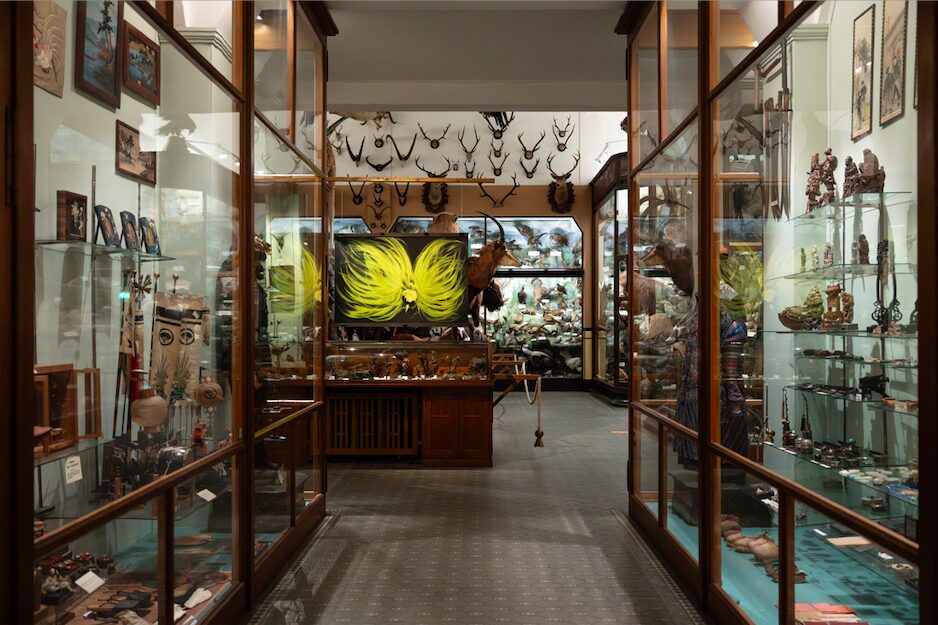
Ekkelboom’s curatorial work is marked by a persistent concern with agency. The exhibition seeks to make new voices perceptible—and amplify those that have long existed. Object and viewer agency become central in attuning to these frequencies. While this responsibility feels appropriate, I can’t help but note that much of the exhibition’s conceptual nuance may not register fully with those exploring the collection alone.
Humans skulls
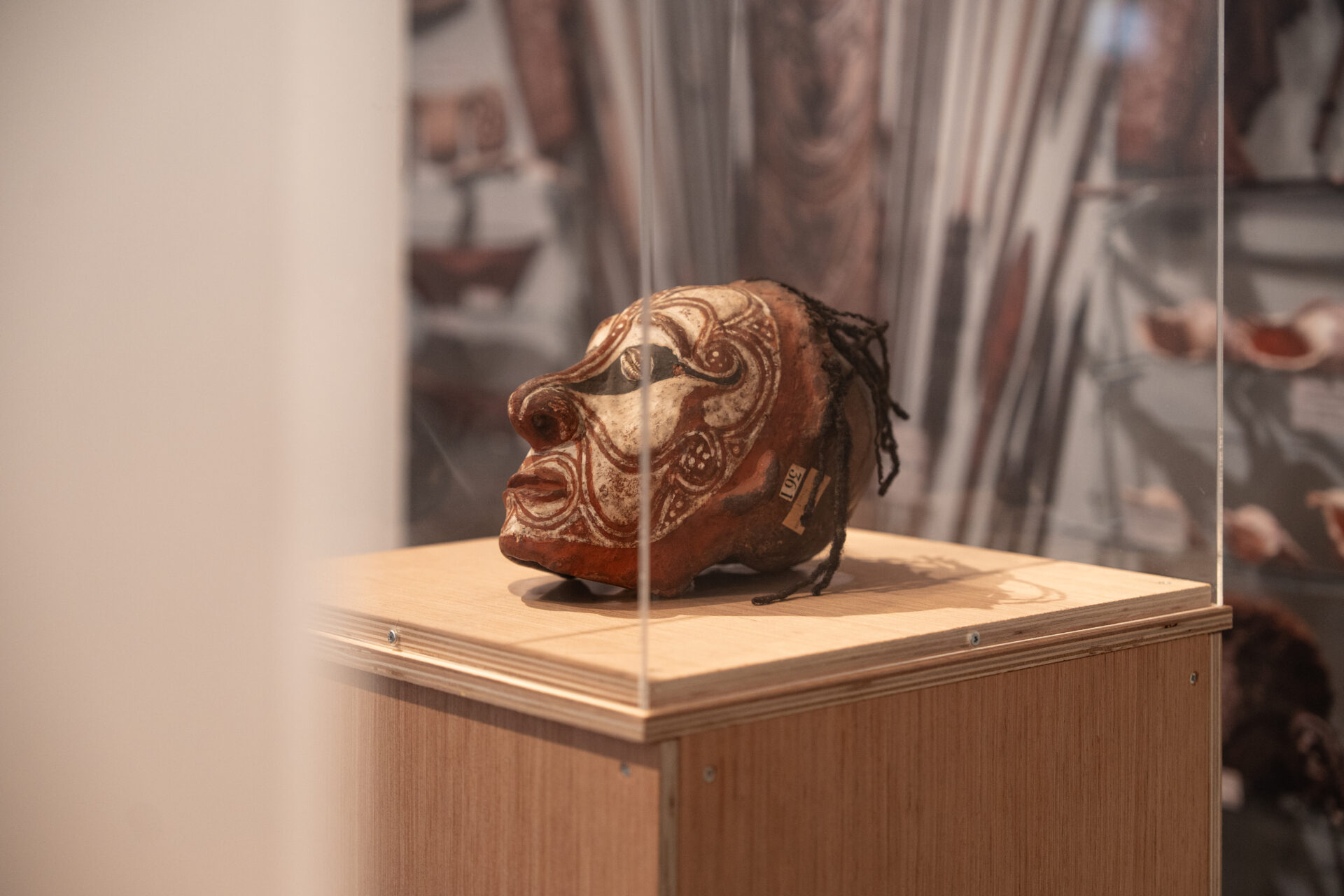
One area in which Ekkelboom is sure to make his process visible is in relation to seven human skulls from Papua New Guinea—the collection’s most visibly fraught objects. Last year, the Missiemuseum received considerable press attention over five of them. In the original vitrine are four skulls, one is missing. Later, I find it in an adjoining exhibition space—accompanied by two others. I learn that there are seven in total: the two additions belong to a private collection held by the sisters’ mission, handed over on the promise that their responsibility would now rest with the museum. This very act underscores the tension and unease these objects carry. The museum’s lead curator, Paul Voogt, has undertaken extensive research to trace their origins in an effort to facilitate repatriation, yet their return was deemed ‘unnecessary and unwanted’, leaving the museum in an uneasy state of custodianship.
Here, Ekkelboom renders that discomfort visible. A series of wall texts outlines what he calls possible ‘options’ for institutions confronting such objects: storage, burial, destruction, artistic intervention, or simply leaving them alone. In this curatorial dialogue, the skulls’ presence—and the surrounding moral tension—are no longer buried in the cabinet’s visual excess, but held up for collective reckoning. Here, Ekkelboom’s conception of an ‘exhibition about exhibiting’ becomes clearest: making visible the contradictions and responsibilities of decolonising institutions that remain tethered to the very structures they aim to critique.
Here the exhibition concludes—or rather, opens. The questions posed by Ekkelboom refuse a singular or concrete resolution. He describes tensions with the museum over the decision to keep the skulls on display; explaining his unmet wish to remove them entirely from view. The result is a compromise that exposes its own tension—an uneasy coexistence between institutional preservation and the urgent call to unsettle it, embodied in the uncomfortable conversations that they necessitate.
The Collection Resists is a noteworthy effort to confront the multifaceted and innumerable angles from which to critique a collection grounded in post-Enlightenment hierarchies of knowledge, colonial violence, and exploitation of people, animals, and land
The Collection Resists is a noteworthy effort to confront the multifaceted and innumerable angles from which to critique a collection grounded in post-Enlightenment hierarchies of knowledge, colonial violence, and exploitation of people, animals, and land. The project is ambitious in both scale and scope, foregrounding ideas that ‘cannot be explained by one perspective’. While the exhibition makes clear that the collection certainly does resist, I wonder if this dialogue might have been more effective with a tighter focus. The effort to incorporate so many voices is commendable and certainly allows the collection to push back against the hierarchical structures imposed upon it. Yet, with so many differing dialogues, the emphasis on agency leaves the viewer unguided, and much of the work’s conceptual weight risks slipping past, ultimately falling short of its potential. However, navigating a wide range of critiques, Ekkelboom’s expansive, sometimes unruly engagement opens a vital space from which the Missiemuseum might continue to reckon with objects that unsettle. The Collection Resists holds significant potential as a starting point for the museum to confront the tensions embedded in its collection, while also prompting a broader institutional question: what do we do with objects that make us uncomfortable? Allowing its unsettling truths to linger, the exhibition makes clear that no tidy resolutions are possible. Through Ekkelboom’s intervention The Collection Resists opens a space for reflection and hesitation, in its provisional state asking most pertinently: what comes next?
The Collection Resists is on show until the 1st of March at Missiemuseum in Steyl
Work by: Adriana Bustos, Aliwaa Collective, Benjamin Li, Brois van Berkum, Danielle lemaire, Dicky Takndare & Albertho Wanma, Fré Calmes, Hadrien Gerenton, Monika Dahlberg, Oscar Ekkelboom, Oscar Scantillan, Pavel van Houten, Pit Daenen, Roos Holleman, Roy Villevoye, Timoteus Kusno, Warre Mulder
Isobel Nicholl
is a writer and researcher based between Amsterdam and London.