2025 > 2026 Year in Review – Selected by Rachael Rakes, Ada M. Patterson, Johan Gustavsson, Manique Hendriks, Nadia de Vries & Vincent van Velsen
We asked artists, writers and curators to share an artist, art work, art show, film, event or publication that made an impression in 2025.
Thema's
Part 1: Artist Ada M. Patterson and the curators Rachael Rakes and Johan Gustavsson (EN)
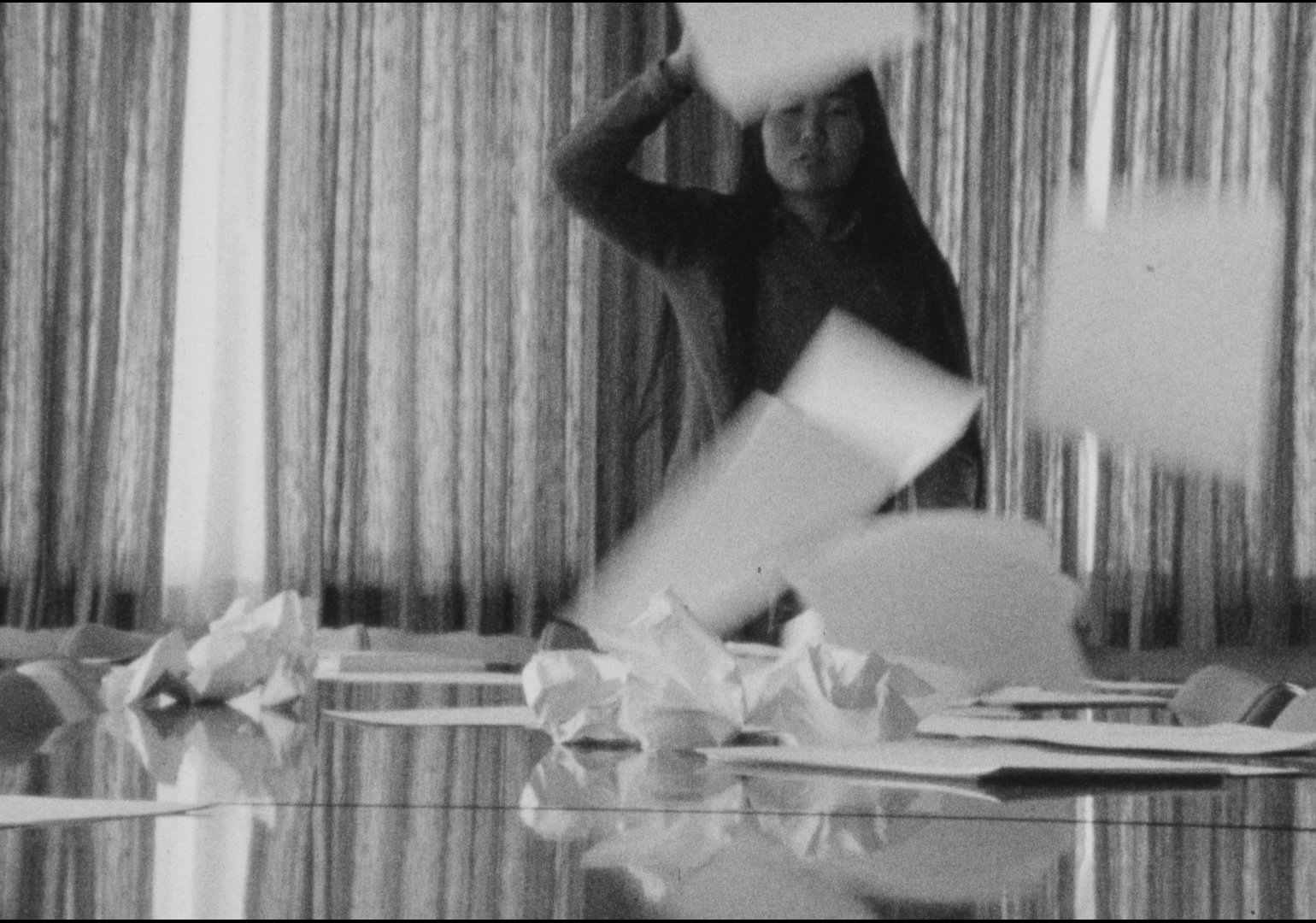
Rachael Rakes: Theresa Hak Kyung Cha
The largest to date retrospective of Theresa Hak Kyung Cha did not take place this year. Multiple Offerings opens in 2026 at BAM/PFA in Berkeley before touring widely–her fan base is geographically and nationally transcendent. I use fan base with a straight face: those who encounter her once tend to attach. The institution has administered the artist’s estate since 1992–ten years after Theresa Hak Kyung Cha was raped and killed at age 31–announced that over 75 percent of the requests its archive and collection receives are for Cha. There are stories of people feeling led to view the holdings and not knowing why; countless reflections, re-readings, and polemics attest to her persistent resonance and my best of the year pick is one.
‘It was a long time before I realized that a book could be written by someone who was not dead,’ begins poet Brandon Shimoda’s leading essay in She Follows No Progression: A Theresa Hak Kyung Cha Reader (Wendy’s Subway, 2024). A selection of Cha’s poems, letters, sketches, and ephemera wrap like veins around the book’s ribs: open, wrenching, razor-pointed essays, drawings, neo/anti translations, and letters bring Cha’s work energetically into the present. They offer vulnerable haunted armatures for the puzzles from the future she left here. Each contribution is heavy with its own personal history, and in connecting to Cha, each feels like another terrible salve. Cha’s prose poem proto-autohistory Dictee is punctuated with elegant refusals of reality’s gridwork. In one such break, the voice ’tells herself’ that she will be able to ‘displace time’. Meanwhile, as the contributions here attest, displacement’s displacements become the objects to haunt and hold.
Ada M. Patterson: Síofra Augusteijn – Sanctified Sorrow (2025)
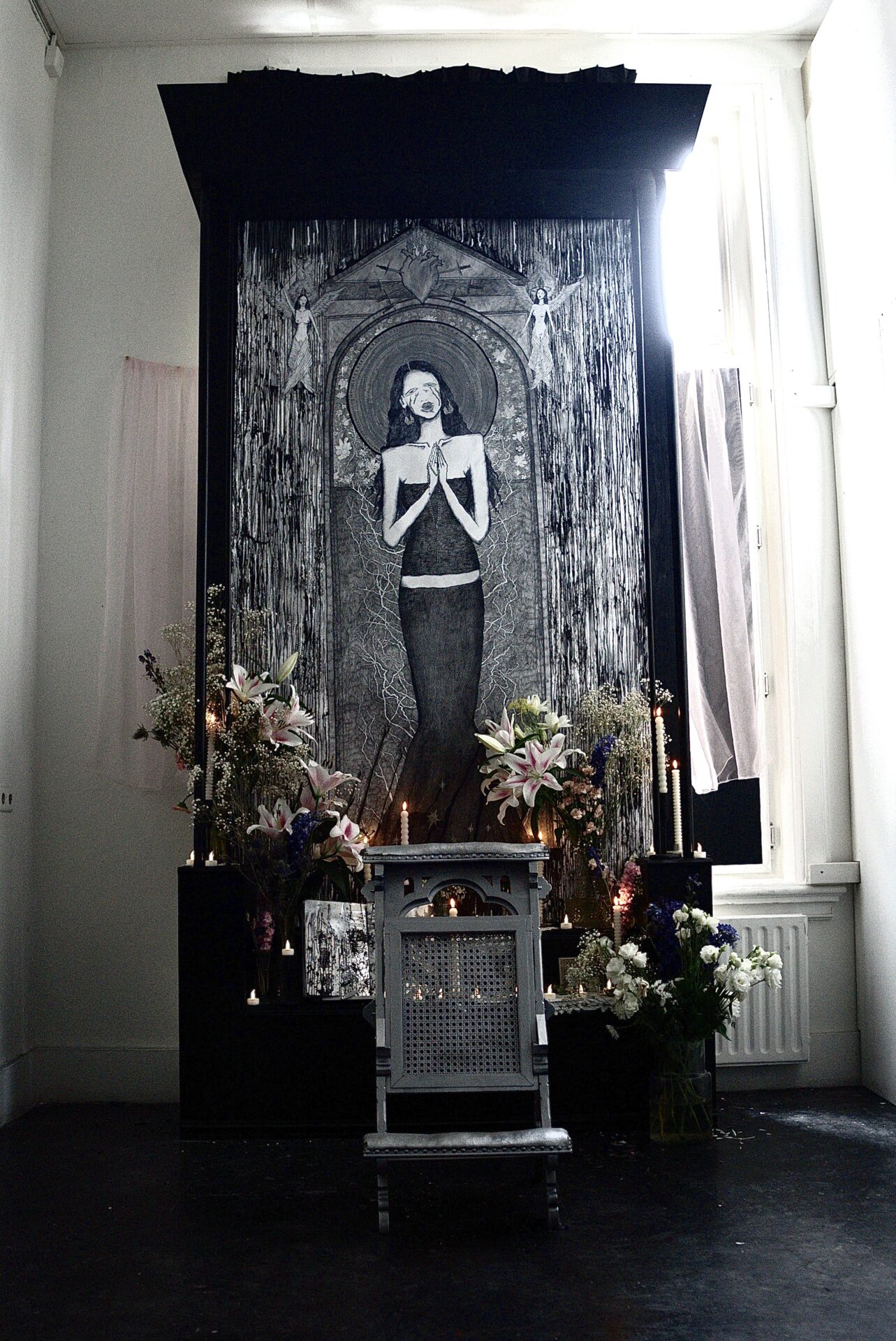
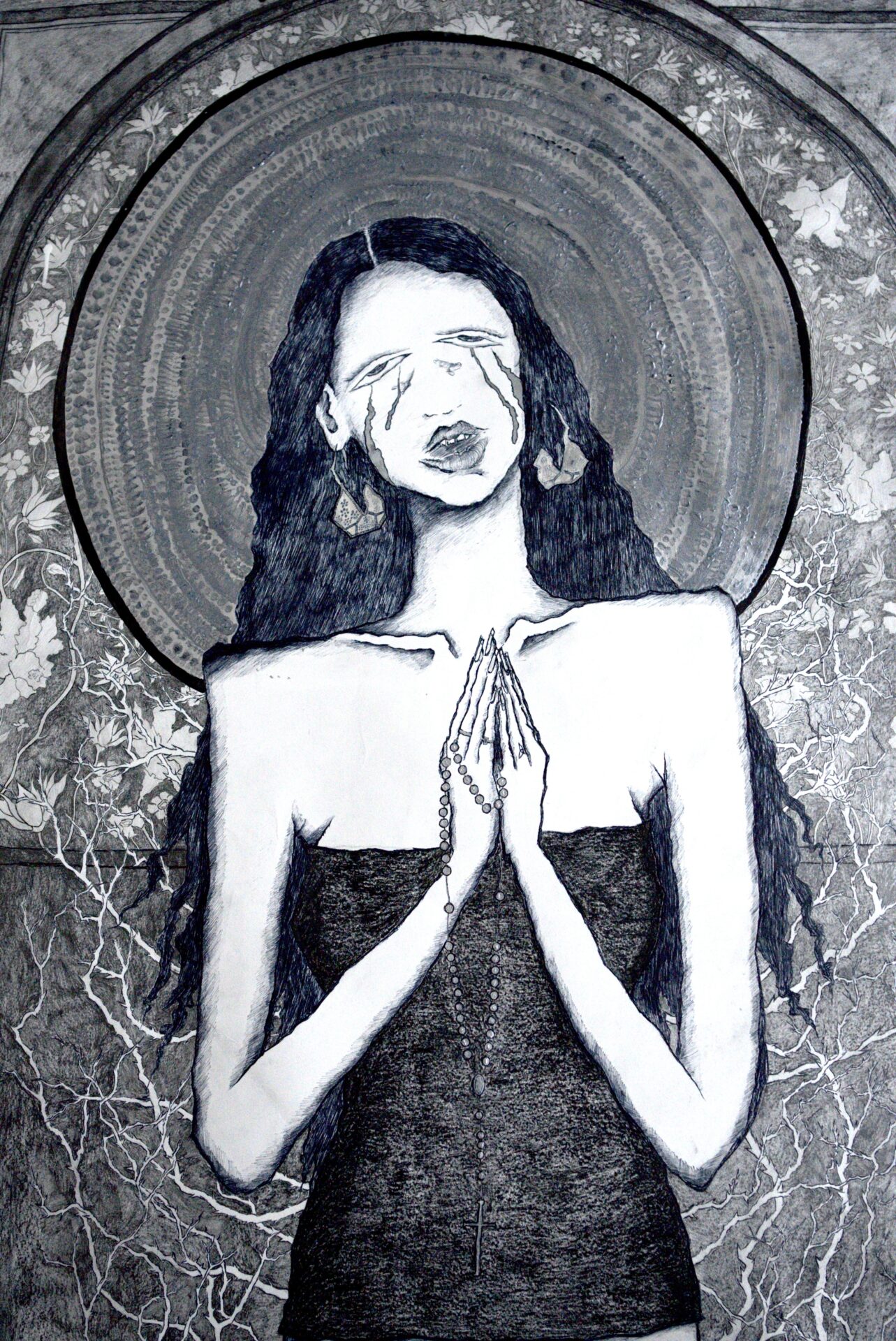
All her eyes are slits. Christ-wound like. Weeping. A grief honoured and held sacred. She is our lady of sorrows, not yours.
Sanctified Sorrow by Siofra Augusteijn offers a drawing of a haloed mourning woman mounted on a char black altar. At each shoulder she is guarded by transsexual seraphim. Floating above, her heart is pierced by seven swords; a testament to her grief. Some artworks demand pause. A gracious listening. A reverent payment of attention. Through a lens of trans womanhood under threat, Sanctified Sorrow lends a resting place to girls in need of a miracle. So often, our lives, the terrors we endure by the hands of others—people in the streets, lovers in our sheets, doctors in our bodies, politicians in our lives—are made to feel trivial. This work derails the usual pace, the quick banality of terror and the random exposures to violence. It is an act of faith that believes we are not ungrievable. That believes our survival and the demand to revere our sorrows is not a trivial thing.
I am not an avid enthusiast of representational politics, and yet, a trans woman sainted is not a meaningless gesture. Sanctified Sorrow reminds me of the work of faithing ourselves into form. Like wrestling with an unknowable God, we wrestle closer to ourselves, towards forms we could never be sure of in the first place. To saint ourselves then—to sanctify our grief—is to show conviction through the terrors. With or without a compassionate God to save us, we keep living, by any means necessary.
Johan Gustavsson – Fiona Lutjenhuis, Susanne Khalil Yusef & Liga Spunde
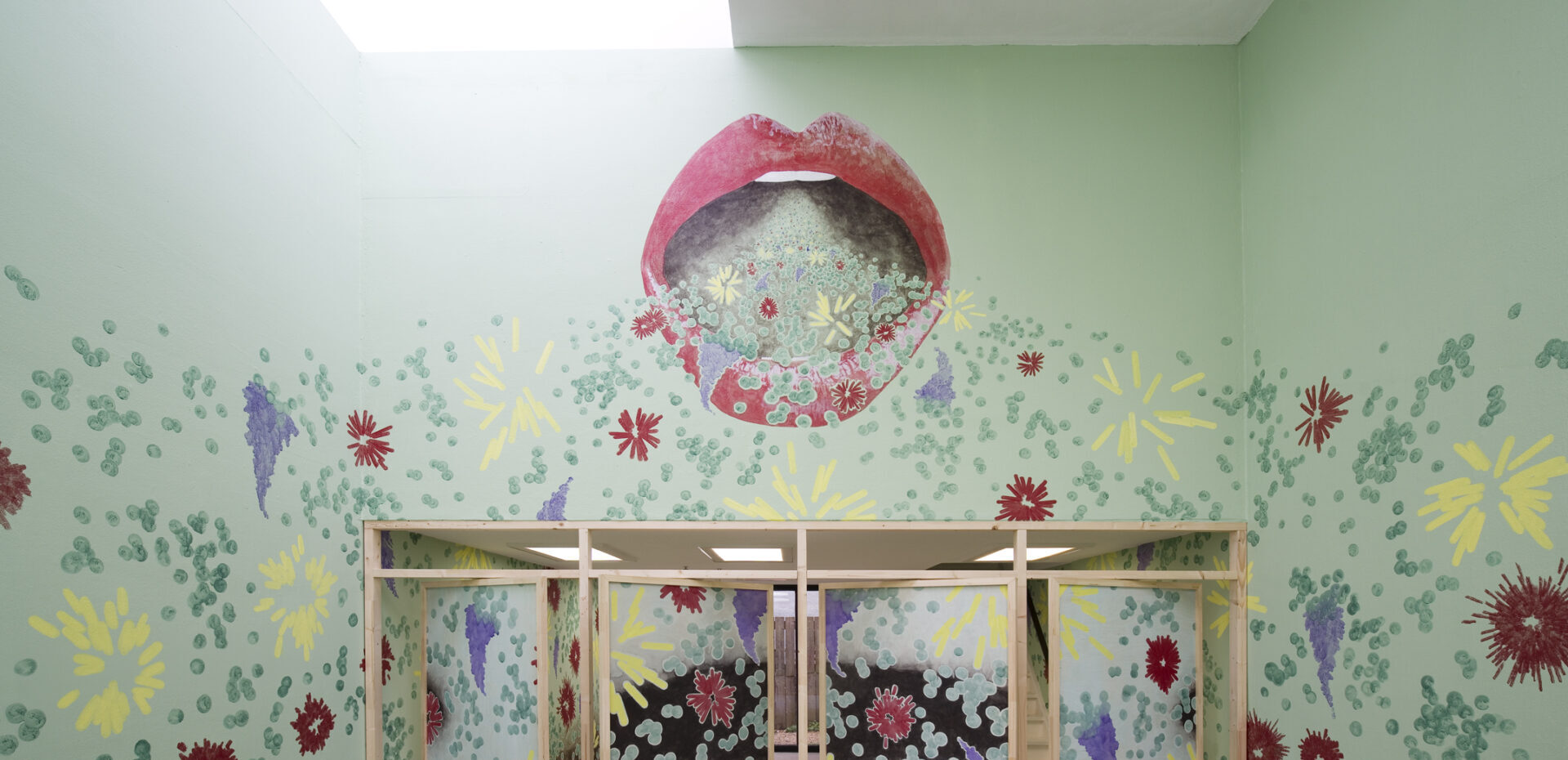
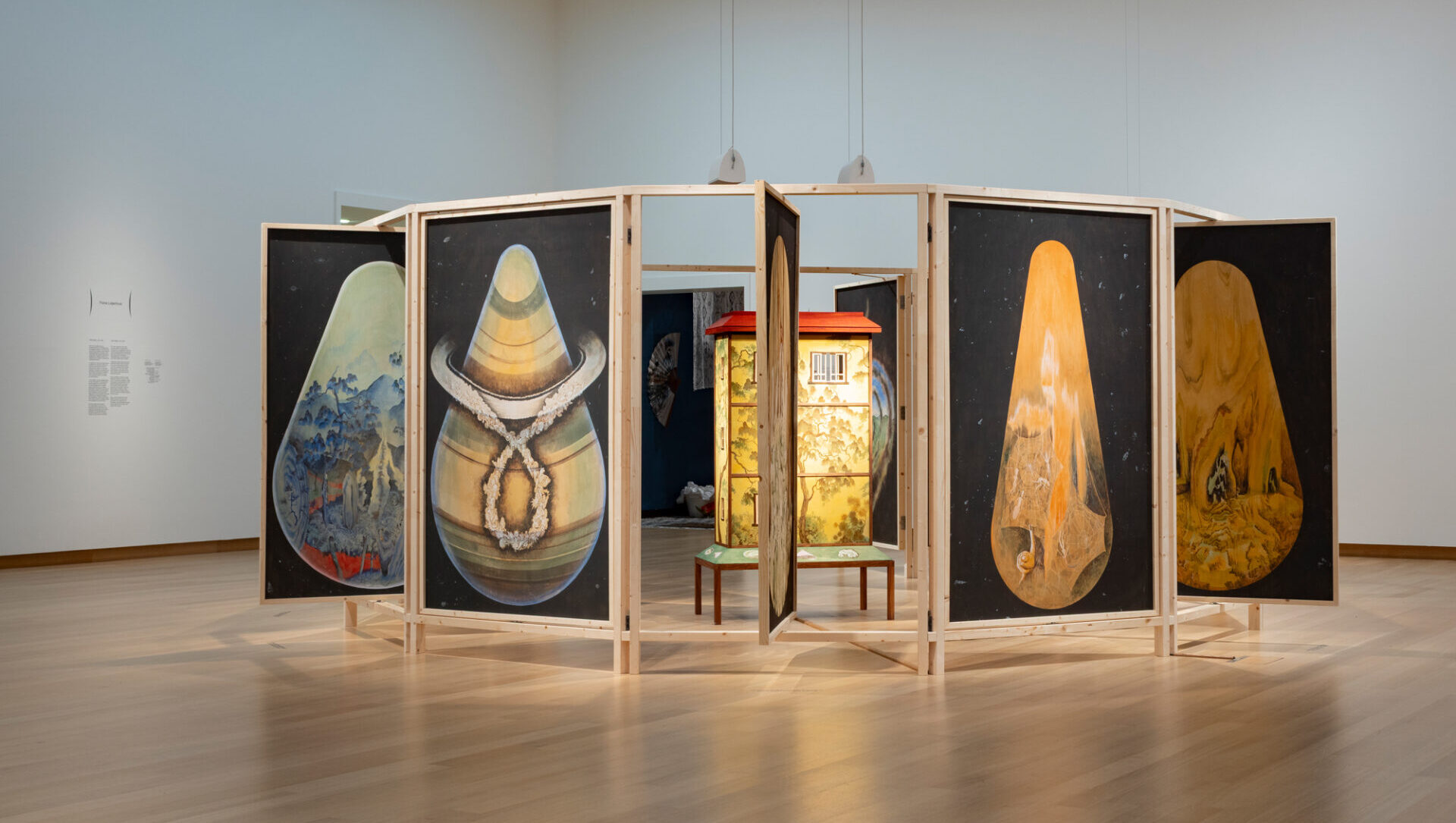
In 2025, it feels important to see artists who can remain critical yet maintain a sense of hope and positivity in such complicated times. The first artist who comes to mind is Fiona Lutjenhuis. Her first museum solo exhibition, Seasoned Sins at Het Noordbrabants Museum in Den Bosch, revealed her remarkable ability to transform the personal into the universal. Incredibly productive and ambitious, her work and “worlds” are filled with humour, pain and tenderness. I can’t wait to see what she presents next for the Prix de Rome.
Another work that stands out is Susanne Khalil Yusef’s We Want to Live at Museum Rijswijk, curated by Julia Geerlings for the Textile Biennale. The piece is both disarmingly simple and incredibly powerful. The fact that such a basic affirmation of life can provoke resistance speaks volumes about the world we live in.
Finally, there is Līga Spunde’s solo exhibition Field of Exercises at TUR Telpa in Riga. This was an abstract training ground where sculptural objects invite visitors to practice human virtues. These beautiful large-scale, 3D-printed sculptures take the form of gestures — such as an embrace, interlocked hands or a confident stance — that evoke strength, empathy, tenderness and care. They are not props for literal exercise, but propositions for the imagination, reminding us of the good in humans, that is fundamental to our shared humanity.
Part 2: Curator Manique Hendriks, writer and critic Nadia de Vries and curator and editor Vincent van Velsen (NL)
Manique Hendricks: Maison the Faux – The Tail
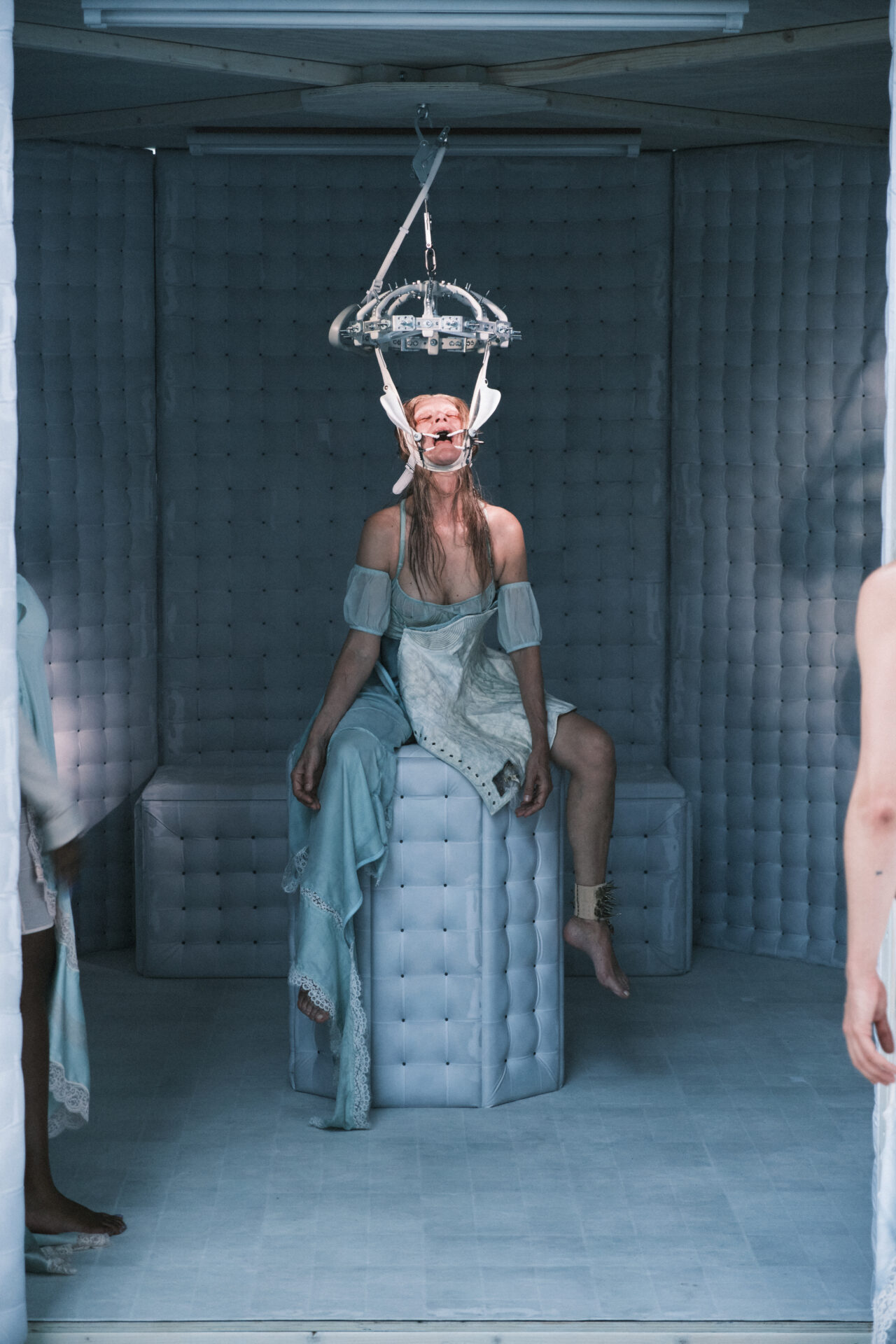
Afgelopen zomer werd ik meegezogen in de performance The Tail door modehuis en creatieve studio Maison the Faux in Framer Framed (20.6 t/m 17.8.2025). In een zowel betoverende als beangstigende wereld gaven zij een eigentijdse interpretatie van Hans Christian Andersens De kleine zeemeermin. Door een uitgesproken queer lens onderzochten en verbeeldden zij thema’s rond transformatie en identiteit.
Alles in de doorlopende performance, opgedeeld in drie meeslepende hoofdstukken, had een duidelijke functie. In een klinisch pastelkleurig decor creëerden de vervreemdende objecten van Dae Uk Kim een sfeer die zowel verleidelijk als afstotend was. De drie performers, Bien de Moor, Oriana Ikomo en Anto López Espinosa, in waanzinnige outfits, brachten het verhaal zonder enige terughoudendheid tot leven. Hun inzet was een voelbare fysieke uitputtingsslag, als een trein die niet meer tot stilstand komt. Ze maakten elke emotie intens voelbaar; een rauwe energie die de toeschouwer meevoerde in een ritueel van steeds terugkomende geboorte en verlies.
The Tail balanceerde op bewonderenswaardige wijze tussen het artificiële en het natuurlijke, en is een krachtig statement over persoonlijke transformatie. In een tijd waarin queer- en transgemeenschappen wereldwijd onder druk staan, zijn zulke indringende en wonderschone kunstwerken van ontzettend groot belang.
Manique Hendricks is conservator hedendaagse kunst bij het Frans Halsmuseum in Haarlem
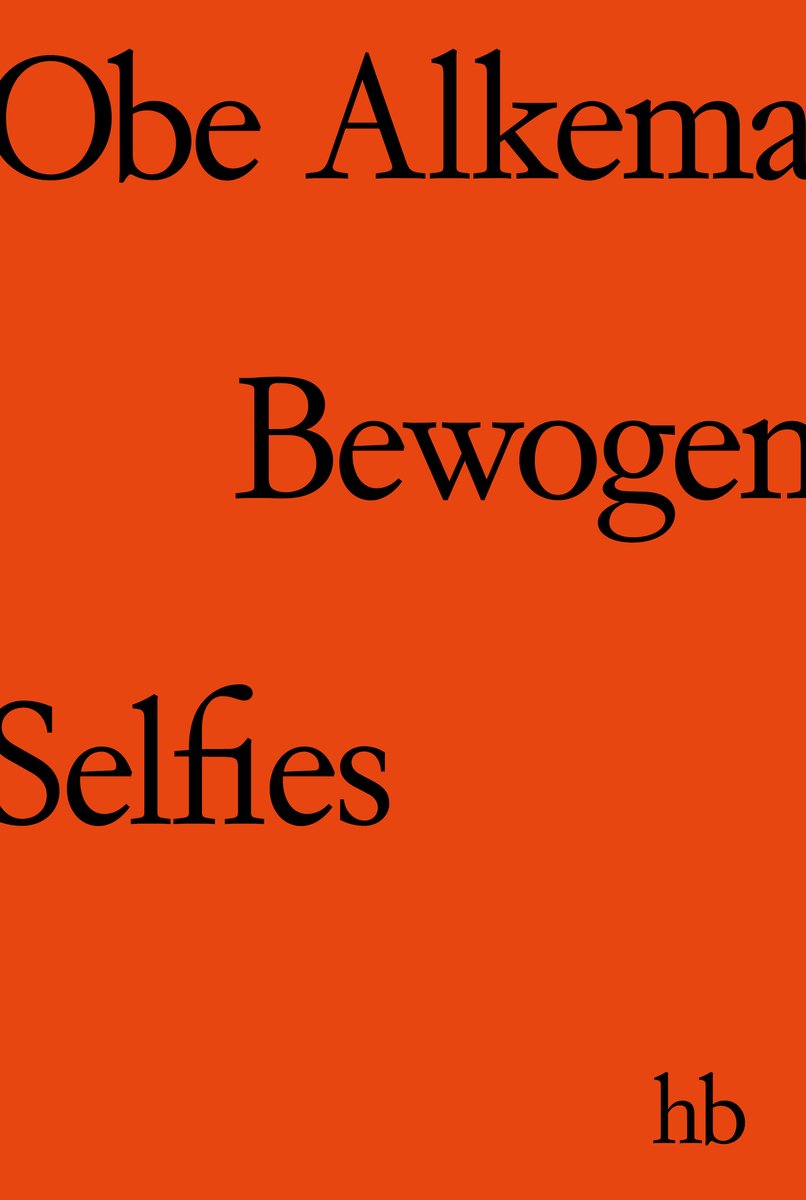
Nadia de Vries: Bewogen selfies van Obe Alkema
Dit boek verscheen eind 2024 al, maar ik las het dit jaar pas. Bewogen selfies is het eerste prozawerk van dichter Obe Alkema, geschreven in de traditie van New Narrative: een experimentele, doch zeer persoonlijke manier van schrijven waarbij fragmentatie centraal staat. In Bewogen selfies laveert Alkema tussen kwetsbaar en analytisch; vervreemdend en intiem. Het boek laat zich het makkelijkst omschrijven als een verzameling dagboeken, alhoewel Alkema het concept ‘dagboek’ ook lijkt uit te dagen. Zo omvat Bewogen selfies zowel klassieke dagboeken als de hedendaagse, digitale dagboeken die per ongeluk lijken te ontstaan: onze zoekgeschiedenissen op Google, de fotoalbums die onze smartphones periodiek genereren.
Deze onwillekeurige rapportages van andermans privéleven zijn grappig, maar ook confronterend om te lezen. Bewogen selfies liet me nadenken over de sporen die ik zelf heb achtergelaten in de levens van anderen. Het deed me ook nadenken over de mensen die juist géén sporen achterlieten en desondanks belangrijk voor me zijn, zoals kennissen van vroeger die zijn overleden. Ik werd er melancholisch van, maar op een prettige manier, zoals wanneer je stuit op een oude liefdesbrief. Als je van radicale kwetsbaarheid houdt, moet je Obe Alkema lezen.
Nadia de Vries is schrijver en cultuurwetenschapper
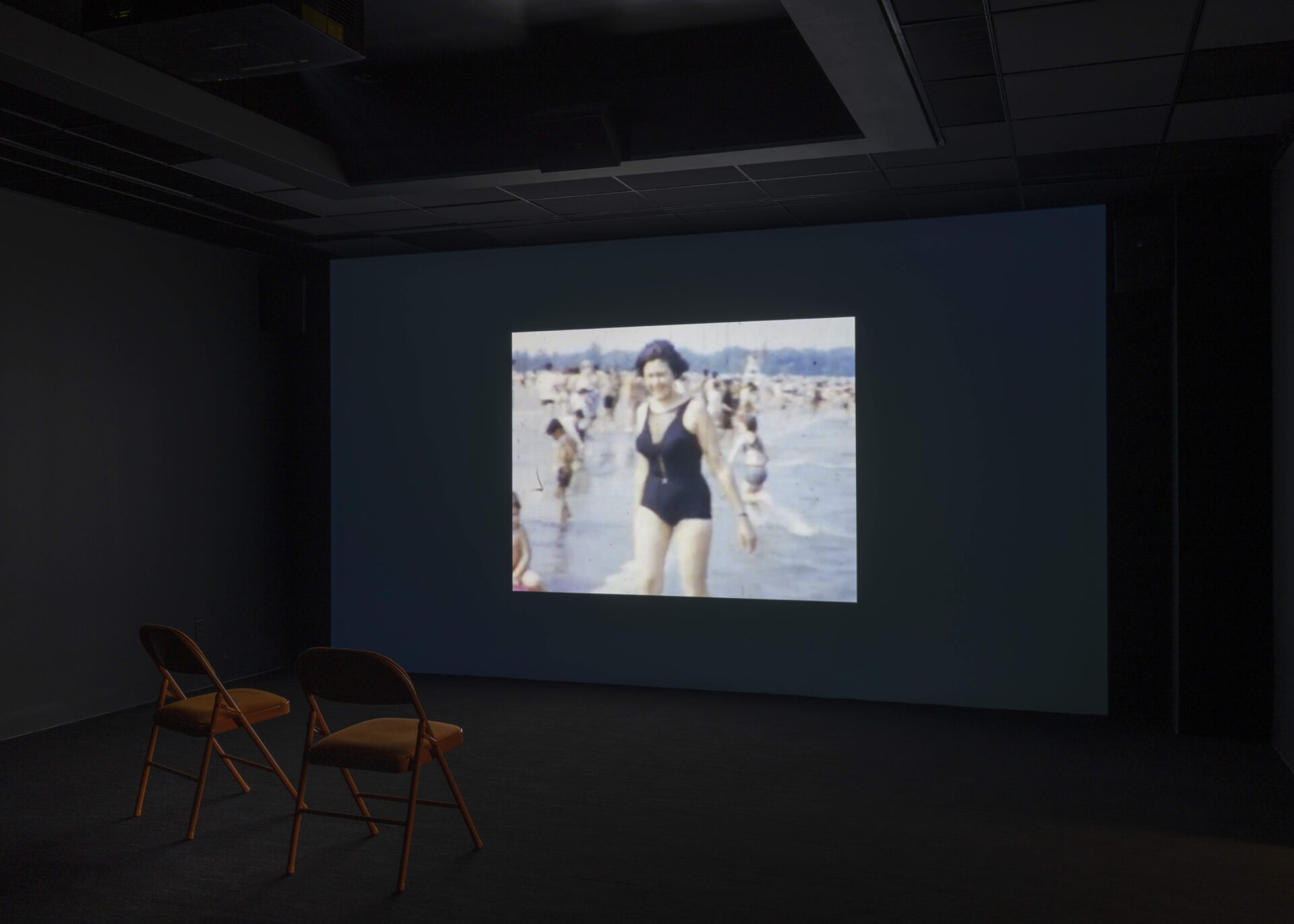
Vincent van Velsen: Elle Pérez – The World Is Always Again Beginning
Soms voel je de liefde en aandacht van een maker in elk beeld, in elk shot, in elk geschreven of gesproken woord dat een tentoonstelling behelst. Bij The World Is Always Again Beginning, de expositie van Elle Pérez bij Arts and Letters, was dat op z’n zachtst gezegd het geval. De tentoonstelling behandelt thema’s als tijd, macht, aanwezigheid, vergankelijkheid, herinnering en gemeenschap, en onderzoekt hoe fotografie deze dynamieken zichtbaar kan maken. Het oeuvre komt voort uit samenwerkingen en relaties met zowel biologische als gekozen familie, waardoor het werk van Pérez nog het meest doet denken aan Nan Goldin en Wolfgang Tillmans. Maar dan in het nu. Bij Arts and Letters waren het snapshots en geënsceneerde interacties die werden samengebracht met film, prikbordachtige collages en tekst. Samen vormden ze een tijdlijn van een persoonlijk leven, die tegelijk inzicht en ruimte bood aan hen die eraan voorafgingen, met wie contact ooit was en met wie nog steeds contact is.
Het werk van Pérez komt voort uit intimiteit en noodzaak. Een bewijs van (hebben) bestaan in de vorm van fotografische nabijheid. Het geheel toont relaties en opent portalen naar individuen en vergane momenten – meestal van gezamenlijkheid, verlies, transformatie en herinnering. In deze turbulente tijd waarin zowel mensen als gedeelde ruimten onder druk staan, stelt Pérez: ‘But one day, when we can finally reflect on this time, we will need pictures… that express, through poetic declaration, what it felt like when we were alive.’ Affectie en aandacht, voor elkaar, en voor altijd vastgelegd.
Vincent van Velsen is curator en redacteur Metropolis M
These texts were published in Metropolis M issue 6 – OUT NOW – ORDER [email protected]