The boundary-pushing practice of Florentina Holzinger
At the current Venice Biennale, Florentina Holzinger’s SEAWORLD VENICE is proving to be the main attraction. If any single work symbolises this Biennale, it is this one. In the run-up to the Biennale, Megan Hoetger spoke with the curator and discusses SEAWORLD VENICE within the context of her work.
Motorbikes hang suspended above the stage for aerial choreographies. Roller skaters donning nuns’ habits and nothing else drop into a half-pipe. The stage is transformed into an aquatic terrain by massive pools and water tanks with intubated performers becoming elements of living fountains. Shakespeare meets the reality game show, the Catholic mass meets death metal. Blood pours from ballet slippers. Body modification, defecation, female fornication on stage. These are some of the elements from Florentina Holzinger’s repertoire.
In visual arts contexts, her work is immediately legible within Endurance and Body Art lineages – from Carolee Schneemann, Gina Pane and Marina Abramović, to Karen Finley, Ron Athey, and Herman Nitsch. I want to propose, though, to think about the feminist choreographer as working after after postdramatic theatre – after, that is, the after of the blurring of boundaries between performance art and performing arts which followed from the blurring of boundaries between art and life. This multiplicity of “afters” offers a way to understand the “de-disciplining” ethos that Holzinger’s practice embodies.
Pushing boundaries
The physical and technical intensity of actions that unfold in Holzinger’s works have excited, disturbed, and, in some cases, scandalised stages of Europe. Articles have reported the number of audience members in need of medical attention during or after the shows – a signal of the visceral impact of the artist’s approach and the way it unrelentingly transgresses the boundaries between bodily reality and artificiality of the stage. In her body of works, Holzinger draws together elements from intertwined histories of dance, theatre, opera, and music, redistributing them across a diversity of bodies and movement techniques. The resulting performances are maximalist postmodern amalgamations.
Beyond the enormous production value and “abject” shock effects, Holzinger’s body-based practice pushes disciplinary boundaries to their limits, offering in the process a reinvigoration of second-wave feminist critiques now released from the foreclosures and impasses of respectability politics. Since studying at the School for New Dance Development (SNDO), Amsterdam (2008-2012), the choreographer has gone on to produce and tour a series of sold-out works – from her SNDO diploma work Silk (2012), which won the prestigious Prix Jardin d’Europe, to the more recent string of critically recognized pieces like TANZ (2019), Ophelia’s Got Talent (2022), SANCTA (2024), and the currently traveling A Year without Summer. These productions move across multiple contexts: theatre, through Holzinger’s ongoing role as artist-in-residence at the Völksbühne Berlin (2021–); opera with SANCTA at Mecklenburgisches Staatstheater Opera Schwerin, and countless performing arts spaces and festivals. Unfolding over the past fifteen years across stages around Europe, they have cemented Holzinger’s position in the performing arts.
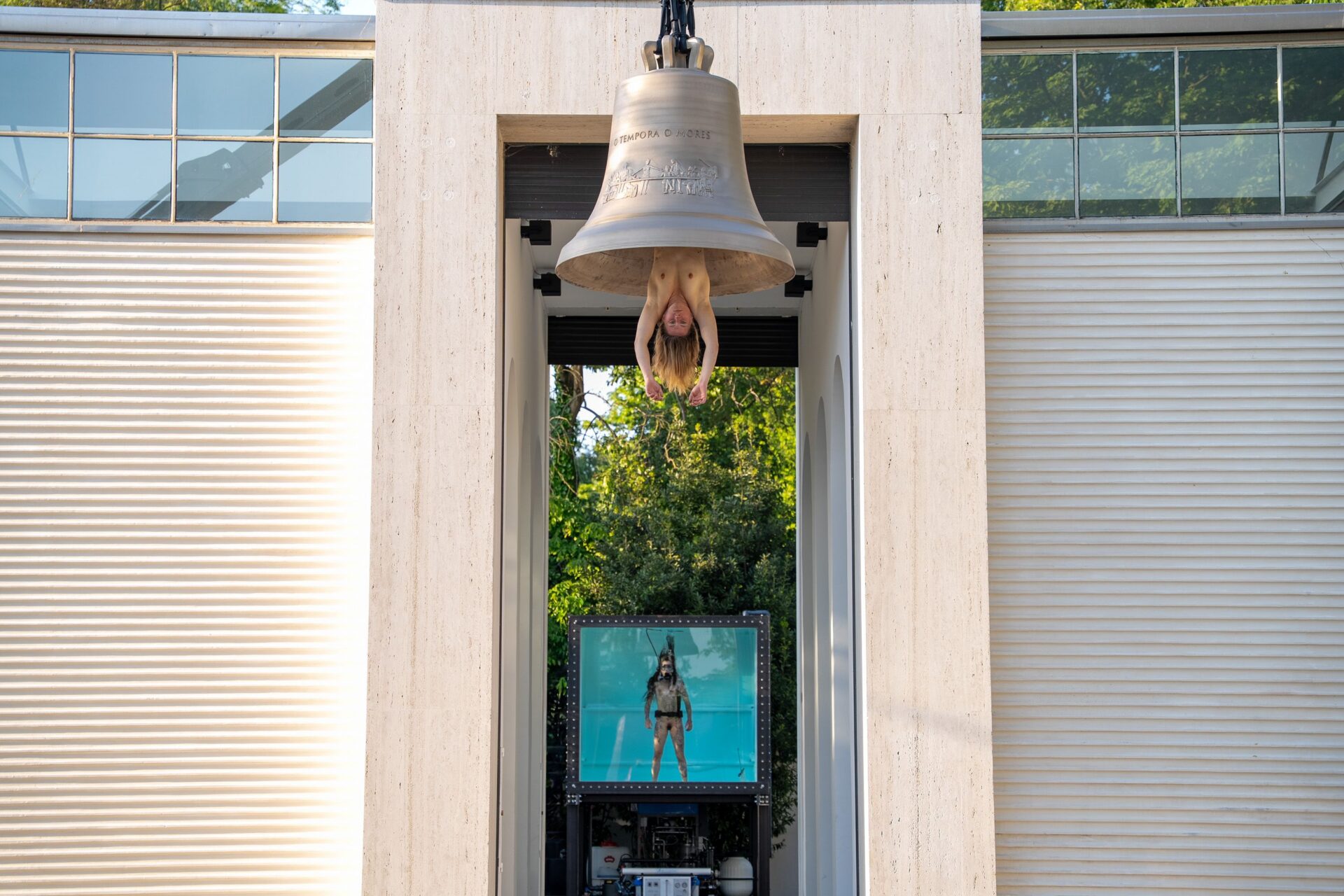
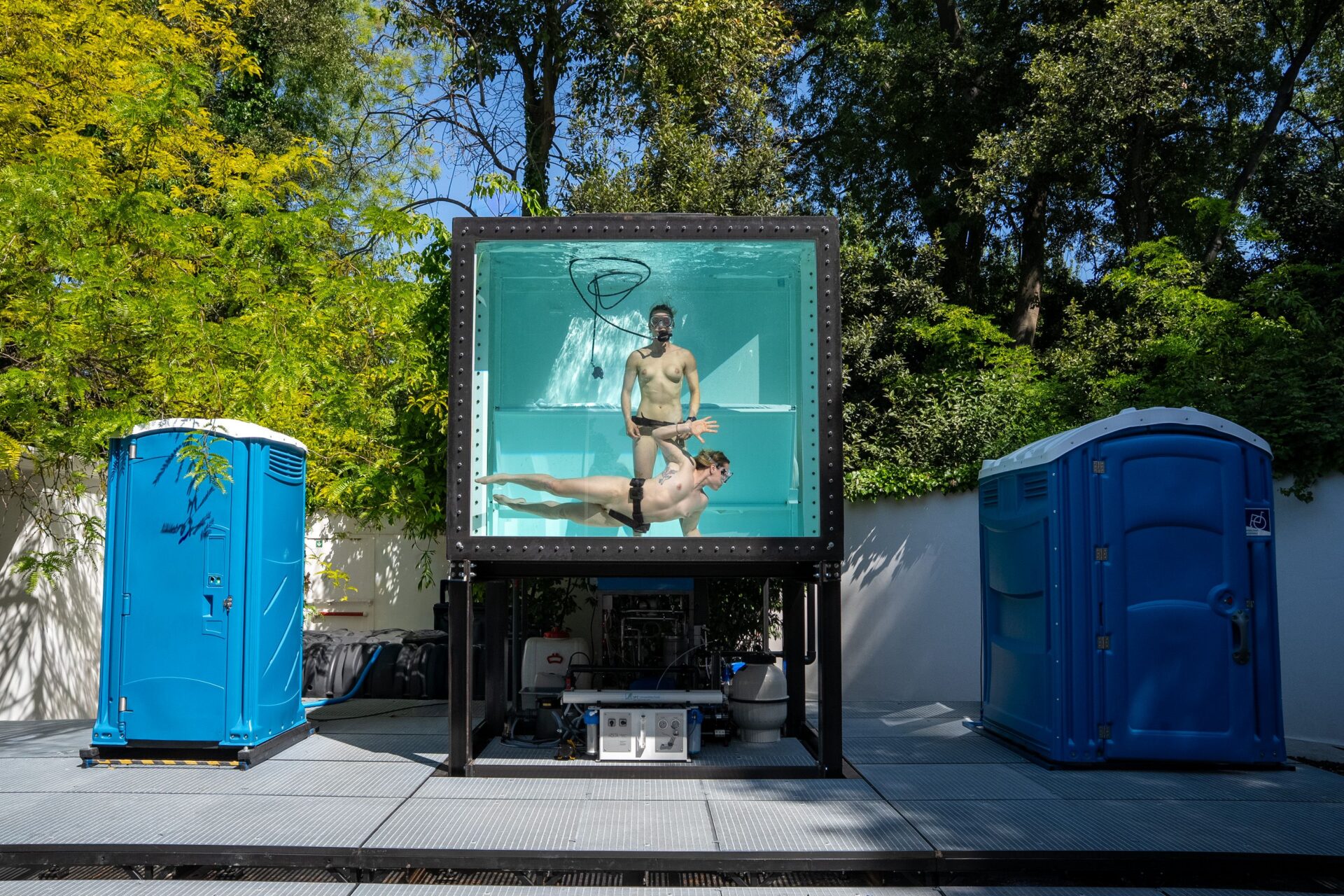
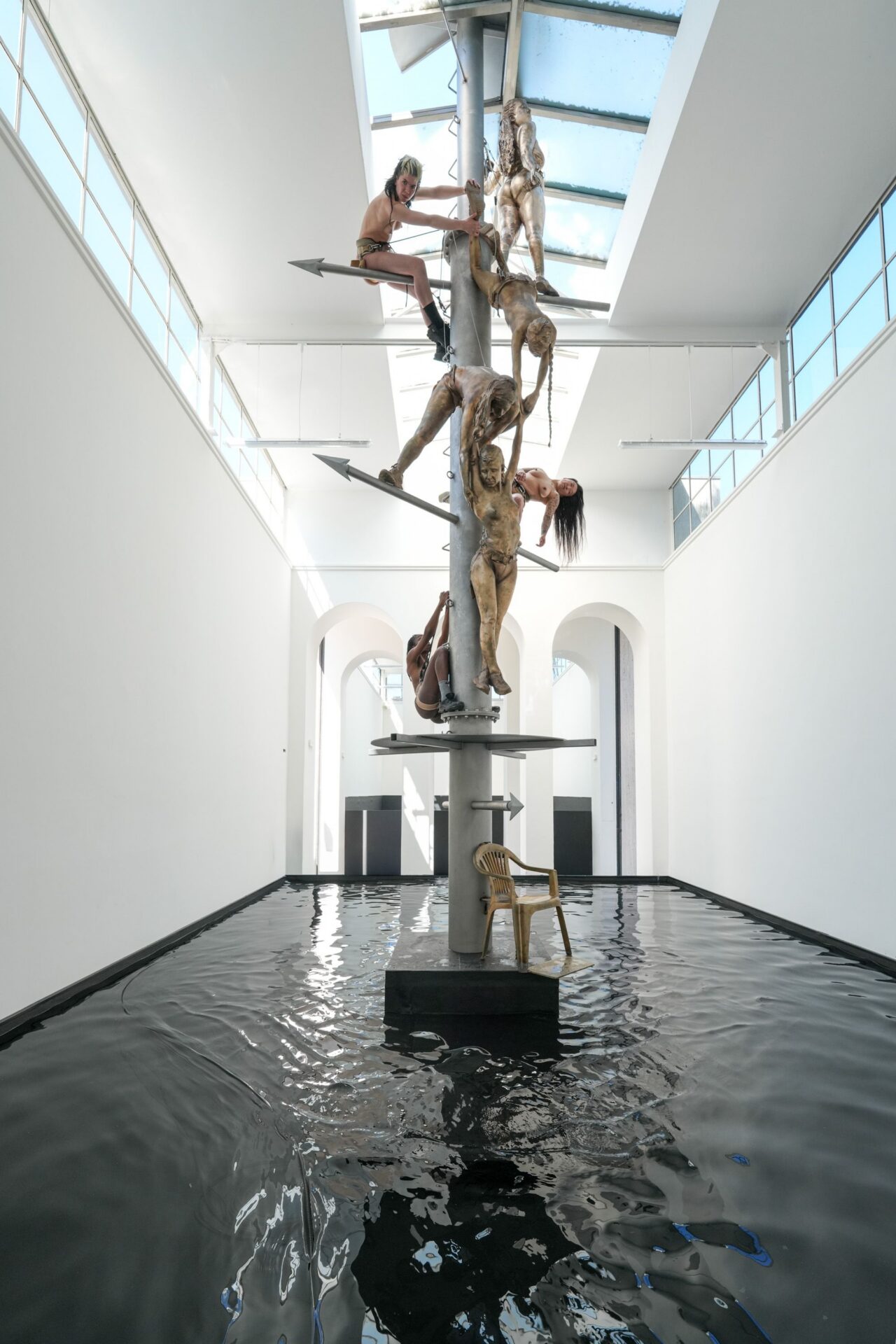
SEAWORLD VENICE, the title of her presentation for the Austrian Pavilion at the 61st Venice Biennale, marks the choreographer’s first major foray into the fine arts biennial circuit and the durationality of the exhibitionary context. For this presentation, Holzinger has conceived a self-sustaining hydrosystem that is part underwater theme park, part sewage treatment plant, and part sacred building; and which requires constant bodily presence – of both performers and visitors – throughout the seven months of the Biennale. The installation serves as a node within the synergistic complex of SEAWORLD VENICE, which also includes a series of outdoor site-responsive performances around the island called Études. Holzinger’s presentation for the Pavilion continues along one of the paths that her practice now moves in contemporary art, amping things up to a new level in terms of spatial scope and temporal scale.
Monumental Occupation(s)
To discuss the conceptual and practical implications of this step, I sat down with Nora-Swantje Almes, curator of this year’s Austrian Pavilion. Over the course of an hour, we discussed Holzinger’s capacity for image-making; how her choreographic thinking organises her approaches to site-responsive creation; and how, as the presentation’s press release states, her work seeks “to make power legible at the level of the body.” The Études series, begun in 2020, is a touchstone for understanding the Venice installation, and in particular, the Harbour Étude realized with Almes at Bergen Kunsthall in 2024.
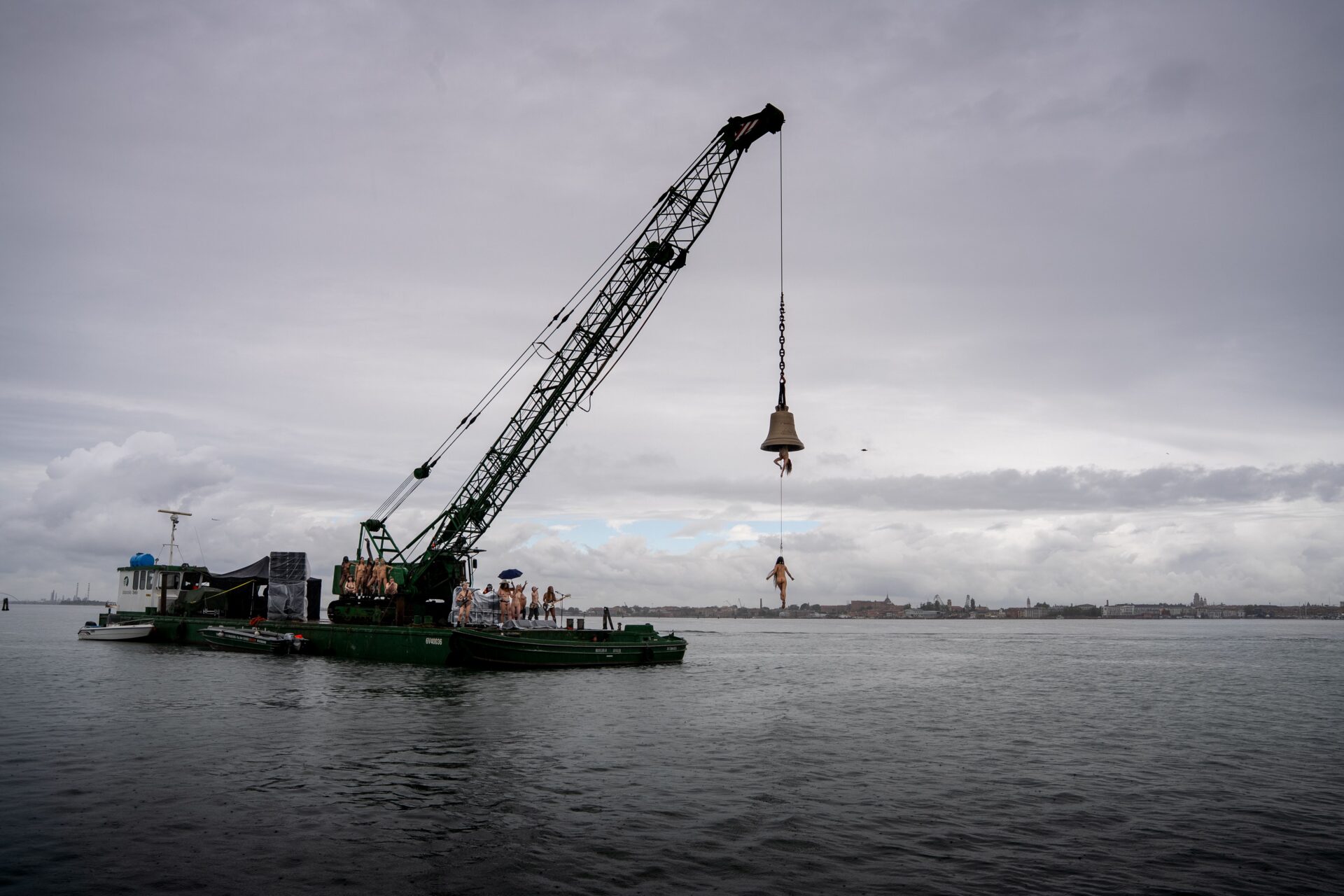
With Études, which move from stage into public spaces, Holzinger engages with choreographies already in place – Almes recounted the process of site visits for Harbour Étude, for instance, which included a training center for oil platform workers, a salmon farm, and a fishing museum. Additionally, the position of water has taken on new infrastructural dimensions since Bergen, introducing an ecological register to the work that builds upon the symbolic roles of the element introduced in earlier projects like Ophelia’s Got Talent. With the apocalyptic effects of the climate crisis already here, especially in locations with accelerating relative sea-level rise like Venice, the choreographies of interdependency between bodies and infrastructures become a matter of survival.
I asked Almes if we might think about Holzinger’s upcoming presentation as a “queering” of the Austrian Pavilion. She suggested, instead, that the ecosystem being developed for SEAWORLD VENICE was an occupation of the monument – of the heritage-protected physical building and of the histories inscribed into it. Both the notions of queering and occupying, Almes pointed out, refer to “reinventing structures,” or to denaturalising the set systems that organise bodies. To make power legible at the level of the body, then, would be to also render those infrastructures palpable, as well as the interdependencies between them – “nude bodies meeting machinery,” as Almes described. Turning the curator’s words over in my head as I tried to envision the scale and duration of the “permanent” live installation, I wondered what would happen if I took a note from Holzinger herself and flipped things around. What would happen, in other words, if I took Almes’s proposition of the occupied monument in its inverse: as a monumental occupation?
In her postmodern amalgamations, Holzinger insistently – monumentally, even – centers this bodily discipline in contrast to the ideological disciplining of bodies
In this act of transposition, space opens up to see the spectacular nature of Holzinger’s works, including SEAWORLD VENICE, within the frame of a new virtuosity, which is “not a specific skill set for all circumstances; the skill is [instead] in the receptivity of the artist, the ability to respond to the intention, context, and content of the work itself.” In such a frame of recognition, Holzinger’s de-disciplining ethos might start to come into view. As the choreographer described in a 2023 interview: “Through the dance or also through training I decide which form I represent today in a world full of other forms.”
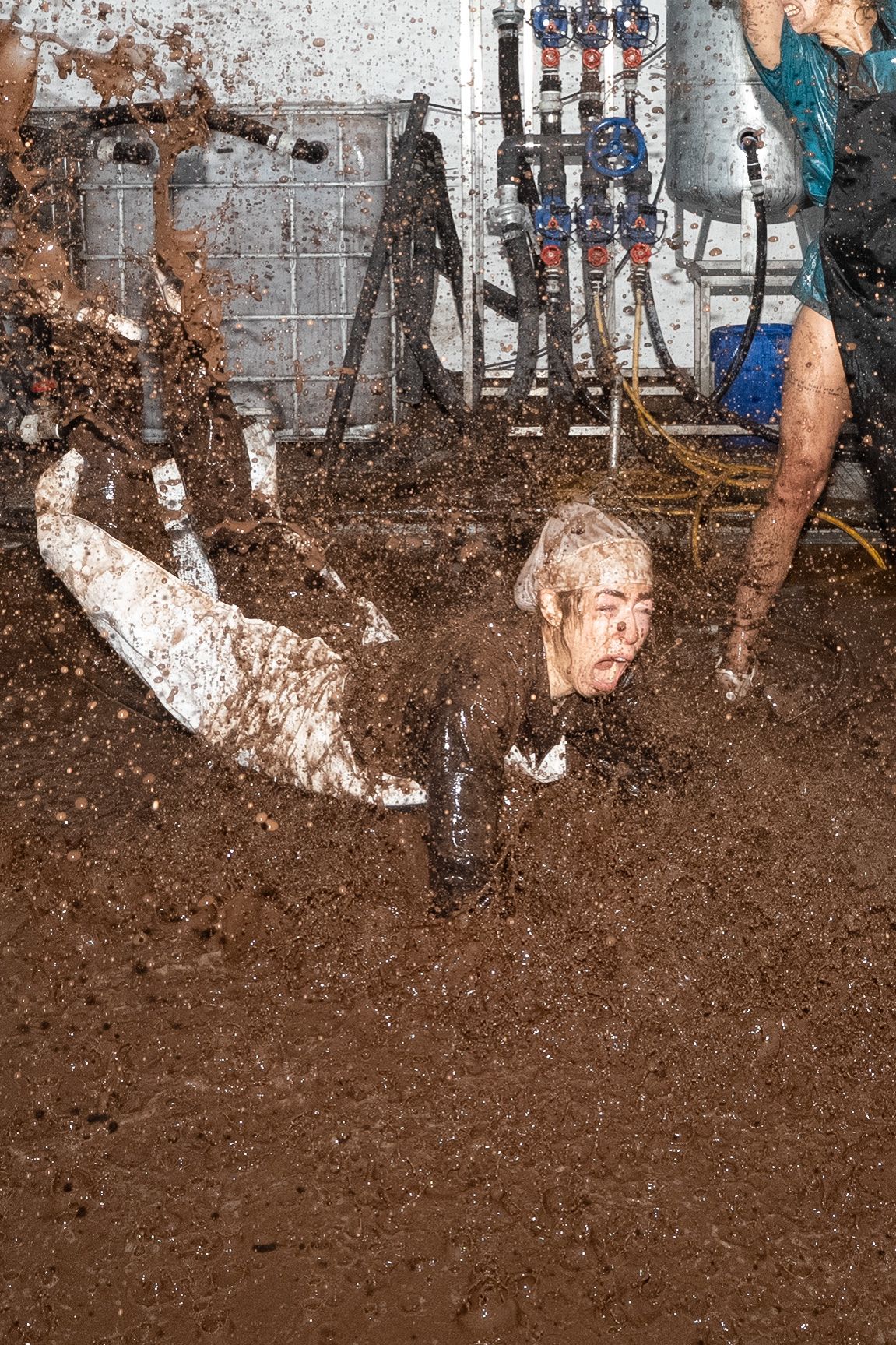
Here, Holzinger binds the process of selection (of forms) with the processes of training – every de-disciplining is, she reminds, also an act of re-disciplining otherwise. Almes’s words to me echo: ‘She draws on really different genres of body-based practices, such as side shows, circus shows, ballet, martial arts, body modification – Viennese Actionism might be also one of them. She takes all of these different genres and all the rules and conventions that are linked to them, and she uses them as containers for critically engaging with histories. You also see it in the cast (the core ensemble) who are coming from really different body-based practices. This is the richness, maybe the openness, of how [Holzinger] understands her practice. All these different genres can co-exist, and they inform her work as much as each cast member does – the suspension expert comes in and becomes part of the cast.’ Disciplinary boundaries aside, body-based practices, whether on the oil platform, at the sewage plant, or in the performance, demand technical discipline and training. In her postmodern amalgamations, Holzinger insistently – monumentally, even – centers this bodily discipline in contrast to the ideological disciplining of bodies. Monumentality, like the virtue at the root of virtuosity, becomes something else in her work.


After After
This something else must be seen in the contextual aftermaths of postdramatic theatre; or, of the parting of ways between theatre and drama since the 1960s with the rise of performance vis-a-vis Happenings, Fluxus and, I would add, the Endurance and Body Art traditions that accompanied them. Holzinger’s connection to these aftermaths is both conceptual and material. In her practice, one sees an unruly channeling of the enfant terrible spirit of German film- and theatremaker Christoph Schlingensief, which, since 1999, has haunted the stage of Berlin’s Volksbühne where he was an artist-in-residence during the turbulent decade after Germany’s reunification. This spirit has found new form since Holzinger’s arrival at the Volksbühne, coming to embody a set of provocations akin to those laid out in the notion of global realism by the choreographer’s contemporary, Swiss theatremaker Milo Rau. In Rau’s conceptualisation, realism “does not mean something real will be represented, but that the representation is itself real.” Holzinger’s works take such tenets to task by taking them to their messy feminist extremes – once questioned about the realness of a body piercing live on stage, she wryly responded: “the whole performance is ‘real with a grain of salt.’”
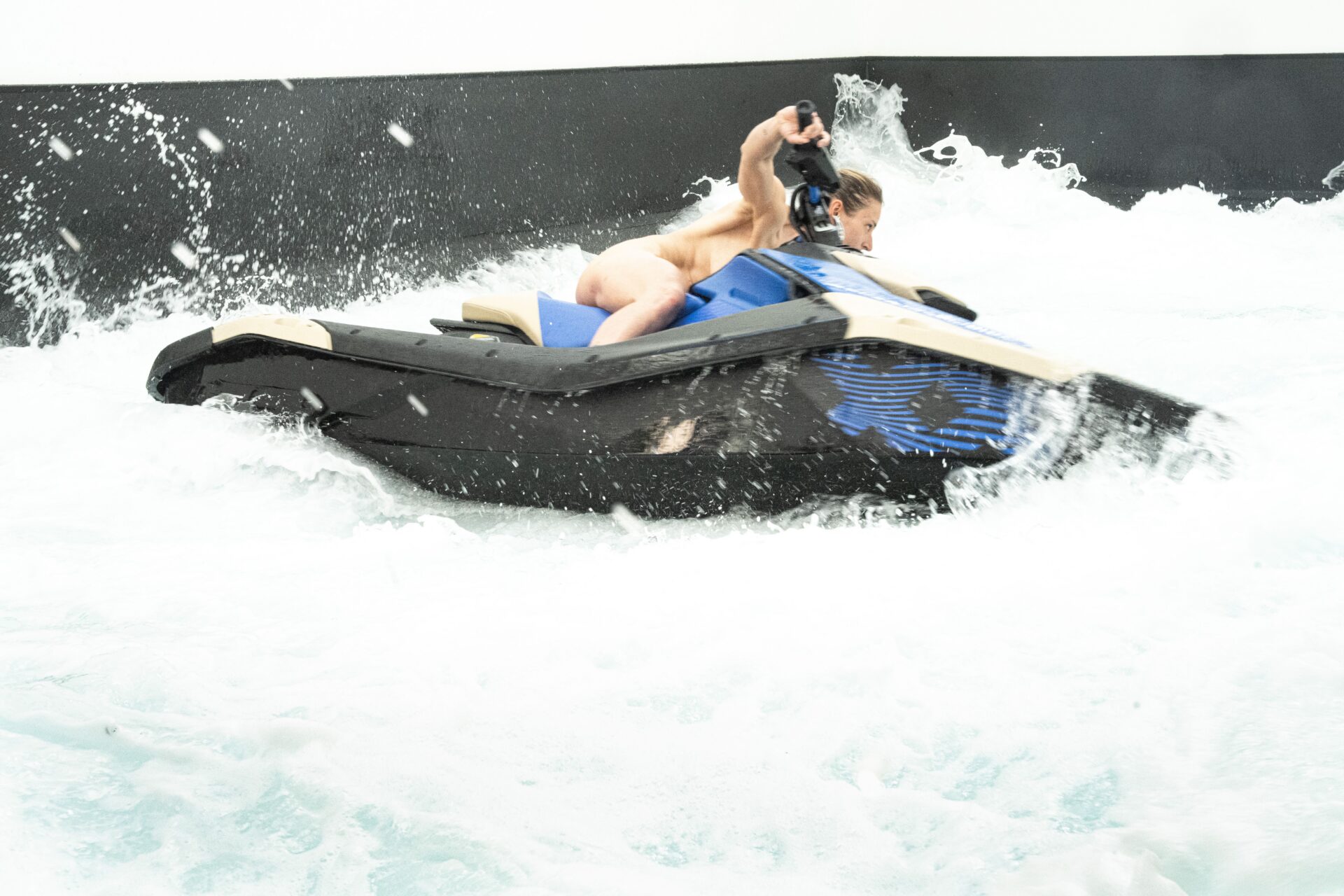
In this bait-and-switch, the choreographer brings issues of the real, realness, and reality in slippery proximity to representation, flipping things around by staging their already inhabited proximities to each other. The self-sustaining hydrosystem that constitutes SEAWORLD VENICE follows as well from this approach to artistic production; and, in Holzinger’s signature fashion, it builds a fantastical, other world from within the impurities, the dirt, and the shit – from within the “lives lived in the waste of others,” as Almes writes. Foregrounding the entanglements of body and machinery more emphatically than ever, the installation invites visitors into the viscera of infrastructure itself. For our part, we are both implicated in the system and left to speculate at the virtuosic levels of receptivity and responsiveness needed to navigate matters of the underwater theme park and the sewage plant within the municipal infrastructures of a heritage-protected site like this one where technological advancement takes a backseat to the ebbs and flows of the Mediterranean.
THIS ARTICLE IS PUBLISHED IN METROPOLIS M No 2-2026. YOU CAN BUY THE METROPOLIS M BIENNALE GUIDE BY MAILING [email protected]
1 See Caroline Lillian Schopp, “Importunate Feminism: On ‘Ophelia’s Got Talent’ by Florentina Holzinger,” Texte zur Kunst 131 (September 2023): 226.
2 Simon Dove, “Virtuosity,” in In Terms of Performance, ed. Shannon Jackson and Paula Marincola, accessed April 2, 2026, https://intermsofperformance.site/keywords/virtuosity/simon-dove.
3 Carolin Desiree Becker, “In Conversation with Florentina Holzinger,” Numéro Berlin, September 2023, https://www.numeroberlin.de/2023/09/in-conversation-with-fl
orentina-holzinger/.
4 The term “postdramatic theatre” was first introduced by the German theatre scholar Hans-Thies Lehmann in 1999. See Hans-Thies Lehmann, Postdramatic Theatre, trans. Karen Jürs-Munby (London: Routledge, 2006).
5 See Milo Rau, Global Realism (Berlin: Verbrecher Verlag, 2018), 177.
6 Florentina Holzinger, quoted in Caroline Lillian Schopp, “Importunate Feminism: On ‘Ophelia’s Got Talent’ by Florentina Holzinger,” Texte zur Kunst 131 (September 2023).
Megan Hoetger
is researcher