A Hum that Occupies – Hajra Waheed at Melly
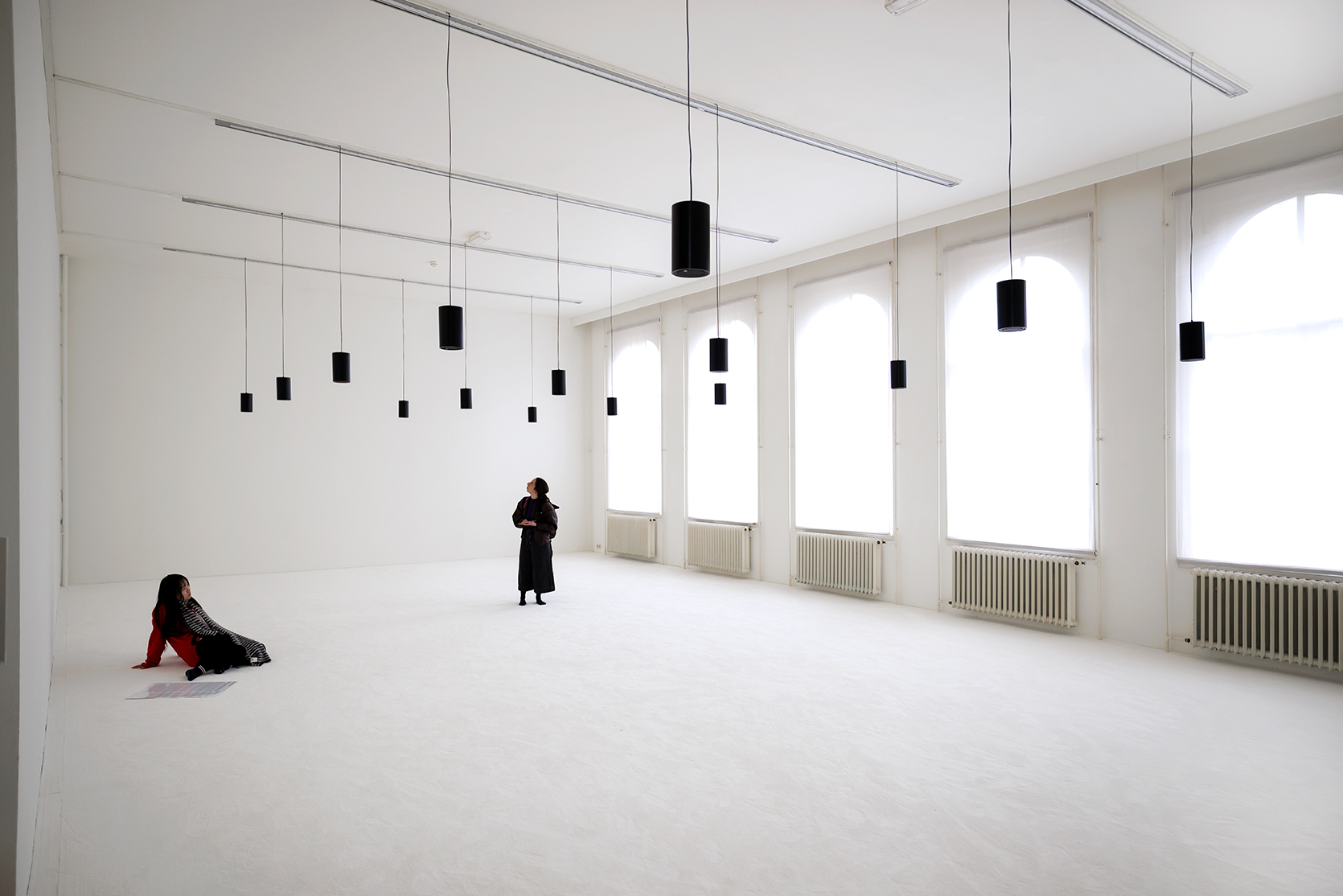
Humming voices fill a carpeted room at Melly in Rotterdam. The sound installation HUM is part of Hajra Waheed’s solo-exhibition There Is a Fountain Even If Pale That Flows Beneath Us All at Melly. Anastasia Shin visits the exhibition and is caught by the way in which the sounds of HUM touch without explanation or interpretation.
The sound enters my body almost as soon as I step into the quiet, carpeted space filled with bright sunshine. Discernable melody drifts from 15 suspended speakers in a human-feeling hum. I remove my shoes, per signage, and am reminded of a prayer hall. Yet there is no pattern or holy direction to abide by and the speakers are distributing the sound all across the room. The hum makes me aware of the porosity of my skin as the vibration that knows no borders travels through me and around the space. I sit on the widow-white carpet and wonder if I should read the space symbolically, as a place for grief? As white is the clothing colour which expresses mourning across East, Southern and Southeast Asia. But the sound quickly interrupts this line of thought, transporting me away from the visual elements and into something else.
The sensitivity and resonance in Hajra Waheed’s sound installation at Melly catches me off-guard. I feel the melodies carrying narratives of struggle, optimism and reflection. The layered humming voices are at times bewitching, even, or perhaps especially, in their semi-abstract form. I say semi, because the melodic form is carrying tones and timbres which are not only abstractly beautiful and touching but recognisably structured and referential. The sound becomes figurative as it symbolically refers to a type of feeling, a type of story, a situated expression. As each song is hummed, the words are held back behind closed lips, yet the human expression is powerfully present. Even if some of this musical force comes down to the learned interpretation of major and minor keys, this is a language that strikes something at the core of being human. And all of this is before I’ve contextualized the voices and circumstances from which these hummed songs stem…
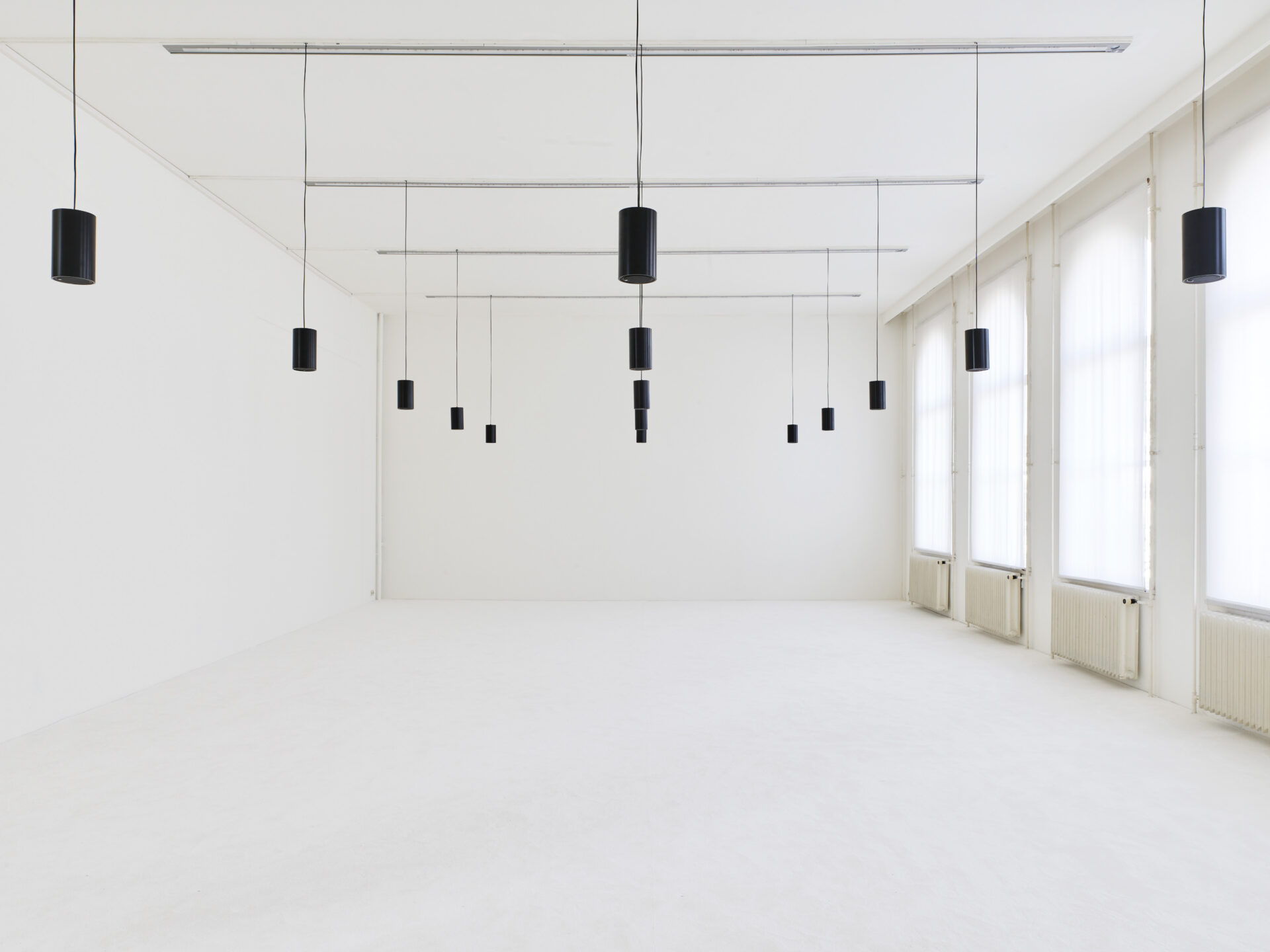
HUM translates as ‘we’ in Urdu, the national language of Pakistan. And the singers and songwriters of the hummed songs within the sound installation have all been political prisoners. These six, born across a span of nearly 80 years, with the earliest in 1911, anchor the songs to specific liberation struggles in Turkey, Egypt, Burma, Pakistan and Sudan. One such example is Faiz Ahmed Faiz’s poem Hum Dekheñge, (which can be translated as the assertion: We Shall See) inspired by the possibility of revolution.[1] When Faiz, revolutionary poet, writer and first chief editor of the Pakistan times was first arrested he was kept in solitary confinement for four years. Hum Dekheñge was written more than 20 years later, in 1979 during Zia Ul Haq’s dictatorship. Faiz’ banned poem was set to music and sung by famous Ghazal singer Iqbal Bano in Lahore stadium in 1986, enlivening the crowd of 50,000 to chant: ‘Inqilab Zindabad!’ (‘Long Live the Revolution!’).[2] Her called-for encore was recorded. In the days following the concert, raids were carried out to find and destroy the tapes, testament to the power of Bano’s rendition at that time. And now, as songs travel not only through the synchronous sharing of oral history but across asynchronous digital and networked connections, the sentiment of Hum Dekheñge has been echoed in protests against the Indian Government’s citizen amendment act (CAA) which penalises refugees based on their religion both at sit-ins and dispersed online as videos which have gone viral.[3]
In response to the anti-CAA student protests in India, the Pakistan Students Solidarity Marches erupted in 2019 in more than 50 different locations in Pakistan, during which Waheed paid a site visit for the Lahore biennial.[4] HUM was originally commissioned for the biennial and is dated 2020 but there is something about the work which brings it beyond a layered and composed recording. The urgency of protest can be felt in the sounds. It doesn’t feel like I am just listening to something archival and fixed. The edges of the hummed songs blur. The humming voices seem to occupy me and the struggles of this present. Waheed understands the architecture of listening, the vulnerability needed to touch an audience, and the necessity to come together in solidarity against tyranny. As well as signalling to me to slow down and pay a different kind of attention to listening, the atmosphere of HUM allows me to become sensitive to the way sound can occupy space within the present. The wordless songs are unrushed: audible inhales sip air between the long, mouth-closed, tonal, nasal exhales. Alone and uninhibited that afternoon I joined in with the background hum, my voice becoming a disguised entity amidst the multiple voices which support, extend and strengthen a single humming voice.
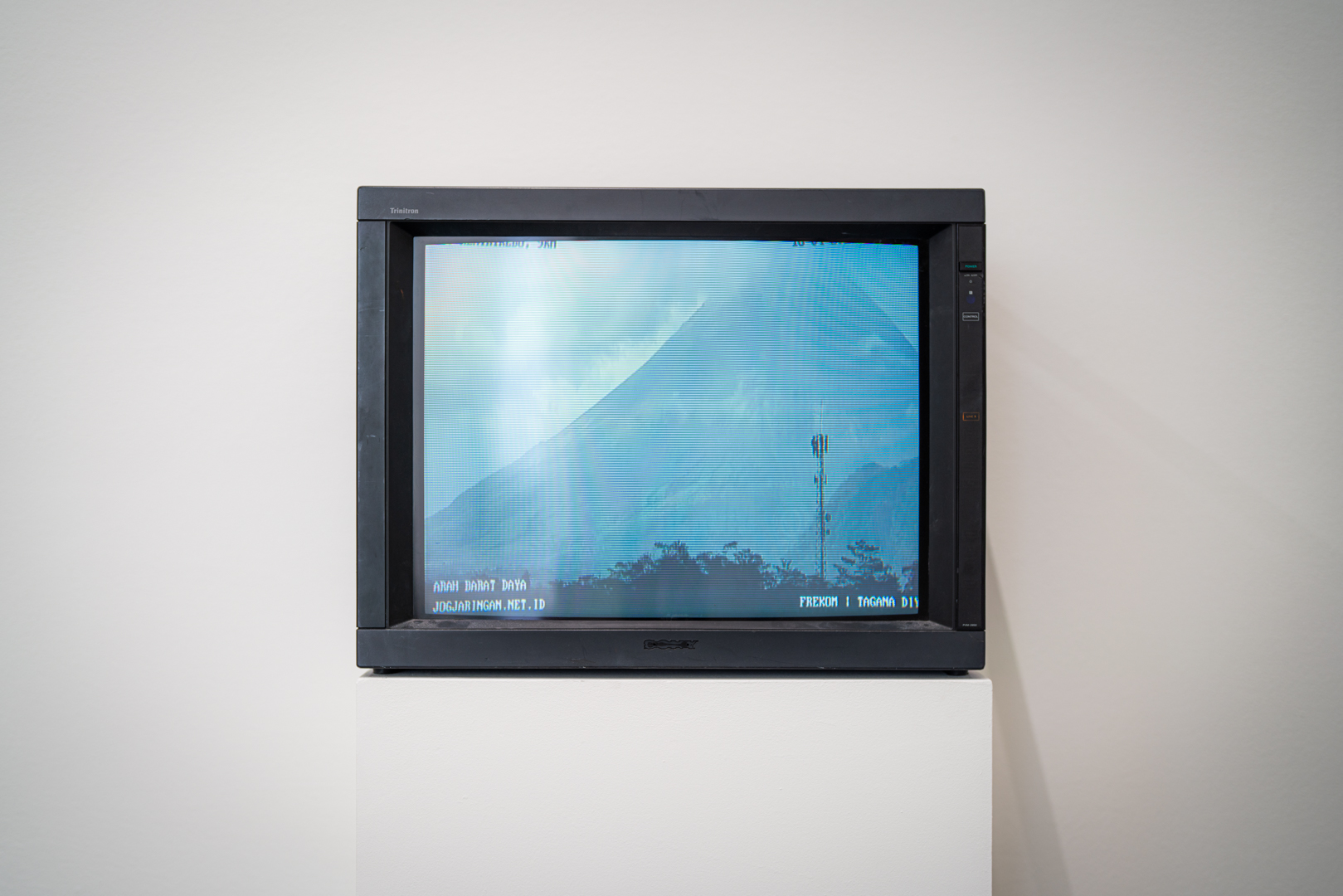
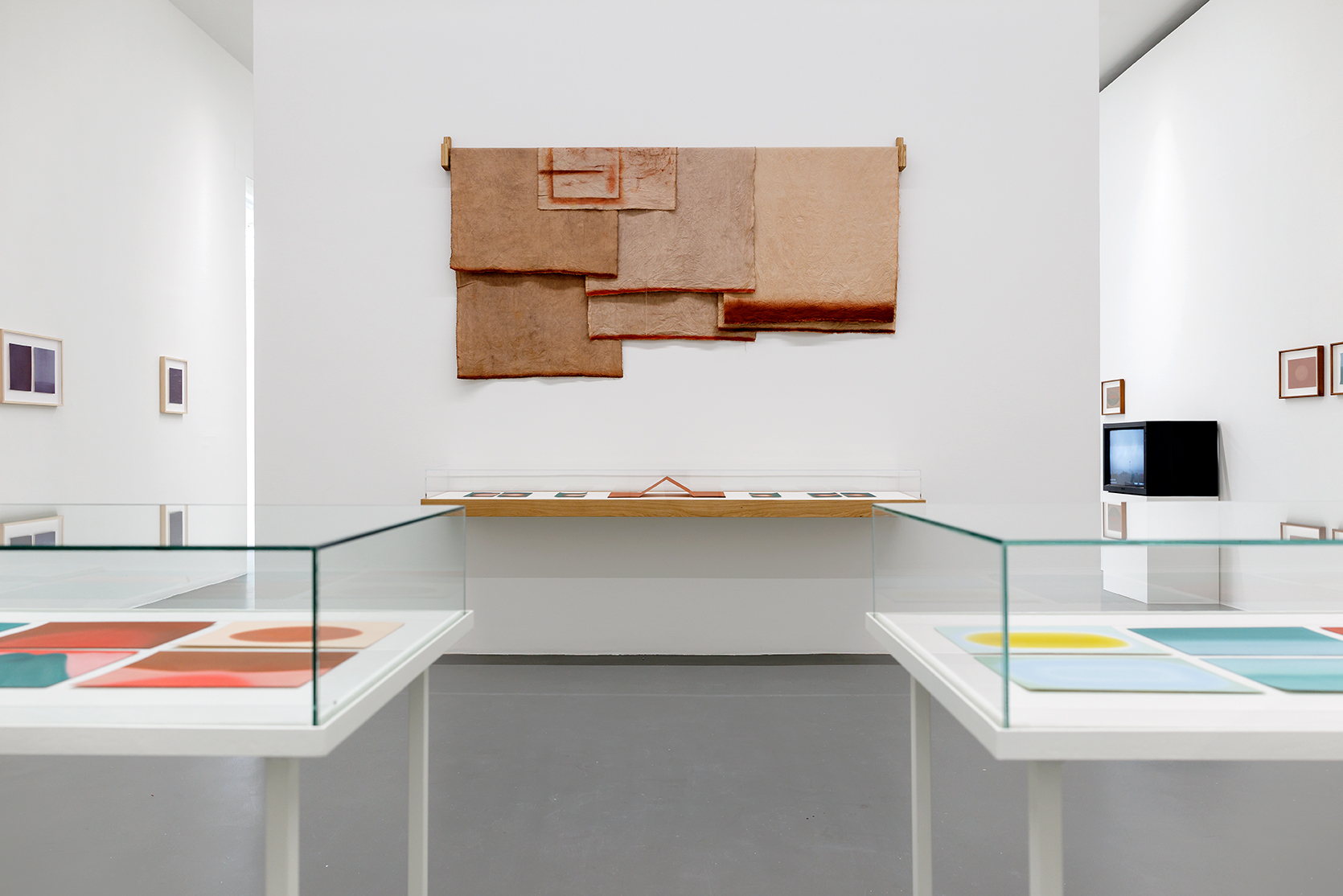
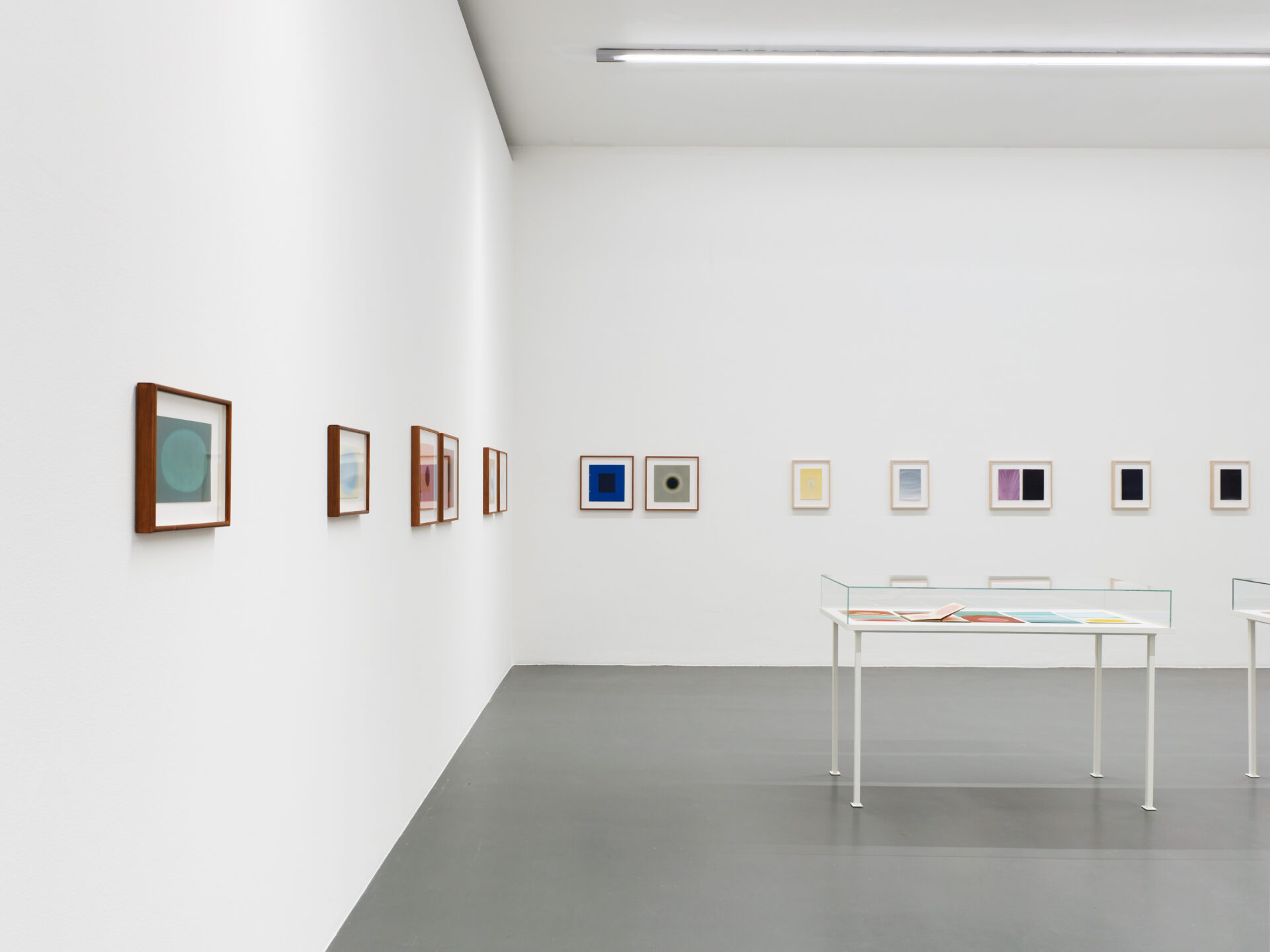
The symbolism of the white carpet initially reminded me of grief, and perhaps there is an element of this in the work; creating space to acknowledge the losses within these different struggles, the years of incarceration, isolation and forced exile. But the complexity of Waheed’s work lies in the space it creates for a breadth of feeling. How it activates, informs, allows for and deepens my understanding of various political struggles and how in the first instance of listening, whilst my cognitive understanding is kept at bay, I am moved before I understand why. The resonance of the collective voices in HUM is held above the Rotterdam metro rumbles but below the city sirens. From Waheed I learn that this deeply felt, indeterminate middle space of humming can signify safety and connection—a lullaby effect—and yet, be poignantly political.
There Is a Fountain Even If Pale That Flows Beneath Us All is on show until the 6th of September at Kunstinstituut Melly
Anastasia Shin