Bringing the background to the front – talking to Ana Navas about A Veil as a Glaze at de Oude Kerk
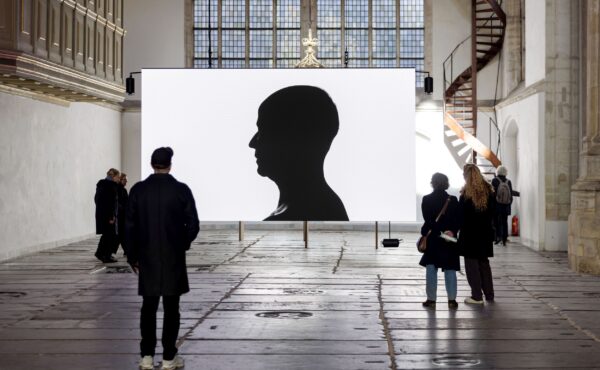
It is only a year since Ana Navas started working with glass during a residency at Make in Eindhoven. At De Oude Kerk she presents a collection of new works integrating them with research into the intertwined histories of de Oude Kerk and Amsterdam.
Upon visiting Ana Navas’ solo show A Veil as a Glaze, the exhibition is still in preparation. In one of the side rooms of de Oude Kerk, Navas has set up a small studio to complete the pieces that will be shown. Together with curator Marianna van der Zwaag, we gather around a table to discuss her works. Navas recently completed a residency at MAKE Eindhoven, culminating in an exhibition at PARK. In this exhibition at de Oude Kerk, she continues her exploration of glass works, integrating them with research into the intertwined histories of de Oude Kerk and Amsterdam. Next to the glass sculptures, Navas presents a textile work and sculptural drawings. In all of these works she brings the background, whether metaphorical or literal, to the forefront, prompting questions about historical representation. Her art creates a lens through which the church and city become part of a cohesive collage.
How did the process of exhibiting here at de Oude Kerk go?
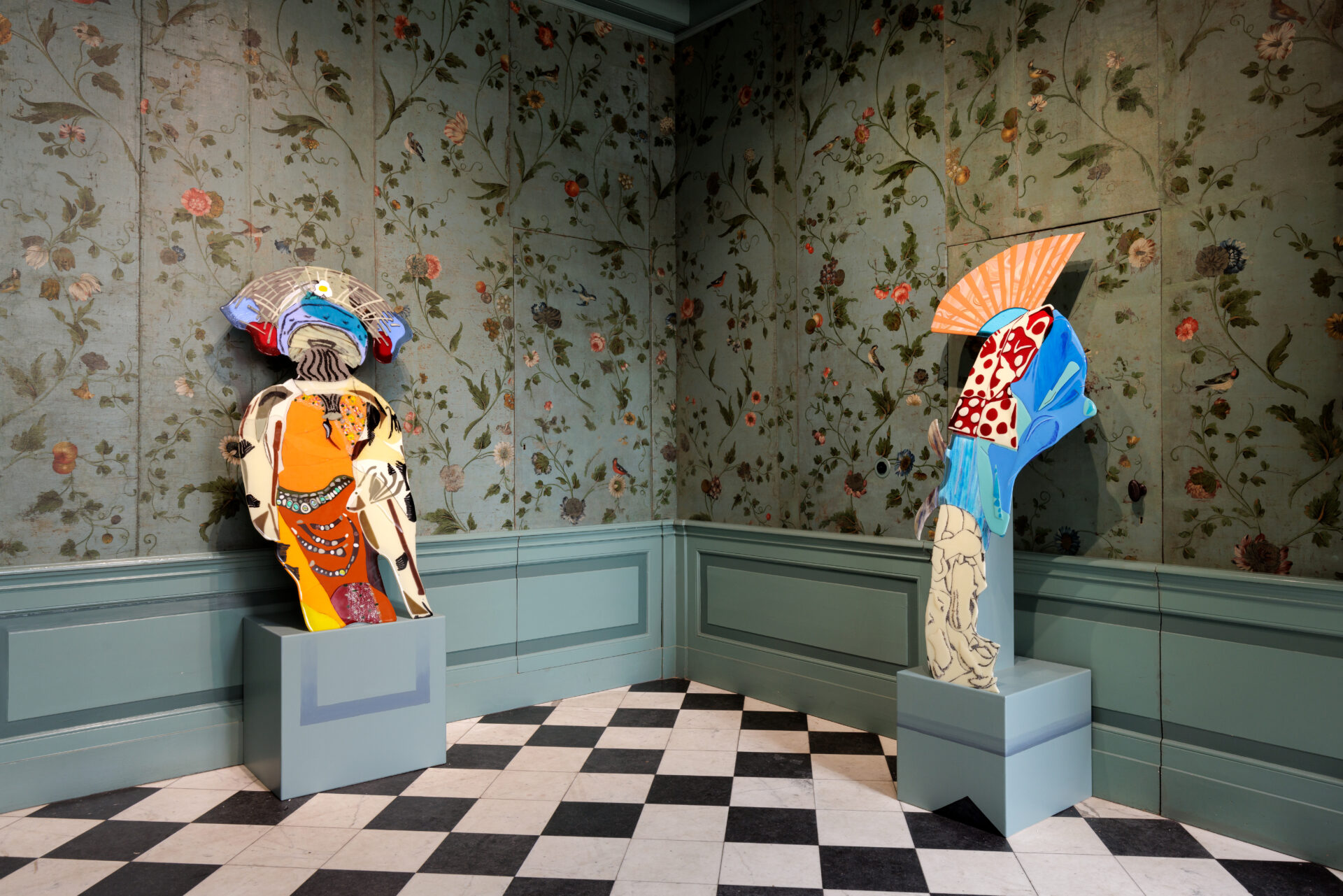
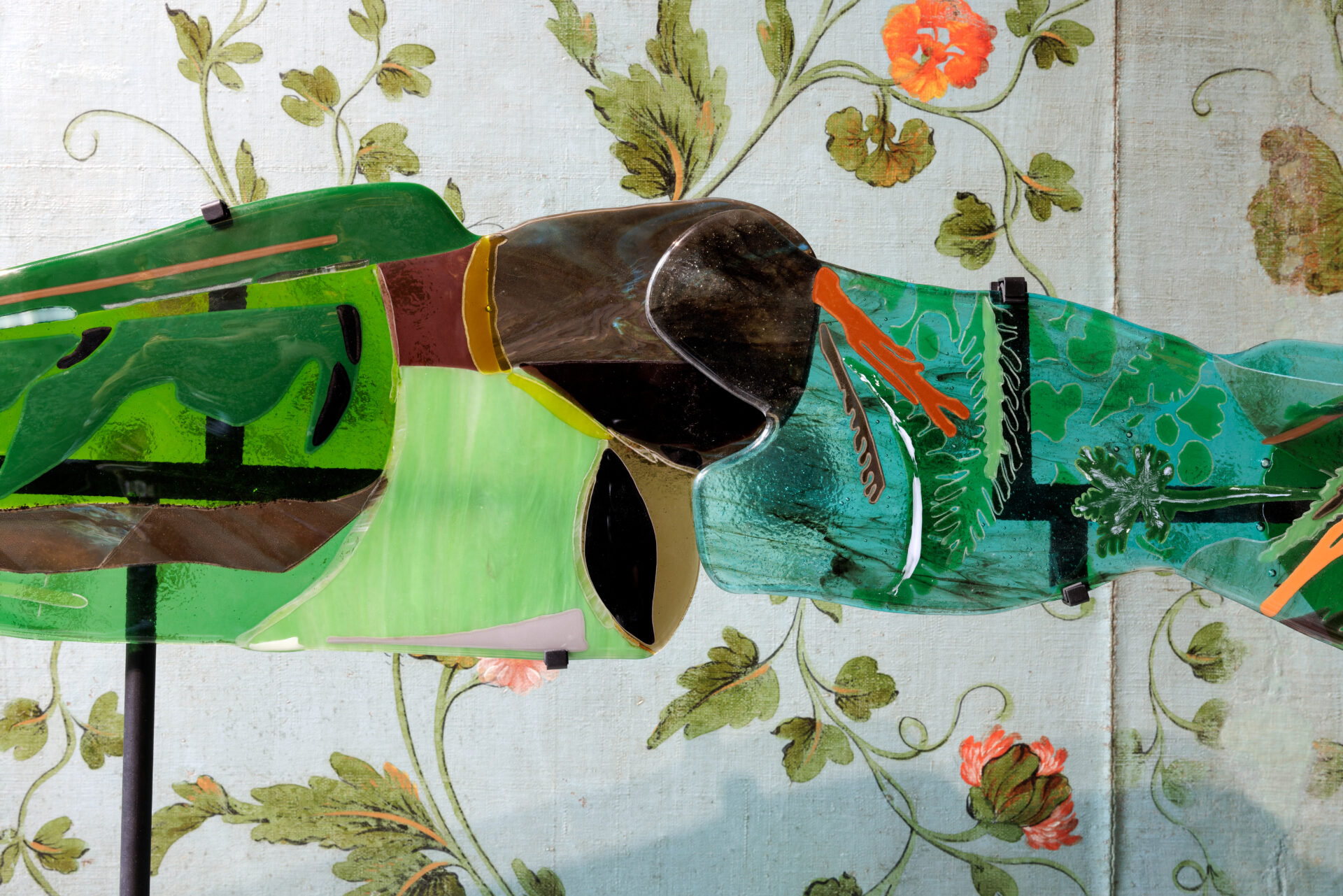
‘The invitation to exhibit here came through the Three Package Deal from the AFK, which fosters synergy between various institutions in Amsterdam, including Museum van Loon, Reinwardtacademie, H41, and de Oude Kerk. The collaboration revolves around the theme of interhistoricity, sparking conversations about buildings with historical knowledge or relevance. These discussions ultimately led to the decision to hold my final presentation at de Oude Kerk. The starting point for this exhibition was the Spiegelkamer, one of the side rooms in de Oude Kerk. I always consider my work built up like a set of dominoes: I begin with a basic plan, knowing it will for sure change during execution. That was exactly the case in the Spiegelkamer. The unique wallpaper sparked my interest, and I got to know that De Spiegelkamer was also used as the chapel for weddings, including the marriage of Saskia and Rembrandt. This led me to Barendina Bijtelaar, an archivist deeply involved with the church and the city in general. I delved into her archive materials of the city, which inspired the works displayed in the library. This is what I mean by a domino effect: a starting point that allows the story to develop in tandem with the work.’
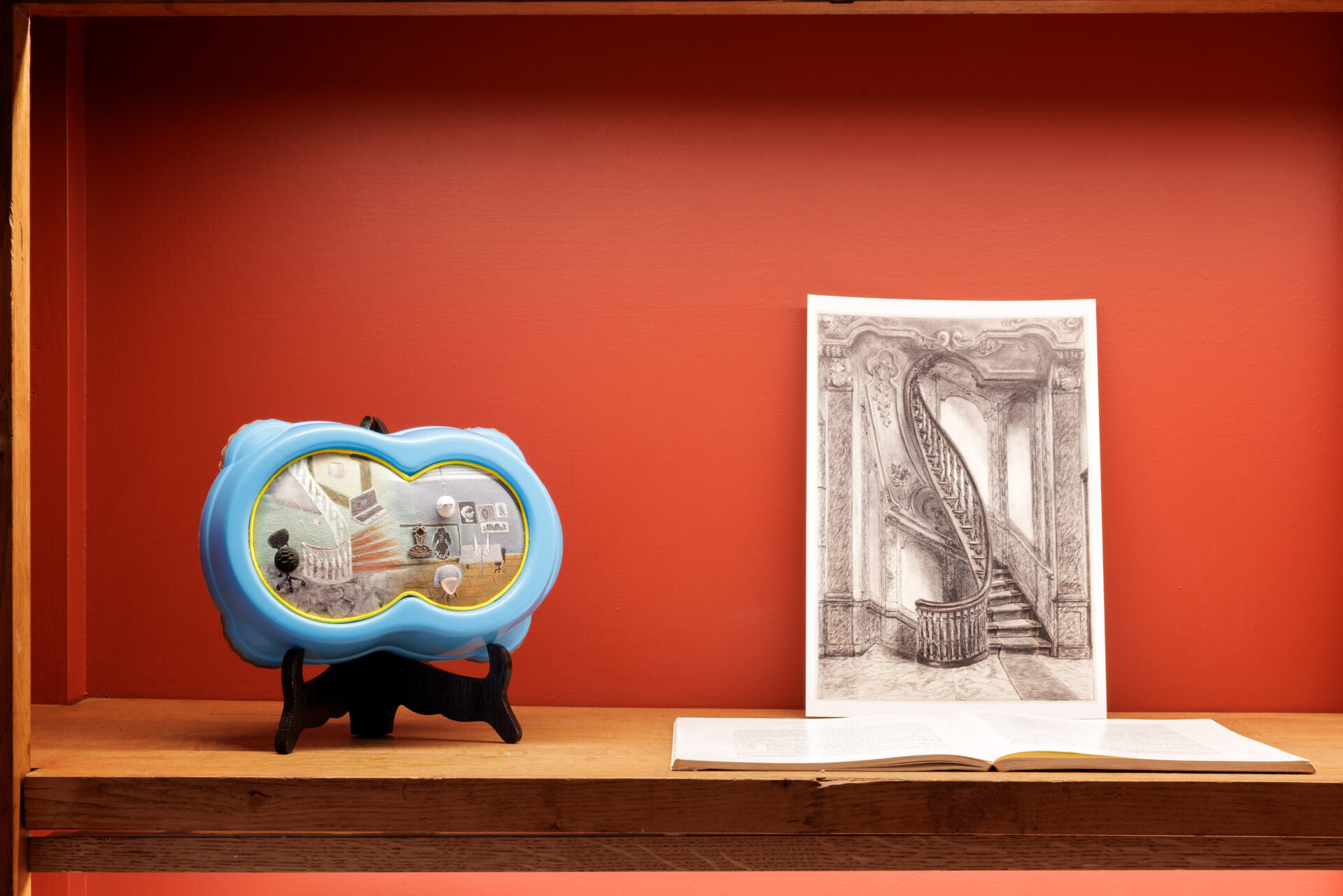
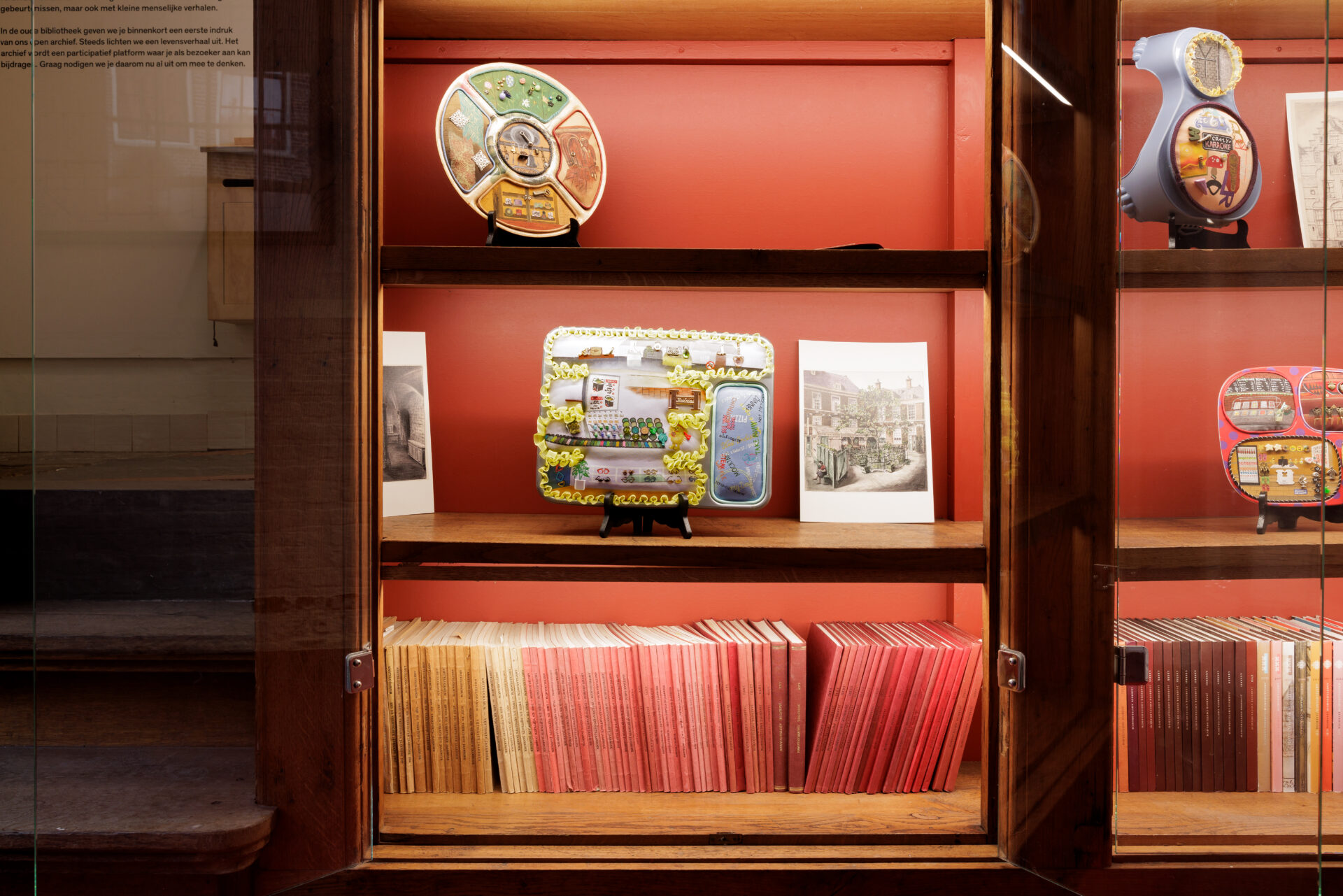
Can you explain how the work of the archivist Bijtelaar inspired your works?
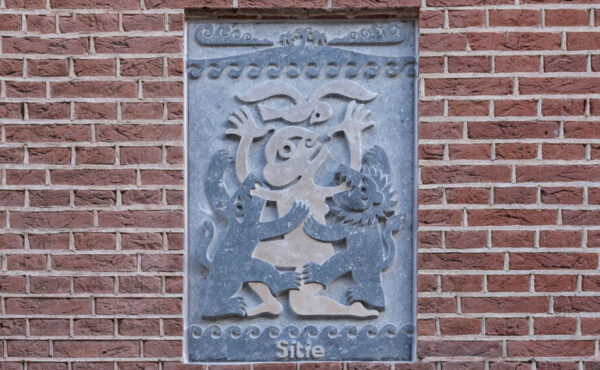
‘In the library here, you’ll find objects from the church, but also books that Bijtelaar wrote about Amsterdam and de Oude Kerk. Besides her research, she made drawings of Amsterdam, which were not taken that seriously, but she still kept on making them. There are many drawings of the church, one of her favorite subjects, but also drawing of Amsterdam. These drawings of Amsterdam were a point of departure for me. I visited the same places depicted in her drawings to observe how these places have transformed over time. I focused on specific things – a restaurant, a graffiti, a street sign – as examples of this form of layering. The city itself is like a layered collage. This process also provided me with an opportunity to paint something I’ve long wanted to, given my personal connections and histories in Amsterdam. Bijtelaar for example has one drawing of the Munttoren. When I was a participant at De Ateliers, I would buy my supplies somewhere around the Munttoren. So, it really made sense to do something with that place. These works about Amsterdam are a way for me to open up my references to the real world. While some artists maintain a photo archive to keep a connection to the outside world, for me, these works serve as city archives that connect the viewer and the shared spaces we inhabit.’
So, the distinction between your archive and art has become a bit more ambiguous in these works?
‘Yes, following Bijtelaar made me think about how I engage with archives for my work. Now that they are juxtaposed, I can also discern which aspects of the city intrigue me. While I could have painted the sidewalk or the trees, I focused on this highly charged, almost pop art aesthetic instead.’
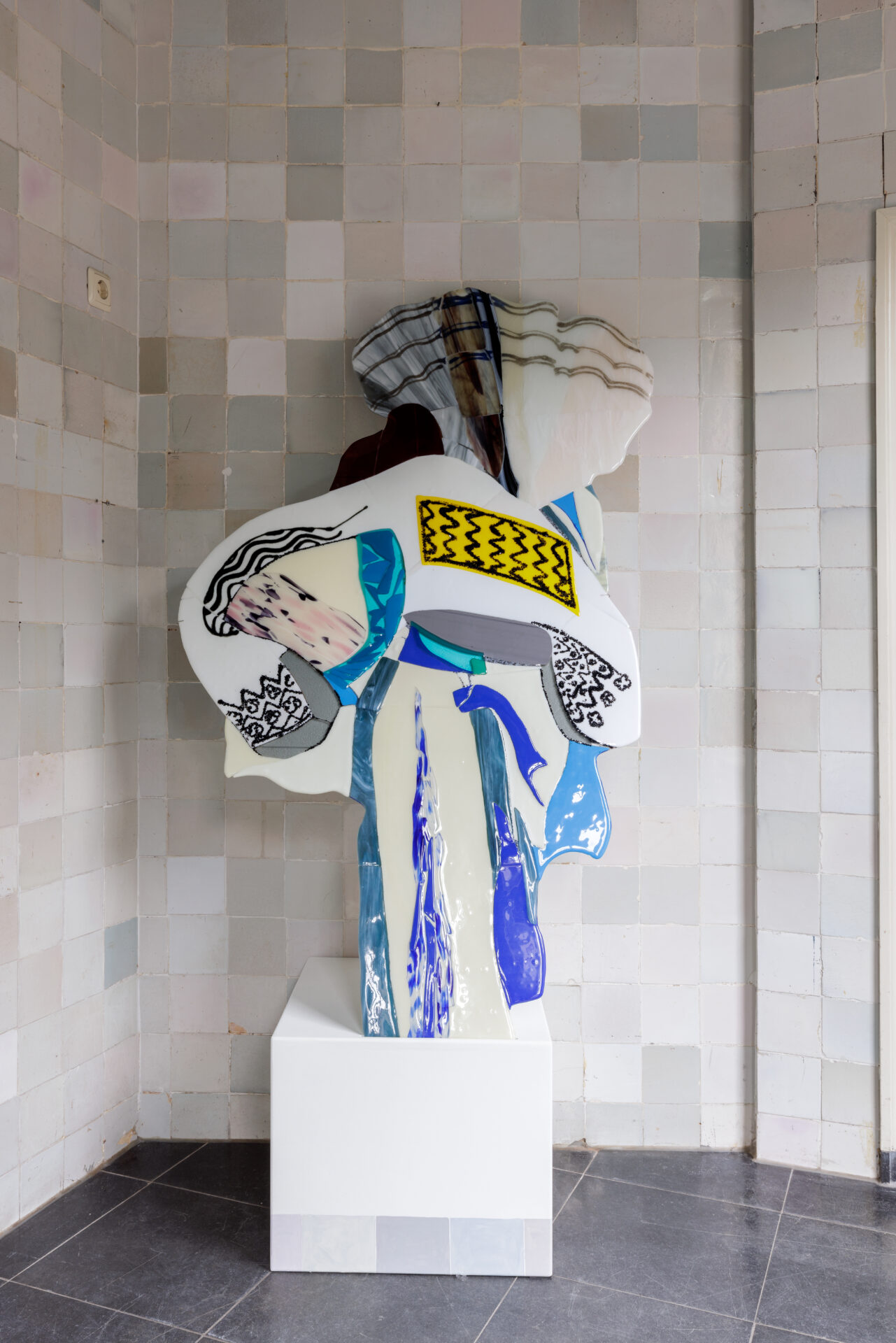
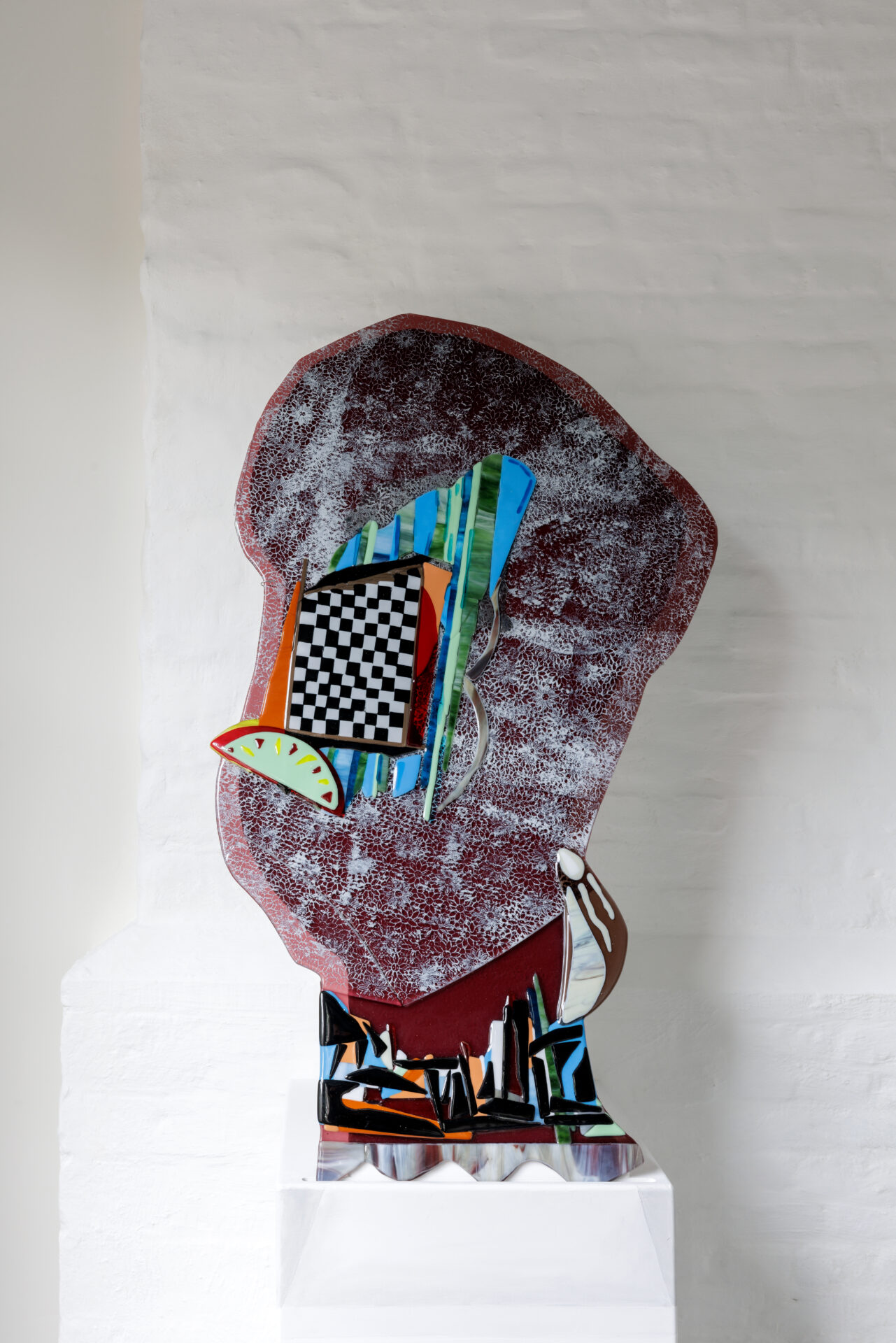
‘The glass figures I created, are a bit like ghostly figures for me. I call them absent bodies’
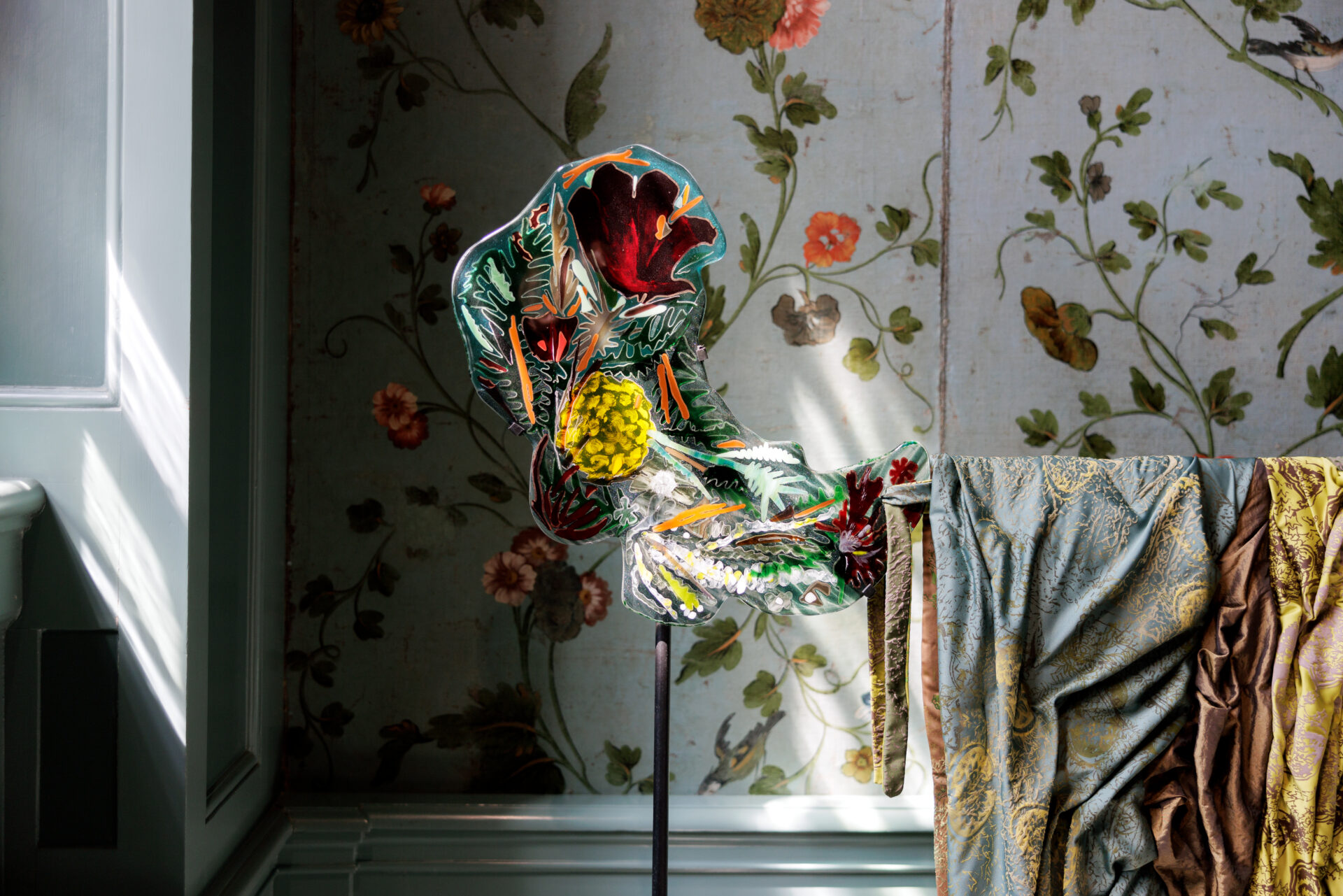
You started working with glass not too long ago. How did glass find its place in your work here?
‘I only started working with glass last September during a residency at MAKE Eindhoven, after I had already begun the AFK Three Package Deal. Before that, I was focused on collages made from various paintings, all depicting women. I was particularly interested in how these depictions emphasized clothing, accessories and interiors over the body and skin of the subjects. I extracted pieces of textiles, accessories and interior design elements that were interesting to me and used them to create new figures or shapes in weird poses. This creation of new forms was inspired by the Spiegelkamer. The flowers that you see on the wallpaper there are imaginary; the flower is from one species while the stem or leaves are from another, making them collage-like mixtures. While working on my collages, I realized that this process mirrored the creation of these nonexistent images on the wallpaper. During my glass residency at MAKE Eindhoven, I learned that fusing images in glass is very similar to making paper collages. You cut the pieces of glass by hand, and the oven fuses and glues them together. I was thrilled to see that I could translate my paper collage sketches into glass, with a process that felt quite similar. In the context of the church, glass has a spiritual and ethereal association. The glass figures I created, are a bit like ghostly figures for me. I call them absent bodies. They are bodily forms composed of the things that surround a body – textiles, background patterns and accessories are transformed into skin.’
Besides these glass figures, you are also exhibiting a textile piece.
‘Yes, this textile piece is partially based on the painting depicting Saskia as Flora by Rembrandt. A lot of the paintings I described, have titles that denote a certain nationality or ‘category’, such as The Romanian blouse. I started concentrating on the ornamental aspects of these paintings, exploring the background and details rather than the depicted bodies, as ways to investigate this concept of ‘otherness’. This ‘otherness’ is not always a cultural of geographical difference, sometimes it’s a historical difference. I was particularly interested in Rembrandt’s mythological subjects because he transforms his wife into a mythological figure. The textile piece is especially inspired by a large sleeve that she wears. I translated that sleeve into a new textile and combined it with patterns found on some worn-out columns in the center part of the church. The vestiges caught my attention because they resemble carpets translated into weird painted cylindrical shapes. I wanted to create a textile inspired by a painting of a textile. There’s always this negotiation and transformation in my work, whether it’s through altering the medium or shifting between presentation and representation. One of the glass pieces also includes different interpretations of some of the accessories that Saskia is carrying on the painting.’
Marianna van der Zwaag
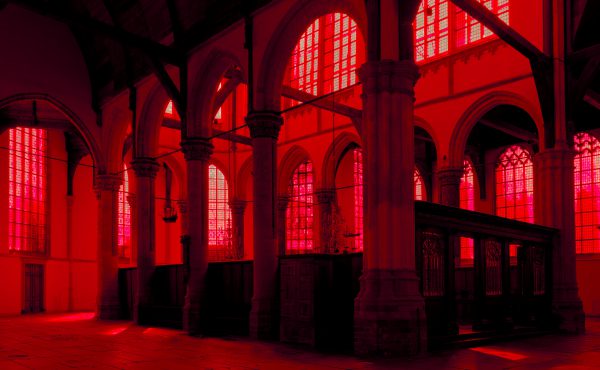
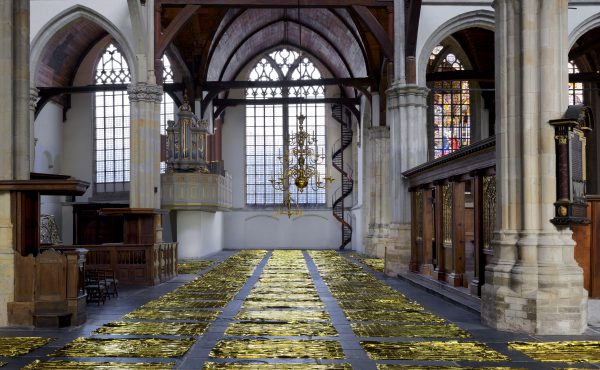
‘In the main room of de Oude Kerk, you can see the pillars that inspired Ana’s textiles. These pillars once had wooden sculptures of the Apostles in front of them, which were destroyed during the Iconoclastic Fury. Originally, the pillars served as a background for these sculptures, but Ana has brought them into a foreground through her work.’
The title 'A Veil as a Glaze' hints at this idea that we constantly view the world through a transparent layer, influenced by personal histories or the time in which we develop a work
Can you tell a bit more about the exhibition’s title: A Veil As A Glaze?
‘During this project, I was thinking a lot about wedding accessories. The veil, a very traditional wedding item, intrigued me. It acts as a membrane, concealing while allowing visibility of someone’s features. Yet, it deliberately creates a blurred image. The metaphor of the veil as a blurry perception resonates with the places depicted in the paintings I talked about earlier, as well as with works inspired by Barendina Bijtelaar. In the library, you’ll find Bijtelaar’s drawings of different places in Amsterdam alongside my own works, which were inspired by those same places. They’re drawings of a same location, but in two different times and through two different disciplines; the archivist/researcher and the artist, each offering unique interpretations. The title hints at this idea that we constantly view the world through a transparent layer, influenced by personal histories or the time in which we develop a work. Besides this metaphorical layer, it was important for me to incorporate something in the title that speaks to both perception and materiality. Therefore, the title can be interpreted as both seeing and covering.’
You work a lot with translation and assimilation in your art. How do these concept manifest itself in your work?
‘I see these translations as conglomerates – an amorphous mass where, despite my ability to explain and trace back every element, visually, it’s impossible to pin down definitively. For example, someone might not even notice that the textiles are based on the columns of de Oude Kerk, even though they are right around the corner. The same happens with the drawings of places in the center of Amsterdam. I doubt that somebody would recognize the Herengracht in one of my works. Yet, that conglomerate is exactly what happens on those streets, where a fancy restaurant, a historical house, a kebab place and a museum monument can coexist.’
What was it like to work in a place so charged with historical narratives?
‘It definitely felt exciting, because I will probably not have this possibility again. One thing that made it less overwhelming was that we decided early on which rooms we were going to work with. In the presentation, you can also see how I had to relate to those spaces architectonically already early on the process, and with Marianna, I could explore which other elements could play a role in the exhibition.’
Marianna van der Zwaag
‘Since 2018, we’ve opened more of the side rooms. The concept behind these rooms was to activate the vast space of the church. Stepping into one of the side rooms provides a smaller context, more intimate context. With that feeling, when you step back into the main church, the experience of de Oude Kerk becomes more layered. The church becomes one big object where you can journey back in time. And after that, you step back into the city.’
Ana Navas
‘It’s exactly those parallel and overlapping stories in the city and the church that I hope my works reflect. These ambiguous spaces in between are essential and, hopefully, are reflected and felt in the exhibition.’
The exhibition A Veil as a Glaze can be visited in de Oude Kerk until August 25
Stella Kummer
is schrijver en webredacteur bij Metropolis M