‘America has power but not justice’ – Jota Mombaça’s reflections on migration at the former US Embassy – A Method/Grieving Time at West Den Haag
Being herself a migrant Jota Mombaça reflects in her first solo exhibition in The Netherlands on the system of power represented in this former American Embassy and looks for ways to turn it against itself and its former functions. She invites visitors to reconsider the building’s role and reflect on how these materials and symbols resonate with broader global implications.
Embassies symbolize state power and the control of borders, determining who is allowed to enter or exit a country and thus, regulating the movement of people. Often situated in imposing and grand buildings, they exert a sense of authority and control. But where does this power go, when embassies find new buildings and abandon the old ones? This is the driving concept behind Jota Mombaça’s exhibition A METHOD/GRIEVING TIME in West, which interrogates the control of migration flows, the notion of arrested time, and the enduring impact of colonial power structures. Through site-specific interventions she engages with the contemporary realities of Europe, the historical legacies of the U.S., and shared experiences of being a migrant on these continents.
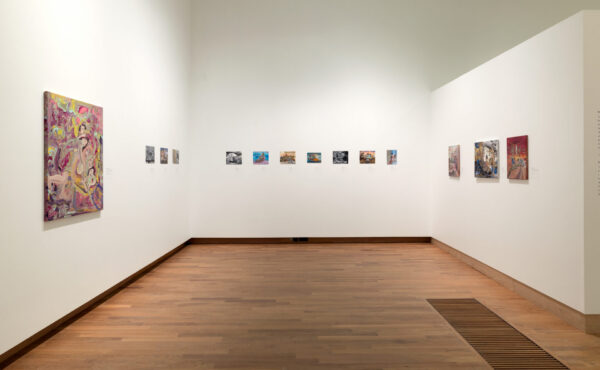
A METHOD/GRIEVING TIME marks Jota Mombaça’s first solo exhibition in the Netherlands, where the artist was granted two floors of the building, consisting of 21 small rooms. Although the building, designed by Hungarian-American architect Marcel Breuer, is celebrated as an architectural gem, the small rooms are considerable less impressive than the façade, entrance, or waiting areas, since they were originally used as employee offices. The office spaces embody the typical 1960s architectural style: low ceilings, concrete, rectangular layouts, and a focus on efficiency over aesthetics. It’s easy to picture these stark offices with two employees at their desks, engaged in routine tasks such as filing documents and maintaining databases. The rooms create a distinctly confined and almost stifling atmosphere, where merely standing in the space can make you feel as though you are occupying more room than intended.
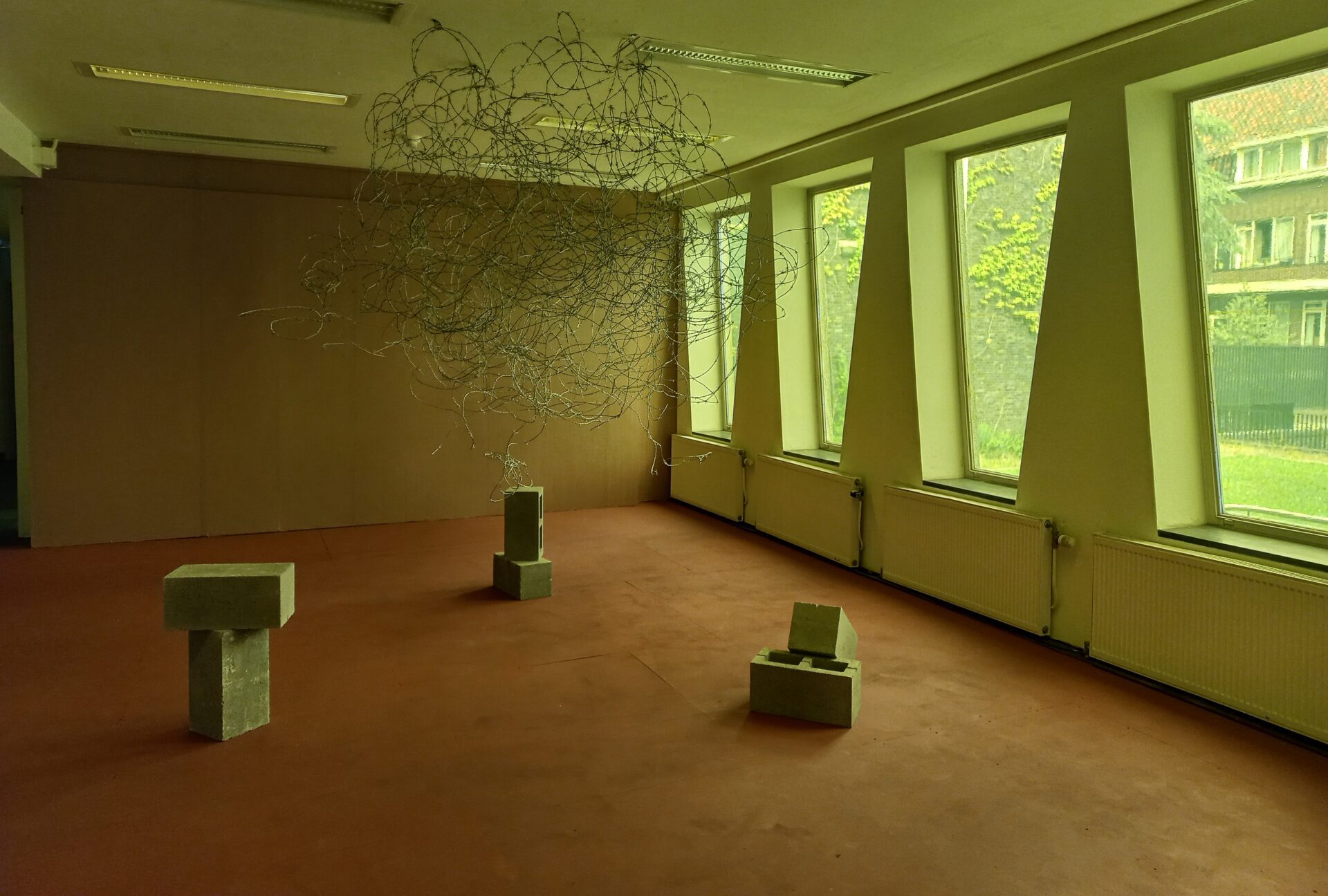
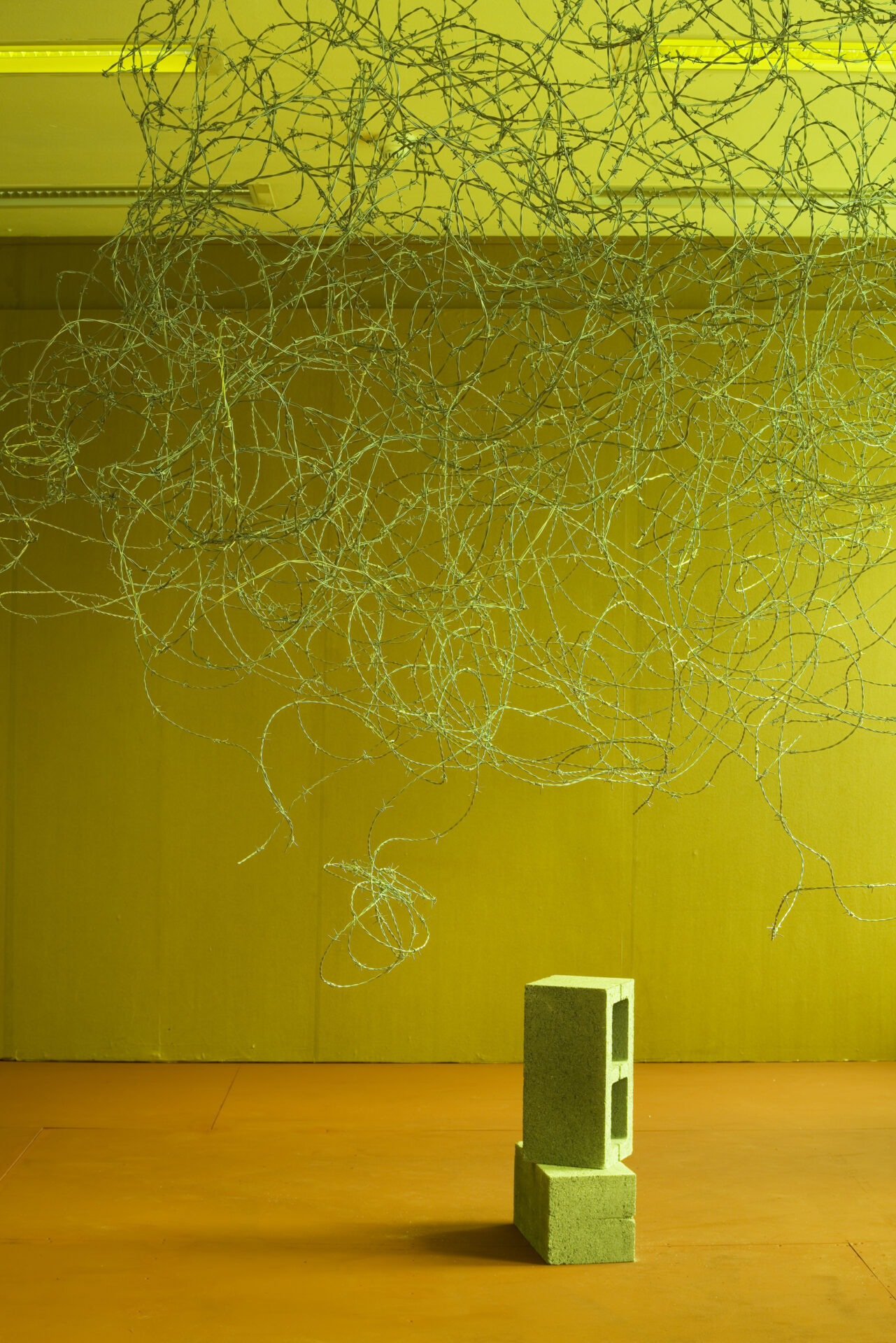
An exception to these rooms is the open space encountered upon entering the exhibition, to which the smaller offices are attached. This area features the work One Cannot Leave Behind What Is All Around (2024), where Mombaça introduces key themes and materials that frame the exhibition. The piece includes barbed wire, symbolizing restrictions on movement across different territories; concrete, representing the construction of imperial and colonial infrastructure; and lead paint (a variation thereof), which, despite being prohibited or banned due to health risks, was used on the walls of the detention center at Angel Island, which Mombaça uses as a guideline in this exhibition. From the outset, Mombaça invites visitors to reconsider the building’s role and reflect on how these materials and symbols resonate with broader global implications.
Following this introduction, the exhibition continues into the first office space, where the work The Colonial Wound Still Hurts, vol. 7: Honey Baby (2017) is displayed. This piece, which serves as another foundational element for many of the new works in the exhibition, features Mombaça’s marriage and migration papers stained with her own blood, making the documents unreadable. Mombaça explains that she intentionally positioned this work early in the exhibition to highlight her trajectory as a migrant. Mombaça’s act of erasing the data becomes a form of resistance against bureaucratic processes, rendering her documents incomplete and making it considerably harder for the system to process them. In doing so, she creates an intervention within the system itself and works with concepts like power, validity and (non)existence.
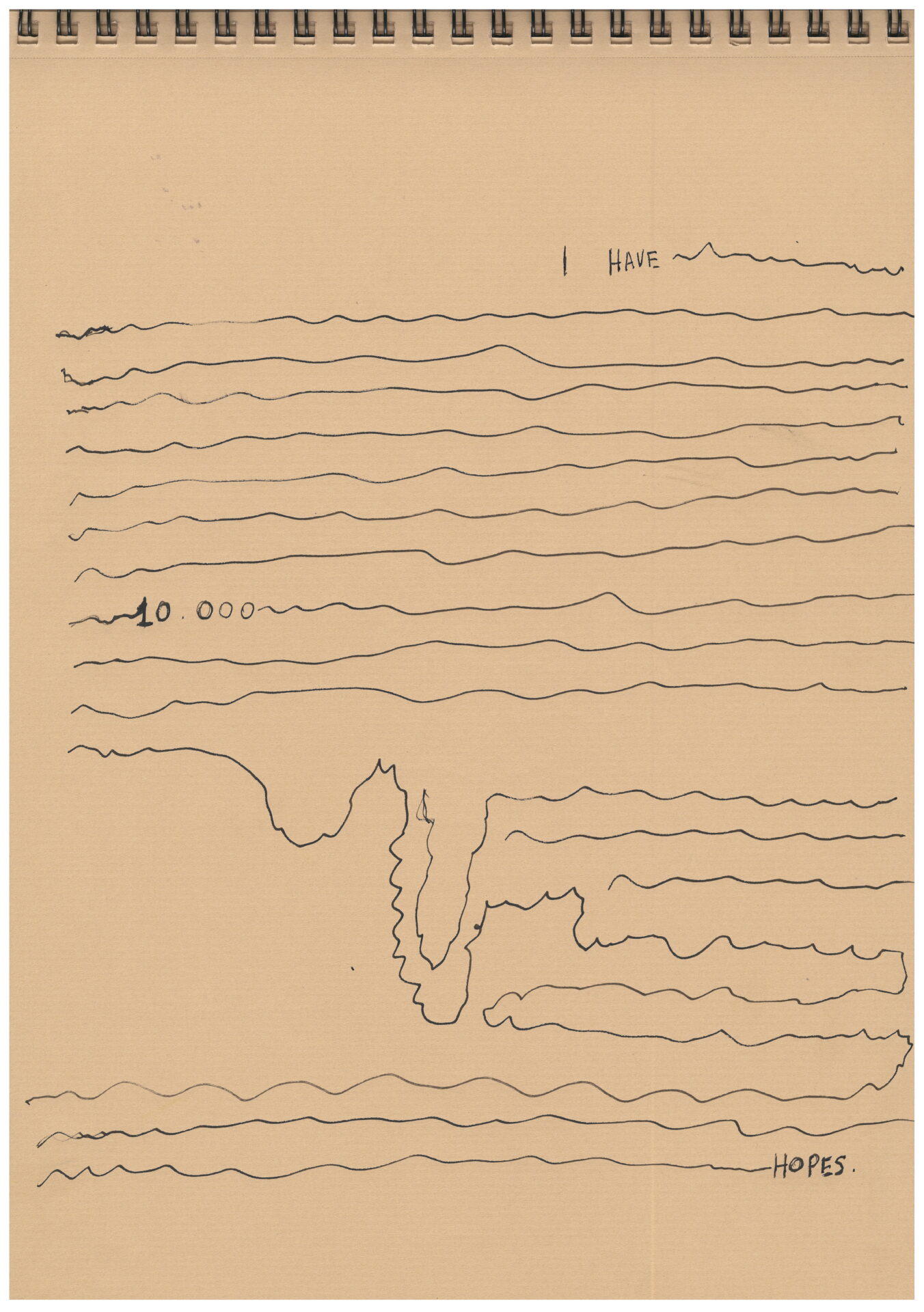
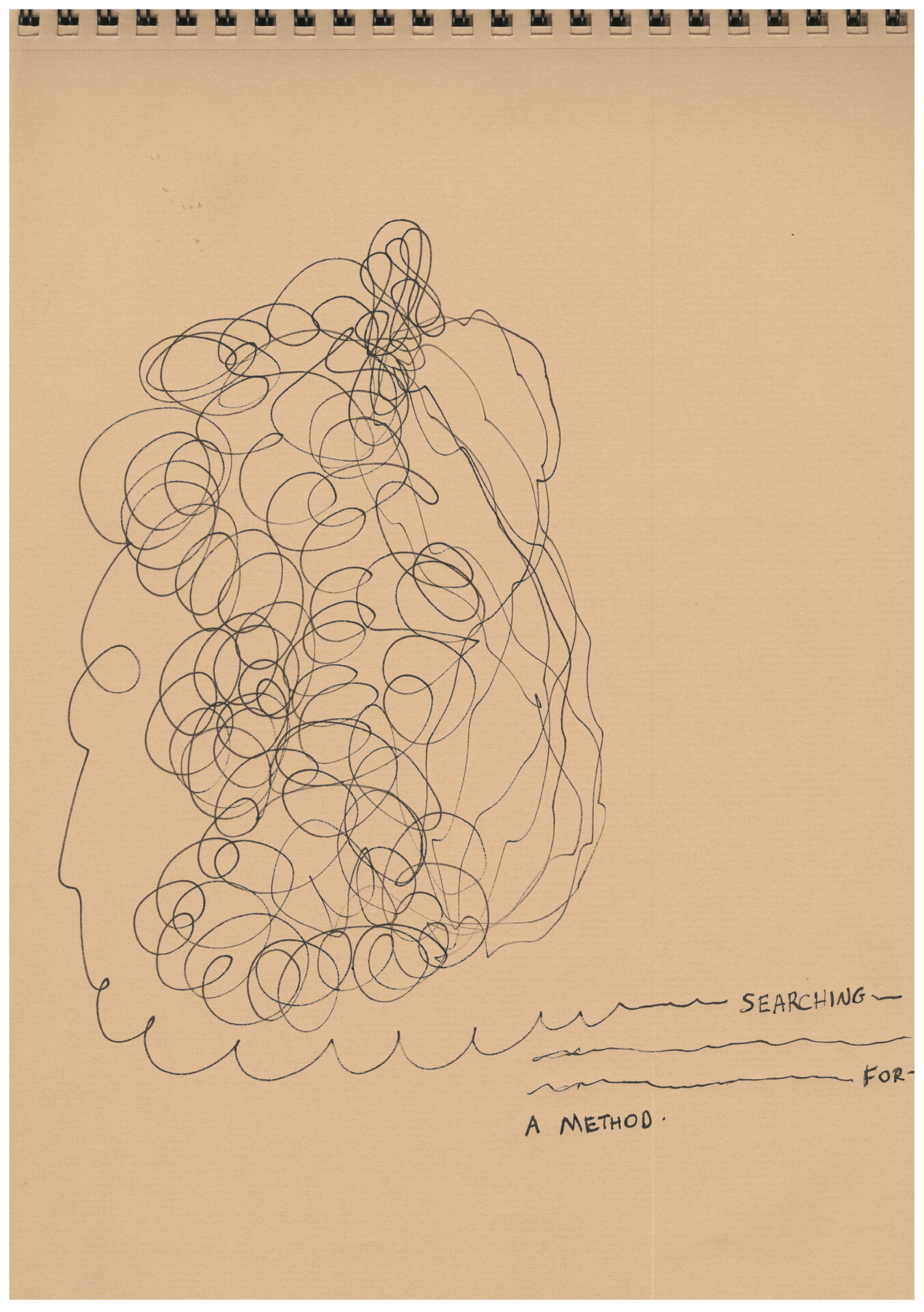
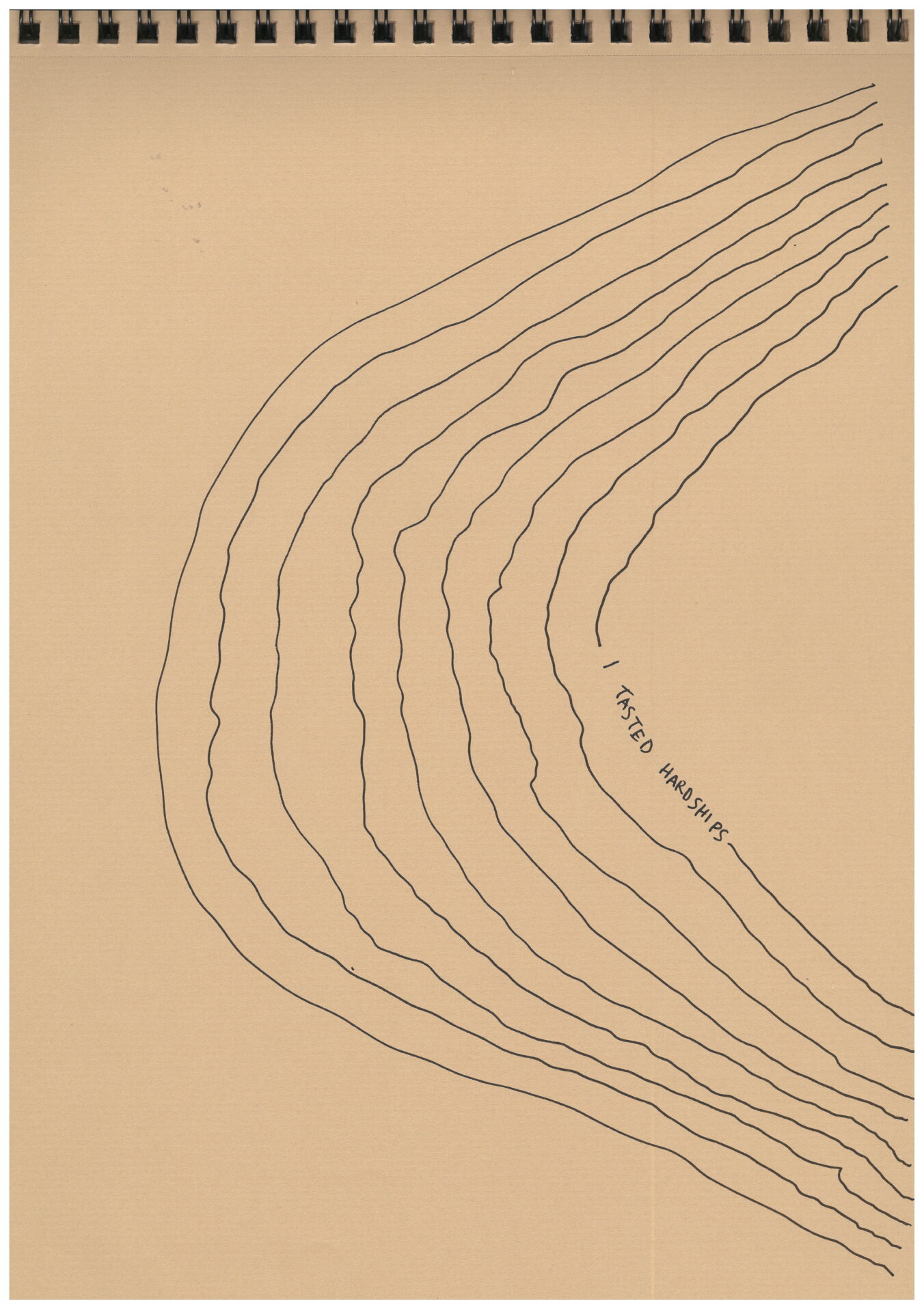
Another crucial work in this exhibition is Routes (Studies) (2024), a series of drawings that delve into the poetry that was carved into the walls of Angel Island by unidentified Chinese immigrants. Angel Island, which served as an immigration station on the U.S. West Coast from 1910 to 1940, was a site where immigrants, primarily from Asia, were processed and often detained for extended periods due to stringent immigration policies and bureaucratic delays. Mombaça tells me that the experiences of these individuals were arduous and stressful, marked by long waits and harsh conditions. Despite these challenges, the immigrants carved poems into the walls of this imperial infrastructure, offering profound reflections on their predicaments, hopes, and journeys. Phrases such as ‘I have 10,000 hopes’ and ‘America has power but not justice’ capture their resilience and hardships.
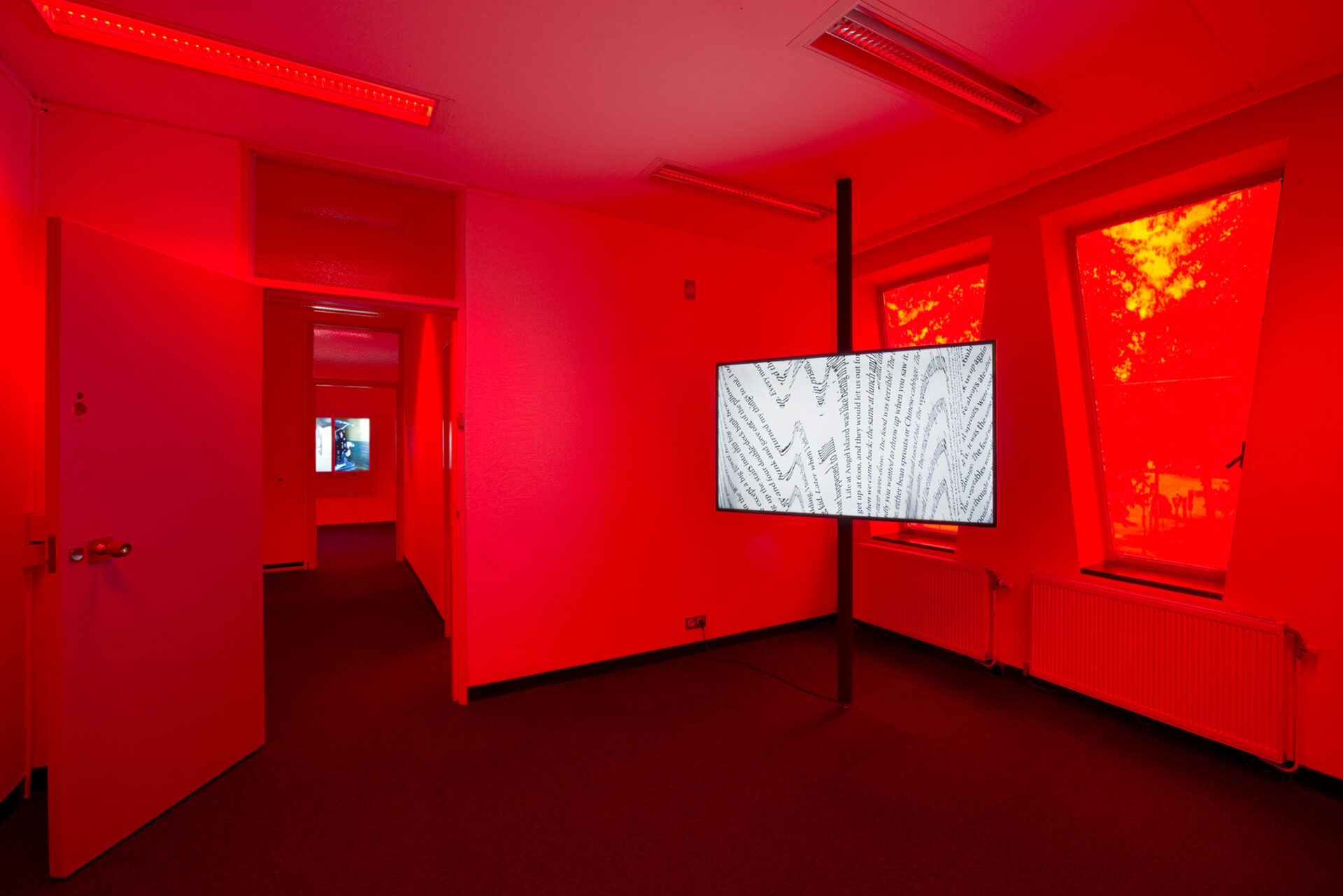
Mombaça incorporated fragments of these poems into wavy line drawings that evoke a sense of vibration. Gazing at these rhythmic constellations of words and lines, one can almost hear the different voices reciting their poems. By using fragments rather than the full text of the poems, Mombaça raises questions about what words have been erased, what has been lost, and what remains. Reading poems and incorporating them in drawings eventually became a method for Mombaça to explore the experiences and stories of other immigrants. One poem was particularly striking for her, it starts with: ‘I am searching for a method that will turn destiny back.’ Mombaça reflects: ‘I was deeply moved by the thought of someone being detained and yet carving into the wall of their prison, searching for a method. This resilience guided me in creating this project.’ Through this method and these works, Mombaça offers a memorial for voices from the past, showing that they cannot be confined within walls, nor can they be situated in one timeline. As Mombaça beautifully said: ‘like sound, these voices can travel where the body cannot.’
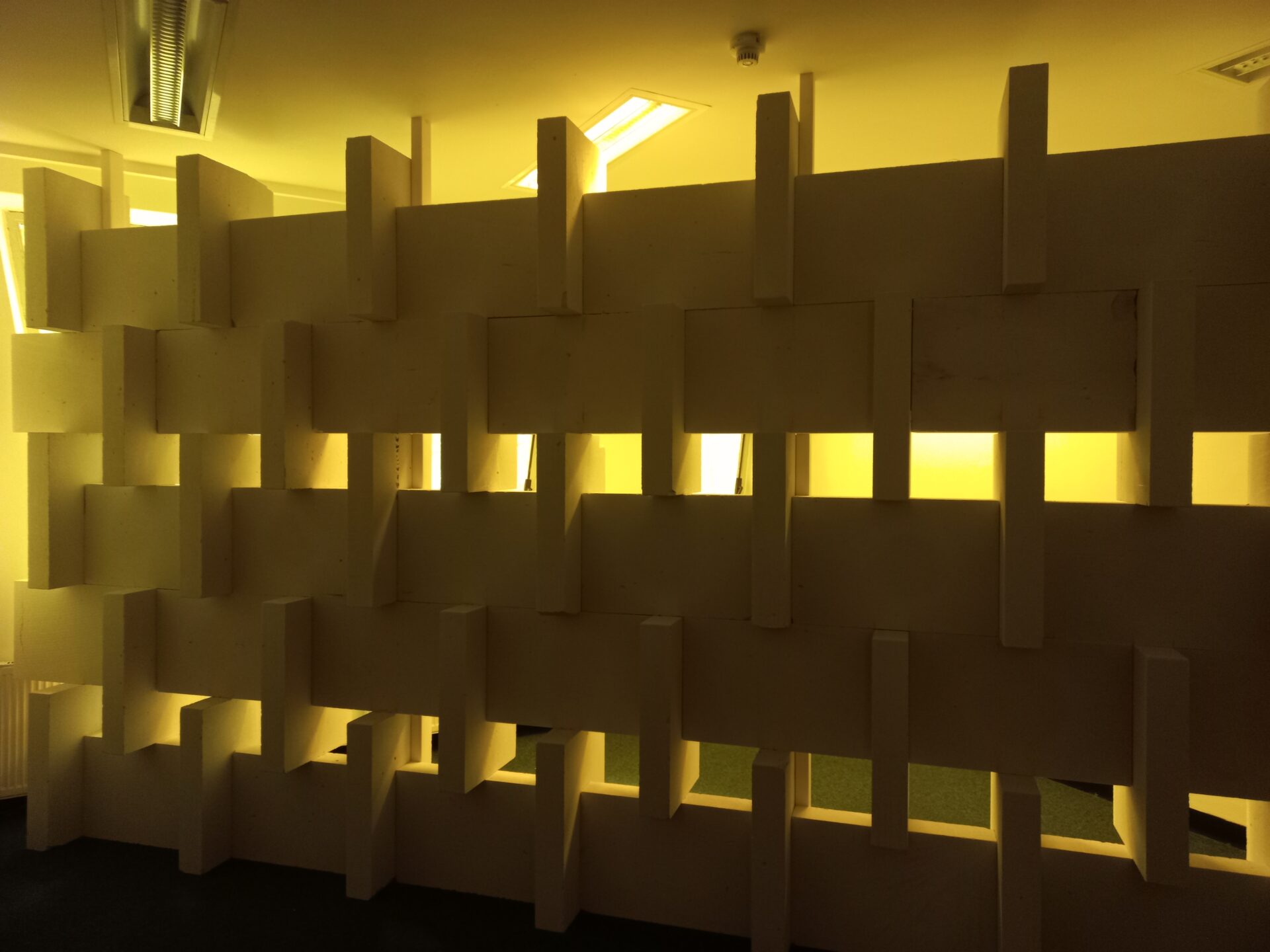
The functions and procedures embedded in the former embassy building, play a pivotal role in shaping the narrative of Mombaça’s work, as she actively seeks to challenge and disrupt these normalized systems of control. On the second floor, six rooms are occupied by the installation How to cross a solid wall (2024) made from cellular concrete blocks that are strategically placed in highly inconvenient ways. These blocks obstruct passages, obscure viewpoints and create borders. Some are so massive that, while you can walk around them, the space feels incredibly confined.
When designing these pieces, Mombaça imagined what would happen if the concrete of this building gained autonomy and began constructing itself in an autonomous way, interfering with the very structure itself, even to the point of blocking its intended function. By engaging with the architecture, Mombaça’s work creates a trans-material dialogue, transforming the building from a mere backdrop into an active participant. Through her interventions, she imbues the building with a sense of agency.
Mombaça’s work creates a trans-material dialogue, transforming the building from a mere backdrop into an active participant
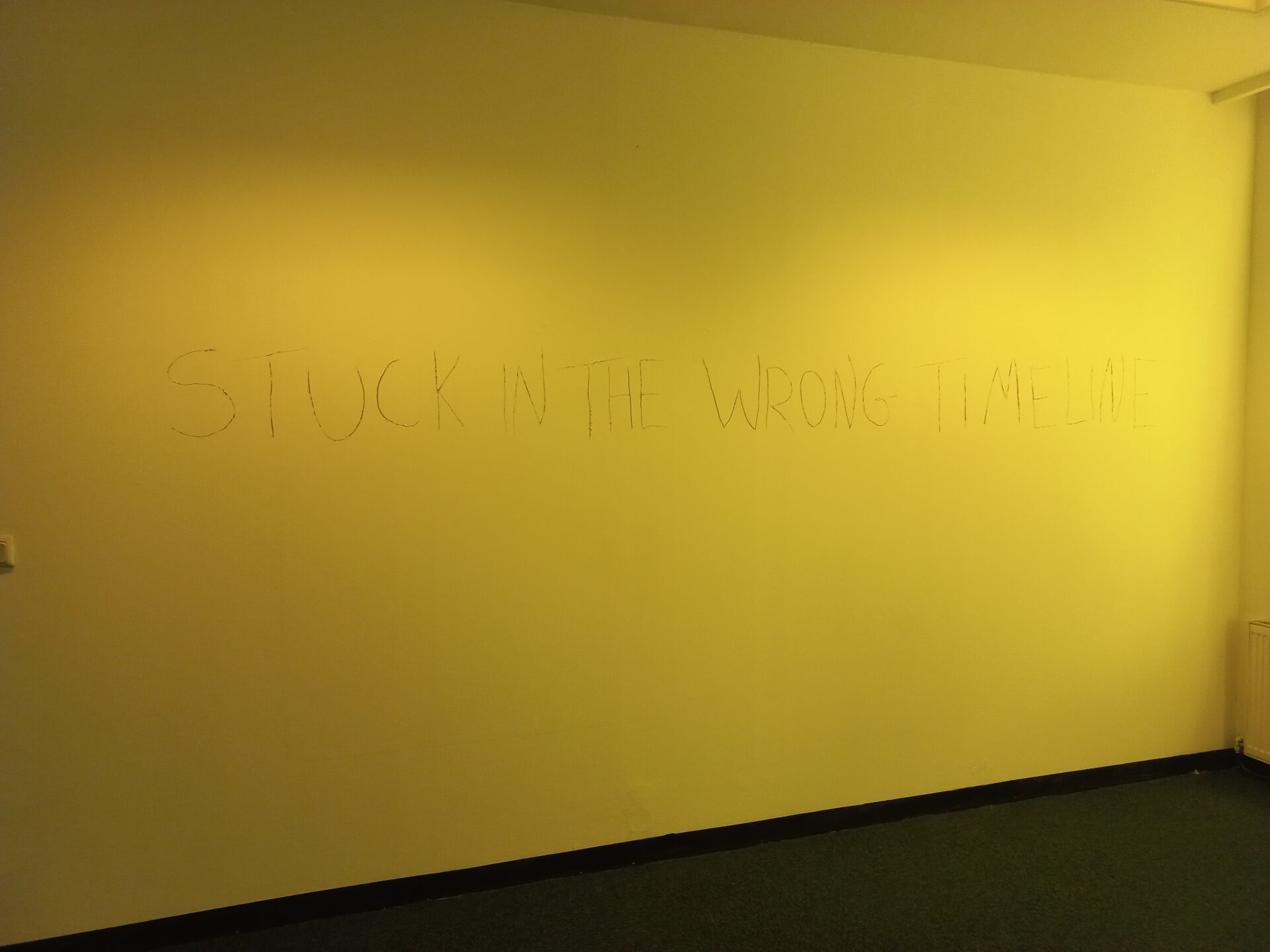
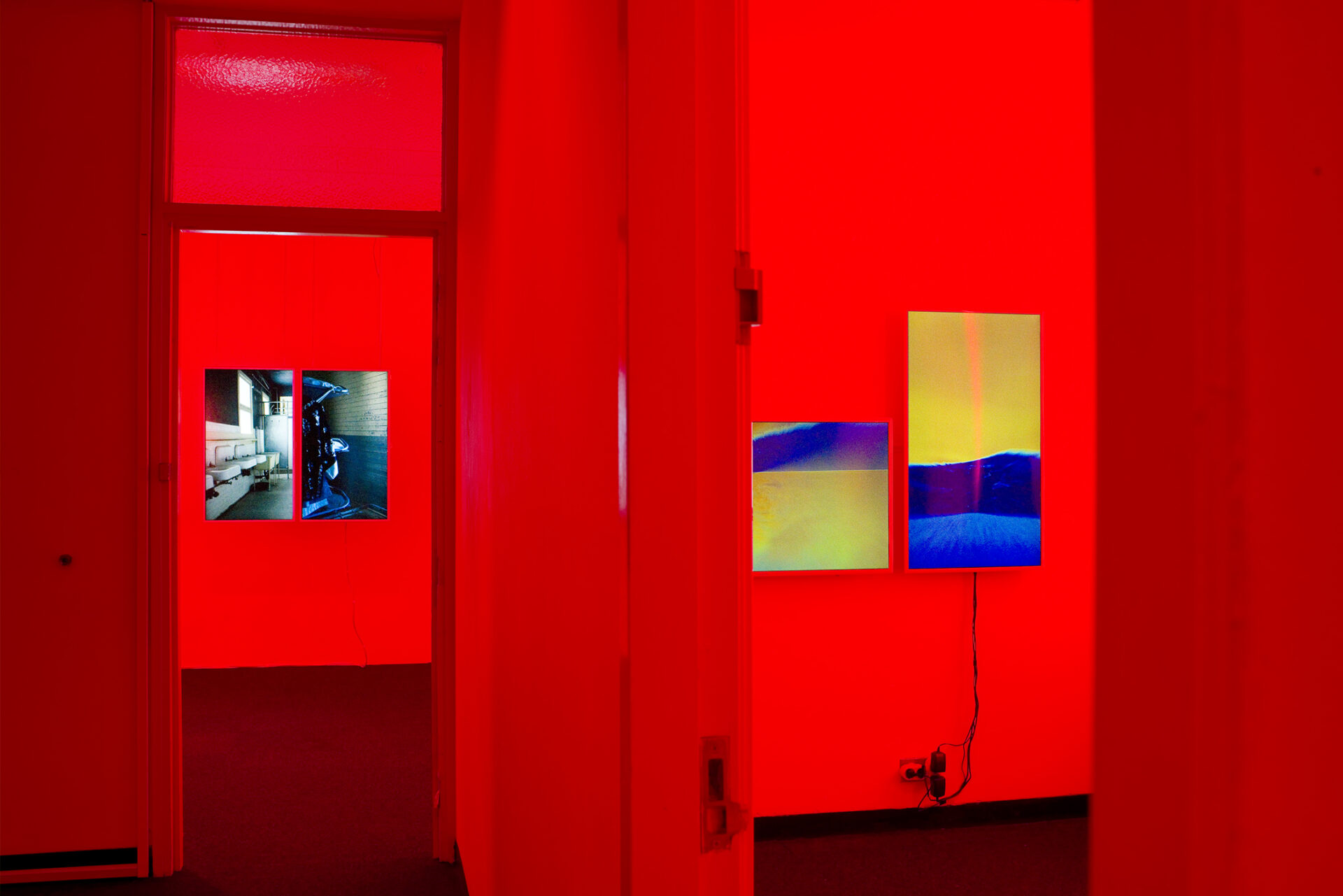
The exhibition concludes with the multi-channel video installation If You Have But One Breath Left (2024), which spans seven rooms. This work presents fragmented elements recorded during visits to Angel Island of the immigration station, including footage of the building, the carved walls, and the landscape. These elements stand as witnesses to spatial memories and arrested time. Mombaça explains how the concept of “arrested time” reflects the idea that power regulates not only our movement through space but also through time. The visa application process involves waiting periods, and the visa itself grants a limited timeframe for staying in a place. Time is a constant measure, but there are also those who are denied entry, trapped in bureaucratic limbo, or separated from their homeland due to political or colonial legacies, thus kept in an endless state of waiting and anticipating. This ending to the exhibition underscores how movement is often policed and how architectural forms can serve as tangible embodiments of migration laws, reinforcing and perpetuating these restrictive systems.
Mombaça encompasses the structural form of space, be it an embassy or a detention station; the power dynamics between people or the geopolitical constructs embedded in both regional and global institutional policies. It is crucial to acknowledge that the American embassy in the Netherlands and the Angel Island detention station in the U.S. had very different policies, however; they are united by a common thread of power relations and control that needs to be addressed with critical examination and reflection. In her works, Mombaça shows how space can manifest power differently and how we can use these mechanisms to turn power around.
Mombaça grieves with and within the building, reflecting on the injustices inherent in immigration laws and procedures that, while intended to deliver justice, frequently fall short. The exhibition serves as a memorial for the voices that remained unheard during their harrowing immigration journeys, offering a universal embassy where their experiences can be finally acknowledged and expressed.
Karmen Samson
is modebeoefenaar en onderzoeker met interesses in materiële cultuur en museologie