Paradys 2025 – Following A Tangle Of Roots in Leeuwarden – Zomerwandelingen #3
This summer, we’re publishing a series of reflective art walks, parallel to the articles on the resurgence of walking as artistic and critical practice in the Summer issue of Metropolis M. How does walking expand our ways of seeing, whether we’re strolling, straying, or drifting? In today’s contribution, Joshua Miller reflects on his tour through Leeuwarden, exploring key venues of Paradys, the art exhibition featured in the Arcadia triennial.
Arcadia is an arts and community triennale in Friesland that challenges visitors to become better ancestors. Paradys, the art exhibition of this year’s edition, presents itself as a meditation on collective identity and connection across several intersecting fronts: land, community, the cultural currencies through which we enact the latter, and the land itself as both witness to these rituals and, at times, their recipient. The exhibition spans the entire province of Friesland. I visited the Leeuwarden walking tour, itself a substantial exhibition with venues across the city centre. Realising the program as a walking tour must have challenged the organisers, but I found it unfolded with a strong sense of narrative and thematic coherence.
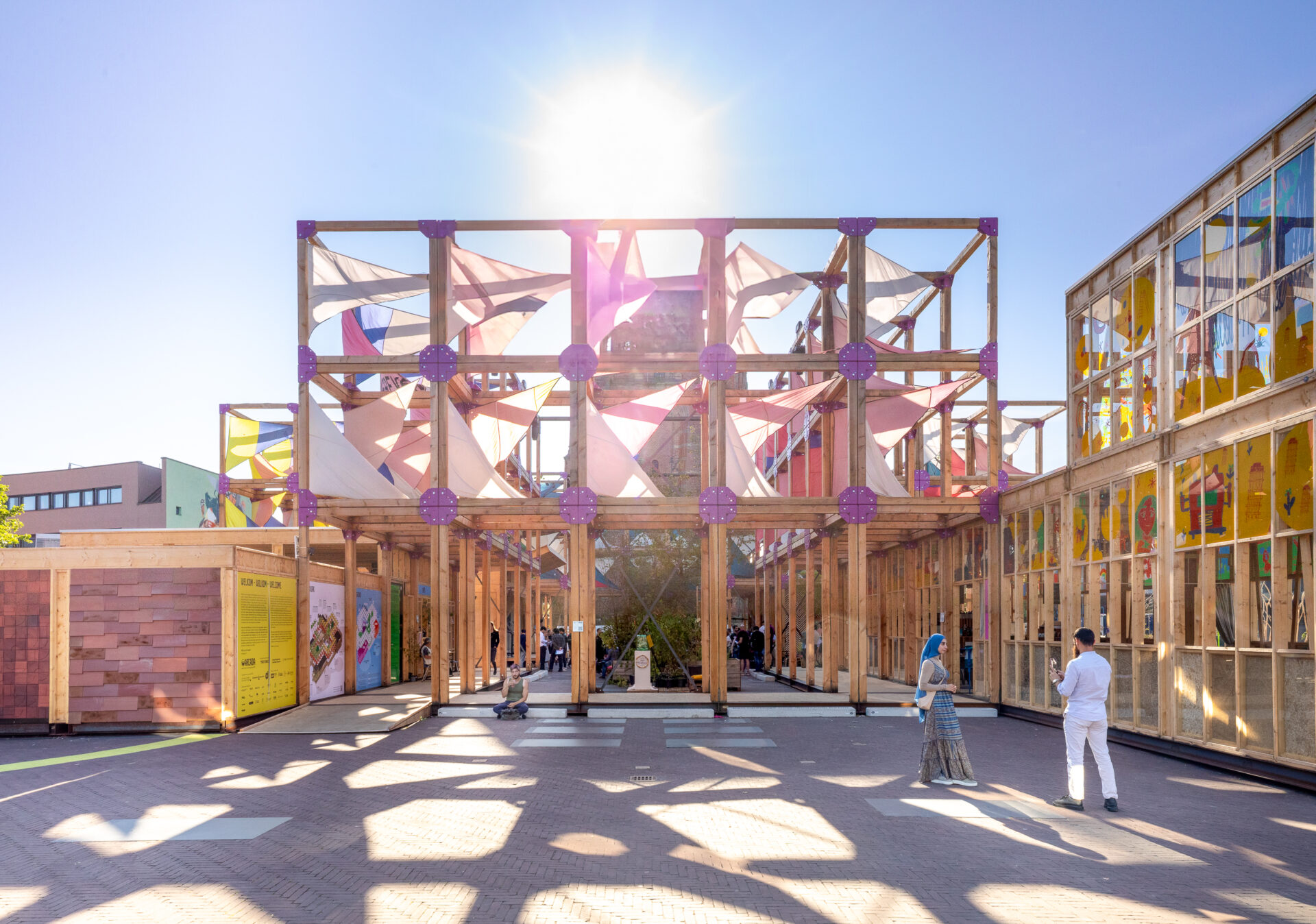
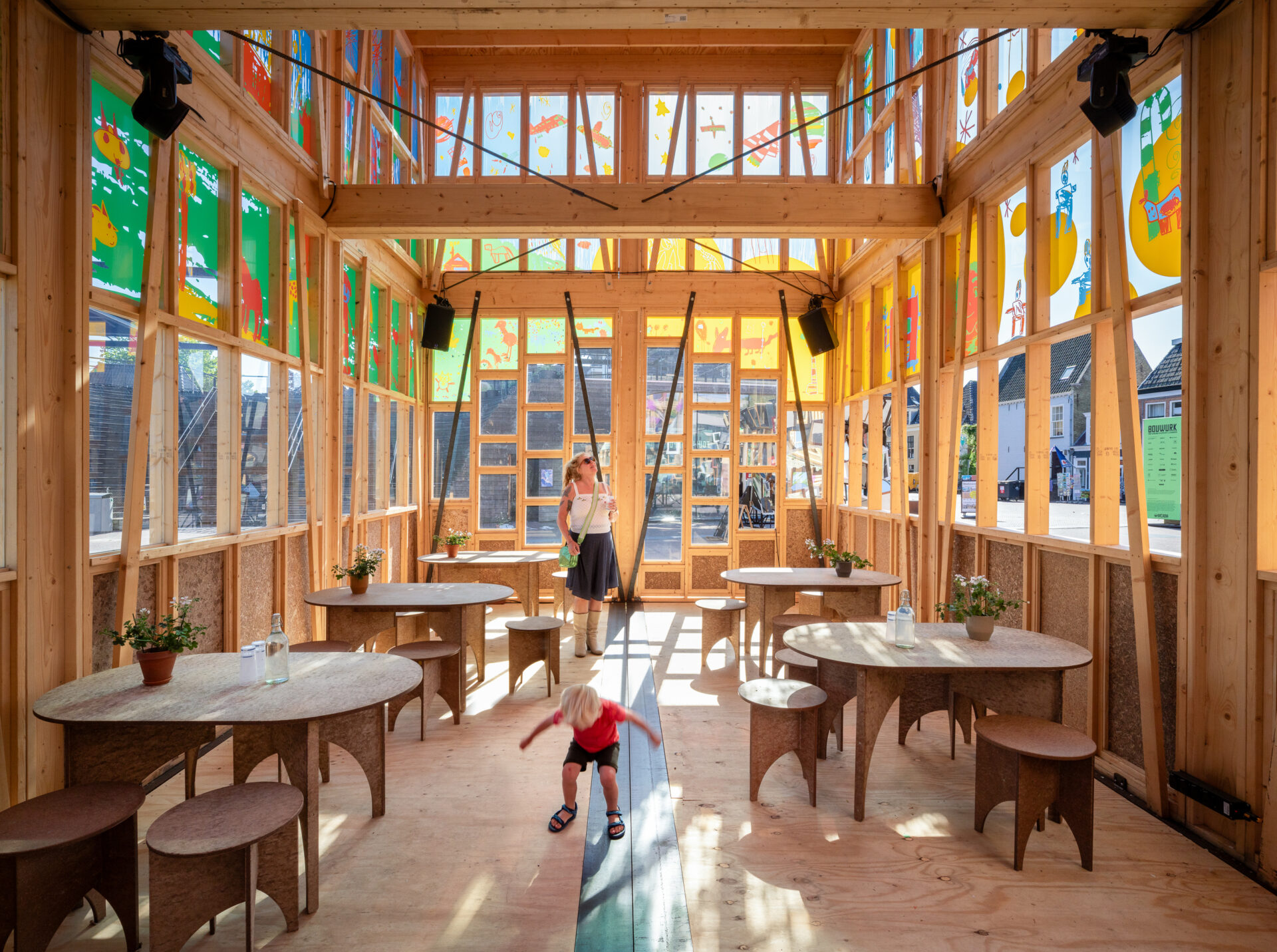
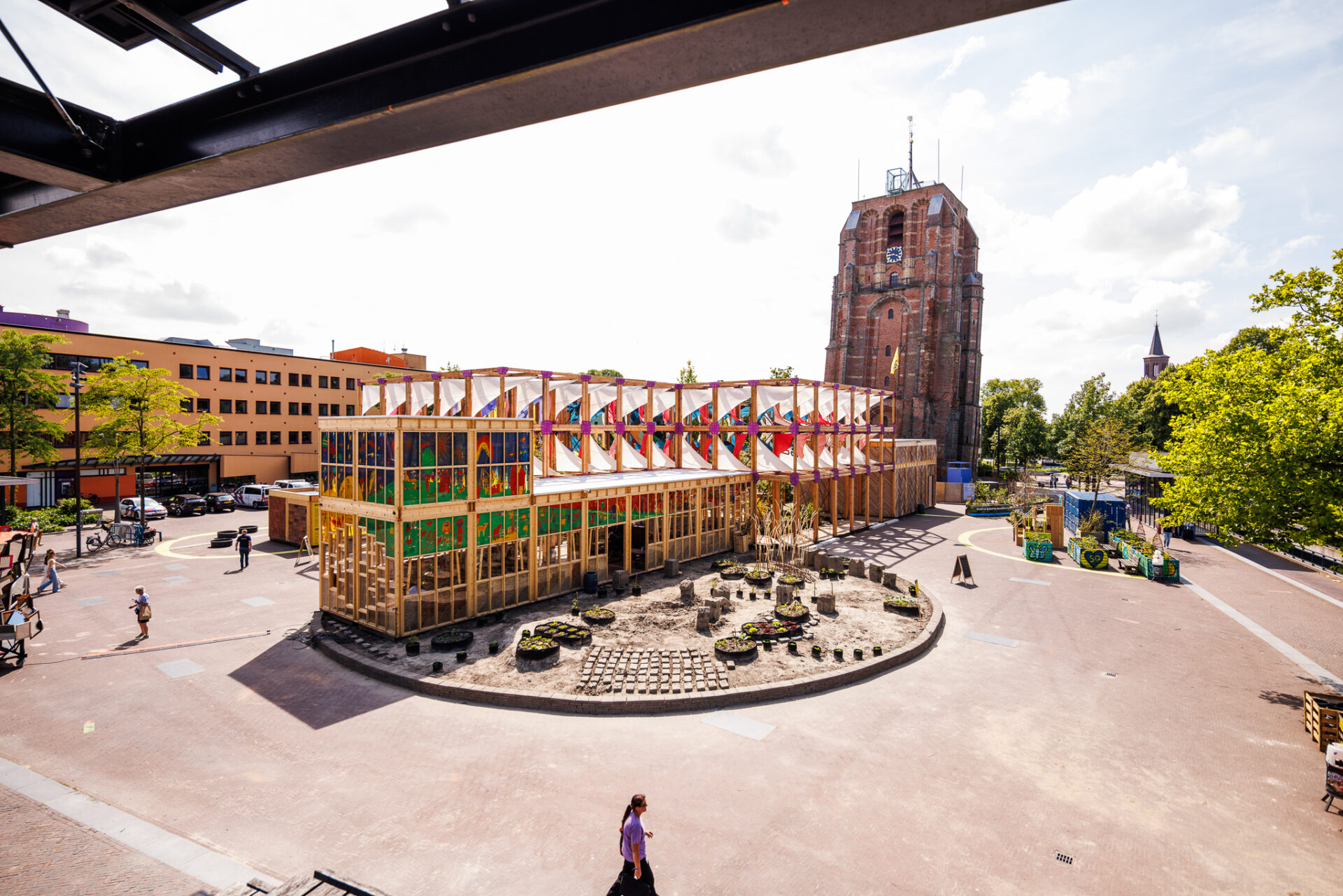
My route for Paradys begins at Bouwurk, a skeletal wooden mienskip built for the event at the foot of the Oldehove. It recalls a great ship under construction, ribs exposed, with a bustling market or town forum growing in its shade. Here lay a series of public installations with a focus on exploring community and the shared practices that bind us together.
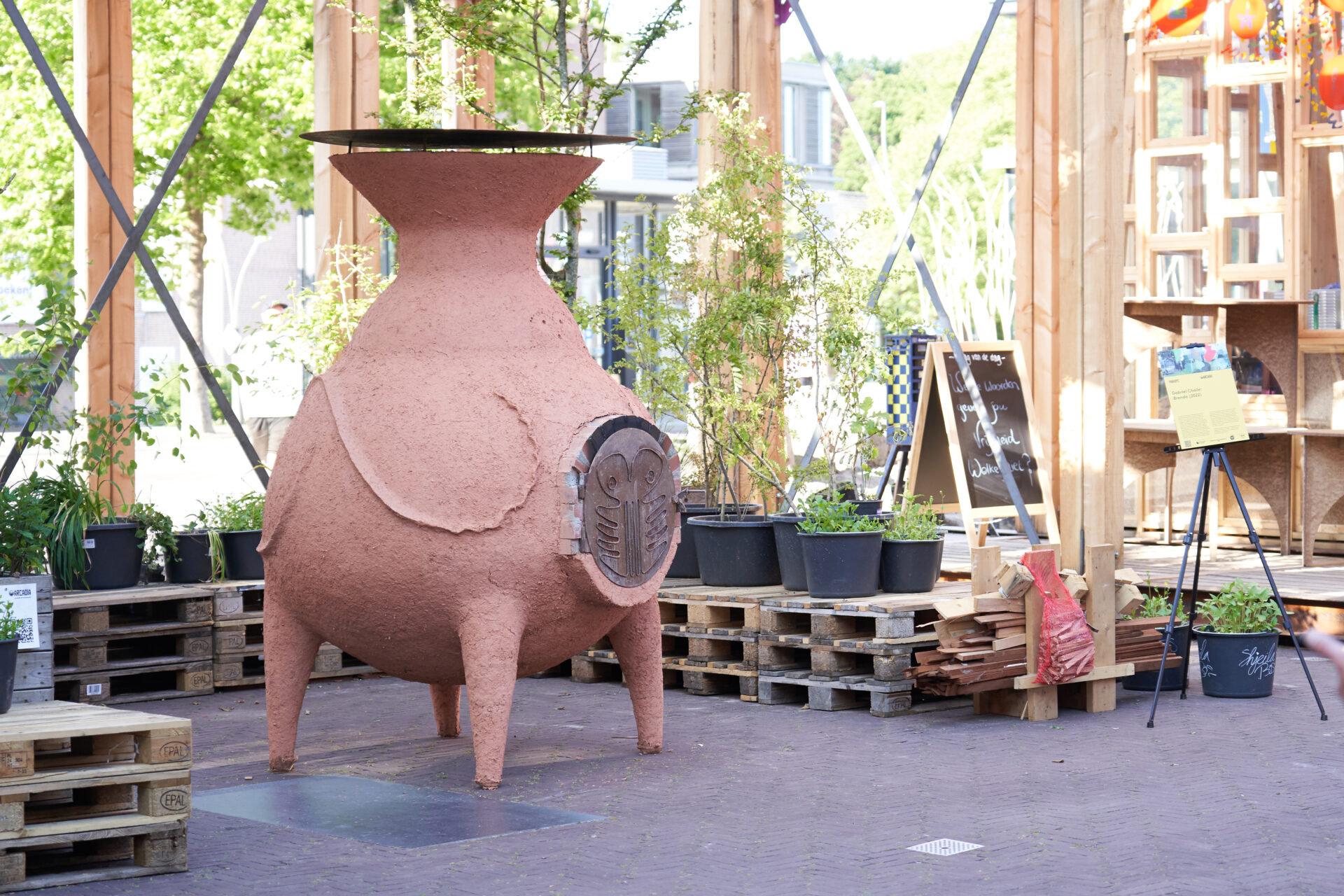
Brenda, a clay sculpture doubling as an oven, stood near the beginning. I had seen other ovens by its creator, Gabriel Chaile, at the 2022 Venice Biennale, although I could not recall their names. It was easier to assign Brenda a personality. She felt caring and matronly, like a matriarch of the village bakery. Chaile’s foundational language is that of bread and baking, here transformed into a common currency of community. Koos Buster’s Donatiepotten, a series of coloured glass jars, intends to explore altruism as a community ritual. Visitors were invited to donate money and to reflect on whether altruism can exist without self-interest. Interestingly, the only currency I could see through the coloured glass was Chinese yuan, or renminbi.
With various different activities and programs in the public heart of Leeuwarden, Bouwurk proved to be an ideal platform for the social ambitions of Paradys. For some, it might bring back memories to Leeuwarden’s program when it was European Cultural Capital of the Year in 2018, presenting mienskip as its main interest. Here too, community and the currencies of connection underlying it, from bread to selflessness, were explored.
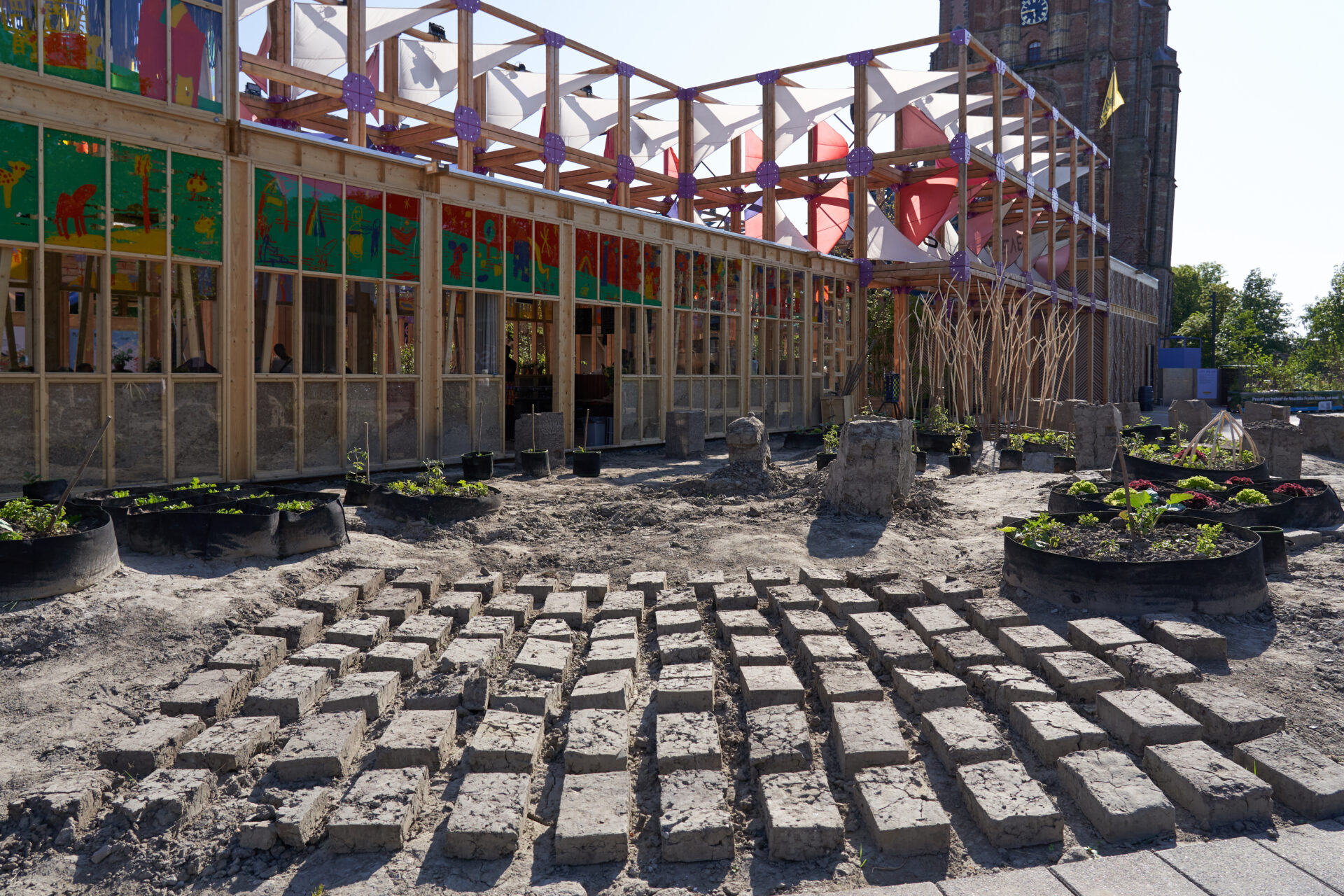
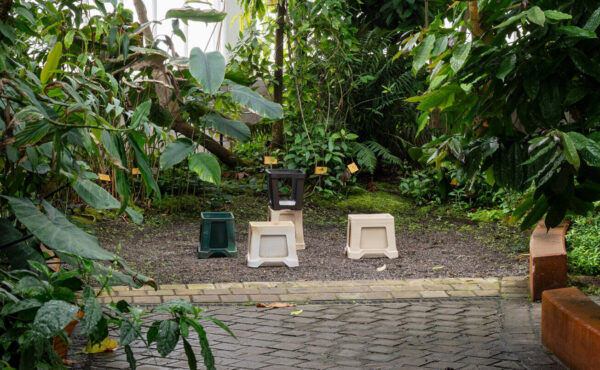
Next came a meander through On The Field Of Hope by Peng Zhang. Friesland offers fertile soil for this project, both literally and metaphorically, due to shared agricultural heritage. For instance, Zhang draws attention to how both Dutch and Chinese farmers have a long-standing relationship with the willow tree. Growing up in the small farming village of Shi Jian Cun, Zhang came to see the land itself as his teacher. His childhood was defined by the slow rhythm of small-scale agriculture, paced by the Chinese calendar.
In his garden stands a forest of pitchforks, two-tined and hand-carved from willow. Several times, Zhang found himself asked why his exploration took a non-utilitarian form since it was about such a utilitarian craft as farming. His answer was that he explores the process, not the result. On The Field Of Hope is a process-oriented meditation on the act of cultivation itself as a slow and symbiotic act. His “canvas” displays the artistic patterns formed in the interplay between us and nature. As with human interaction, connection is found in the spaces in-between. A little hanging-back, even shyness, and a degree of openness goes a long way.
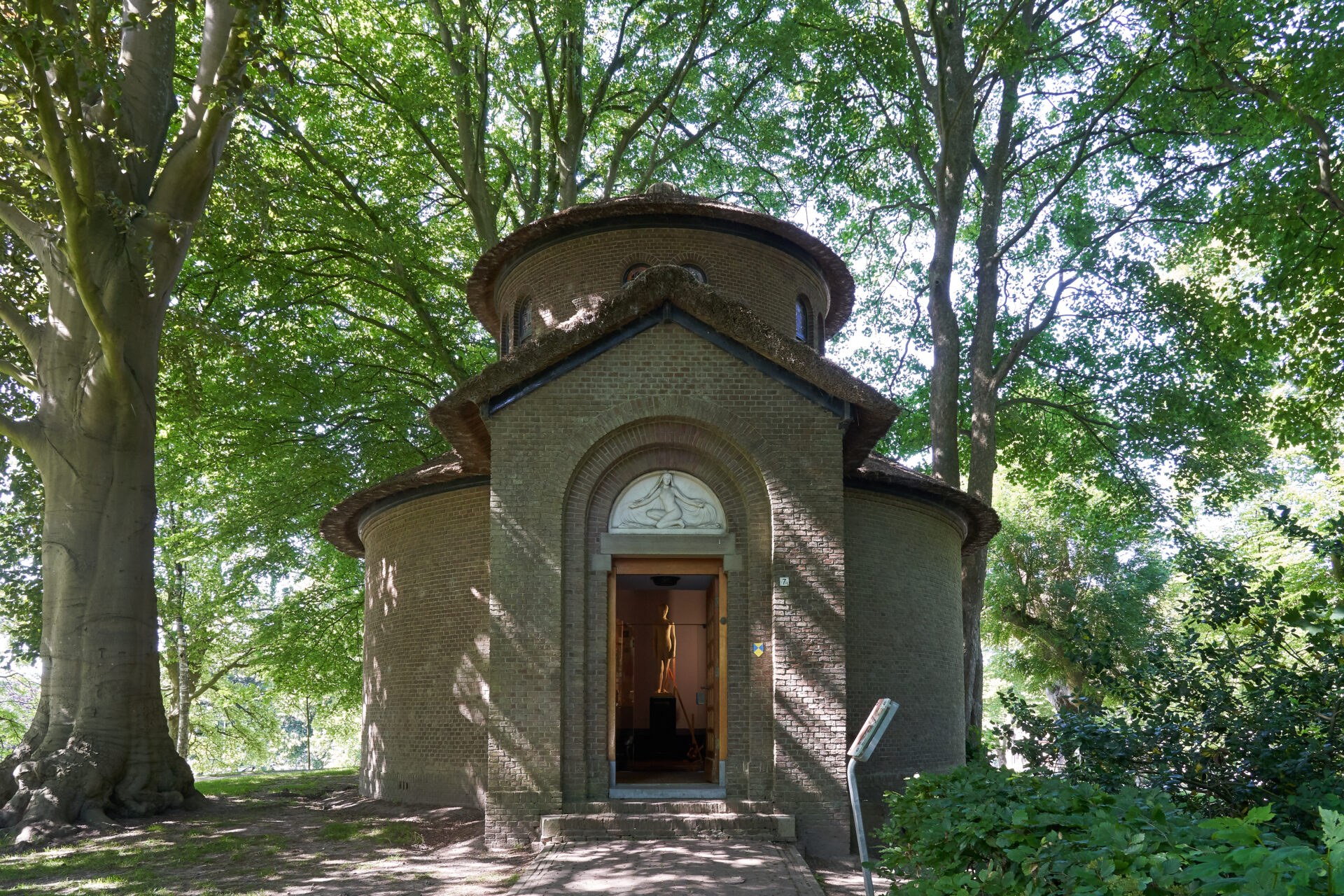
As a sort of temporal cultural excavation, an effort to reactivate local art history towards contemporary dialogue, Saskia Noor van Imhoff’s Liminal Spaces is well situated inside the Pier Pander Temple itself.
In her installation, Van Imhoff explores the work of Friesian sculptor Pier Pander (1864-1919), placing her contemporary interventions in direct conversation with historical sculptures. The temple was designed by Pander and now bears his name. He modelled it on a Roman mausoleum and planned to house five marble statues within, representing fundamental components of art creation: Inspiration, Feeling, Thought, Courage and Strength. Inspiration appears genderless and pristine white; Feeling is recognisably female and Thought is a curious boy, both more roughly cut. Courage and Strength, two men in their prime, flank the door. The project was posthumously completed in 1924.
Saskia Noor Van Imhoff seeks to reactivate the temple space at the Pier Pander Museum , forging connections between nature and culture, past and present and interestingly, sound and silence
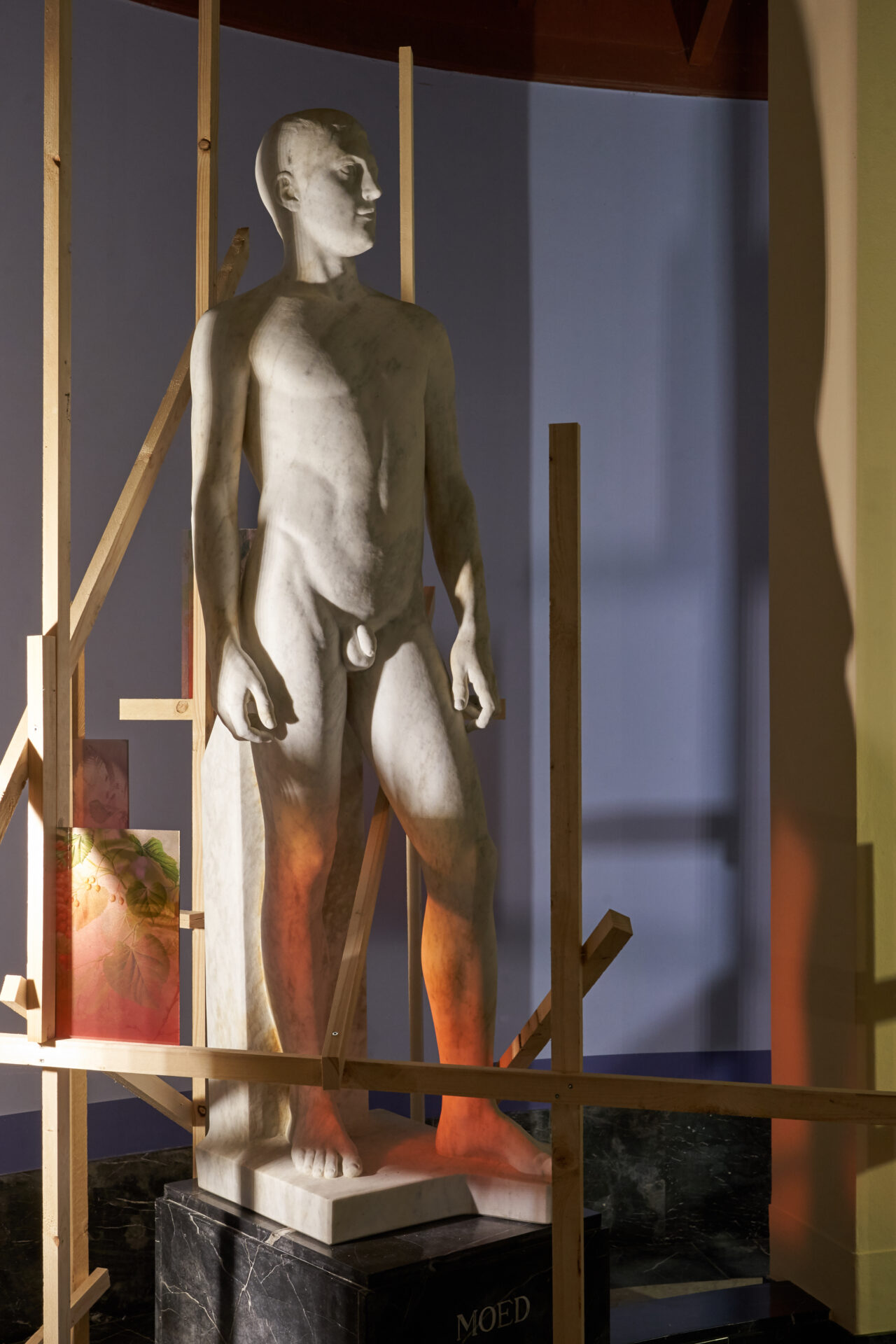
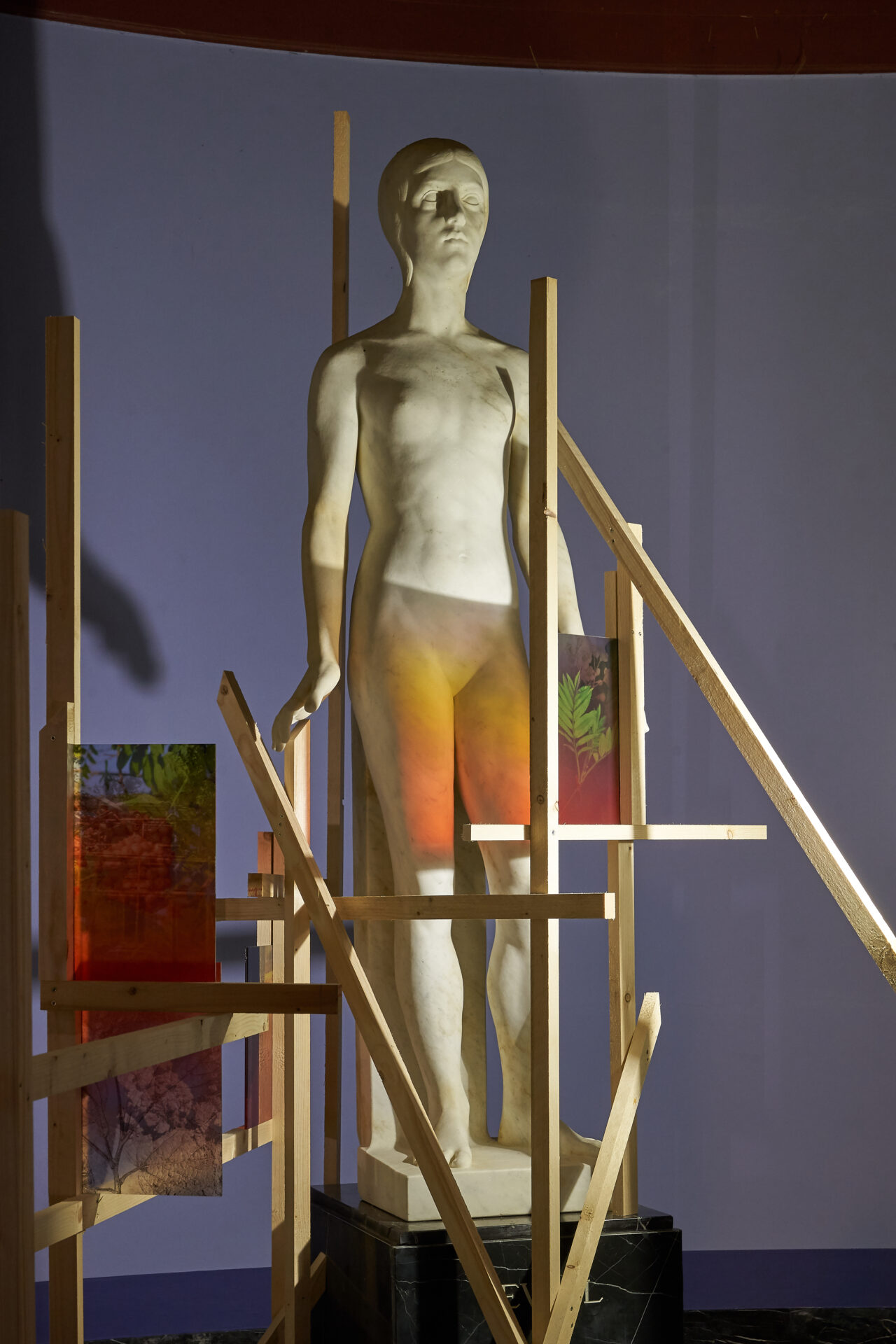
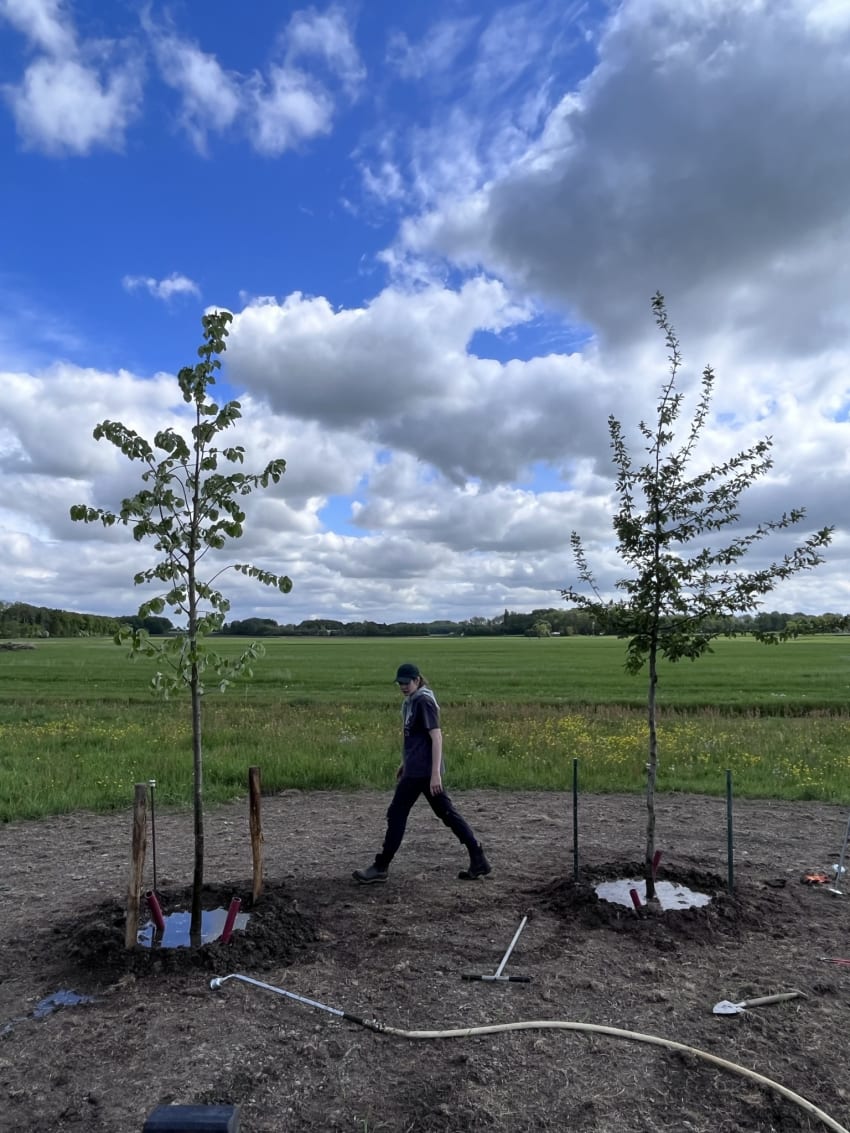
Van Imhoff reactivates the space by placing it back under construction, surrounding each statue with scaffolding. Each wooden structure displays a glass slide depicting a local tree species – rowan, lime, hornbeam, sweetgum and plane. These correspond to a work in REST, a project she curated at her home in Mirn. Here, she ploughed a circle matching the temple diameter into the earth and planted the same five trees around the edges.
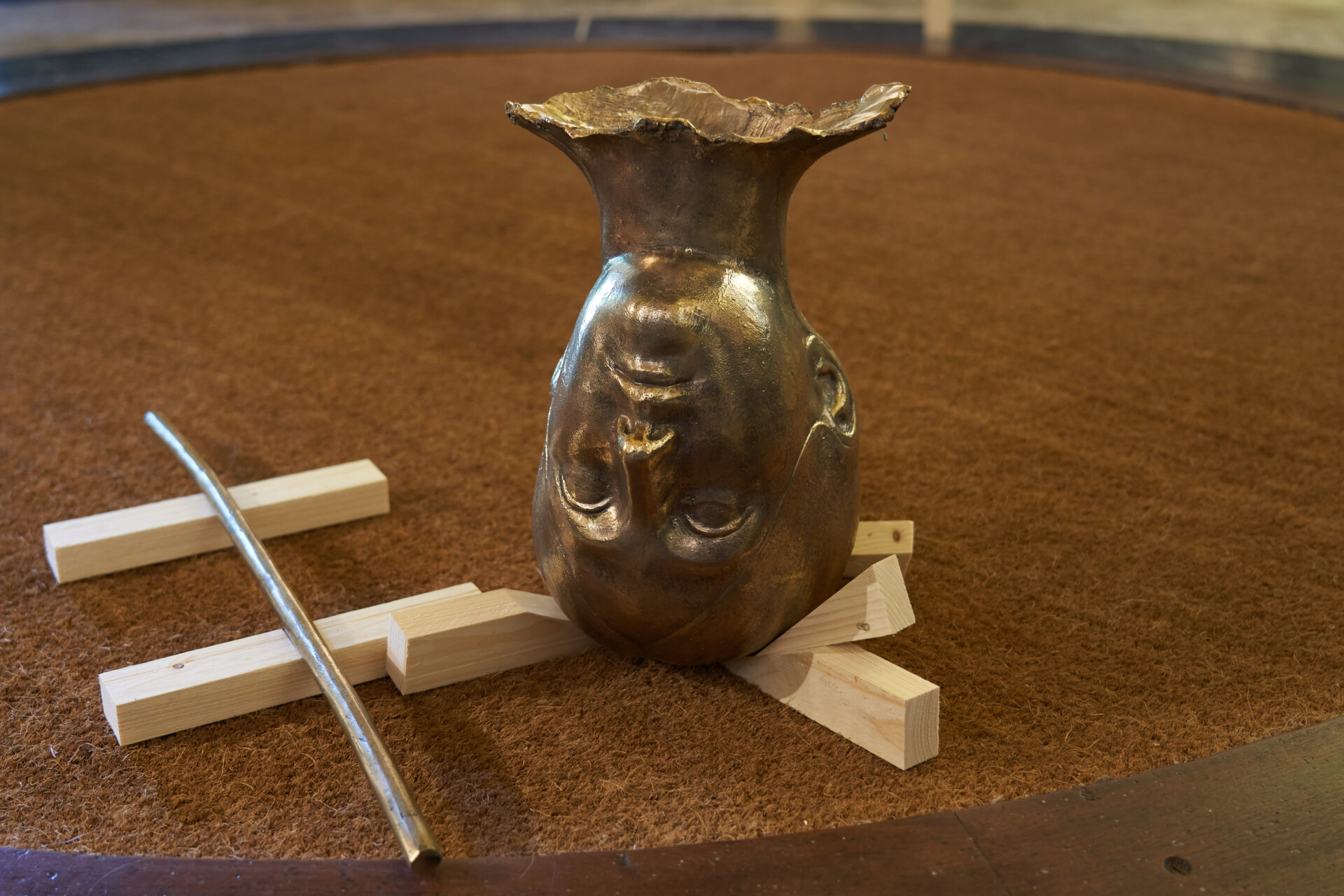
Van Imhoff seeks to reactivate the temple space, forging connections between nature and culture, past and present and interestingly, sound and silence. She placed a bronze cast of the head of Courage in the temple centre, accompanied by a staff with which visitors are invited to strike it after viewing the work. In keeping with the reverent and meditative atmosphere of the installation, the temple may only be entered by one person at a time.
Nearby Hedwich Rooks installed Ynfra in the spiral display room of Tresoar, a snail-shell corridor forming a little cave. A naturally contemplative space, it mirrors the hiddenness of her subject: the Zuidwal volcano. Discovered during oil and gas exploration in the 1970s, this ancient crater lies two kilometres beneath the Wadden Sea. Although long extinct, it still locally intensifies the Earth’s magnetic field and its internal temperature remains 30℃ higher than the surrounding seabed.
Rooks invites viewers to reflect on the layered, invisible ecologies that lie deep beneath our feet. Walking into the spiral, I was greeted by piles of volcanic rock and the glow of infrared lighting, invoking subterranean heat. I felt as though I had stepped into the belly of the volcano itself. A video installation in the centre showed Rooks’ performance above the volcano, stalking the sandflats in a heat-retardant reflective suit and melting volcanic rock at the shifting border between ebb and flow. The footage was all in negative, shades upon shades of silver.
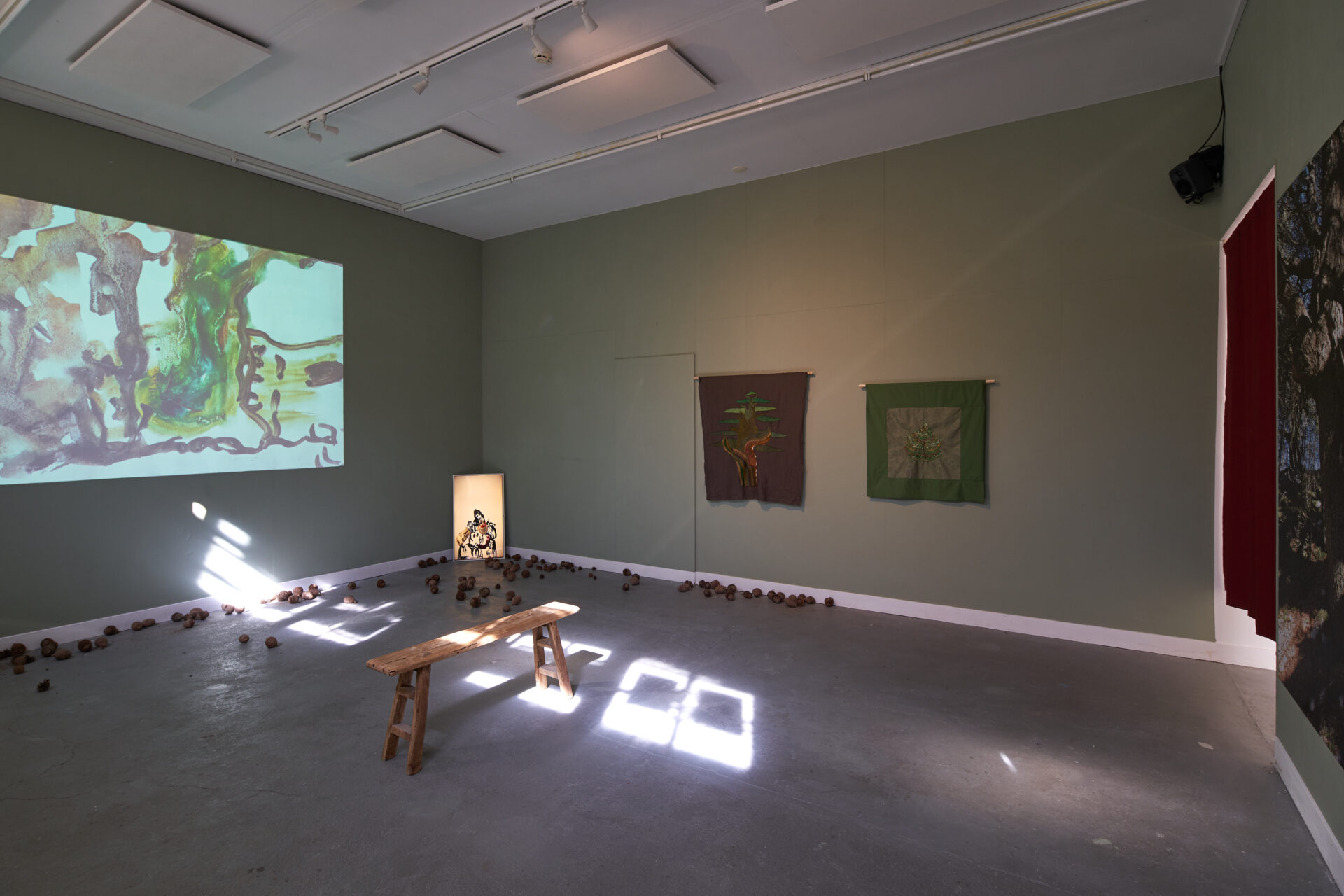
Mounira Al Solh has chosen the oldest cedar tree in Lebanon as a locus of her exploration, an instrument of cultural autopsy. Her piece, a mix of sculpture and audiovisual installation, recalls a time witnessed by the same cedar when Lebanon was ruled by Assyrian tyrants. They demanded tributes of cedar wood from the Phoenicians and reinforced their power with pyramids of severed rebel heads. It represents permanence and a repository of eternal memory in the face of fleeting wars.
Fat Branches, Open Pines diverges from the predictably Friesian emphasis of Paradys. The cedar tree is a powerful symbol of Lebanese culture, depicted on the flag of Lebanon and deeply intertwined with the story of her people. Al Solh uses it to explore natural and cultural history and how they relate. The roots burrow down through centuries and she follows their tunnels like a curious mole.
To Al Solh, the wars of the time mirror those closer to the present. Yet the cedar tree is more than a symbol of loss. Cedar wood was a foundational language of commerce and thus cultural exchange throughout Lebanese history. The Phoenicians monopolised the Mediterranean shipbuilding market and their clients included the ancient Pharaohs.
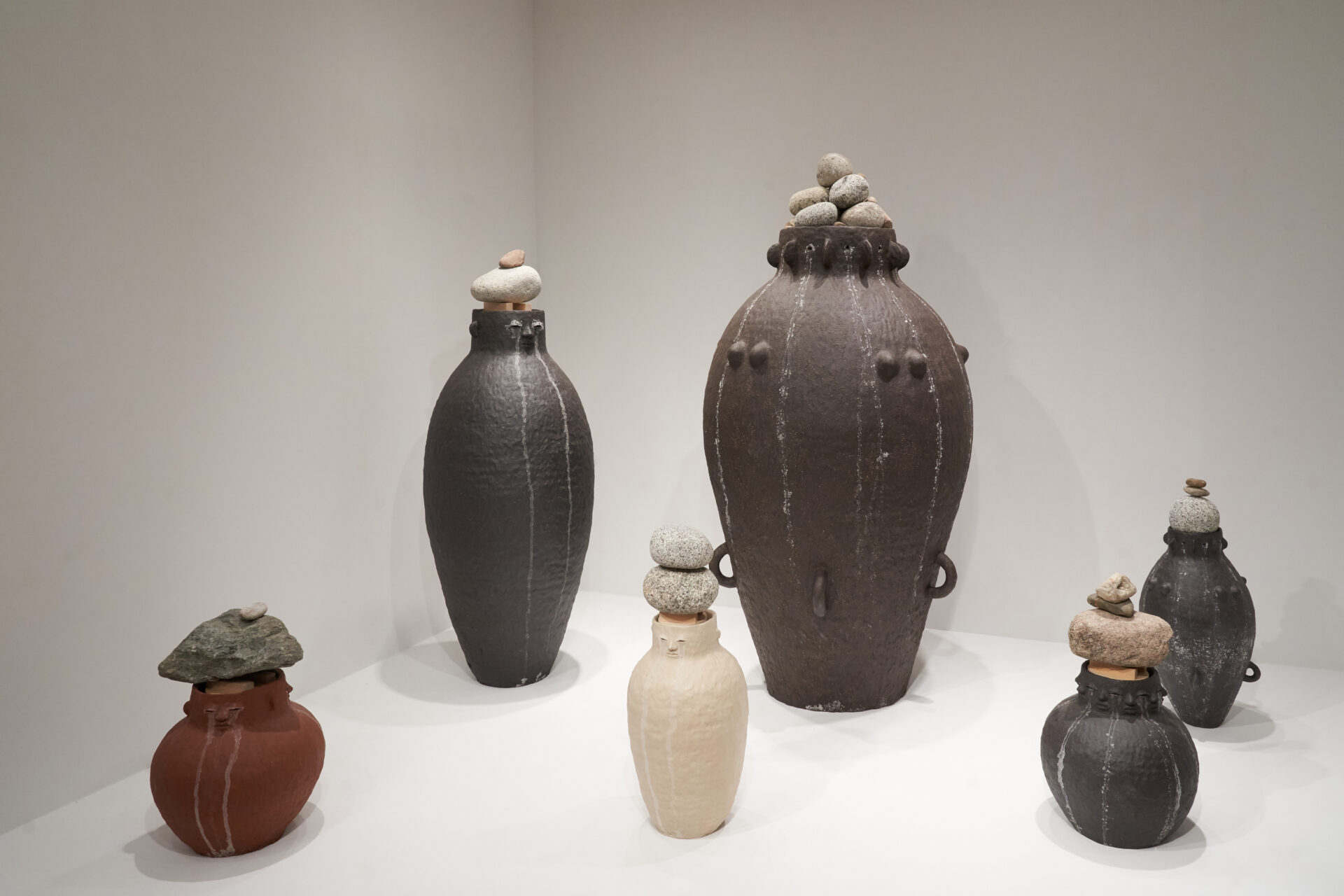
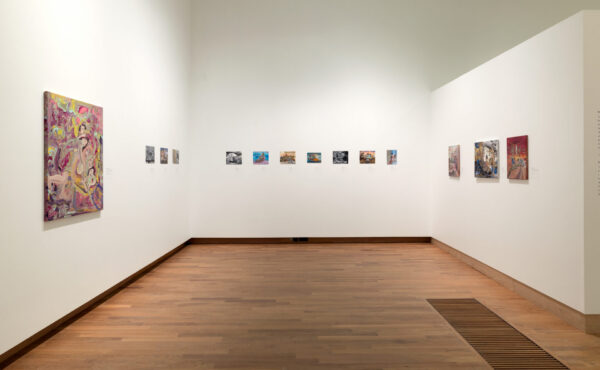
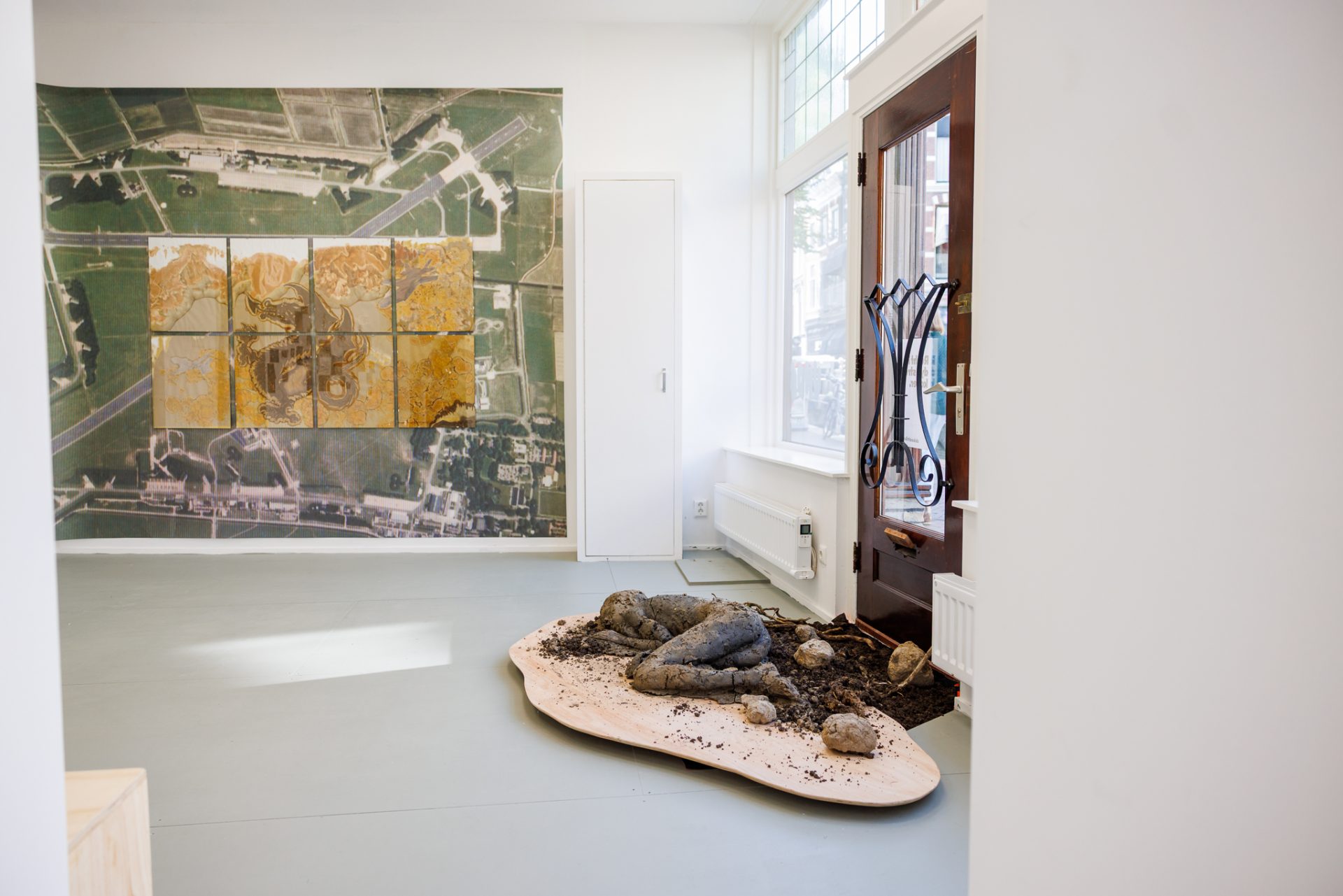
Finishing my walk through Leeuwarden, I visit Grensverleggers, a group exhibition curated by Roísín Douglas. This project stands out as less culturally focused, speaking the more foundational language of intimacy with nature itself. The pieces shown aim to blur the boundaries between human bodies and the mechanics of the wilderness.
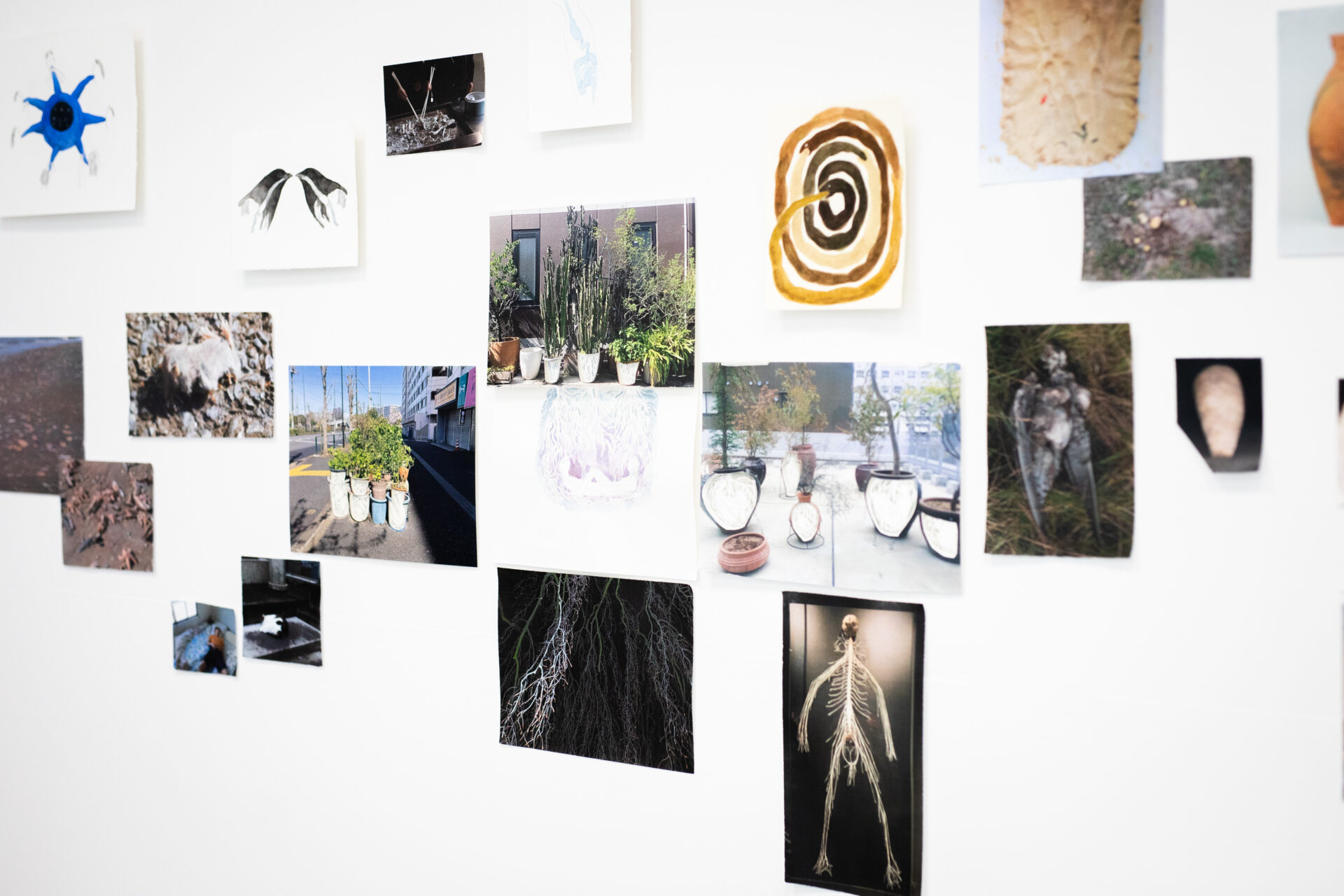
In Ai Ozaki’s drawings, human seeds curled up like underground fetuses are inserted into photographs of potted cacti and trees, which sprout up through the soil from them. The formation of culture is positioned in the crucible of environmental entanglement, with several similarly abstract figures blowing into the same multi-mouthed horn. They seem to be less communicating than producing an entangled cacophony together. A chaotic dialogue is formed in the present and better understood in retrospect, much like life itself.
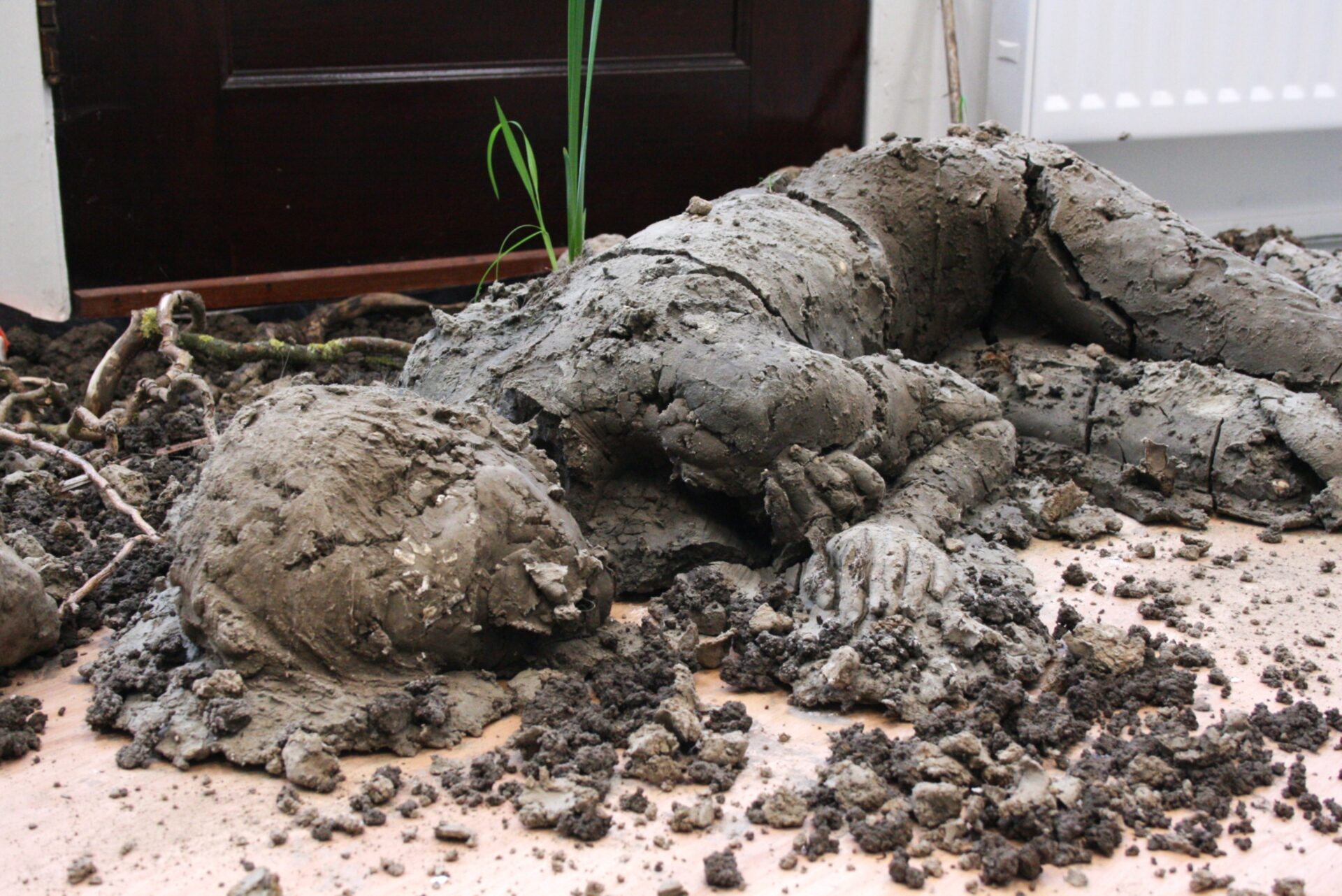
Amber Veel explores the question of where human bodies, those inscribed repositories of culture, end and their natural environment begins. She created a human figure from earth, prostrate and curled up, recalling Ozaki’s seed-fetuses. It seems to grow out of the soil that surrounds it like a womb. Veel said of the piece: “In the fractures of the salt marsh sediment I found the echoes of my own skin.” The sculpture is temporal, cracking and crumbling as the exhibition goes on. In the end it will be returned to the (Friesian) plains of marine clay from whence it came. Temporality and ephemerality evoke the continual state of slow flux we share with our environment, with which we too will reunite one day. “For dust thou art, and unto dust shalt thou return.”
The highlighted pieces stood out as performing a dialogue between humanity and nature on a level deeper than culture, inviting reflections on the natural world as crucible and womb
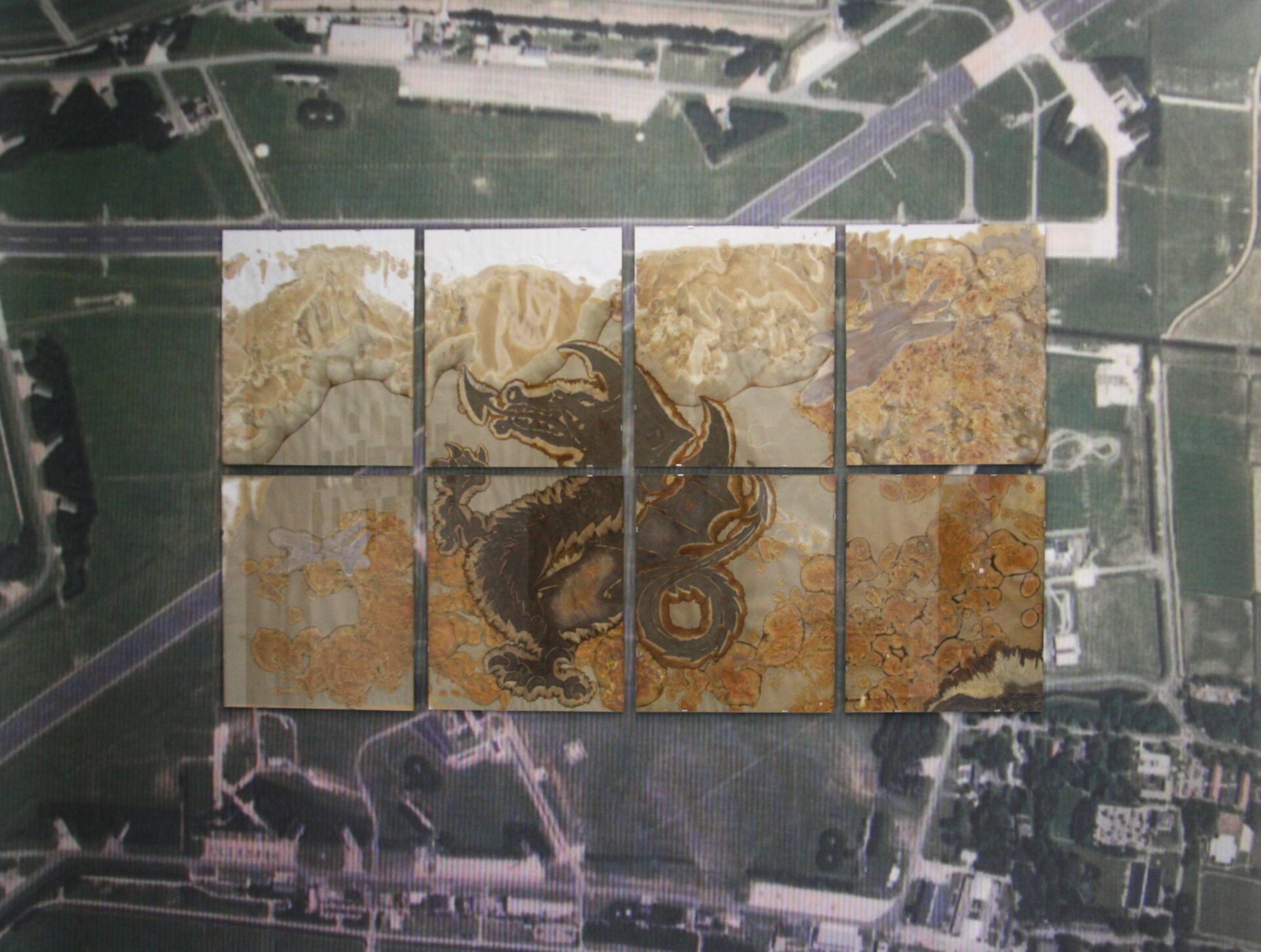
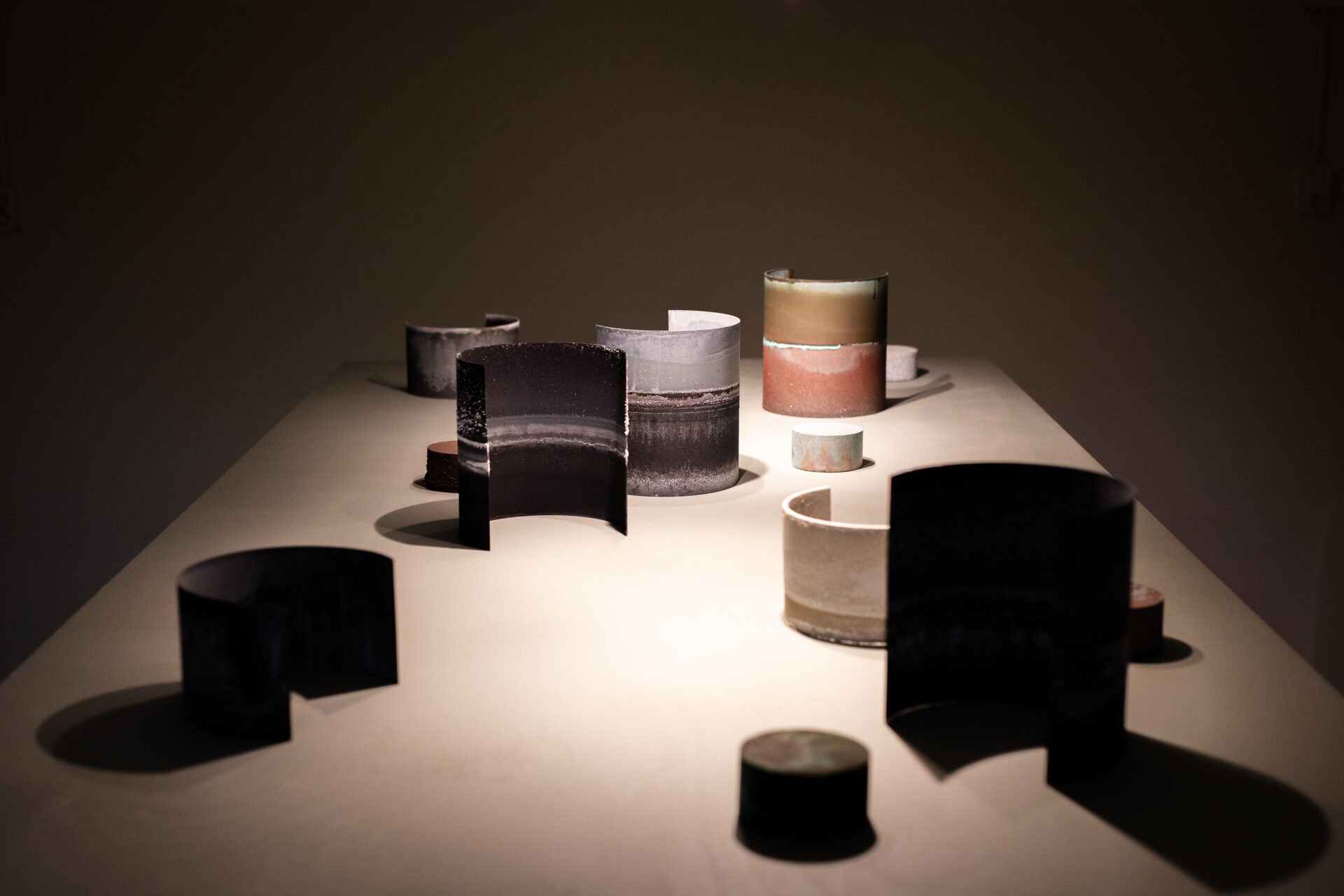
The highlighted pieces stood out as performing a dialogue between humanity and nature on a level deeper than culture, inviting reflections on the natural world as crucible and womb. Unfortunately, Deirdre O’Mahony’s short film The Quickening left little room for audience reflection or dialogue, instead telling viewers precisely what to think. The opening shots looked promising, thoughtfully using close-ups of beetles and earthworms inching their way through the earth to highlight arable land as an entangled patchwork of interdependencies. They quickly zoomed out, floating over Irish farmland while the film’s creators sang a series of statistics about the effects of certain farming practices and advocated for specific solutions in granular detail. The piece felt prescriptive, even sanctimonious, more like a lecture than a reflection.
The singers seemed to enjoy their own voices too much to leave their audience the space to form their own conclusions. The end result was as bluntly utilitarian as the extractive agriculture it railed against. Had it struck a more reflective, inviting tone it could have found harmony with the rest of Grensverleggers. But next to pieces that so beautifully blur the borders between us and the world, the painfully human addiction to lecturing each other jarred.
For the most part, Paradys Leeuwarden was an invitation to participants to ask themselves questions about connection itself, to each other and to the land we all came from. How these connections cross over, how culture and nature affect each other in mutual reciprocity and how such relationships might be better calibrated. How we can acknowledge the ever-present entanglement between nature and culture and better respect the womb of the world. Whether human beings realise it or not, nature and culture can never be fully separated. Paradys brought them, and us, into conscious, embodied dialogue.
Paradys, onderdeel van Arcadia, op meerdere locaties in Leeuwarden en elders in Friesland, t/m 24.8 Meer info HIER
Joshua Miller
is schrijver, criticus