Time For (and With) Papua at Wereldmuseum Leiden
The new permanent exhibition at the Wereldmuseum in Amsterdam titled Our Colonial Heritage (Onze Koloniale Erfenis) brings Dutch ‘elsewhere histories’ to the fore, rupturing the primacy of the ‘happy stories’ the Netherlands prefers to tell about itself. At Wereldmuseum Leiden the exhibition Time for Papua (Tijd voor Papoea) turns the gaze to Papua, where visitors are invited to engage differently with time. Andy Fuller visits the exhibition in Leiden
A few years ago, the book Revolusi (2020) by Belgian author David van Reybrouck, created a storm due to the ‘home truths’ it brought to the Netherlands about the revolutionary era in Indonesia. These ‘elsewhere histories’ of uncomfortable realities were long written out of mainstream textbooks. Time for Papua is another vital iteration of this engagement with Dutch colonial heritage. Structuring of time is also a part of the colonial logic and this exhibition recalibrates how time is imagined through Papuan cultural practices.
The title of the exhibition is rather poetically ambiguous. It suggests that ‘it is time to give attention to Papua’, rather than a separate ‘elsewhere’. But it is also an inquiry into what time means in Papua. The exhibition engages with the varying ways in which regimes of time are constructed, enforced, negotiated, and subverted. The curatorial notes frame the theme by stating: ‘Whereas museums preserve objects, in Papua, ideas about time are dynamic and circular—with room for renewal through loss and decay. What does it mean when objects are removed from that cycle and preserved “forever” elsewhere?’ Through the exhibition, us visitors experience an ‘elsewhere’. We have to consider our own subjectivity, rather than projecting our conceptions of time on that ‘somewhere else.’
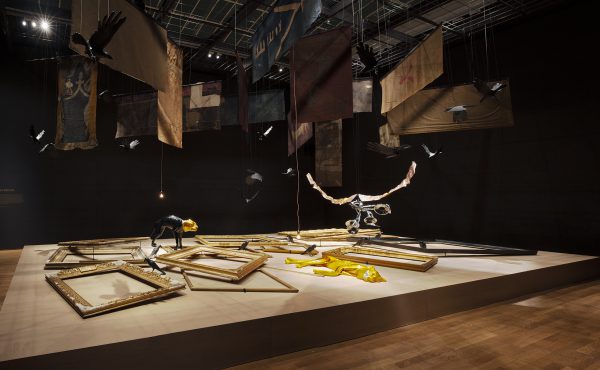
Throughout the darkened rooms, I encounter works that invite visitors to think across these varying senses of time. I’m attracted to the ‘noisy’ art works of Udeido Collective and Kevin van Braak, rather than artefacts. The curious case of Papua is that it has been subject to the colonial presence of both the Netherlands and Indonesia. The collaborative works of Udeido Collective and van Braak speak back to this in particular. Their works are almost ‘messy’; not putting their hope in a singularly articulated image of what contrasting realities can mean. In a linear sense of time ‘the past’ is unreachable; something subject to forgetting that forever falls into the distance. Here, I see how people have a continual dialogue with their ancestors and the stories they have told them.
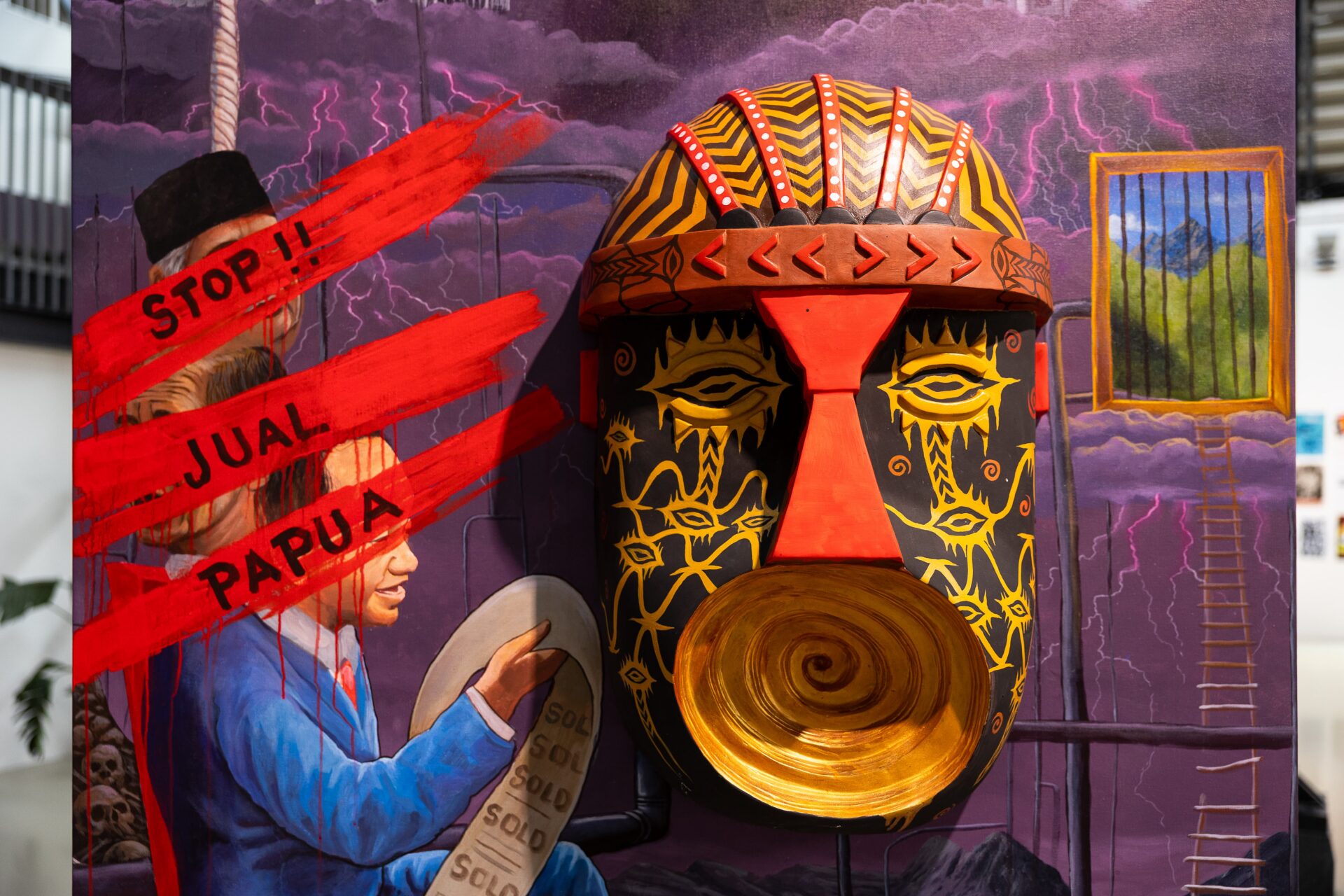
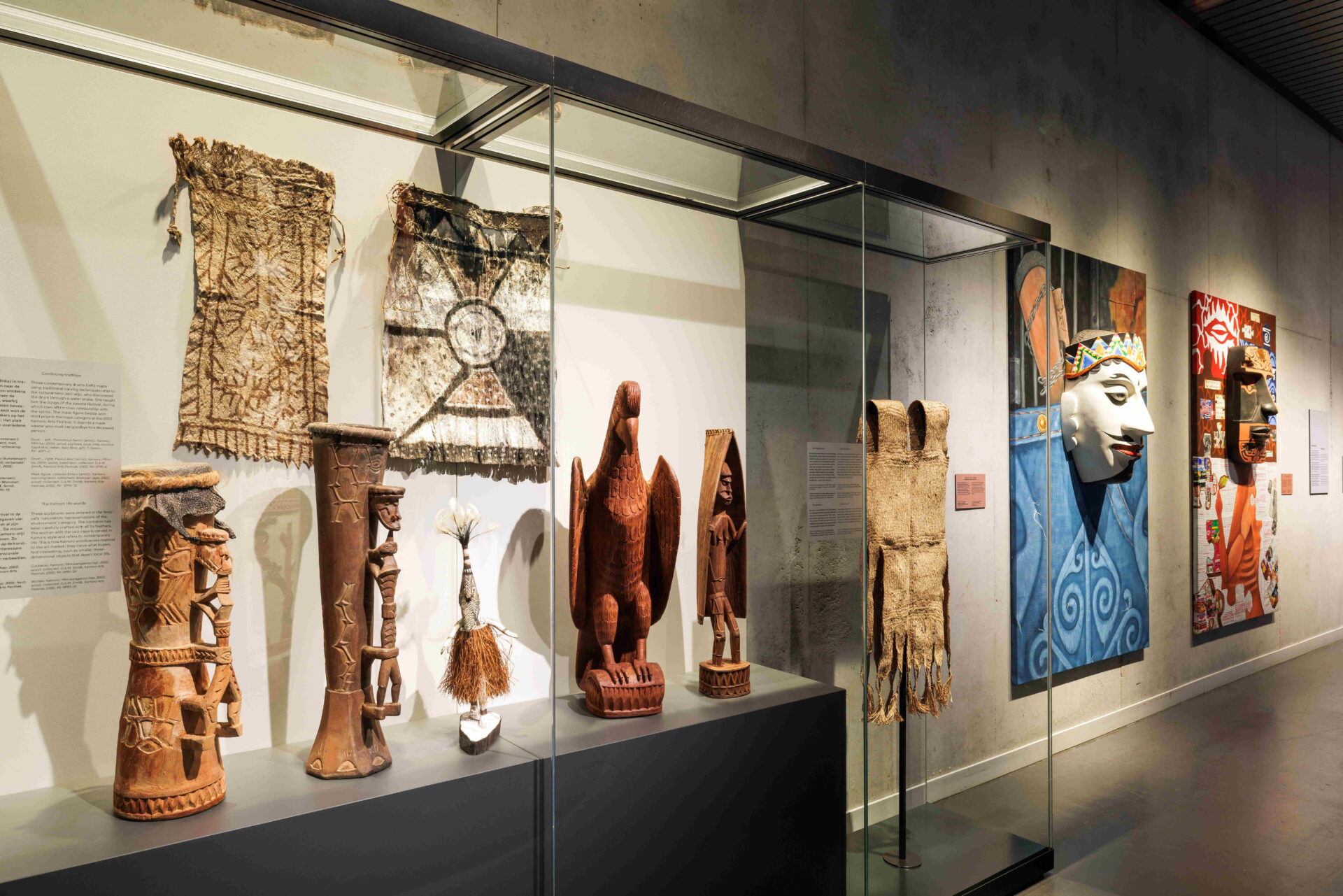
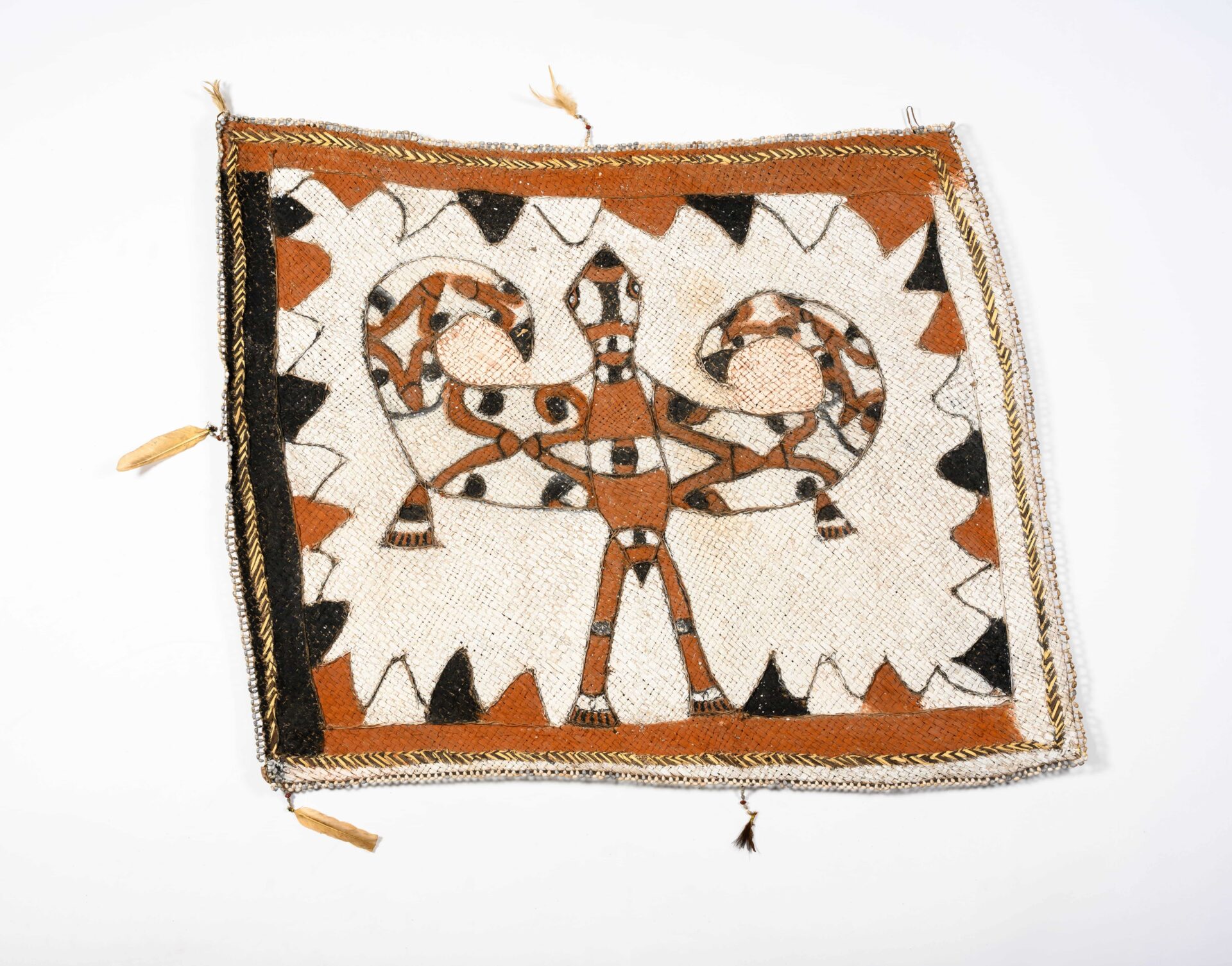
The terms ‘traditional’ and ‘modern’ feel inadequate for describing the complexities at play in the works, yet they are the labels most easily applied to the encounters between the Papuan and the Global North. Notably, Indonesia’s intrusion into Papua casts it as a modernizing ally of the West; as a textbook modernist nation-state, Indonesia has long projected an image of ‘backwardness’ onto Papua to justify its colonization and the extraction of its resources.
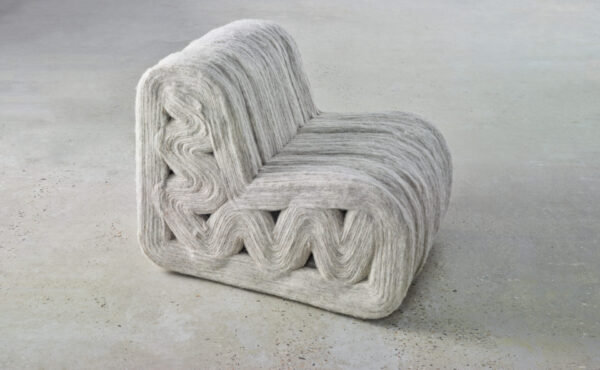
A tension between the local and the distant is also present outside the museum walls. Along the streets of Leiden, I see billboards promoting Tijd voor Papoea. The image depicts a running figure. whose face remains unseen, enclosed in woven clothing, adorned with thick textures and sandals. Here, Time for Papua entices us for a momentary leave from our busy lives, soaked in our usual obligations, to consider something distant. But once inside the exhibition, the sense of distance becomes bumpy as viewers see the intertwined histories of the Netherlands and Papua. It turns out that what is ‘distant’ is a part of local histories.
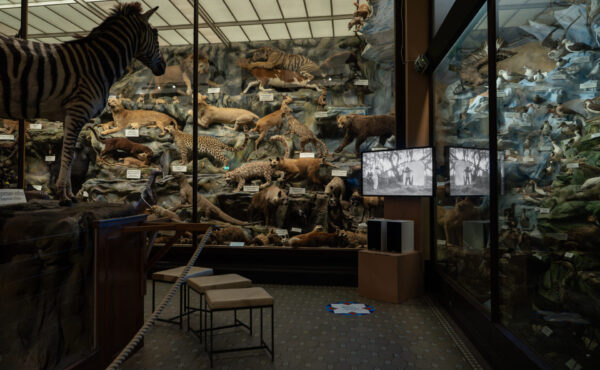
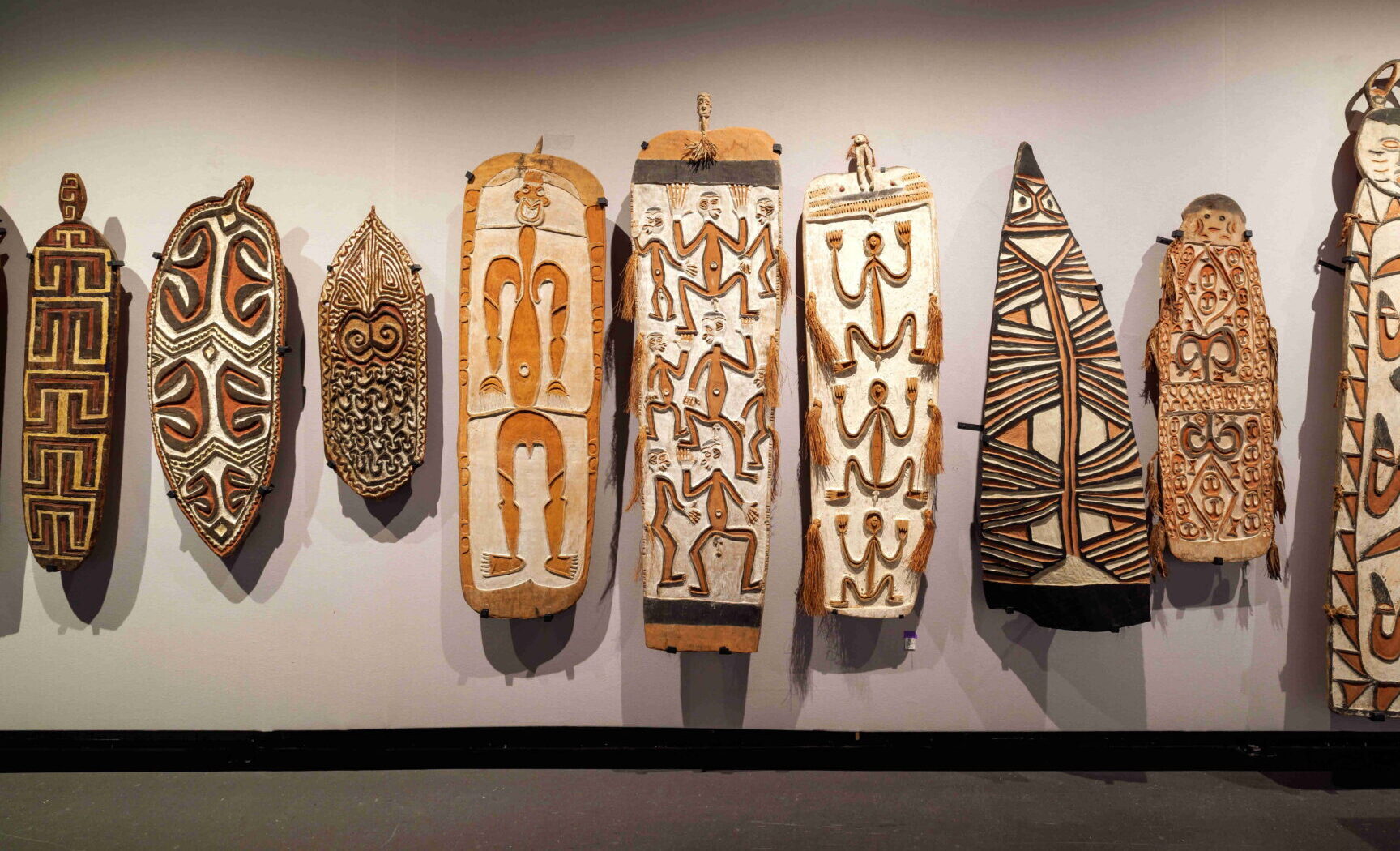
The ‘how’ of these distant objects’ journeys into Dutch institutions remains subject to critical interrogation. The museum acknowledges that the 50,000 items in their collection arrived via explorers, missionaries, and civil servants, and is continuing to investigate their origins. The lens of ‘worlding’ contests a Eurocentric gaze and re-situates the histories of these objects. Perhaps there is some kind of discomfort with the abundance of these objects: they are a part of a heritage which is both subject to critical inquiry and to being re-presented. While the institution has rebranded as Wereldmuseum, it still carries the atmosphere of a traditional ethnographic museum: darkened rooms, glass-protected objects, and clinical notes. I find myself struggling with the weighting of the display; there is a lack of context regarding what the ‘Papuas’ invoked through these objects actually are like today. This may be another reason for my orientation towards the works where the makers are clearly acknowledged, rather than the artefacts coming from more generally acknowledged places.
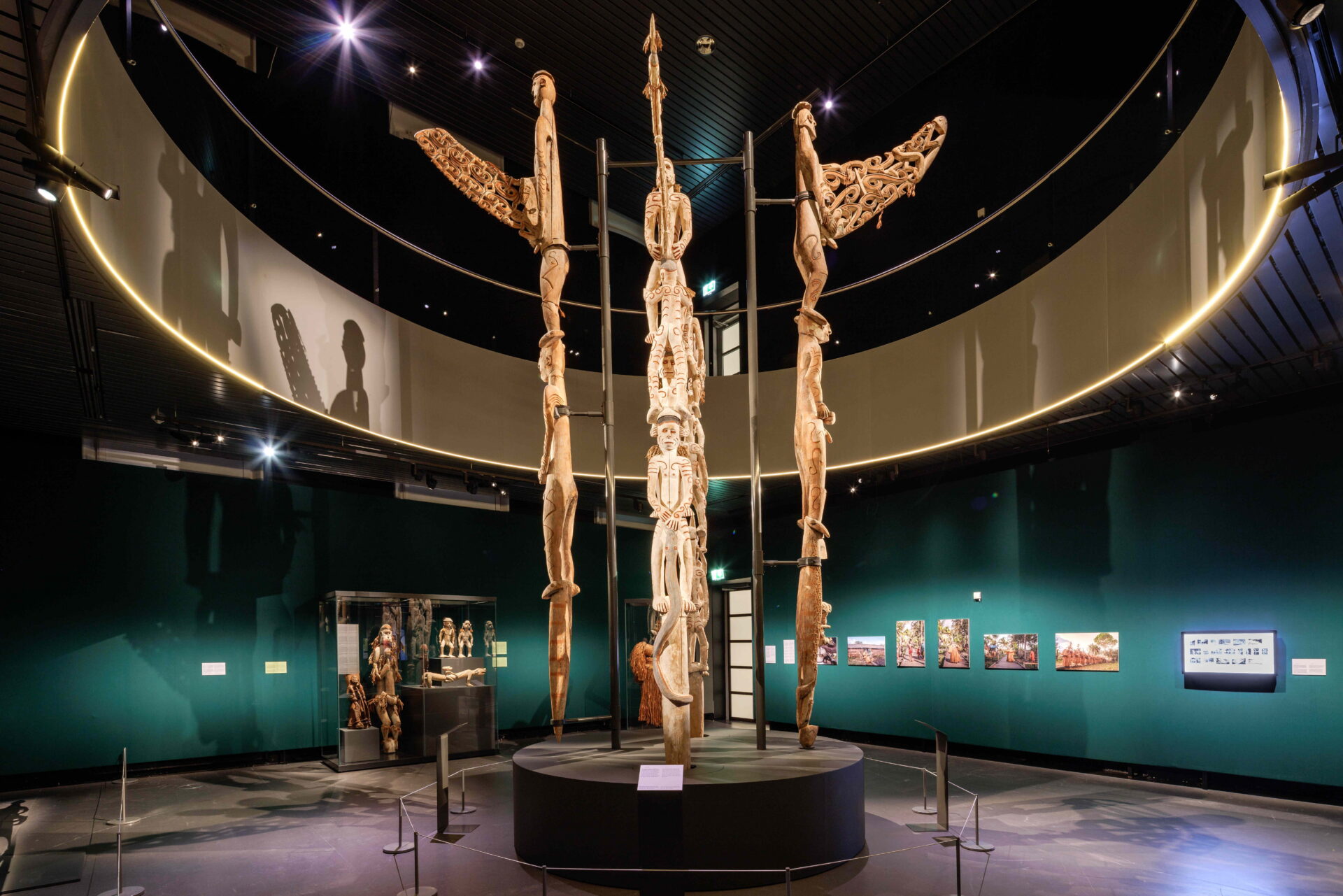
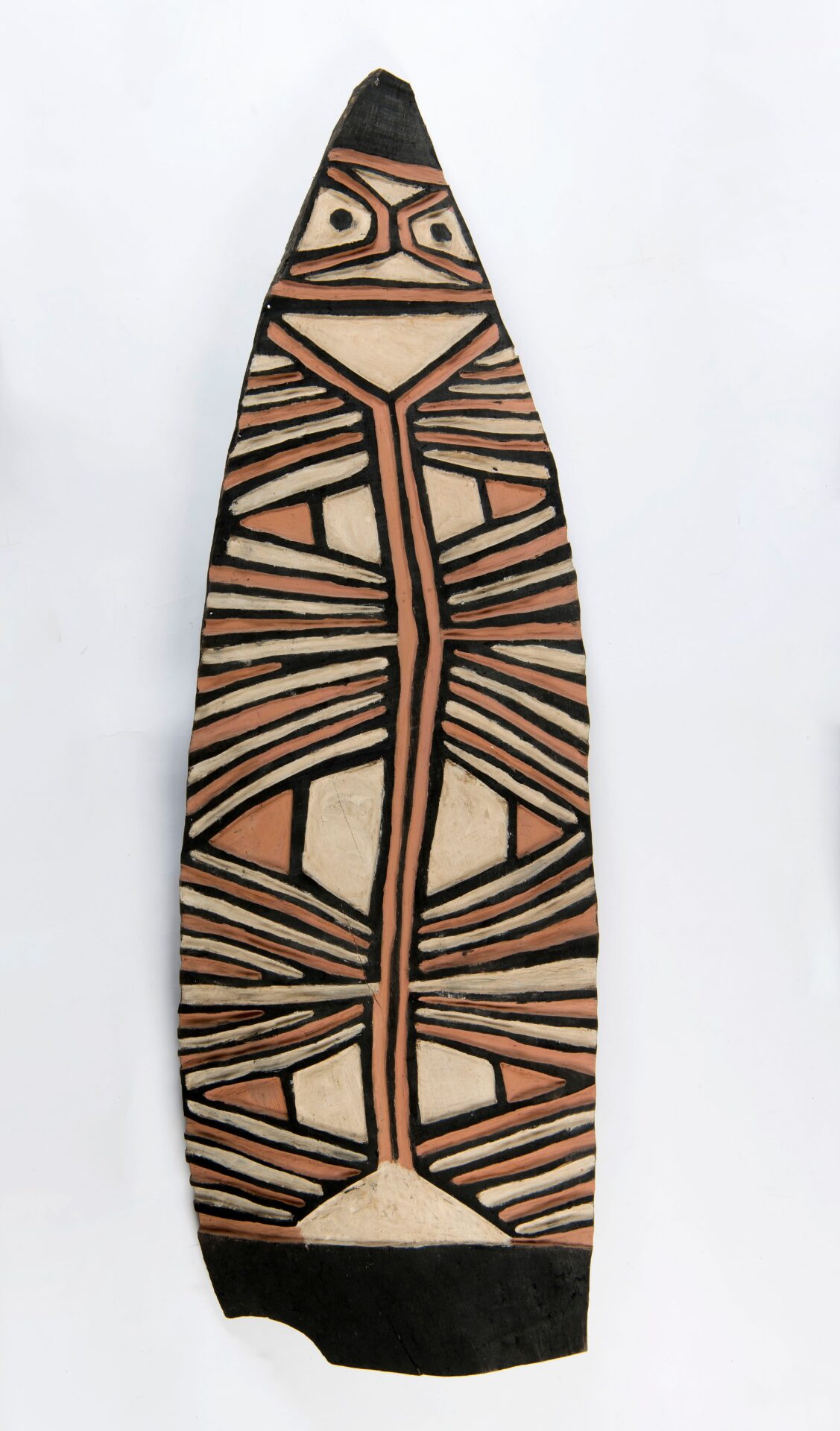
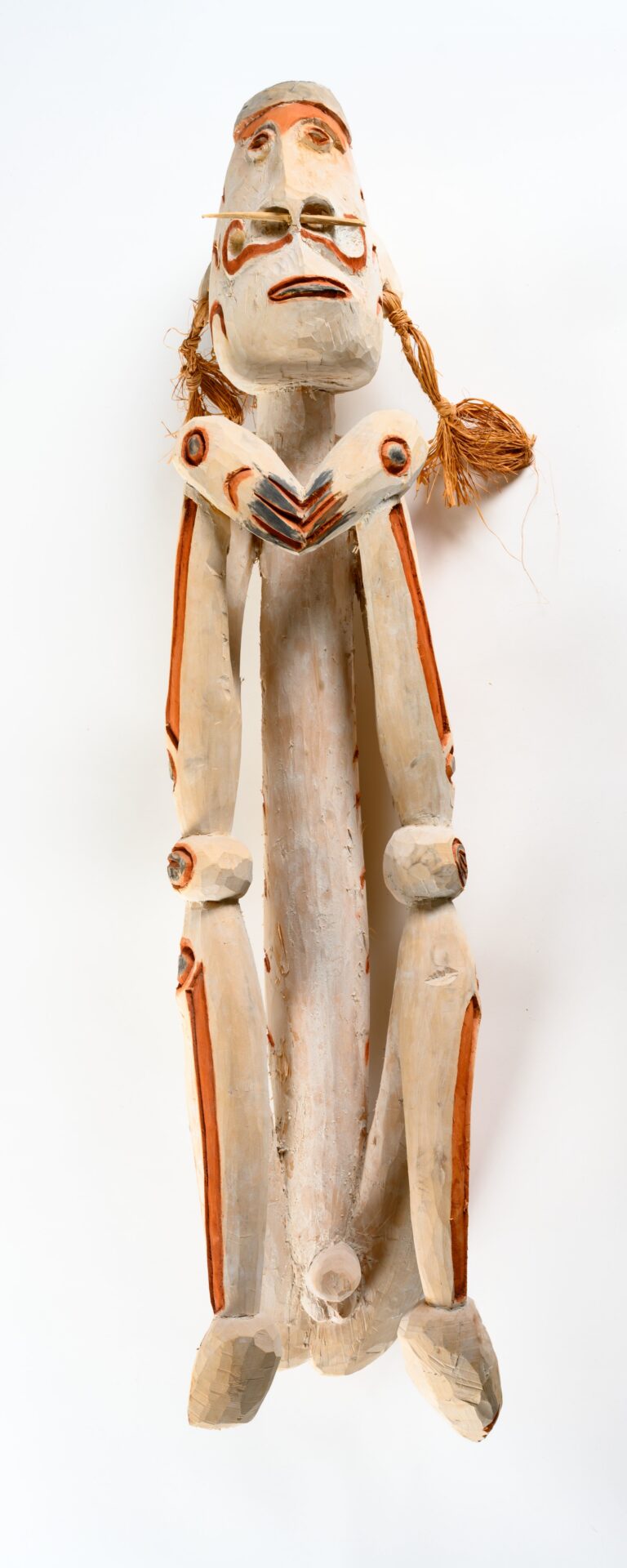
The works that facilitate this connection most effectively are those by contemporary artists and documentary filmmakers. The audio narratives of the Dutch-based Papuan diaspora are particularly meaningful, as they bridge the colonial past with present-day realities. The works of the Udeido Collective and van Braak transform the exhibition from an old-school ethnographic collection into a critical act of worlding. These works recontextualize Papuan imagery within the context of ongoing colonization and environmental destruction.
In one of their most striking collaborations, teeth are depicted as bullets. One bullet rests at the end of a lawmaker’s gavel. The word bubar, meaning ‘dismantle’, is graffitied across the Indonesian national motto, Bhinneka Tunggal Ika (Unity in Diversity). By spreading these large-scale (approximately 1.5m x 2m) works throughout the exhibition rather than clumping them together, the curators allow the contemporary pieces to stay in a constant, provocative dialogue with the historical objects nearby. Another striking work, Bhim (between 2018-2025), features a mask placed atop a collage of Dutch newspaper articles. Here, Udeido Collective and van Braak practice the postcolonial art of ‘speaking back to empire.’ In an era of digital saturation, they remind us of the tactile history of the press, where headlines like ‘primitieve Papoea-cultuur gedoemd te verdwijnen’ (primitive Papuan culture is doomed to disappear) served to justify erasure.
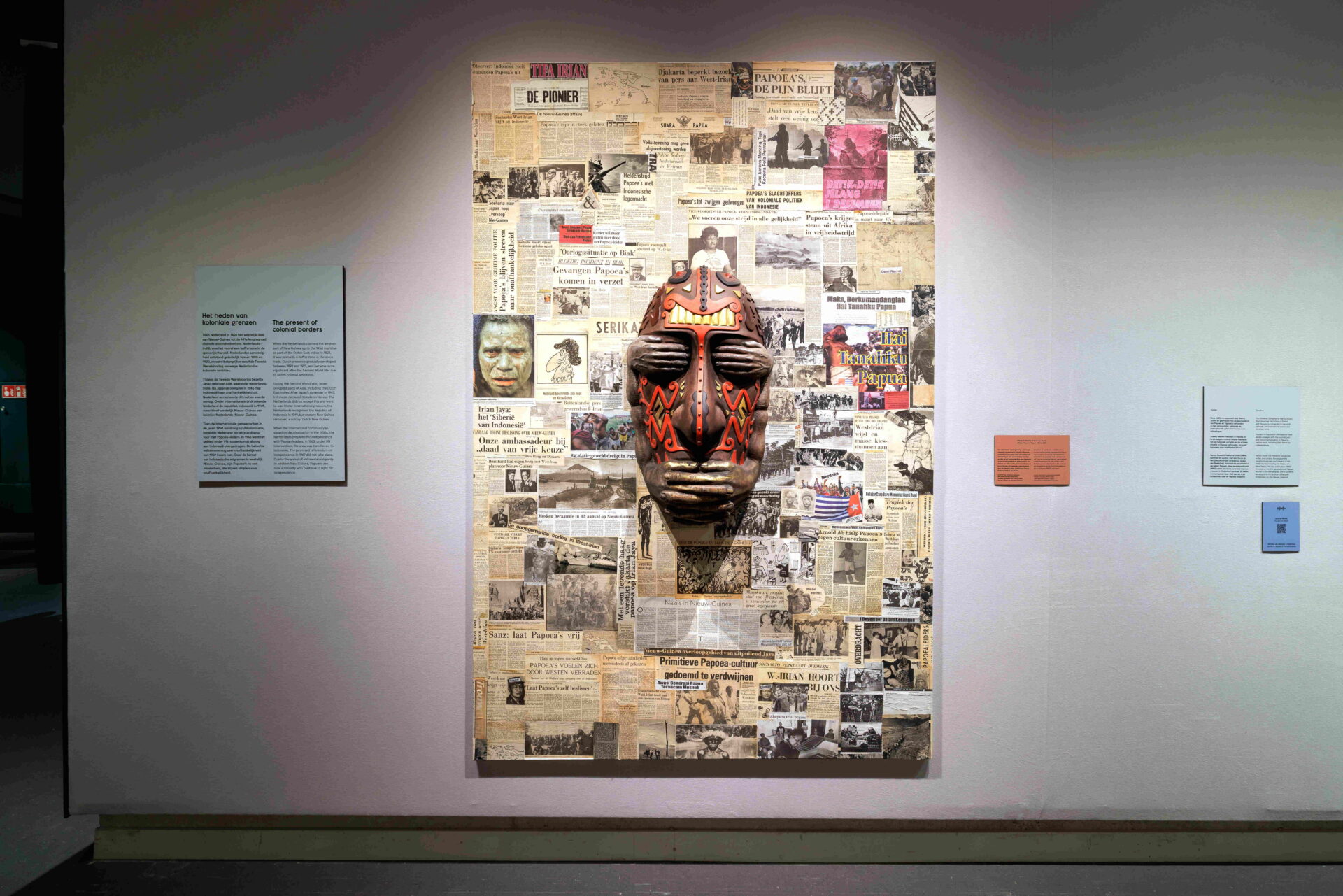
I have been back and forth to the museum to see this exhibition. Each time I go, I feel I respond differently. I feel the multiplicity of images and materials enable various readings of ‘time’ for Papua. The curatorial intention of worlding disrupts the essentialist gaze and acknowledges the intersections of industry, capitalism, and colonialism. Through the exhibition, we see more than just artefacts; we see the material and discursive resistance to the co-option of Papuan lives, objects and environment.
Time for Papua (Tijd voor Papoea) is on show until the 3rd of January 2027
Andy Fuller


Gerelateerd