We are walking birds – talking to Glicéria Tupinambá – representing Hãhãwpuá (Brasil) at the Venice Biennale
Glicéria Tupinambá is one of three indigenous artists representing Brazil at this year’s Venice Biennale. Combining historical research, community collaborations and contemporary indigenous practices, the artist presents a multifaceted project centred around the brightly coloured Tupinambá mantles that have been exhibited in Europe since colonial times.
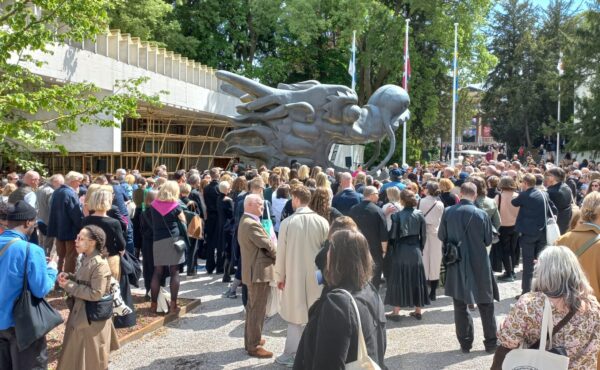
This year, the Brazilian pavilion at the Venice Biennale has been renamed ‘Hãhãwpuá’, a term that the Pataxó peoples use to refer to the territory that, after colonisation, became known as Brazil. The curators have chosen one of the many original indigenous names which still exist, in defiance of the name ‘Brazil’, which is directly connected to European colonisation and the extraction of wood from the brazilwood tree. Curators Arissana Pataxó, Denilson Baniwa, and Gustavo Caboco Wapichana invited three artists to show their work: Glicéria Tupinambá, Olinda Tupinambá and Ziel Karapotó. In installations involving objects and video, each artist reflects on their community’s connection to their territory in their own way.
I speak to Glicéria Tupinambá (1982), also known as Célia, an activist, anthropologist, teacher and filmmaker from Serra do Pandeiro in Olivença, Bahia. She belongs to the Tupinambá ethnic group, which was among the first populations encountered by the European colonists. Their fight for recognition continues until this day. Célia is in the midst of organising a series of workshops that bring the local youth of Serra do Pandeiro into contact with the knowledge of their elders and ancestors. ‘I want to convey the position and the place from where I speak, together with the young people, the women, the elders, their different scales of knowledge, to give people an idea of who we are.’
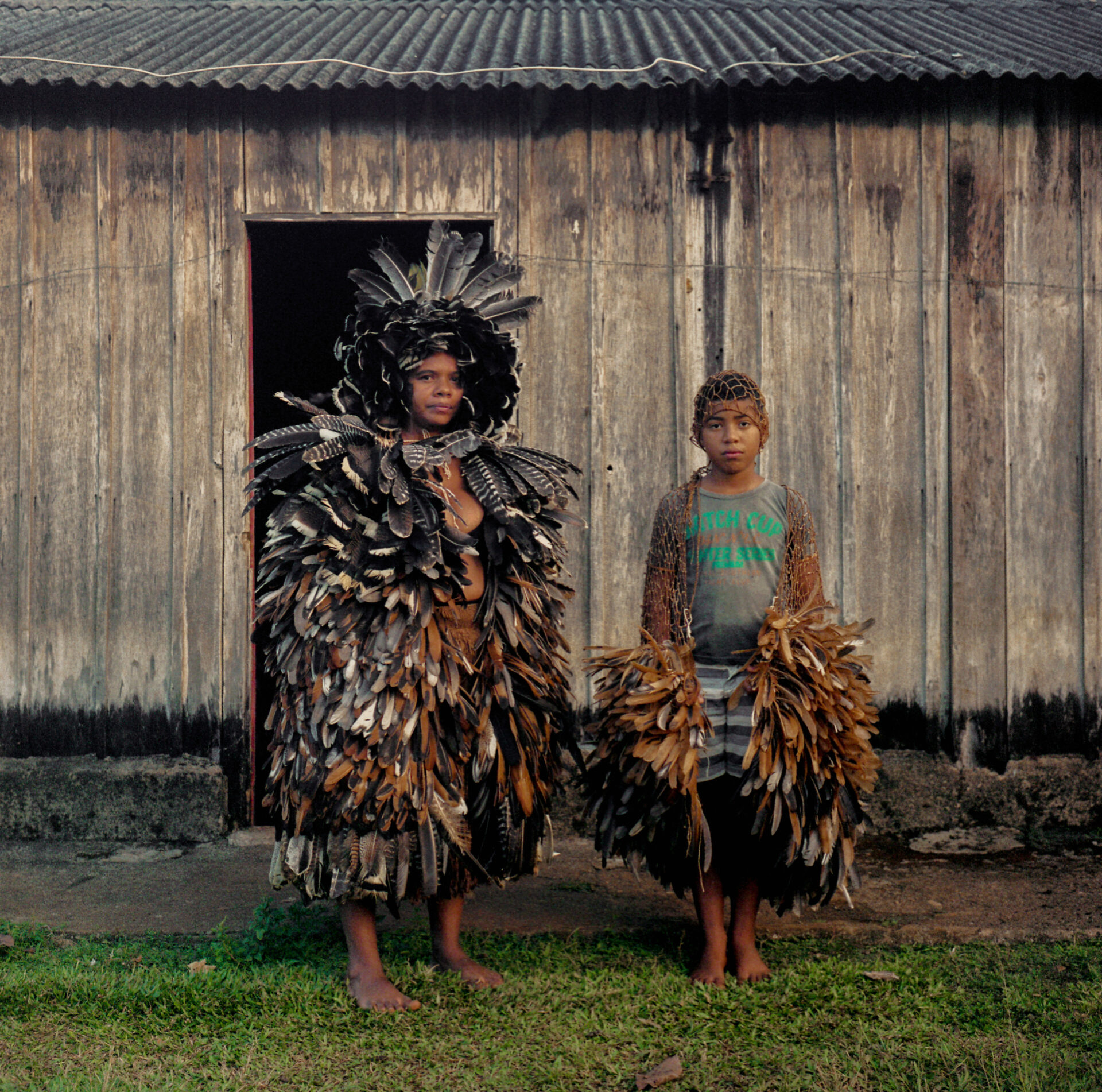
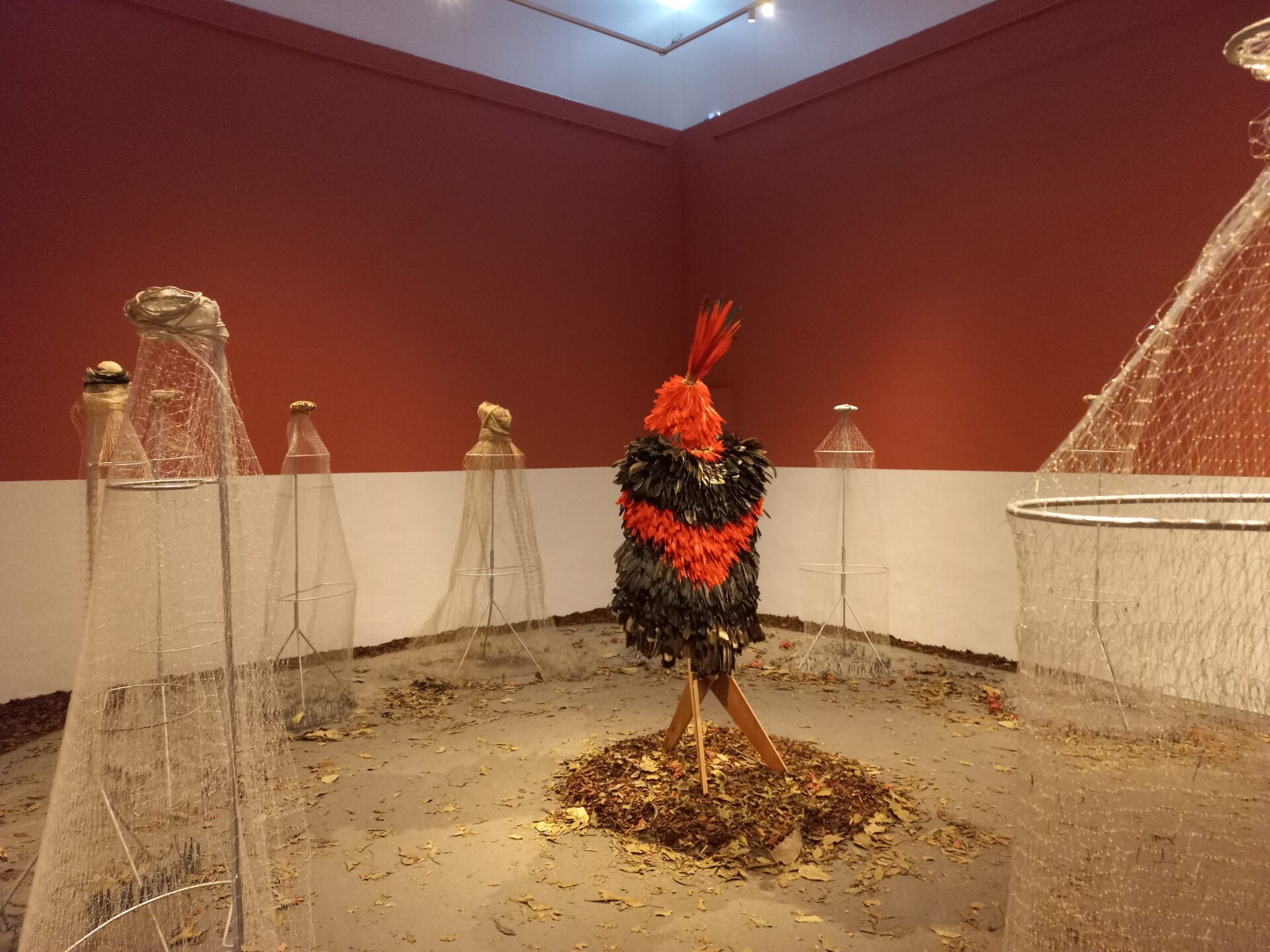
Célia’s work has been shown in many museums throughout Brazil. It strikes me that her practice is about meeting and talking to many different people, not just from her own community, but also conservators from all over Europe. Her work revolves around connecting the dots between the different types of information she gathers, and finding ways to transmit this to others. When I ask her how she gathers this information, she tells me about Ka’a Pûera: we are walking birds, her current project for the Hãhãwpuá pavilion which she is preparing together with the community of Serra do Pandeiro. Ka’a Pûera includes community projects, workshops, conversations and collaborations with many different people. Referring to the title of the project, she explains: ‘There is a type of small bird we call ka’a pûera that lives in the forest and circulates the territory by walking on the earth. They’re very clever – they know how to camouflage, feed themselves, how to take care of their young. In a way, we are all walking birds.’
Bright Red Feathers
Célia will present new works from a research project she started twenty years ago that focuses on the Tupinambá mantles, long ceremonial feather capes that were created by the Tupinambá peoples some 400 years ago. The mantles are hand-woven, made with the bright red feathers of the scarlet ibis bird. Célia’s interest in the mantles was sparked when two elders from her community came across one of the mantles in an exhibition in São Paulo, where it was on temporary loan from the Danish National Museum. A total of eleven original mantles still exist today, all of them kept in European museum collections in Denmark, Belgium, France, Italy and Switzerland. It is commonly assumed that Johan Maurits van Nassau (1623-1679), former governor of the Dutch colony in Brazil, shipped the mantles to Europe and gifted several of them to his Danish cousin Frederik III in 1654. In this way the story of their dispossession is directly related to the Dutch colonial history in these territories.
Following a lengthy diplomatic process, in which Célia was also involved, the National Museum of Denmark has agreed to donate one of five mantles to the National Museum of Brazil in Rio de Janeiro. The museum is currently being reconstructed after the large fire of 2018, which destroyed most of the building. The mantle is scheduled to arrive this year, after which it will be added to the collection.
Over the past twenty years, Célia has been building an archive of photographs, prints, maps, texts and letters, while documenting her research process on film. She also collaborated with the elders of her community to create a number of new mantles in an attempt to reconnect with and breathe new life into this age-old tradition: ‘The mantles represent a collective endeavour. We collected feathers and made the mantles together, with many hands. I think it’s important that I bring a sense of this collectivity to the Biennale.’
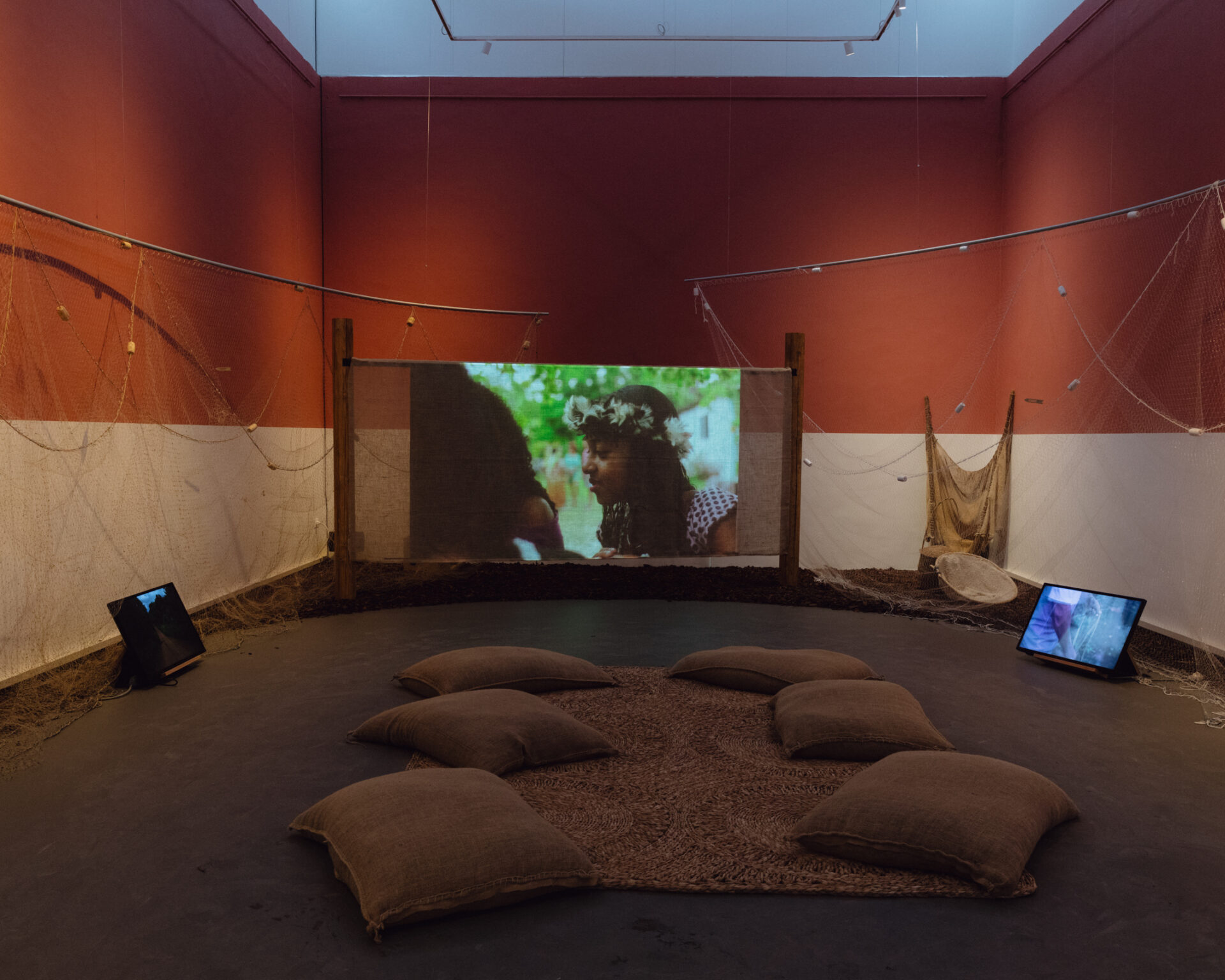
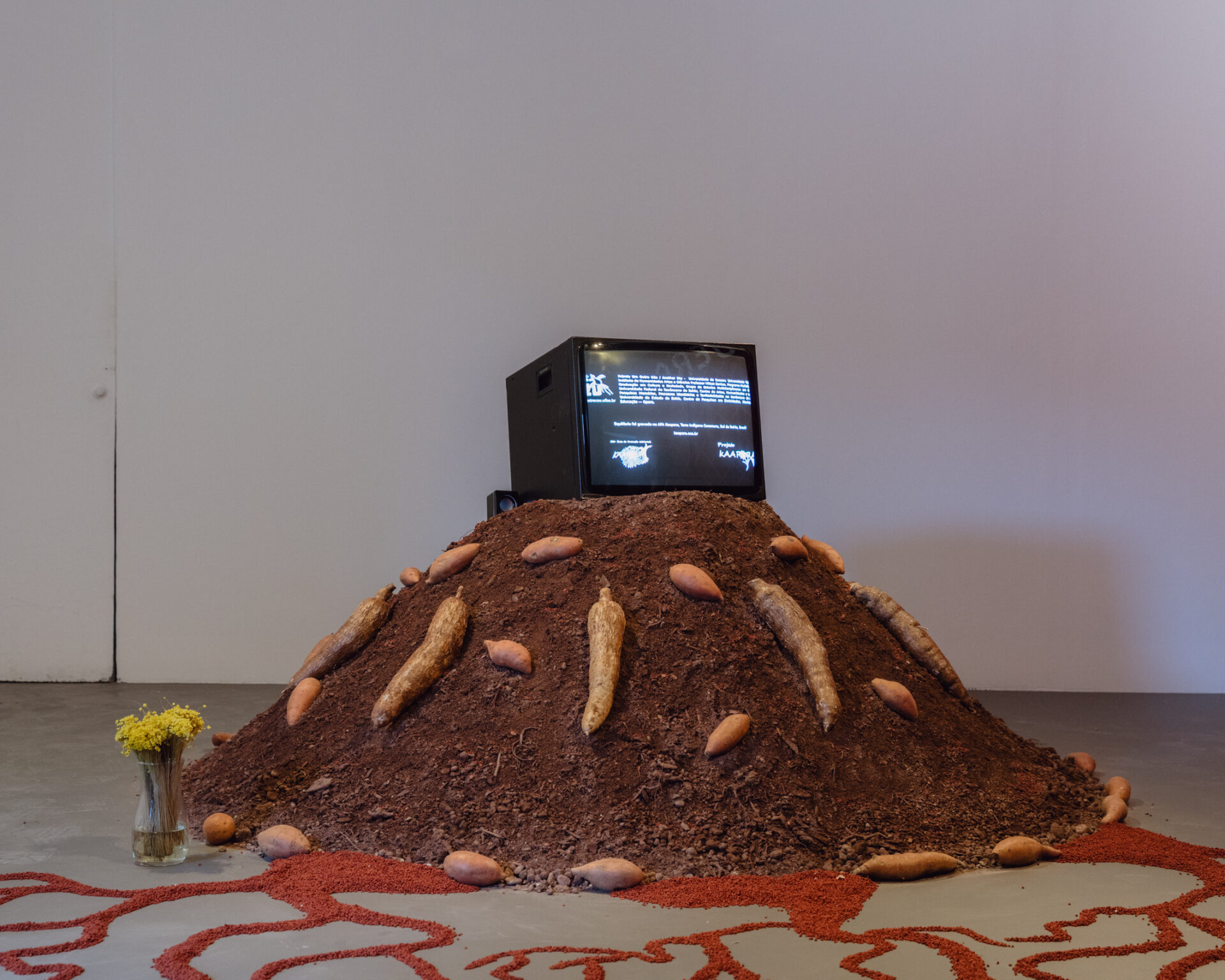
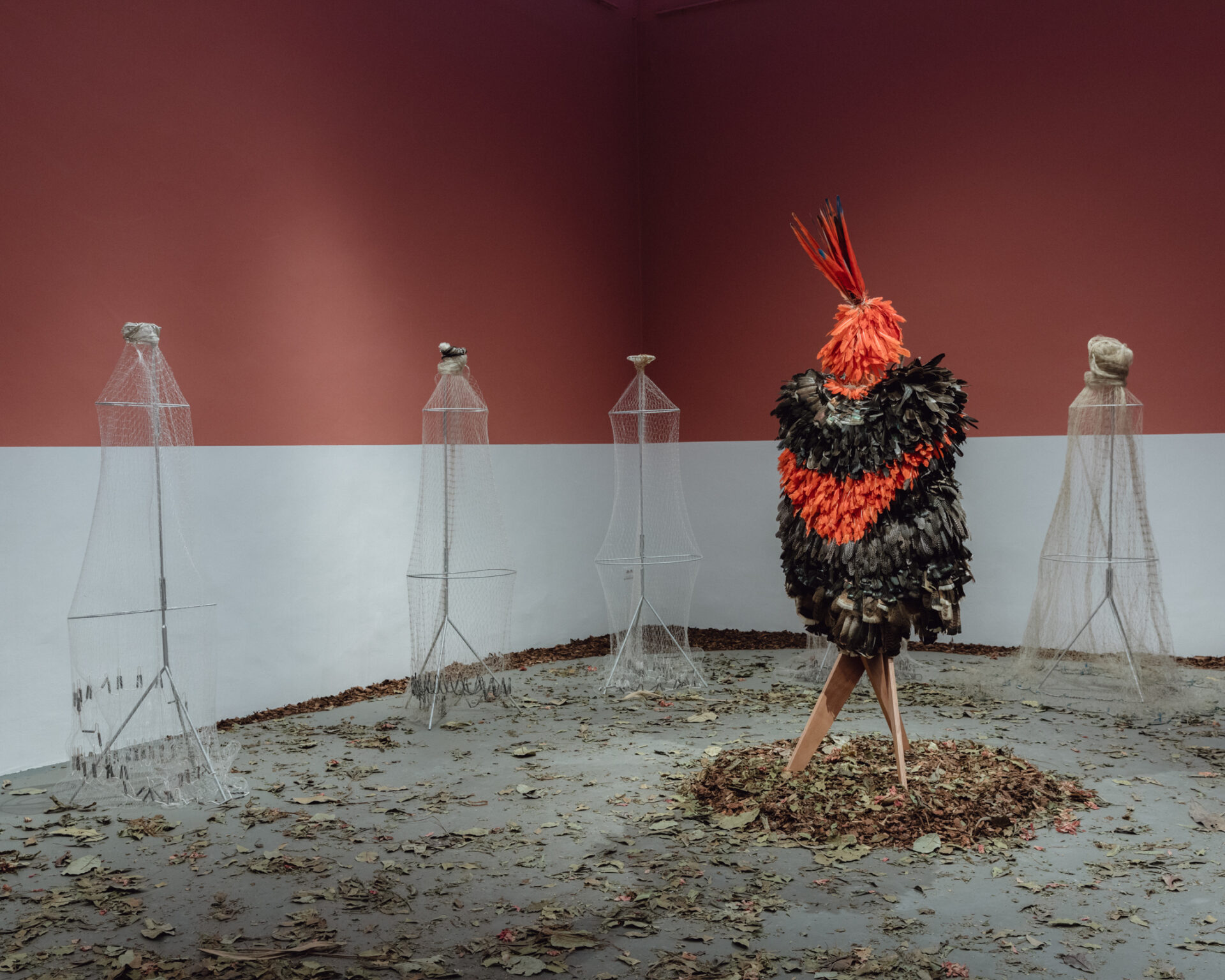
Célia sees it as meaningful that the community shares its knowledge. Her aim is to present a wider perspective on how they behave within their territory, their search for skills and making processes. The research into the mantles inspired her to organise different types of workshops: ‘From the mesh of the mantles we got to the mesh of the fishing net, and I realised there are only a few people in the community who still know how to make these. So I decided to organise workshops for kids about making cast nets. The kids also learn how to document what they are doing on camera, from threading a needle to casting the nets. This audiovisual footage will also be included in the Venice exhibition.’ For the making and casting of the nets, they follow specific techniques that stem directly from the movements developed for fishing by the ancestors of the community. ‘I found documentation of this practice in Versailles on a tapestry from the sixteenth century, which depicts how the Tupinambás used to fish. It shows us a fragment of what our people were like back then. Now you see that these same movements still exist, our bodies remember them.’
Sensitive Listening
Célia constantly makes connections between her research into historical iconography and written accounts on the Tupinambá peoples and present-day practices: ‘My interest is in how we look at ourselves when we come into contact with what has been said and documented about us. For the first time in history, we have the privilege of accessing this information. We have to remember that it is conveyed to us in a European language, so we have to measure it carefully. It was always the Other talking about us. The Europeans didn’t have the ability to imagine our community in all its levels of complexity. They often underestimated our intelligence, portrayed us as weak, and demonised our rituals. At some point, I came to understand these documents as scripts, as stories about warriors and villains, in which the reader or viewer’s emotions are guided towards a certain direction. Once you understand this, you can start to look at it again and ask, but who are we really? What is it that they didn’t know about us? What in here is actually ours? I am always looking for specific details that I can verify or elements that were left out. I also look for the women in these accounts to understand what their role was. They were often overlooked, which is also why the manufacturing technique of the mantles wasn’t documented.’
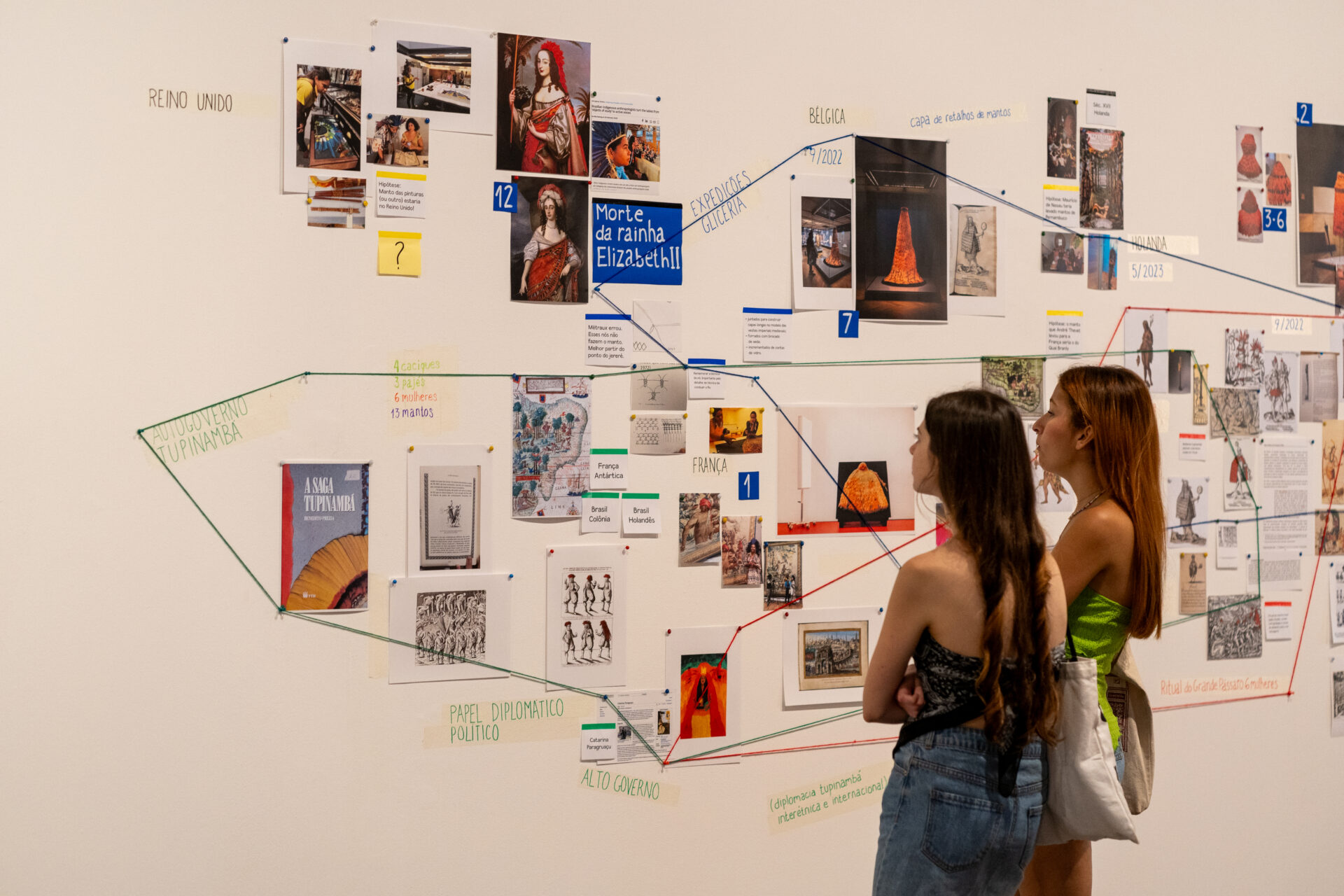
I am surprised to hear that Célia is so sure that the mantles were made by women, and ask her how she knows this: ‘It might not have been documented, but the mantle talked to me. I also found an image of a Tupinambá woman wearing the mantle, and then I came across an account by a priest who describes a ritual of seven red ‘devil-women’, which is actually a report about women dancing, singing and wearing the red mantles – a beautiful image. You just have to know how to sift through the information.’
I ask her what she means when she says that the mantle talked to her: ‘The Tupinambá see these mantles as plural objects that communicate and interact. They have a scope that doesn’t fit into the European way of thinking. So I hope we reach this point where we can all have access to the mantles and take care of them together. That’s why it’s important that we show in Venice what indigenous people are doing in Brazil and how we are trying to understand our past. I travelled to Europe to see the mantles and to listen to them and to my ancestors. It’s a kind of sensitive listening, a way of establishing a dialogue. They guided me in this research on the role of women, but there is a lot more to it. These objects have agency, they are spiritual, and we need to keep this spirituality alive. We are thankful that these mantles were so well preserved, that people studied them and looked after them. However, European thinking is very economical – it presents the mantle as a singular object, kept in a solitary place, removed from the people. But the mantle ís the people, it needs this life, these energies, so that it can renew itself.’
Glicéria Tupinambá: Ka’a Pûera: we are walking birds
Brazilian/Hãhãwpuá Pavilion, Giardini, Venice
20.4 to 24.11.24
Tanja Baudoin