Playing the System – I AM NOT AN ORACLE at IMPAKT
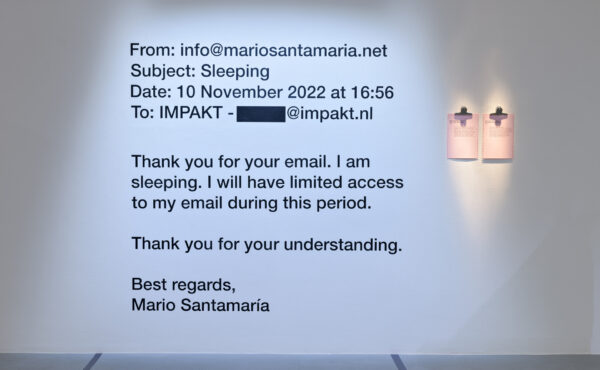
How much do we rely on the systems that surround us? I AM NOT AN ORACLE at IMPAKT, curated by Ine Gevers, explores the structures that shape our identities, economies, climates, religions and politics through the work of nine artists. Rather than offering predictions or warnings, the exhibition invites visitors to navigate these systems from within, positioning them as active participants. But this invitation also reveals its limits, as the exhibition’s scale and density can complicate the very navigation it asks of us.
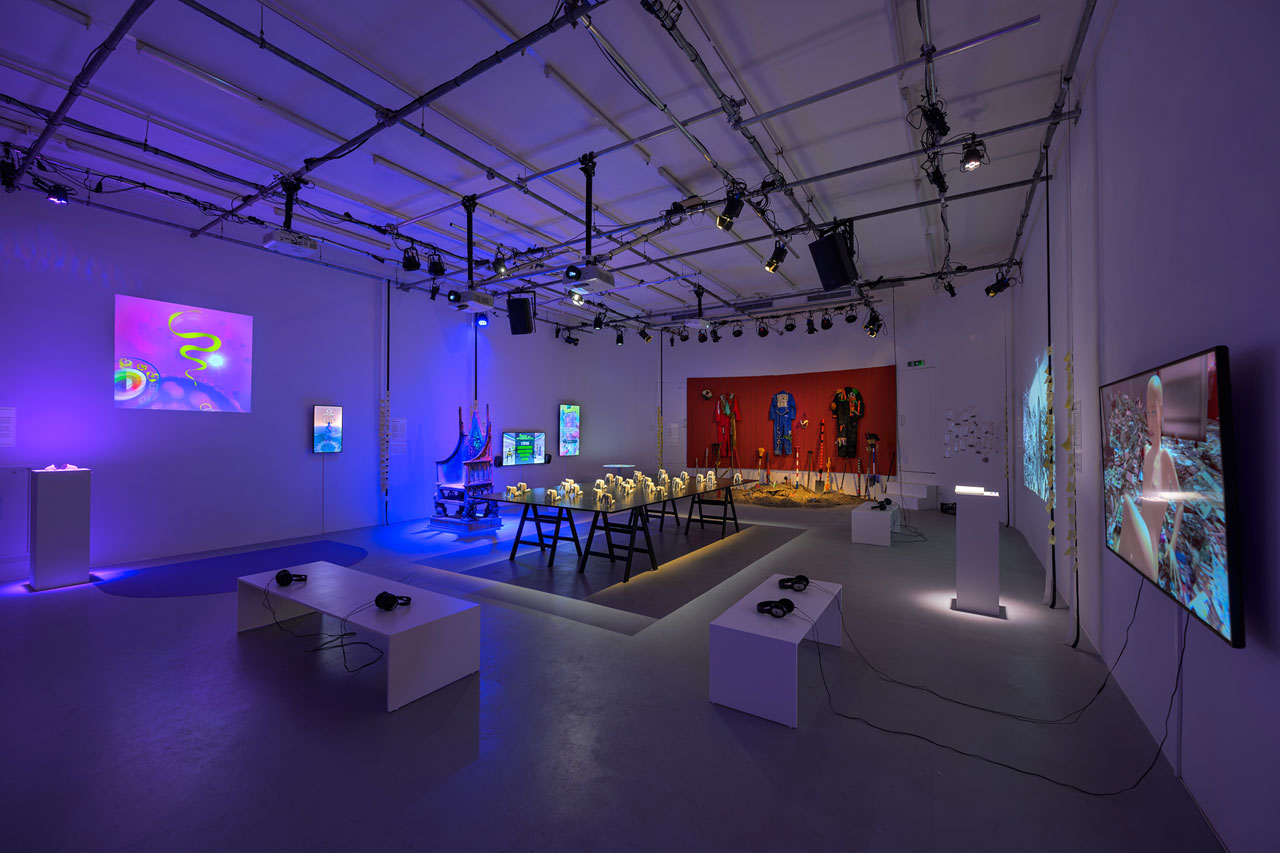
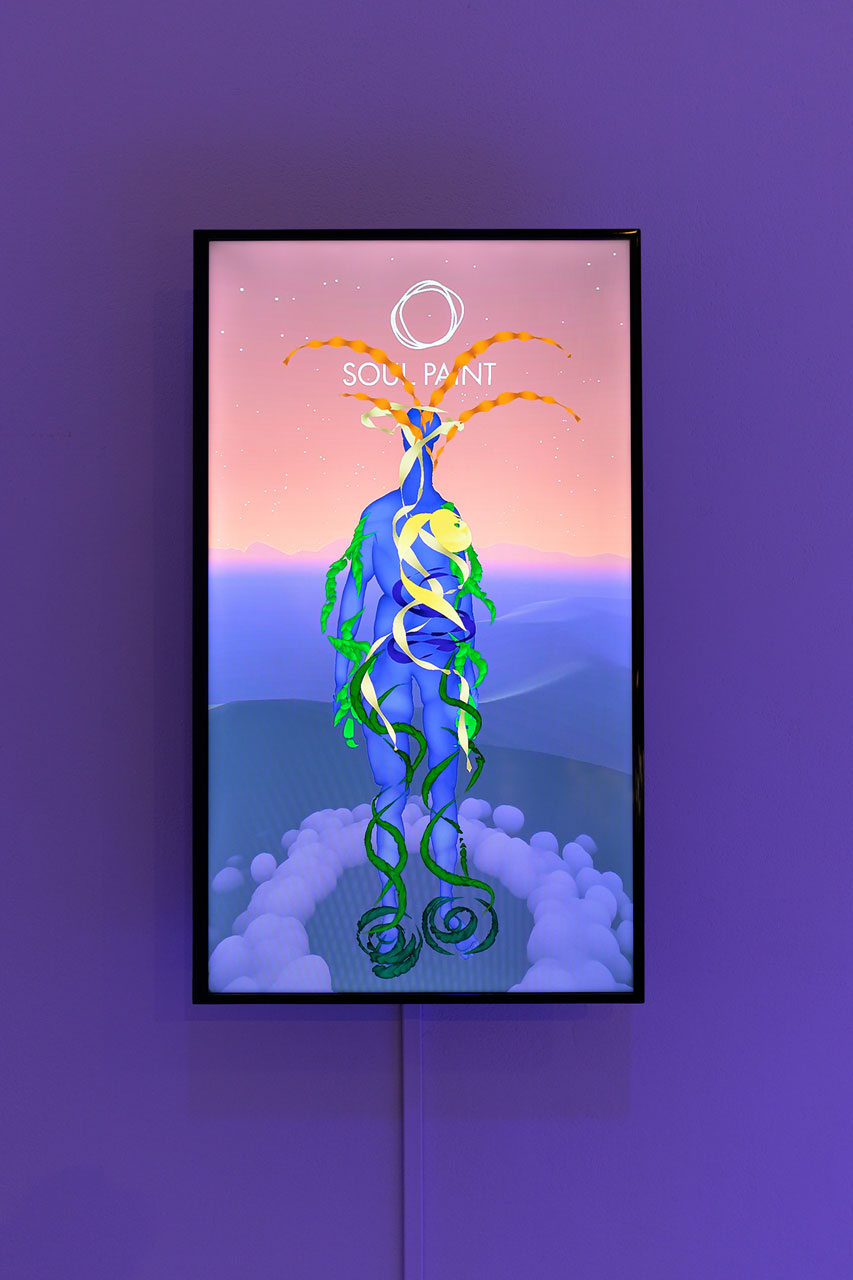
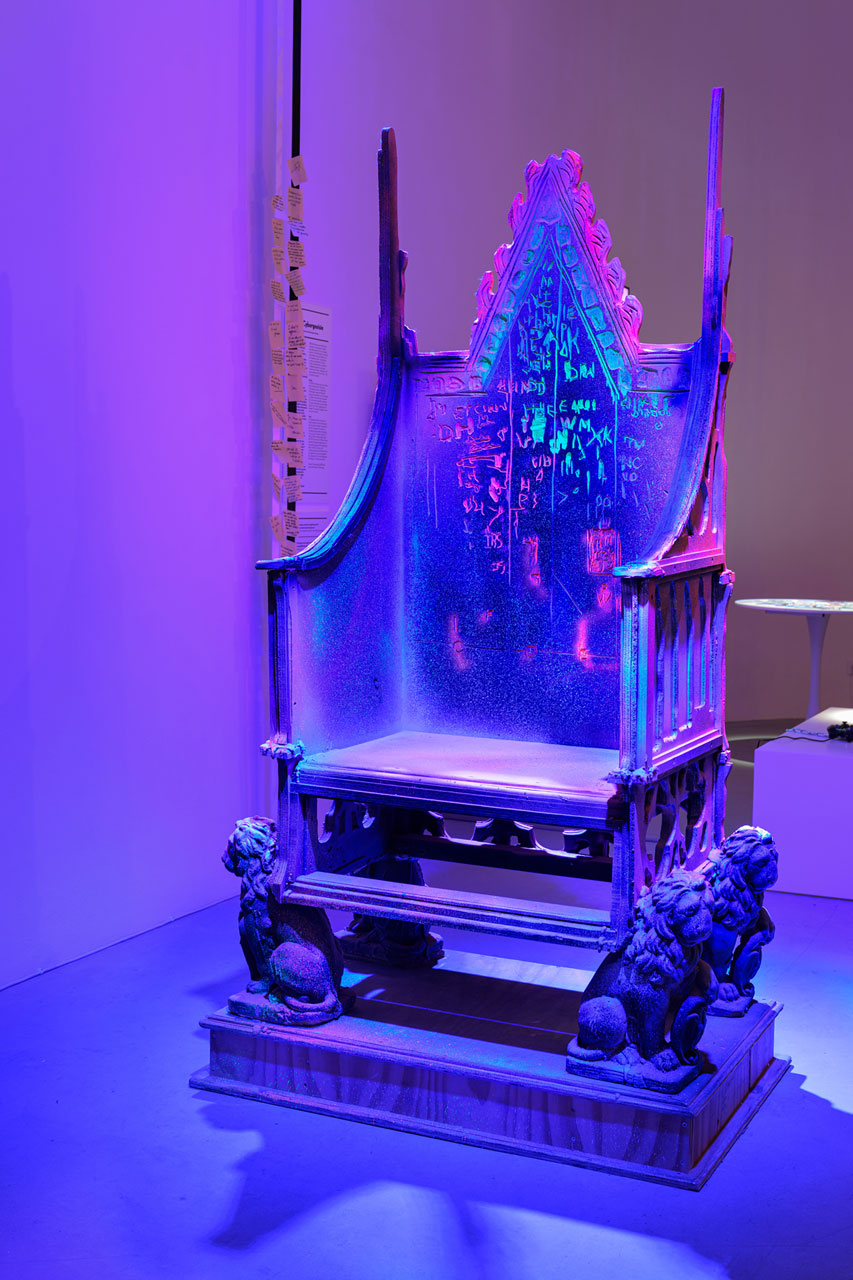
The exhibition is presented in one room, with patricia kaersenhout’s MEA CULPA (2020) positioned in the centre, and the other works arranged around it. As I move through the space, my attention is first drawn to Monobanda’s Soul Paint (2024), an immersive VR experience drawing on body mapping and 3D drawing, narrated by actor and activist Rosario Dawson. Putting on the VR headset, I find myself standing on pastel-coloured clouds, greeted by a voice asking, ‘Where do you feel?’ I receive a virtual paintbrush and in response to this question, I am invited to draw around myself. Then my body materializes in front of me, and I am able to paint within it, tracing emotions in a kind of guided grounding exercise. VR is usually presented as something that highlights the virtual environment more than the body, something more about immersion in a digital world than about how our bodies exist within it. Soul Paint shifts this by placing the focus back on the physical body, even within a virtual space.
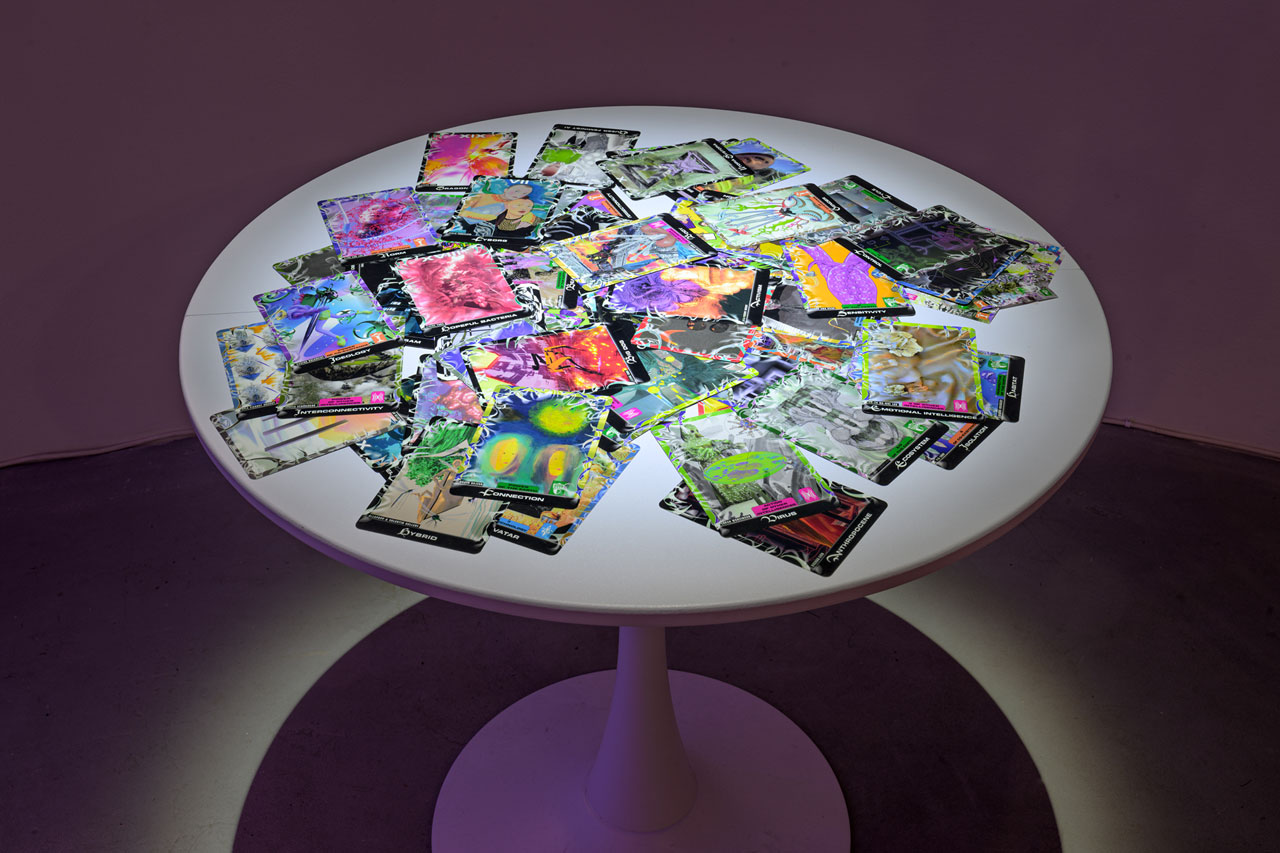
From the intimate setting of Soul Paint, the exhibition shifts towards a more expansive, world-building approach with BBB_ collective’s Songs of Cyborgeoise (2024). I AM NOT AN ORACLE frames the visitor as a player navigating complex systems. This is the work that most literally adopts this format. The installation consists of an hour-long game made up of twelve levels, each with its own soundtrack, accompanied by a tarot deck. Every level features a different being or entity that guides the player through the environment. These figures are often hybrid or non-human forms (mutants or bodies in transformation), a theme that appears in a few other works in the exhibition as well. This emphasis on shifting or unstable forms could be read as a counter to the rigidity of the systems the exhibition addresses.
Thema's
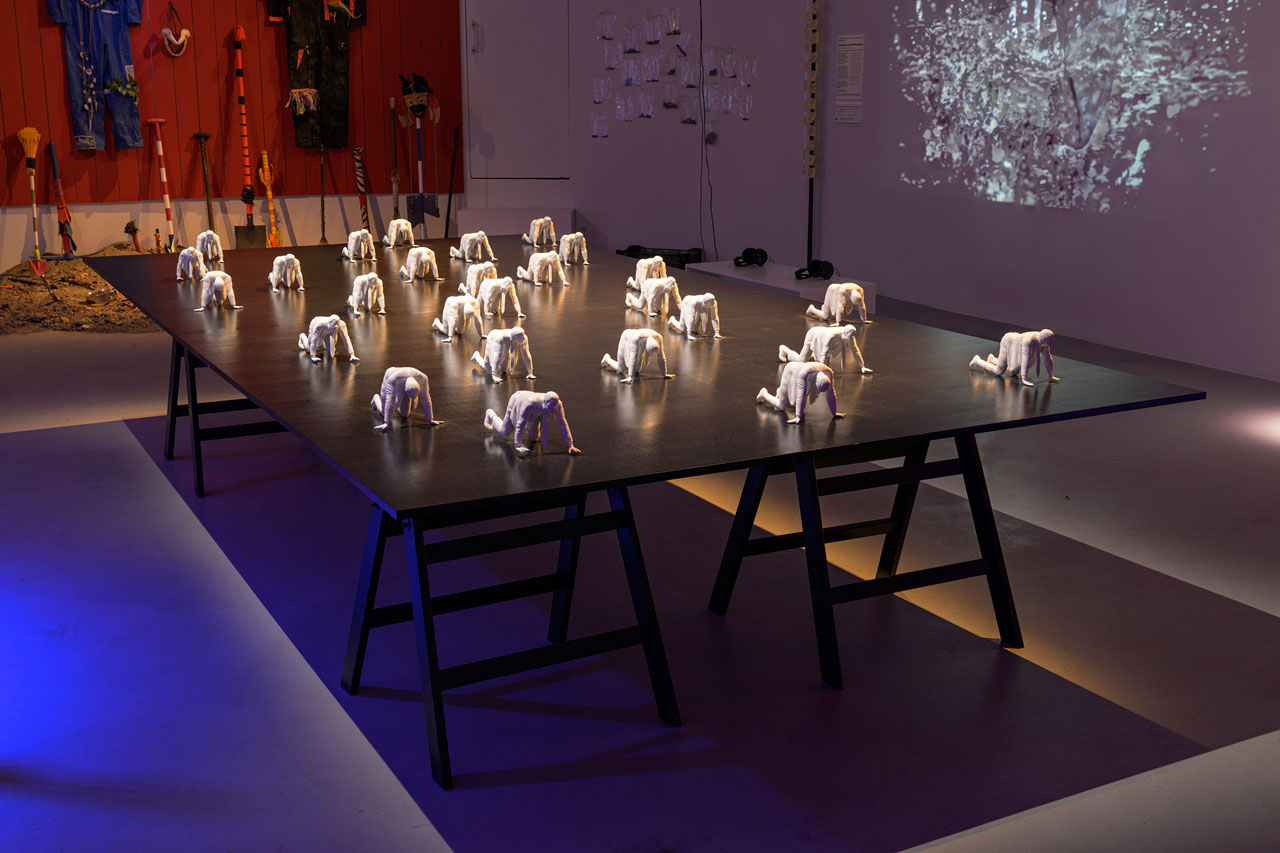
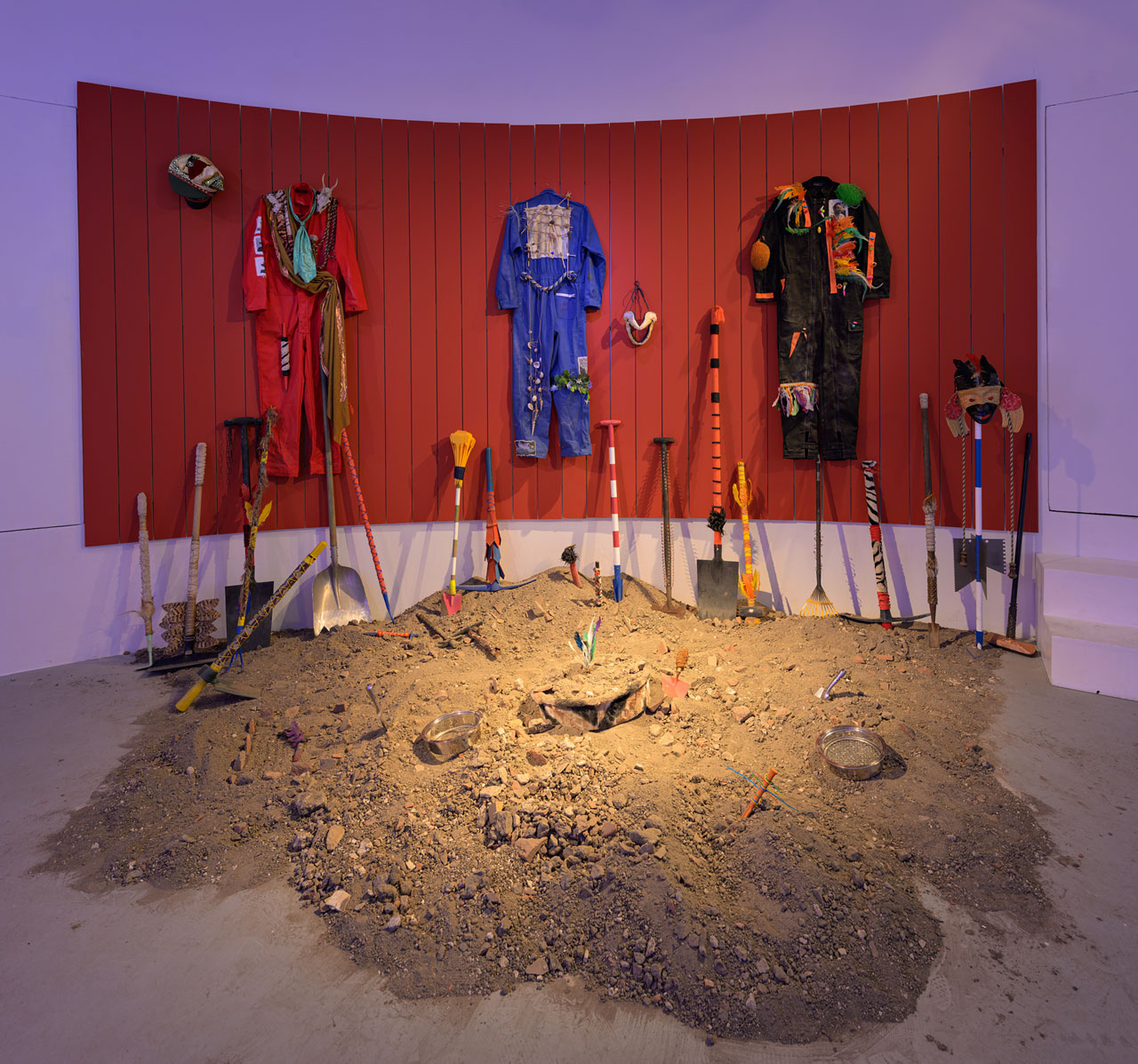
Moving from technology focused works to something more tactile and material, The School of Mutants’ The Dig (2024) is an installation that combines a sandbox with an excavation site. While many works in the exhibition address technological or speculative futures, The Dig redirects the attention to a different kind of system: the educational and historical frameworks that shape collective memory. Its tangible nature expands the exhibition’s understanding of what a system can be, not by creating an entirely new system, but by regrounding already existing ones through physical engagement. Set against the technologically oriented works, this focus on hands-on learning and discovery adds a layer that helps anchor the work in our everyday lived realities. The work asks who decides what is remembered, what is forgotten, and how learning happens outside formal institutions. On the wall, three outfits are displayed, in front of them is the sandbox and a set of tools for visitors to use. It raises questions about how we absorbed knowledge as children, what a less manipulated form of learning might look like, and what we may need to unlearn as adults.
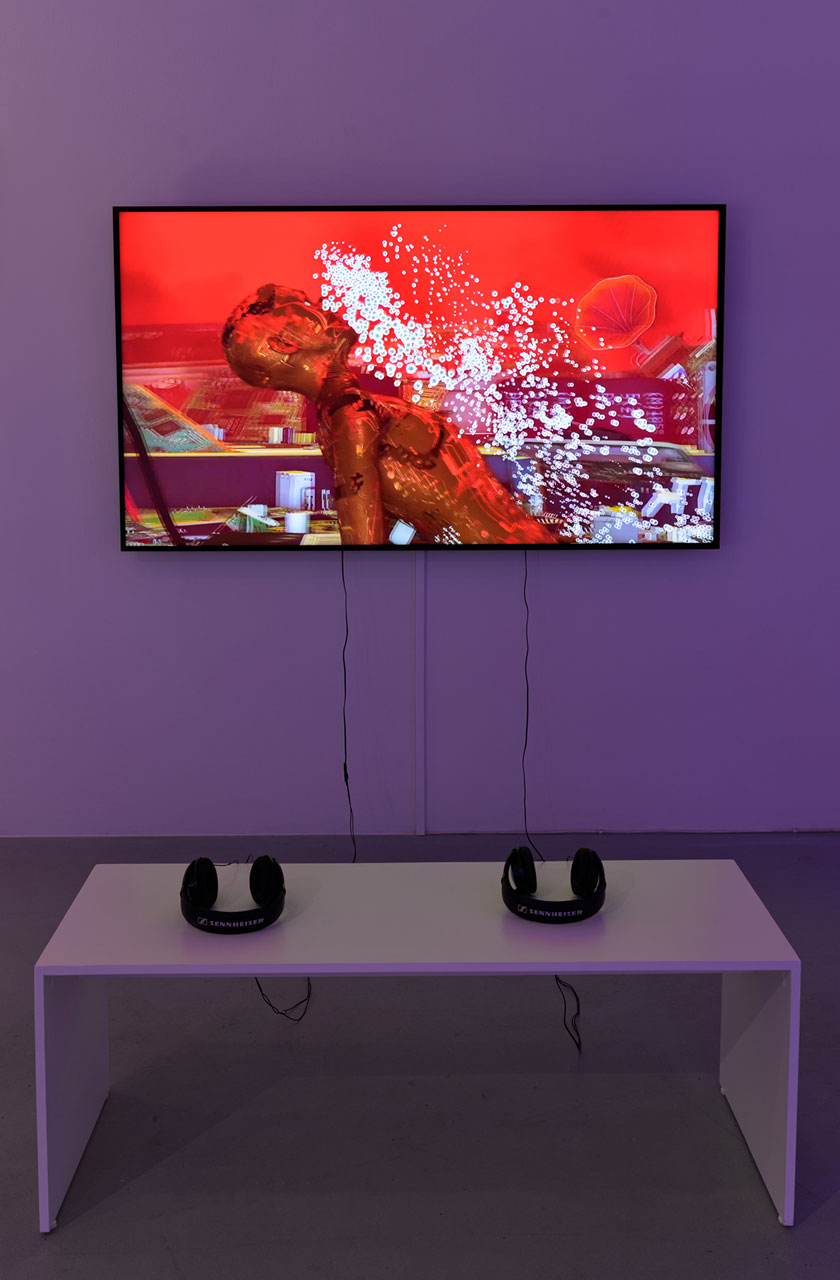
Shu Lea Cheang’s Virus Becoming (2024) explores the idea of refusing a system, rather than existing within. It follows a discarded humanoid, Reiko, who was created by a corporation but later thrown out as e-waste into a site filled with other discarded bodies and technologies. In the video work, we see Reiko trying to reassemble their body in both a literal and metaphorical sense – regaining agency, rebuilding identity. Reiko then begins their journey, meeting other bodies in the realm who have been deemed ‘excess’ or ‘unproductive’ by the corporation, like hackers, trans-mutants, workers or refugees. Ultimately, Reiko mutates into a virus, UKI. The virus becomes a counter-being, a response to the systems that discarded Reiko and to the bodies that are regularly overlooked or erased from dominant discourse. In this context, becoming a virus functions as a kind of liberation: a glitch that destabilises the system, constantly changing shape and refusing a fixed form.
My reading of the exhibition is quite technology focused, though there are several other works – Shertise Solano’s Overboard and Still Breathing (2022), Cristina Lucas’ 4 FAIT/H BILL/BOARD (2025) or Folkert de Jong’s Jacob’s Pillow (2025) – that broaden these themes in different directions. They range from ecological systems to political and historical ones, yet I found it difficult to fully engage them within the density of the presentation. The works that relied on active participation, like Soul Paint or Songs of Cyborgeoise created strong points of connection, but this also made the more passive pieces feel noticeably in the background in comparison. Maybe this is tied to the curatorial aim of activating the viewer, so works that require a more observational form of engagement receive less attention. At the same time, they offer moments of pause and transition within the exhibition’s flow.
The exhibition set itself a large task by addressing so many infrastructures at once, and what works well is the focus on how we navigate these systems from within, rather than simply dissecting their problems or strengths. Even though the show feels dense, the variety of approaches does add layers: from navigating the systems of our bodies, to interventions in educational and historical frameworks and speculations about future environmental and social issues. Though it made me question whether there was simply too much information for each topic to come through clearly. The works that turn toward the body ground the exhibition the most. Through VR body mapping, play, hands-on digging, or bodies in transformation, these moments offer a way of thinking about navigating these systems through mental health, care and lived experience. They make the exhibition feel more tangible, even when its themes are hyper abstract and in doing so, offer a rare sense of agency.
I AM NOT AN ORACLE is on show until the 1st of Febuary at IMPAKT
Rebeka Erdélyi
is an Amsterdam-based art historian and curator whose current research focuses on post-socialist memory, nostalgia, and the (re)positioning of Central and Eastern European art in an international context.