Lenses for structures of displacement – about the Managing Displacement Book series
System of Systems is a research platform and editorial group that critically engages with migration policies and forced displacement. The group has recently published a series of books titled Managing Displacement, launched at Framer Framed last December. In a conversation with two of its members, Danae Io and Rebecca Glyn-Blanco (who, along with Maria McLintock, make up the collective), Danai Giannoglou tries to unravel how their work is commenting on western structures of displacement.
The multidisciplinary research group System of Systems was founded in 2016 in response to the intensified movement of migrants and refugees into Europe, a phenomenon widely framed in the media as the ‘2015 European refugee crisis.’ Although the group’s relationship to that moment is undeniable, they resist treating it as a defining ‘springboard’ for their research. Their initial focus, which was on asylum-seeking, quickly expanded to migration as a wider issue and ‘the general bureaucratic, spatial and technological conditions that shape Europe’s migration landscape.’
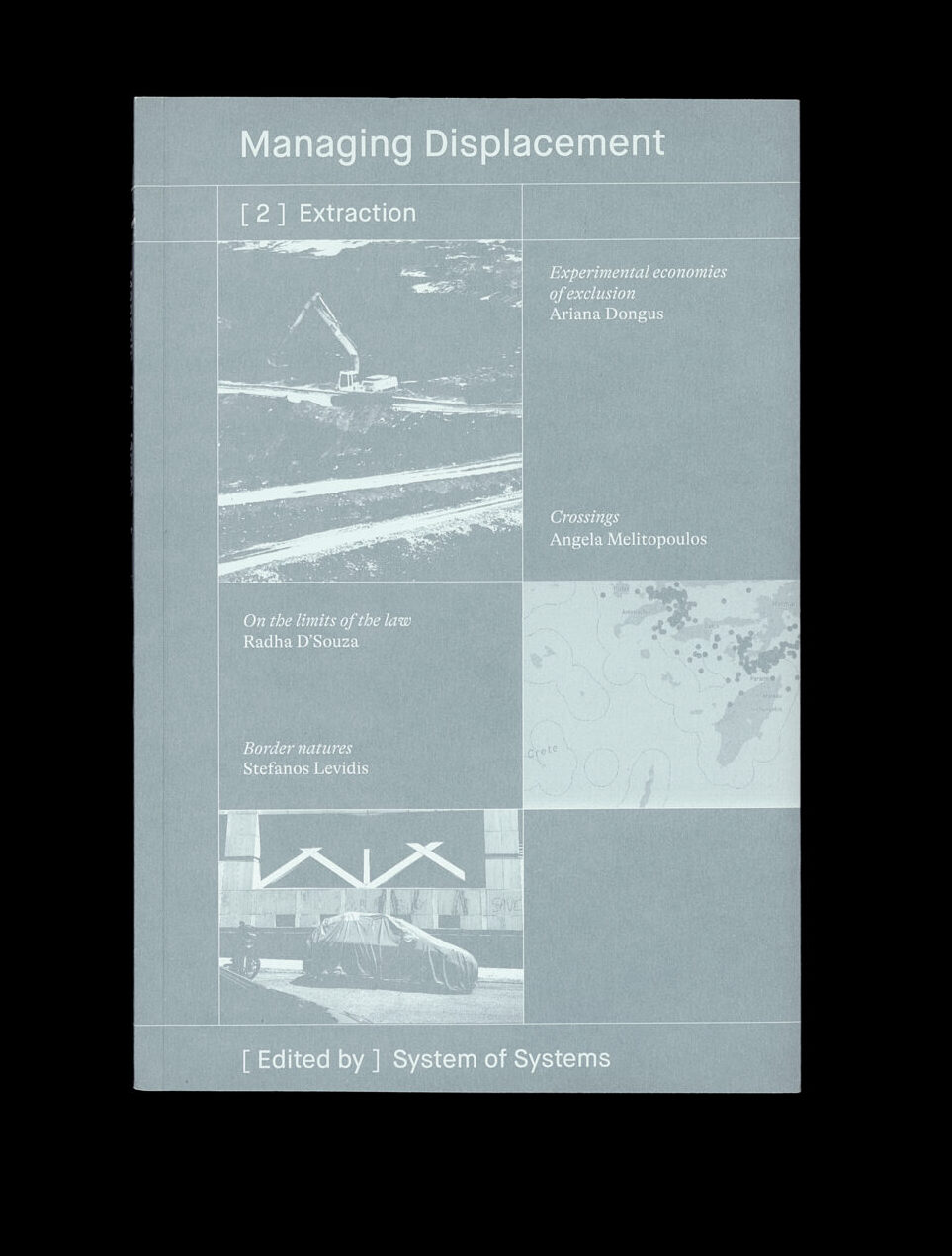
A pivotal idea in their approach is fostering solidarity; not as an instinctive emotional response but as a deeper understanding of our entanglement in the very systems that marginalize people. As Glyn-Blanco and Io highlight, solidarity means acknowledging that we are not distant observers but active participants in these structures. The recently published Managing Displacement series is System of Systems’ latest endeavor that already counts two published volumes, Outsourcing and Extraction, with another two in preparation. The current volumes begin with a glossary which offers open-ended, ‘non-singular’ definitions of specific terms encountered throughout the two books. These glossaries not only help the reader better navigate the complex concepts explored in the pages that follow, but also subtly point out our un-familiarity with many of the mechanisms and structures that define and control forced displacement.
One of the key terms found in both glossaries is the term ‘system of systems’ which is described as follows: ‘This term originates from a phrase used to describe the largest border surveillance system of the European Union, EUROSUR. With Frontex, EUROSUR’s operations merge to form a network of technologies that, as they state, deliver a ‘frictionless circulation of identity data within a single globalised market of information.’ The processes for controlling migration do indeed form a ‘system’, but they highlight that it is composed of a multiplicity of embedded and overlapping systems, not the supposedly frictionless, singular one asserted by the EU’s migration management bodies.’ By utilizing this term as a name for the research group, they are committing to following these long tangled chains, and acknowledging how they are also a part of them.
‘The thematic umbrellas of the two volumes, Outsourcing and Extraction, are lenses, frames, through which we can look at forced migration. They are not the only ones and they are definitely interconnected,’ says Glyn-Blanco. In the first volume, for instance, European migration policies are being looked at through the lens of ‘outsourcing.’ This is something that sheds light on cases and practices far beyond the continent while revealing Europe’s involvement in the movement of populations way before they reach its borders. Subsequently, this frame is a successful attempt to understand the construction of European identity through an in-depth analysis of migration policies and the methodology of ‘harnessing what is external or ‘other’ to uphold an internal cohesion.’ This premise already becomes clear from the introductory text of the first book, where ‘outsourcing’ is described as a neoliberal and colonial tool used to avoid responsibility following a typical out of sight/out of mind manipulation of events.
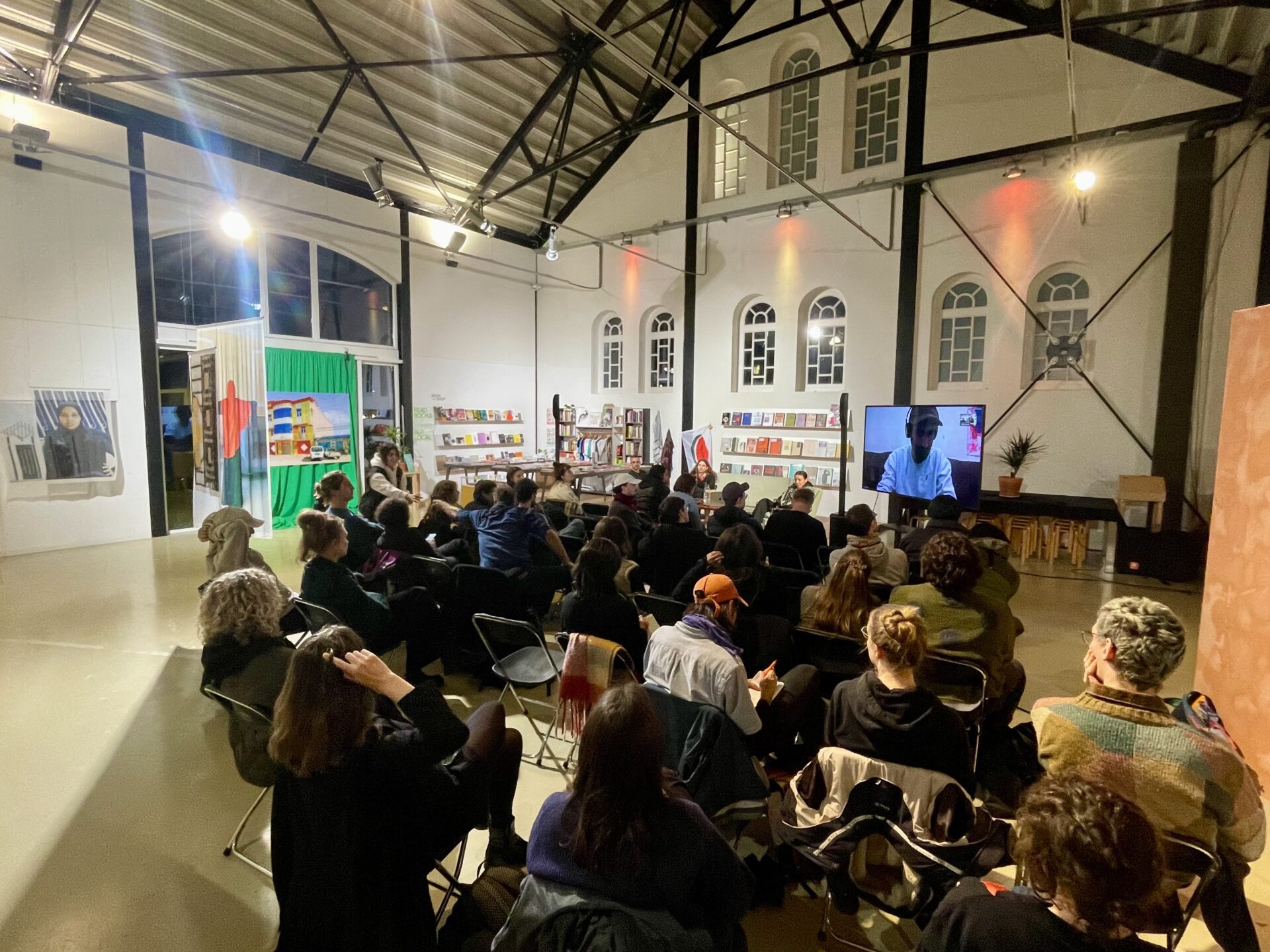
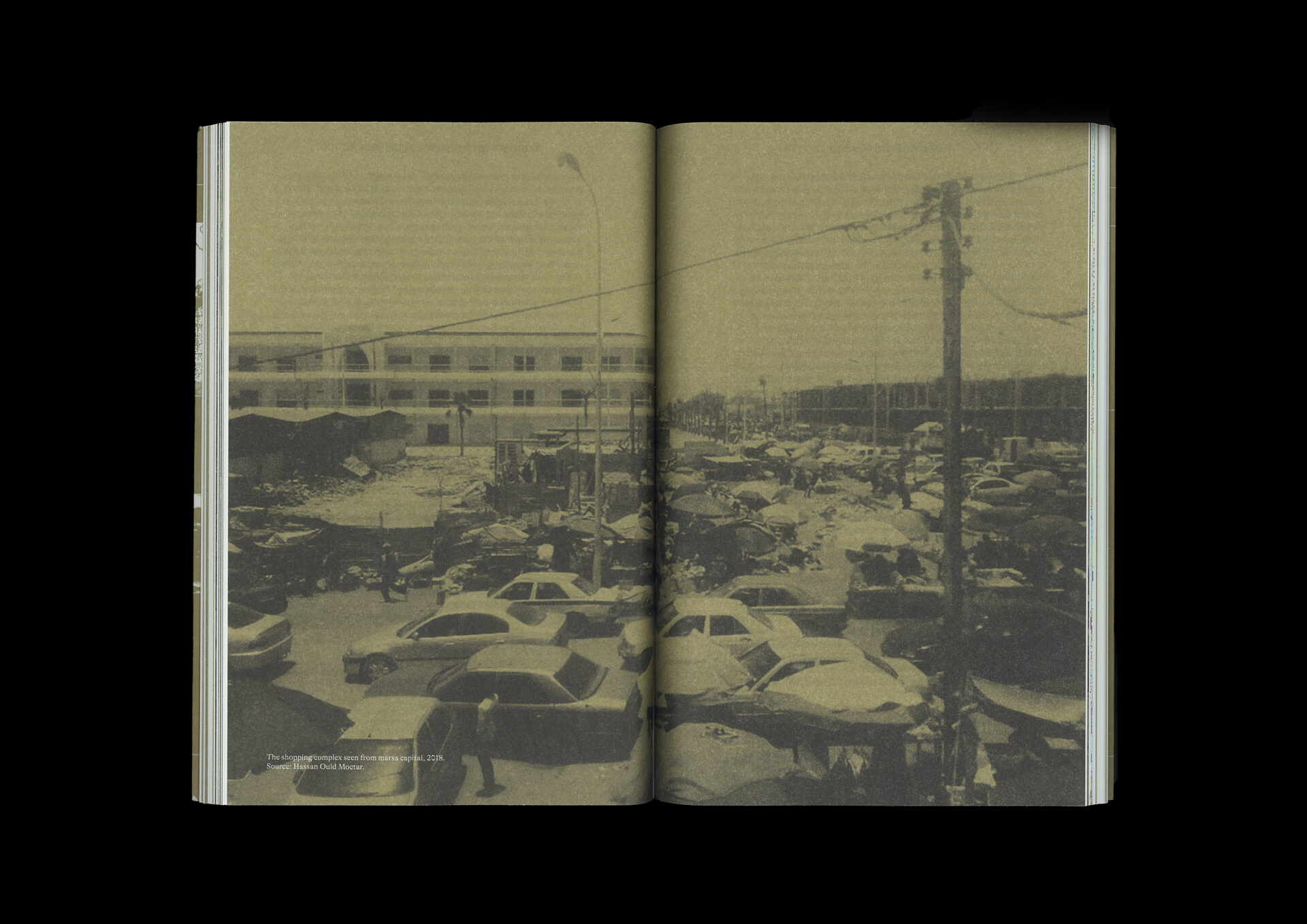

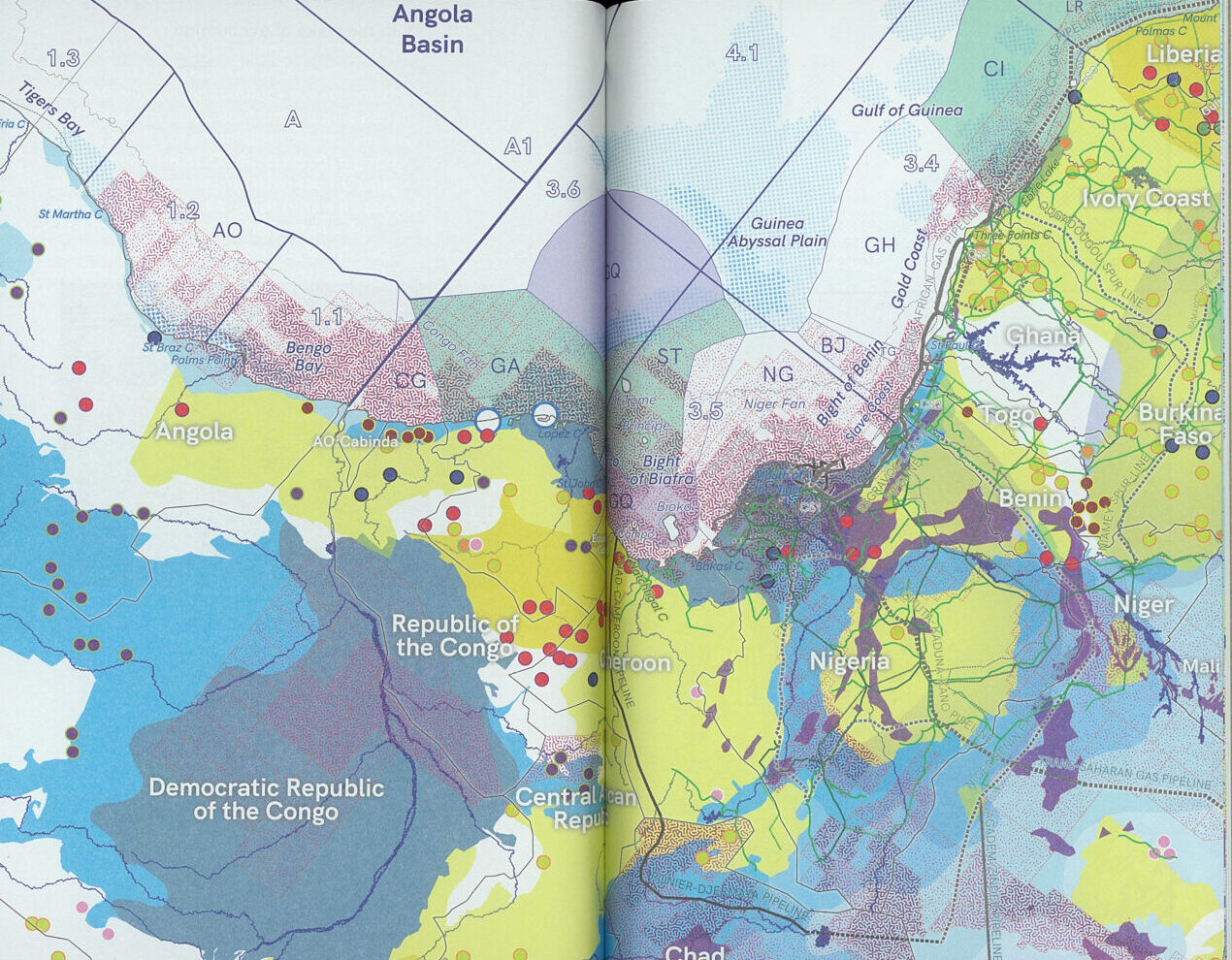
Outsourcing offers the reader a conversation between System of Systems and activist collective Border Violence Monitoring Network which reveals Frontex’s manipulation of legal grey zones as a way to differ accountability. As well as a contribution by writer and researcher Hassan Ould Moctar where the ways in which European border practices affect distant communities are explored through the case of Mauritania. Artist duo FRAUD present a ‘counter-cartography’ of the routes followed by people in the move and goods in transportation to draw parallels between Europe’s reliance in outsourcing humans and non-humans for the generation of wealth and power. Legal scholar Nadine El-Enany navigates paths that relate to the psychological toll of migration and exclusion by taking the Rwanda asylum plan as a starting point.
What sets System of Systems apart is its critical approach as non-specialists and their use of the artistic research field as a meeting point. Io points out that discussions around the technicalities and structures often remain isolated in specific circles, usually academic: ‘We are not speaking as specialists but as practitioners and connectors that bring people from different disciplines together to create spaces of solidarity, spaces for responding and questioning things that feel overwhelmingly depressive.’
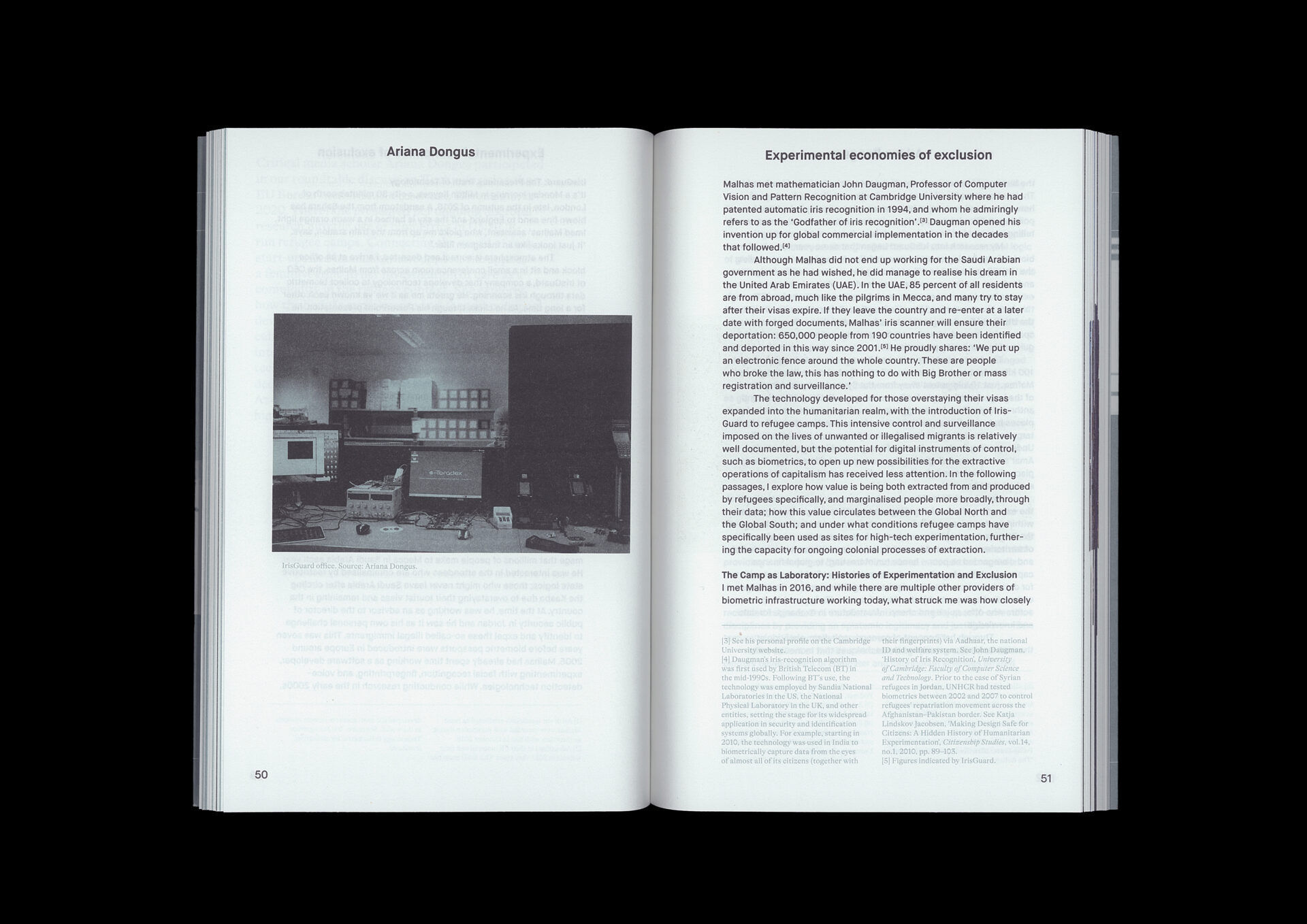
The second volume, Εxtraction builds on how everything that inhabits earth is seen as a source of profit. Following a similar logic as Outsourcing, the second book provides readings of this specific term and its relationship to migration policies. It begins with a conversation with legal scholar and activist Radha D’Souza whose practice explores the relationship between people and nature through justice. Ariana Dongus takes the baton to shed light on the exploitation of refugees’ bodies for the generation of data and Angela Melitopoulos expands on her film Crossings (2017) and the different occasions of people and resources extraction that take place notably in Greece. The last contribution is a beautifully nuanced text by architect, spatial researcher and visual practitioner Stefanos Levidis where he walks the reader through his term ‘border nature’ and looks into landscapes and their weaponization against illegalized migrants. These readings cover a wide spectrum; from climate change and the way it has affected certain migrations to an understanding of how migrants have become themselves extractible and hence, how the border constitutes a means of extraction.
The contributions of both books are not a mere ‘illustration’ of the threads the editors are bringing together, but in fact they expand the limits of these lenses in order to navigate paths of usually obfuscated links between complex chains. Both publications are not anthologies of loosely related ideas, but rather an ensemble of profoundly connected arguments that very carefully support and enhance each other. Unlike the usual journalistic approaches of these issues, Managing Displacement as well as System of Systems’ entire research is not focused on specific events but is trying to detect the deep lineages that create the structures of displacement and the attempts to manage them. Even though they are dealing with constantly shifting policies, administration and technologies, Managing Displacement achieves to remain a thoughtful and malleable body of work.
Click here for more information on the book series
Danai Giannoglou
is a curator and writer